Utila Recommendations

If there’s one place that entices travellers off the beaten path (you know, the one that usually skips Honduras entirely), it is the 45 km2 island of Utila. The smallest island of the Islas de la Bahía, Utila is known for two things – diving and partying. This is the place that I learnt to dive and I’ve indulged in it’s other pastime plenty as well! In the year I lived in Honduras I visited 3 times, once for Christmas and New Year with the whole group of volunteers, once for a random long weekend and once when my mum and twin sister were visiting. I was happy to be able to go back for a full week as part of this trip. Hannah was equally excited – she was supposed to come here to do research for her undergraduate anthropology dissertation but that was in the summer of 2020 so I’m sure you can imagine what happened… Anyway, we were finally back and ready to make the most of it. Our days alternated between diving, relaxing and good food, drinks and company! If you ever make it out there, I wanted to share a few of my recommendations though there are plenty more not included here!

WHAT TO DO

Scuba Dive

This (even above partying) is the number one reason that people go to Utila. It’s actually where I learnt to dive seven years ago and still where most of my dives have been. The Caribbean side of Central America is home to the world’s second largest coral reef which is a large attraction for scuba divers of all levels. Utila is also one of the cheapest places in the region to dive. There is incredible diversity on every dive – with most dives on the reef, there’s an abundance of coral to see (unfortunately not always healthy) and a large variety of fish. It’s also common to see larger marine life such as rays, sharks and dolphins. Even if you don’t see them on your dive, you can go dolphin hunting on your surface interval! This is what I did during the summer and we ended up having over an hour in between dives because it was so incredible. There were 15 or 16 swimming at a greater depth to start with and then three came up to the surface and swam right next to us for a while.

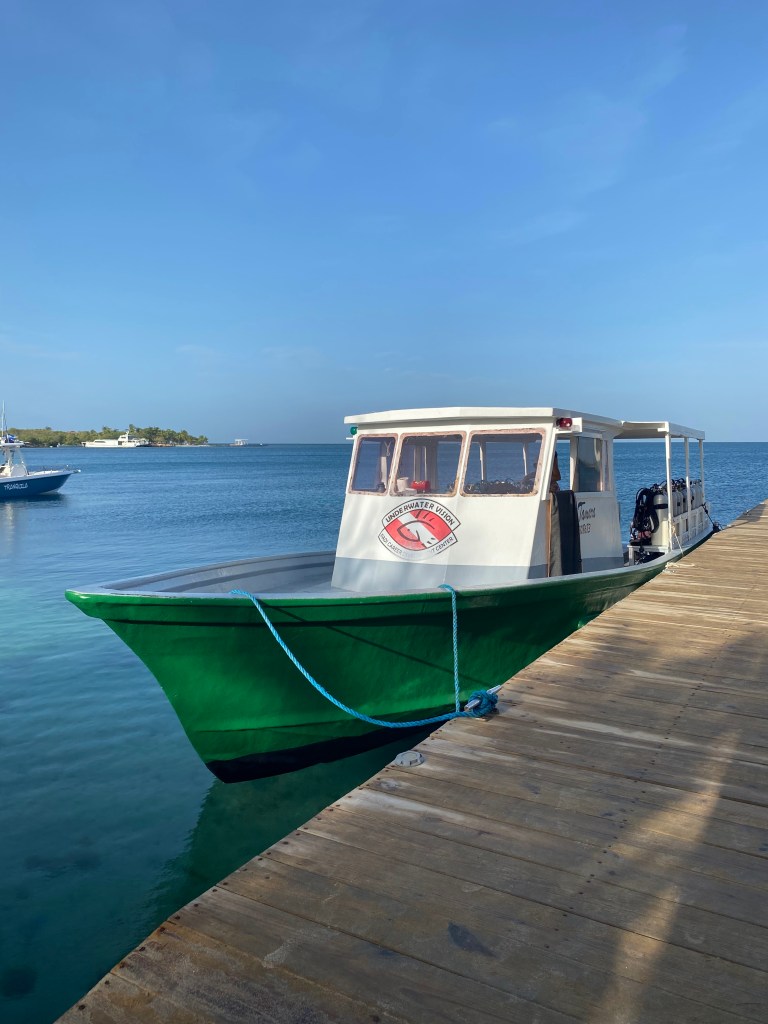
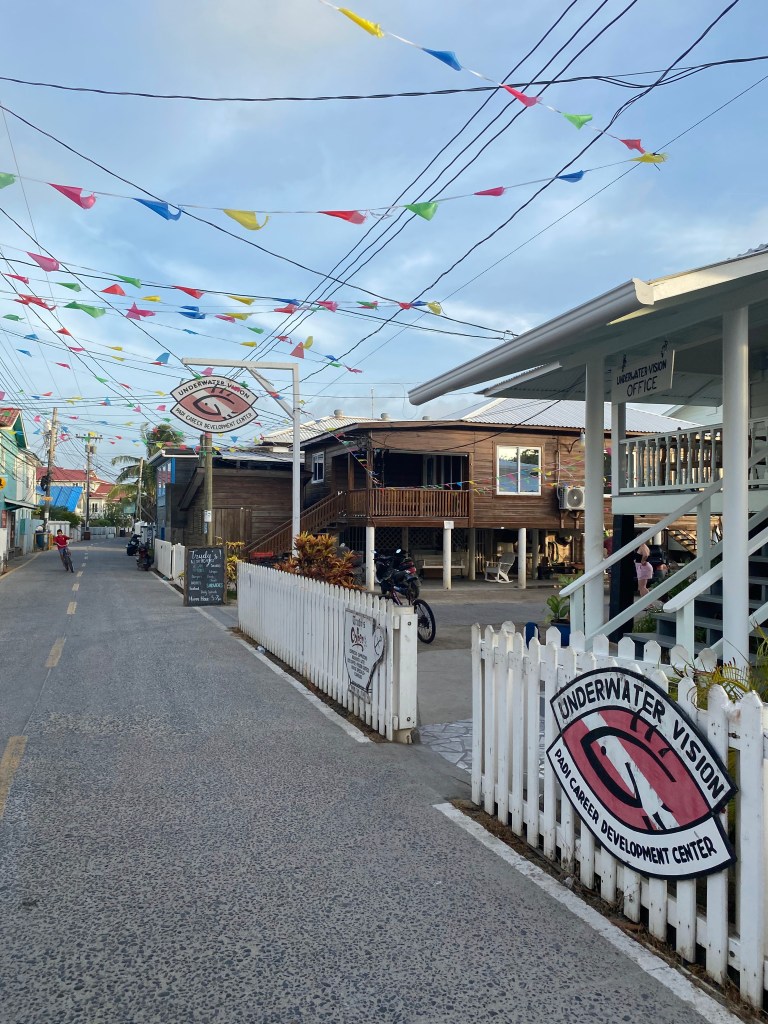
My go-to in terms of a dive shop has always been Underwater Vision. A friend recommended this place to me before I even went to Honduras, I ended up learning to dive there over Christmas 2016 and it’s the only place I’ve ever gone since. They have always had great instructors and divemasters that I’ve felt safe and comfortable with. Some other places that I’ve heard good things about are Utila Dive Center (right next door to Underwater Vision) and Alton’s Dive Center but I can’t vouch for them myself. 

See whale sharks

I don’t have much that I can personally add to this one because I’ve never been lucky enough to see one but Utila is one of the best places in the world to see whale sharks. Despite the name, whale sharks are actually the largest species of fish, known for their distinctive patterns of white spots. They can be found in Utila’s waters all year round but the best chance is between February and April. You’ll still need a lot of luck though!

Neptune’s Beach

While Utila is a bit of an island paradise, it’s not lined with beautiful beaches all the way around. Bando beach is a small private beach at one end of Utila Town and Chepes beach is a small public one on the other side of town but if you want an idyllic beach day, head to Neptune’s. When I visited in the summer, my twin sister Amy happened to be working on Utila at the same time, leading a coral research team. Their base, Coral View Dive Center, was right next to the dock where you can take a 50 lempira (£1.60) boat through the mangroves to Neptune’s. Technically the beach is called Coral Beach and the restaurant is called Neptune’s but everyone just refers to the whole place as Neptune’s. You don’t have to order from the restaurant or bar but I would recommend it – definitely get the onion rings!

One side of the beach has live corals that come right up to the shore so you can’t swim there but on the right side of the jetty the shore is just sand so it’s safe to get in. Further out on this side there are also coral reefs that you can swim to and snorkel over. This is one of the best snorkelling spots on the island! One of my favourite dive sites, Black Coral Wall, is also just off shore around here.

Rent bikes

One thing I’ve never done, the previous times I’ve been to Utila, is explore outside the town much. To remedy this, Hannah and I rented some bikes to see some new places! You’d think it would have been too hot but the movement actually created our own breeze which was really refreshing. We stopped at a few places like Scott’s Driftwood Beach which has incredible sculptures, a random spot with a beautiful view out to the ocean and later at a little pulpería for a nice cold drink. I’m not a goal oriented hiker or cyclist it turns out, so when we wanted to stop to take pictures, look at animals or drink emergency electrolytes (true story), we did it! It was nice to get out of the traveller bubble of Utila town. What we saw reflected a little more of the Honduras that we know from the mainland. We rented our bikes from Golf Cart Rentals along Main Street for $10 for 24 hours though they are also available for just a couple of hours at a time. The bikes weren’t in great shape and it took us a while to figure out the brakes but Utila is pretty flat other than the hill going into town from the back so they got the job done.

Jade Seahorse

A bit of a hidden gem, both due to the fact that it’s under appreciated in my opinion and also somewhere you could walk past without really noticing, is the Jade Seahorse. While technically a hotel with rooms that you can stay in and home to the Treetanic bar (slightly random opening hours mean I have never been there for a drink), Jade Seahorse’s real attraction is the mosaic garden. The 50 lempira entrance fee is well worth it (the owner will most likely be sitting somewhere in the garden and will ask for it as you’re walking around). There is so much to take in that you won’t know where to look. Take your time and enjoy all the little details.

WHERE TO STAY

Trudy’s

Just like Underwater Vision is the only place on the island that I’ve ever dived, Trudy’s, the hostel attached to Underwater Vision, is the only place I’ve ever stayed. I find the rooms to be clean and comfortable, whether that’s a dorm or a private room. There is a restaurant with great food, particularly breakfast, and nightly specials like pizza or wings and a bar that has various events throughout the week like karaoke and quiz nights. These are a great way to get to know other guests but also draw people from elsewhere on the island so it’s a really social place. It’s not, however, a party hostel and most nights things quieten down around 10pm or 11pm (the exception being for divemaster graduation ceremonies but these are a spectacle in themselves). While there’s not a beach, Trudy’s is right on the water with it’s own dock where you can swim and where the dive boats leave from. There is a large sandy area that is perfect for sunbathing (with lots of suncream on!), playing beach volleyball or chilling in a hammock in the shade. If you stay at Trudy’s and take a course with UV, there are discounts on the accommodation prices which is an added bonus.

I’ve stayed there in a big group, a small group, with my family and this summer just as a pair and I’ve always had a great experience. It’s easy to get talking to anyone, whether it’s on a dive, swimming by the dock or having a drink in the bar. All of the instructors and divemasters get involved with the guests and are friendly faces around the place. This summer, Hannah and I built a great wee group, a trio of girls from Germany, Austria and Norway, one of the divemasters and the first of two great Dutch T(h)oms of the trip. I also, absolutely unbelievably, managed to find a few long lost cousins from the Isle of Lewis by way of Ireland! That’s a story for another day but it still baffles me not just that we met on this tiny island in the Caribbean but that we managed to figure out the connection!

Other options

As I’ve said before, Trudy’s is the only place I’ve stayed but I have heard bits and pieces of other places. Mango Inn is the name of the hostel attached to Utila Dive Center which is supposed to be nice. Whereas Underwater Vision and Trudy’s are in the same spot on the waterfront, UDC and Mango Inn are separate. UDC is right next door to Underwater Vision but Mango Inn is about a 15 minute walk away, in the centre of Utila Town. You could also stay in cabins at the Jade Seahorse that I mentioned above, each room with a different theme. There are a lot of options to choose from around the island and anywhere in Utila town is not very far from anywhere else.

WHERE TO EAT

Mama Rosa’s

Due to its proximity to Underwater Vision, cheap prices and large portions, this is a go-to spot of mine in Utila. Baleadas are great anywhere really but Mama Rosa’s are huge and you can get them all loaded up with chicken, beef, avocado, salad and more. They also have massive pupusas, large stuffed tortillas that are a favourite of mine. They also have things like burritos and quesadillas as well as great fresh fruit juices.

La Casita

What drew me to La Casita was initially the bright colours of its exterior but also the amazing smells every time I passed by. It has all kinds of things on the menu from baleadas and burgers to pasta and seafood. I had the special of the day when we went which was birria tacos and they were delicious.

Camilla’s Bakery/Pizza Nut

A very versatile spot, Camilla’s Bakery serves breakfast and lunch during the day and then reopens at night as Pizza Nut. As far as Camilla’s Bakery goes, they have a great selection of bagels that have saved me on more than one worse-for-wear morning over the years. I have actually never been to Pizza Nut but hear nothing but good things!

The Pelican 

The Pelican is right opposite Underwater Vision but was new since I was last on Utila. Hannah and I figured that we should check it out one night but it was actually completely full when we first tried to go! It’s a pretty small space but is very popular so it’s actually somewhere that I would recommend booking if you want to make sure you get a table! We booked for the following day and enjoyed an incredible meal. I went for the Thai yellow curry which actually wasn’t on the menu but had been the special the day before. The server remembered that we hadn’t been able to get a table then and offered us the option of the curries that were on offer the previous day. It was absolutely delicious and I was very grateful for the chance to enjoy it! As good as most of the other options around Utila are, having some lighter food made a nice change from the heavier Honduran and American options.

Pink Flamingo 

I met my sister here on her day off to have a wee brunch and it is such a stunning spot. You could be forgiven for missing it because it’s hidden from the road and is very inconspicuous. Once you enter, you are greeted with a wooden structure that stretches out into the most stunning turquoise water that surrounds the whole of Utila. Pink Flamingo really leans into the aesthetics of its surroundings, making it a very Instagrammable spot. It was a place I could have quite happily stayed for several hours, enjoying my book in one of their hammocks or swing chairs. The food was good too, I had a Mexican style brunch option but their salads, bowls and sandwiches had me wanting to go back and work my way through the menu! It’s a little more expensive and with smaller portions than some other places but I think it’s worth a visit for the vibes!

The Point

On the recommendation of a new divemaster friend we met at the start of the week, we had a spare day with no plans and decided to head to The Point. It’s a restaurant and bar looking out onto the water that also has a small chlorinated pool. I love being in the ocean but there’s just something about being in a chlorine pool that makes me feel so clean and so at home. On the menu are American staples and I enjoyed a great buffalo chicken burger. Hannah and I enlisted a couple of our new friends to come along with us and we spent most of the day there, playing cards, reading and chatting in the pool.

WHERE TO DRINK

Ask around for the best place to go depending on the night!

There are endless options on an island that is known for its party scene and it mostly depends on the night. Talk to people at your hostel or around town and ask where will be good that night. Back in the day, Tequila Tuesdays at Tranquilos and Ladies Night on Thursdays at Vinyls were the place to be and still to this day. Hannah and I have fond memories (if a little fuzzy in places) of both of these nights when we were 18 and we did actually go back to Tequila Tuesday this summer. I don’t know if it was my advanced age of 25 or just not being in the mood on the night but it didn’t hit quite the same.

La Cueva

Something that I did love and the thing to do on Monday nights is karaoke at La Cueva! My sister and a lot of her research students plus Hannah and I and our group from the hostel (and pretty much everyone else) were packed into the bar. I’m not a big karaoke singer but I am an avid and enthusiastic audience member. There were lots of great performances, Taylor Swift from Amy and her friend, some Patti Smith from Hannah and someone sang the Cha Cha Slide which I’m definitely stealing in the future.

Utila Brewing Company

This was more of a one off experience or at least monthly rather than weekly, but we happened to be on the island for one of Utila Brewing Company’s big jungle parties. The brewing company was actually set up by the instructor I had for my Advanced diving course seven years ago! Normally it’s only open at the weekends but the jungle parties are usually Friday nights. It was 100 lempira (£3.20) to get in and there was a great DJ, and even though it was mostly techno music which isn’t usually my thing I really enjoyed it!

Top Tips for Visiting Honduras

Despite how much I love Honduras, I recognise that it’s not top of most people’s list of must-see destinations. However, it feels like a personal mission to change people’s minds about that. With everything I’ve written and will write, I hope I can show people that Honduras is definitely a country worth your time. At the same time, Honduras has a certain reputation that precedes it that I don’t think is representative of the country as a whole. It is safer and easier to navigate than it might appear. That’s not to say that there aren’t things to watch out for and you also shouldn’t expect the same level of tourism infrastructure as somewhere like Costa Rica. With that in mind, there are a few things that I think are important to know before you visit so that your expectations are in line with reality.

Take what you might have heard with a pinch of salt.

Back in 2015 when I was first embarking on the journey that would take me to Honduras (the selection and fundraising process started a year before I would actually leave), the prolific BBC investigative presenter Stacey Dooley had just released a two part documentary about the worst places in the world to be a woman and guess where one of those places was? This meant that many of my first interactions with people when I told them that I would be moving to Honduras for a year was shock and horror. This was quickly followed by questions or comments about how bad it is for women there and generally how dangerous it is. At the time, I had no idea how to respond and usually just laughed somewhat awkwardly before moving the conversation along.

Now, I’ll say that while Honduras still doesn’t have the best reputation among international travellers, a lot of the problems (gangs, violence, drugs) are localised to specific areas of bigger cities and visitors are rarely affected or the targets. Outside of the large cities of San Pedro Sula and Tegucigalpa, I have never felt unsafe in Honduras. (Saying that, still don’t take any unnecessary risks.)

Don’t flush toilet paper.

The pipes in Honduras are not what you will be used to at home. It sounds like it’s going to be really annoying and it will definitely take a few days to get used to this but it’s the same throughout most of Central America. You’ll get the hang of it eventually and if not, I hope you’re good with a plunger!

Cash is king.

To be on the safe side, I would assume that nowhere takes card so always have lempiras (the Honduran currency) on you. Most larger towns and cities have ATMs but sometimes these are out of service or there’s an unexpected problem with your card so stock up when you can. In general when it comes to using your bank card, Visa and Mastercard are widely accepted. I personally use my Monzo card when I travel because they have pretty good travel rates and won’t block your card if you change countries without telling them. Back to cash, dollars are not really used (other than in very touristy places like the island of Roatán) but can be good to have for emergencies. In smaller shops or restaurants it might be hard to break a 500 lempira note (~£15) for smaller purchases.

Dress a little more conservatively.

If you’re anything like me, you’ll spend the whole time wondering how Hondurans are going about their business in jeans in up to 40° heat! I’m not saying you have to follow suit but Honduras is generally a pretty conservative place so keep that in mind in your clothing. Especially if you travel to a smaller town, somewhere like Candelaria for example, I wouldn’t wear shorts and I would have more coverage on the top, no crop tops or low cleavages. In the cities and on the islands which are used to more tourists, you can be more free with what you want to wear.

Visit the mainland!

So often people travelling Central America will skip Honduras entirely or only visit the Bay Islands of Utila and Roatán. I’m not saying they aren’t worth visiting (I love Utila and have been four times, watch out for the next blog post) but the mainland has so much to offer too! Copan Ruinas are in the northwest of Honduras, near the borders with Guatemala and El Salvador and are most well known for their Mayan ruins. These are the most southern Mayan ruins and my favourite of the handful that I’ve visited. I feel like they are the ones that I could most imagine being full of life and I could still see how everything fit together as a city. The town itself is really cute and there’s also a scarlet macaw sanctuary that’s worth a visit. In central Honduras, you’ll find Lago de Yojoa which is a hot spot for outdoor activities. It’s popular with bird watchers, kayaking out into the middle of the water gives you incredible views and you have to go to one of the many lakeside restaurants and try their specialty, pescado frito (fried fish). Nearby there is also the very impressive Pulhapanzak waterfall, 30 metres high. You can spend the day at the facilities there, go ziplining in front of the falls or go canyoning through them. And of course, there’s always Gracias for the hot springs and zipline.

Basic Spanish will help.

Obviously knowing the language of wherever you’re visiting is always a massive help, this almost goes without saying. But Honduras isn’t Costa Rica where so much of the economy relies on tourism that English is fairly widespread. Even in touristy areas like Utila, Roatán and Copán Ruinas but especially outside of it, a basic command of Spanish will go a long way. I think it’s polite and shows respect to the country you’re visiting to know a few phrases at least and people like it when you make the effort! Being able to have a basic conversation, ask for directions and order food are the most important things to learn but the more the better! Have Spanish downloaded on the Google Translate app as a last resort too.

People are generally kind, generous and willing to help.

You can’t generalise a whole country of people but I have found most Hondurans to be some of the most friendly and welcoming people. It’s hard to put into words how welcome I was made to feel when I lived there and am still made to feel every time I go back. I’m welcomed back into the home and the family that I lived with, my friends won’t let me pay for anything and I’ve had amazing interactions with strangers. This ranges from interesting conversations and lifts from bus stations to getting the best, authentic but otherwise unknown recommendations.

Trust the bus men throwing your bags on top of buses (and in public buses in general).

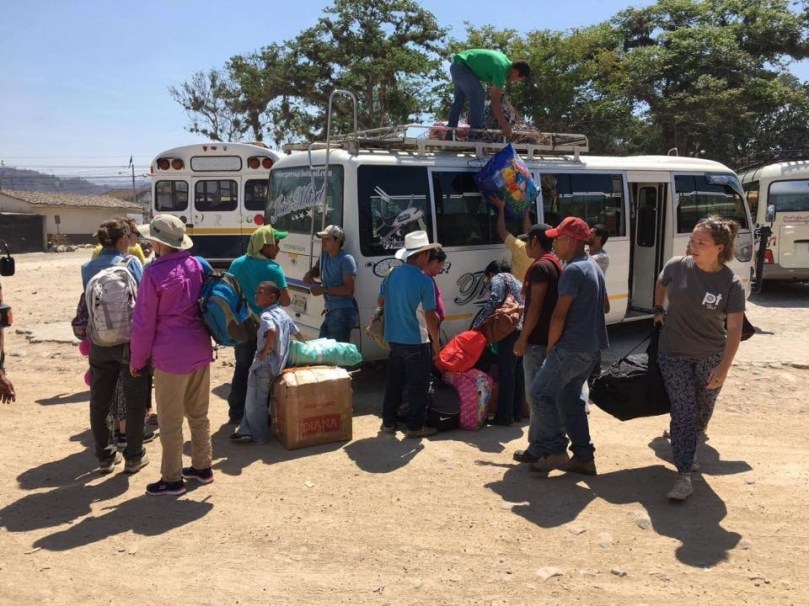
There are some private shuttles that you can take from the more touristy destinations in Honduras, from the islands to Lago de Yojoa or Copan Ruinas, or to the main cities like Tegucigalpa and San Pedro Sula but they’re expensive and if you want to venture further afield, more than likely you’re going to have to trust in public buses. There’s not a nationwide bus network, instead there are a collection of bus companies in each city running specific routes to another city. There’s no app or website in most cases so your best bet is to turn up at the bus station and ask around! There are times when someone will grab your bag and run off with it but they’re not stealing it (probably) – the men who work on the buses are very helpful but not always the best with instructions. Follow your bag and you’ll find the bus you need to get on. What looks like chaos on the surface is actually a well oiled machine.

Cold showers are the standard.

Unlike at home where hot showers are the norm, almost no matter the weather, you’ll have to get used to bracing yourself for freezing water. If you go around expecting this, hot showers become a welcome luxury which is nicer than constant disappointment. Your hair maybe won’t be as nice but take it as an opportunity for some cold water meditation and focus on your breathing. It’s hot enough anyway that you might welcome the cold water!

Women will most likely get catcalled.

Honduras has a strong culture of ‘machismo’ which is defined as an exaggerated sense of masculinity. This manifests itself as Honduras being a very male dominated culture. Men are the heads of the households, the primary breadwinners and much more visible in public and high-level positions. In day to day interactions, one of the ways the macho culture manifests is in catcalling. When I was living there, I had to get used to walking around with the background noise of whistles, kissing noises and various comments. Honduran men have yelled ‘I love you’ in English at me more times than I can count. Usually it’s harmless and ignoring it works. As a tourist, it won’t usually go further than this catcalling although that is unfortunately not the case for many Honduran women who suffer from high levels of violence, both in the home and in society at large.

Go to the local restaurants (comedores).

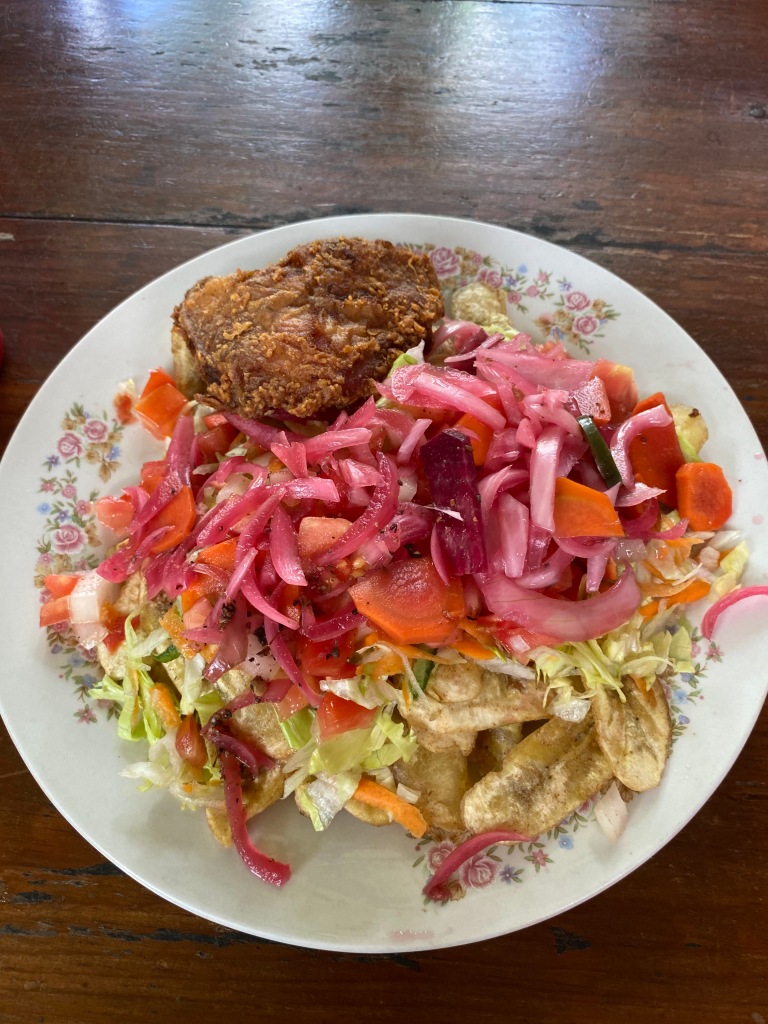
From the outside they don’t look like much, sometimes a bit more like someone’s living room than a restaurant. It might be tempting to go for more aesthetic choices and of course there’s always times when you just want some pizza but you’d be missing out if you don’t give the comedores a chance. You might be wary, particularly at the beginning of the trip, about the cleanliness or hygiene of a place but there’s usually signs to tell if the place is safe, the main one being if it is popular with locals. Try some of the classics like baleadas, fried chicken or a typical dinner. Big plates of food can cost up to around 120 lempira (£4) so it’s a cheap option too. But still trust your gut if something looks too dodgy.

Things will go wrong but they’ll all work out.

A good motto for visiting Honduras is ‘go with the flow’. The phrase ‘organised chaos’ comes to mind but embrace it. Particularly when it comes to transport, things don’t usually go to plan (add at least an extra hour on to the supposed length of any bus journey). Everything is a bit more relaxed in Honduras though, especially timekeeping (although I wouldn’t recommend turning up late for buses). Being open to new experiences can lead to some amazing things! Talk to people and you never know what might happen, you might end up in the most incredible situation that you wouldn’t otherwise have experienced. There is magic in the chaos.

Seven Years Later…

Of the whole two and a half months that I was travelling, these next few days were my absolute favourites, not that I expected any different. After a few days relaxing in Gracias and a night in Hannah’s old project in Yamaranguila, I was returning to Candelaria, a town that feels like home. It had been seven years since I first stepped foot there as a fresh faced 18 year old, although I did go back for a week in 2019. Travelling to new places is exciting and there is much to be learnt but I have found that nothing makes me more reflective than returning somewhere I’ve been before, especially somewhere that means so much to me and had such an impact on the person I am today. It was also really special to share this experience with Hannah because while I had visited her project during our original time in Honduras, she had never made it to Candelaria (awkward bus schedules are mostly to blame).

From Yamaranguila we had to take the bus from La Esperanza towards Mapulaca, a border town with El Salvador, and get off in Candelaria. We were waiting for the bus to take us from our hotel down to the station while simultaneously trying our luck at hitchhiking (a very common practice in Honduras) and we ended up getting a lift with two policemen! The bus journey was easy enough, about five hours in total and much smoother than our bus ride from San Pedro Sula to Gracias. As we were coming around the last few bends before arriving into town, I could barely contain myself! It already felt like coming home, even if I was already noticing a lot of changes.

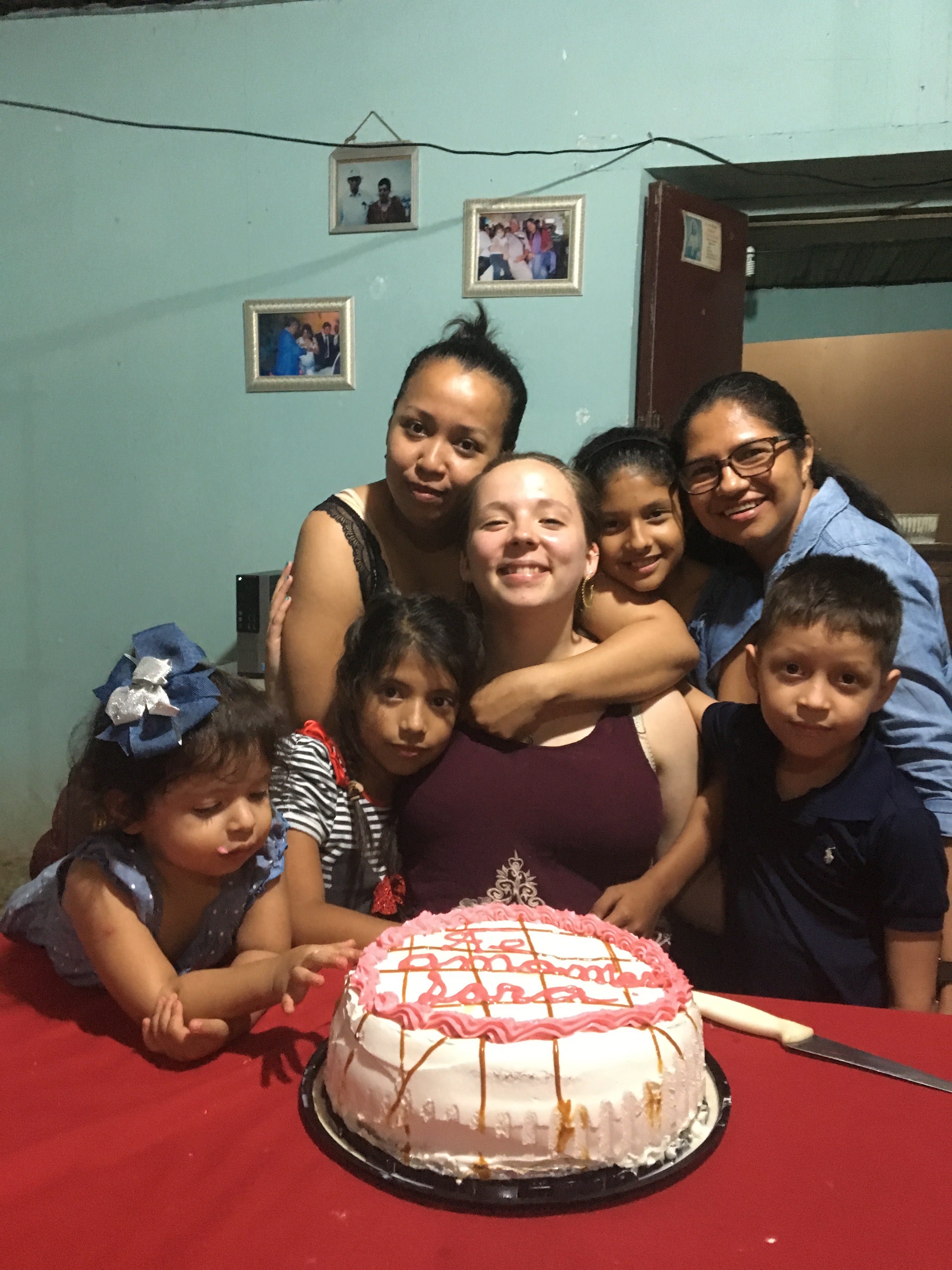
And now comes the real reason that I was so excited to be coming back. My family met me off the bus! When I lived in Honduras in 2016-17, I stayed with a host family – Saida, the mum, Jaime, the dad, and three girls, Daniela, Jamie and Antonella. Antonella was actually born while I was there! Unfortunately the dad Jaime passed away in 2019, just before I came back to visit for the first time, but I’ve remained close to Saida and the girls. I had the loveliest big hug from Saida and I immediately couldn’t believe how big the girls were since I last saw them. Daniela and Jamie are fully teenagers now and Antonella has started school! Mind blowing. They don’t actually live in the same house as they did when I lived there, right on the main square, because they rent it out as a shop now but they’re only one block away and right opposite two of my friends. I introduced Hannah to everyone, we got the grand tour, including meeting the new cat called Sushi, and settled in a little.

For our first evening we went to the pool which is definitely something new, one of the many developments around Candelaria! I would have loved it if this was here before so I could have run some actual swimming lessons (I used to be a swimming teacher and I would teach my host sisters how to swim in the river!). Finca Don Jorge is so cute and definitely would be a good spot when it’s super hot. At this point the sun was going down so it was getting dark and cool but it was still nice to get in the water after being on the dusty bus. Not everyone got in but I enjoyed splashing about with Jamie and teaching Antonella how to blow bubbles and kick her legs. She’s already so confident in the water which is good but it was one of many moments over the next few days that made me wish I was staying much longer. Antonella didn’t remember me from last time because she would only have been about two years old but apparently she was the most excited for me to come, asking when her hermana was getting here… I’m not crying, you are.

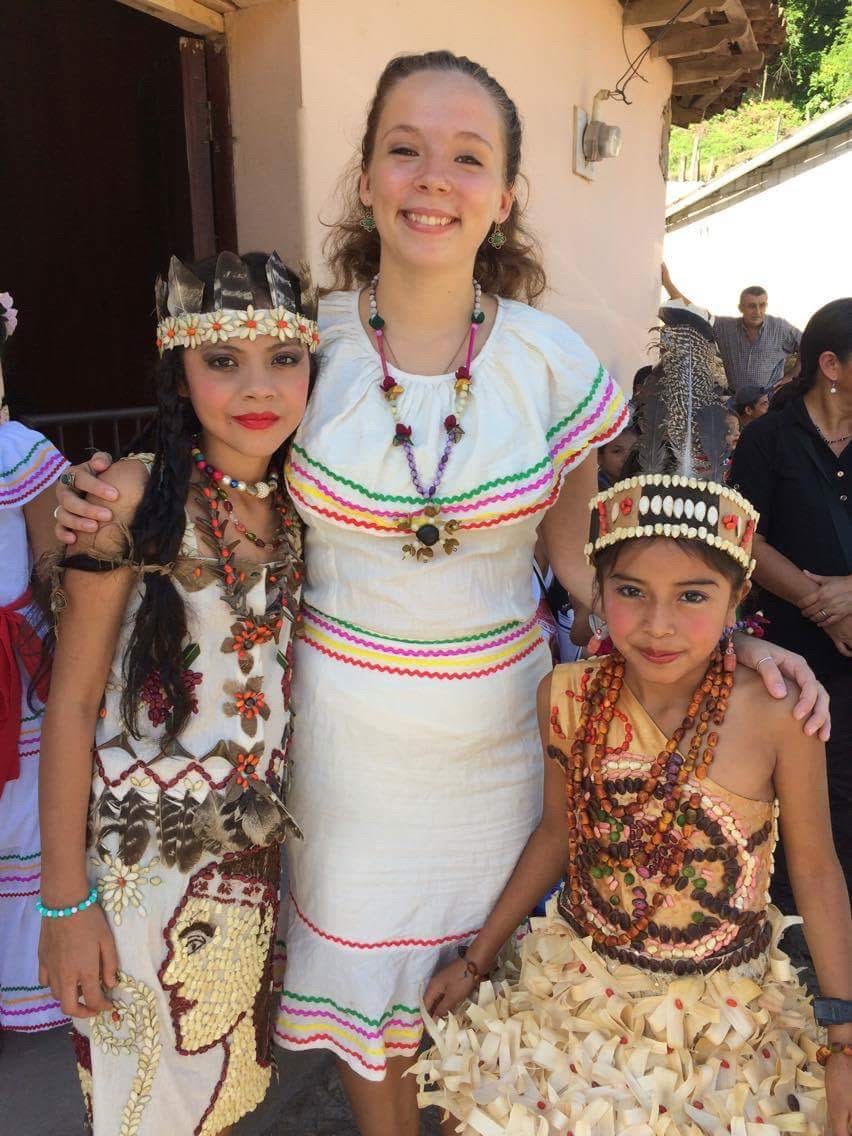
On our second day, we went with Saida to the nearby village of San Lorenzo where she works. They were having their elección de la india bonita , an event that happens just before Lempira Day, a national celebration that would be happening on the final day of our stay. The girls make and wear these incredible dresses using natural materials like beans, seeds, corn, leaves, moss, flowers and more. They have very intricate designs of their town, of Honduras, of national symbols like Lempira or the scarlet macaw. We were helping some of Saida’s students finish their dress and get ready for the presentation which involved braiding a lot of hair! The actual ceremony was really interesting to see, the dresses were absolutely incredible but it was a long afternoon in the hot sun. Hannah, Antonella and I ended up getting a lift back to Candelaria a bit early while Saida stayed on.

We had a chilled evening in the house because everyone was tired after a long day. This was actually one of my favourite evenings though. Over dinner, Saida, Hannah and I had an interesting conversation about various political and social issues which are conversations that I enjoy anyway. This conversation happened in Spanish though so was a bit more challenging. I was very pleased and a bit surprised with how well I’d been able to keep up my Spanish before this trip and how quickly it bounced back even more after arriving in Honduras. Hannah has a pretty good understanding of Spanish but won’t mind me saying that she struggles a bit more with speaking. She absolutely held her own in this discussion though and was participating fully in it. It was so nice for me to see her and Saida getting along and communicating together. After dinner, we helped finish a sign for Lempira Day that involved hot glueing beans to outline letters. While we were doing so, I had a conversation with Daniela, the oldest of the girls, in English. It was simple and short but had full sentences and used the past tense. When I was first here, I taught Daniela English when she was in second and third grade plus some extra bits and pieces in the house. Seeing the progress she’s made and her continued interest in English made me so proud that I was genuinely holding back tears.

The following day was packed full of catching up with as many friends as possible. I’ve already written about the complicated feelings I had after I left about not having made any lasting friendships and this being proved wrong the moment I was back in Candelaria. (While re-reading the blog from my last visit while writing this one, I found that what I had written still resonated a lot and I was very proud of that piece of writing and the reflections in it so it might be interesting for you to have a look at it too if you haven’t already.) It was the exact same this time. From the start of the day until the end I was catching up with people. It started with picking Antonella up from school mid-morning as there were only a few classes in preparation for Lempira Day. It was a bit of a shock that the only students I still knew in the primary school were the sixth graders who I had taught while they were in Kindergarten! A group of them gathered around to talk to me and there were lots of questions about Amy, my project partner (not my twin sister!). Hannah, Antonella and I walked back into the centre of town with our entourage and ended up going to play with them in the park and then being introduced to minutas, like a snow cone topped with flavoured syrup, condensed milk and candy belts.

After a brief air conditioning break in the house (a new but welcome addition since I lived there), we headed out for lunch with my friend Nayely. Her family has a comedor, a typical Honduran restaurant, so we ate there which was absolutely delicious (food pictures are further down)! We were very hot and very full after our pollo frito and tajadas so we went home to chill before I got called out to meet up with another friend, Enedina, for a cold frappé. Hannah was tired so she stayed behind but Saida and Antonella came with us.

The final stop of the day was dinner with Lety and Victor who were like my second host family back in the day. They were the organisers of the project so we spent a lot of time with them and their four kids. Three of them are much more grown up now, including the eldest who is off at university, but Hannah and I got to spend some time with the youngest, Samuel, while waiting for dinner. He was only a toddler when I was here the first time so didn’t really remember me. This time he took us through all 60+ Youtube shorts of something called Skibidi Toilet (if you’re lucky enough not to know what that is, don’t look it up). As painful as it was, it was nice to spend some time with Samuel so that next time he’ll remember me more, the same as with Antonella.

And now for the main event, Día de Lempira! Lempira Day was my favourite national holiday when I was first here, and there are a lot to choose from, so I specifically planned this trip and it’s itinerary around that. Lempira is the national hero in Honduras who led the Lencan people, an indigenous group, against the Spanish in the 1530s. The name comes from two Lencan words that mean ‘señor de la sierra‘ or ‘señor del cerro‘, both meaning ‘lord of the mountain’. Today he is remembered on 20th July every year. The national currency is named after him as well as one of the departments of Honduras (where you’ll find both Gracias and Candelaria).

The first step is the parade! Before that however, everyone has to get ready in their various outfits. My contribution to the morning was plaiting all three girls’ hair plus Saida’s. Hannah and I walked Antonella to the meeting point for the parade, which is a couple of hundred metres shorter than in my day (not that I’m complaining). The whole primary school and high school are part of the parade, dressed up in different styles. There are the indias bonitas, the girls in handmade dresses decorated with beans, corn, flowers and leaves like we had seen in San Lorenzo. There are the caciques, the warriors, the campesinos, the peasants, and those in the traditional folkloric outfits.

The second part of the day is in the main square where there are different kinds of performances and speeches, starting with the national anthem sung by my former students. Next up was traditional dancing, again with my former students, mostly those I taught when they were in fourth and fifth grade (now they’re in eleventh grade!). The final and most important event of the day is the reenactment of the death of Lempira. One student from the high school is chosen to play Lempira (another one of my old students, Josue Maria, was chosen this year!). It is said that Lempira died when he was lured to peace talks with the Spanish who then shot him from horseback in an act of betrayal. There is another telling of events that says he dies in battle and the Spanish cut his head off to prove he was dead but that’s a bit harder to reenact!

After being in the sun for several hours, we went back to the house before going out for lunch with another friend, Karen. We actually ended up back at Nayely’s comedor, today for pollo asado. A common theme throughout my visit was that I wasn’t allowed to pay for anything. It was lovely that all my friends wanted to invite me out but I wanted to contribute to the town and I wasn’t expecting everyone to pay for me. Especially when it came to supporting my friends, like at Nayely’s comedor or buying coffee from Victor (at my dad’s special request), I tried to insist but after a certain point it becomes rude to refuse. Part of the Honduran culture is their generosity, looking after guests and feeding people!

The morning had been a busy one, as had the last few days which caught up to us so we spent the afternoon resting in the house. In the evening, as a last hurrah for our last night, Hannah, Saida, the girls, Saida’s cousin Miriam and I went out to a Mexican restaurant that is also new since I lived here. We had a nice meal and then spent the evening watching a film on a projector in the house. It was a lovely way to wrap up our few days there.

It’s still somewhat of a challenge to put into words how much this little town and its people mean to me. Being back here is like using a time machine – I feel 18 again but at the same time I’m able to see how far I’ve come. And I’m not the only one who has changed. More so this time than the last time I was here, I noticed the differences in the town. In most cases, the changes are positive. There are lots of new businesses and restaurants which is encouraging to see after the economic challenges of the last few years during the pandemic. Coming back to Candelaria feels like coming home and a lot of that is about coming home to my family, particularly my mum Saida. The love I feel for her and from her cannot be described as anything else. The girls are growing up so fast, as are all of my former students, and it is a privilege both to have known them when they were younger and see them transforming now into the strong, independent, intelligent people I always knew they would be. Sharing this experience with Hannah was also really special and I know she saw at least some of what I see in this amazing town and these amazing people. They opened their arms as much to her as they do to me and I’m so grateful for that. Now that I’m in Costa Rica for the foreseeable future, I hope it won’t be four years until my next visit!

Gracias Guide

Gracias is one of my favourite places in Honduras but it could easily slip under the radar behind the more popular and well known Utila or Copán Ruinas. In this guide, I’ll share some of my favourite parts of Gracias and a little bit more about my time there this summer.

A bit of background first, Gracias is the capital of the department of Lempira and was founded in 1536. It is said that the name of the city, which means ‘thank you’ in Spanish, comes from when Spanish explorers arrived through the mountains and exclaimed ‘gracias a Dios, hemos llegado a tierra plana‘ meaning ‘thank God we have arrived at flat land’. A top tourist spot amongst Hondurans, Gracias is home to the highest point in Honduras and also its largest cloud forest.

WHERE TO STAY

Guancascos

It could only be Guancasos! This is as much the attraction to me as anything else in Gracias because it feels like a haven. Not just because it was my home away from home while I lived in Honduras and where I spent a lot of weekends but the hotel itself is blissful. The hotel has its own compound meaning that once you are inside it feels really safe, private and peaceful. There are so many plants and flowers as well which means there’s also lots of birds and other things to see while walking from the restaurant to your room. Another thing I love about Guancascos is that it’s really sustainable and supports the local community. There is an onsite restaurant and bar, breakfast is included in some rooms and they have hot water (not always a given in Central American accommodation!)

WHAT TO DO

Hot Springs

The hot springs are definitely one of the highlights in Gracias. You might think that it’s far too hot in Honduras to go to a hot spring and you would be right, most of the time. This is why they are a popular way to spend an evening. There are a couple around Gracias but the one I like is El Presidente. They are a couple of kilometres out of town but worth the journey so grab a mototaxi from anywhere in town. Mototaxis within Gracias are about 20 lempiras per person (65p) but out to the hot springs it will cost 80L total (£2.65) or 150L at night (£5). It can be hard to find a mototaxi there when you are done so arrange for whoever takes you to come back later.

Entrance to the pools themselves cost 50L (£1.65). Most of the pools are between 36º and 38º and they’re open until 11pm so you can really enjoy the warmth of the water! There’s a little restaurant where you can buy meals or snacks or you can bring your own. We opted to bring some snacks, a bag of lychees for me, and had dinner later. Many Hondurans will wear a t-shirt and shorts into the water and while you can wear whatever you like, you might feel more comfortable doing the same.

Celaque National Park

Celaque National Park is home to Honduras’ highest peak, Cerro Las Minas, but has plenty of hiking for all levels. The park was created in 1987 after a campaign by locals in the town of La Campa, aiming to stop logging that was harming biodiversity. The park has 21% of Honduras’ biodiversity, six of the seven pine species in the country, 256 species of fern and 75 species of moss. There are also 24 plants and 14 animals endemic to Celaque, meaning they aren’t found anywhere else in the world. Celaque means ‘box of water’ in the local indigenous language, Lenca. This could be due to the fact that the park’s nine rivers supply water to 120 villages nearby and the city of Gracias (including Guancascos hotel!).

We paid 120L (£4) entrance fee and arranged for our mototaxi to come back for us at 3pm, when the park closes. I would recommend this unless you want to walk for almost two hours back to town. We were a bit late getting started but the park is open from 8am if you want to spend more time there. There are a few routes you can take in Celaque. There is one that is only an hour long, one that takes you to a waterfall and back in 4-5 hours or the main hike to the highest point in Honduras which takes 12 hours over two days. There are a few off-shoots you can add to the shorter routes as well. We had about four hours but weren’t in a rush to get anywhere so we just started walking until we needed to turn around. We saw lots of cool mushrooms, insects, butterflies and even a cool little lizard.

Fuerte San Cristobal

Fuerte San Cristobal sits above Hotel Guancascos and gives you some gorgeous views over the city and out to Celaque. Admission is about 60 lempiras (£2) and although there isn’t much to see up there other than the tomb of Juan Lindo, former president of both El Salvador and Honduras, it’s still worth the short walk and small entrance fee to see the views across Gracias and over to Celaque.

La Campa Zipline

This isn’t something that I did on my most recent trip to Honduras but I went three times in the year that I lived there and it was one of my favourite experiences. La Campa is a town about an hour away from Gracias where you will find Central America’s most extreme zip line! Thrill seekers, this one’s for you. Six zip lines of 3.6km in total zig zag across a valley 700m deep! This is still one of my favourite things I’ve done in Honduras. The town of La Campa itself is also known for its beautiful Lencan pottery.

WHERE TO EAT AND DRINK

Guancascos

Again I have to start with Guancascos restaurant. Breakfast is included daily with a great desayuno típico, a traditional Honduran breakfast of blended beans, scrambled eggs, plantain and mantequilla (like sour cream) with tortillas on the side of course! Another favourite is the yoghurt and granola bowl piled high with fruit. Their fresh juice never misses, particularly the maracuyá (passion fruit) and you can’t go wrong with the chicken nachos.

Kandil

Kandil is a more modern spot, great for pizza, chicken wings and cocktails. A little pricier than the local comedores but worth it if you want a break from tortillas and frijoles. There’s a really nice atmosphere inside and a new courtyard since I was last there.

Plaza Cafe

The best spot in town for a coffee and some people watching, Plaza Cafe is a kiosk at the centre of the main square. My personal favourite is the granita de cafe, like a sweet, coffee-flavoured slushie. It makes a good place for a break while exploring the centre of the city.

Main Square

While I was in Gracias there was a feria (a cross between a market and a fair) happening in the main square where we stopped for lunch. On the menu: pupusas! These are basically stuffed tortillas, ours with quesillo (cheese) or pollo (chicken) but they are also often filled with beans, chicharrón (fried pork rinds) or loroco (an edible plant found in several Central American countries). They are actually a traditional dish from El Salvador but are often found in the west of Honduras that borders El Salvador. We ate it with a tomato sauce, curtido (fermented cabbage relish) and fresh jamaica (hibiscus) juice.

In the evenings, the main square fills with vendors and food stalls. It’s fair to be wary of places like this in terms of hygiene but it’s also where you’ll get some of the best local food like baleadas, pupusas, tacos flautas, fried chicken and more for pennies!

3 Weeks in Honduras

At this point, you must have been living under a rock not to know about my connection to Honduras. In case you have been, when I was 18 I moved across the world to Honduras, right in the middle of Central America, to volunteer as an English teacher in a rural town in the mountains. If you want to read more about it, you can here, here or here.

Bringing it back to this year, I knew I was going to be finishing my job in France in May, or at least I was going to finish teaching classes in May. However my contract was until August which meant I would get paid until then, including an overtime payment in July. I began thinking about what I wanted to do with what was essentially four months of paid time off and the obvious answer was travel. I joked about going back to Honduras but then I thought about it some more and realised that I actually could! The last time I visited Honduras was in 2019 after being in New York with my family. I only went for a week which was just enough time to have four days back in my project in Candelaria but not much more.

Visiting Candelaria in 2019

A plan started to form in my head, starting with giving myself enough time in Honduras to visit my project and to go back to some of my favourite places in the country. I figured that while I was over that way, I could tick off somewhere else that has been at the top of my list for a long time – Colombia. The more I thought about it, I realised this could also be an opportunity to visit the last country in Central America that I had yet to go to, Panama, which would be perfect as a stop on the way from Honduras to Colombia.

Originally I was planning on going by myself. I feel very at home in Honduras plus I can speak Spanish well and am used to making friends in hostels or just doing things alone. I also don’t like to stop myself from going somewhere just because I don’t have anyone to go with. However, as this plan was starting to come together at Christmas time last year, I was talking to my friend Hannah about it and she invited herself along! I was more than happy to have her. Hannah and I went to university together in Edinburgh but we actually know each other because Hannah was also a volunteer in Honduras in 2016! That meant that the first three weeks of the trip were going to be as special for her as they would be for me and I was glad to have someone to share them with.

In this blog, I’m not necessarily going to be giving specific details about the things we did. There are guides coming for places like Gracias and Utila with recommendations for where to stay, what to do and where to eat. When it comes to my time at home in Candelaria, there will also be a very special blog coming about what it was like to be back there. So without further ado, let me share (a little bit of) those three weeks with you! Buckle up for a bumpy ride (and it’s not just because of the state of Honduran roads!).

2 days travelling UK – Honduras

The journey to get to Honduras was a bit brutal and made me glad that we wouldn’t have to do the return journey for another 10 weeks. We started by popping down from Edinburgh to London which went by in a blink. From there it was onto our flight to Mexico City, long but uneventful. Next we had what felt like the longest five hour layover in the world before the flight to Honduras. It was only 2.5 hours but ended a little unexpectedly! We had started the descent and were pretty close to landing when suddenly the plane started to climb again and we spent another 20 mins circling over San Pedro Sula before attempting to land again. It’s one of the only times I’ve actually been scared in a plane because they didn’t explain it at all so we had no idea what was going on!

We landed in San Pedro Sula, Honduras’ second city after travelling for about 30 hours. We weren’t planning on staying there so after getting a lift from the airport to the bus station from a friend, we were heading to Gracias, a city in the west of Honduras. I have made this journey more times than I can count (albeit seven years ago) and when things go smoothly it should be a four hour journey. But in Honduras things rarely go as planned (a ‘tranquilo‘ attitude is definitely required) and it took us seven hours instead! There was unfortunately an accident just outside San Pedro Sula that resulted in one of the longest traffic jams I have ever seen (that we somehow managed to skip by driving down the wrong but empty side of the road!). More traffic later on and a tropical storm (or at least a very heavy rainstorm) slowed us down a lot so we didn’t arrive at our hotel until 9pm. They were so kind to two very tired and fed up travellers, bringing us fresh juice and bananas because the restaurant was closed and we were too tired to leave in search of food.

3 nights in Gracias

We were so tired that we slept right through the night and might have managed to immediately kick any jet lag. When I lived in Honduras, Gracias was the nearest city to my small mountain town (only 37 miles/60 km but four hours on a bus) so I spent a lot of weekends here with other volunteers and it was a bit of a home away from home (away from home!). Gracias is a popular tourist destination within Honduras because it has a lot to do! There is a fort to visit, hot springs, a beautiful national park and great places to eat. (A Gracias guide is in the works with more information about everything we did!)

We had a very relaxed first proper day in Honduras, doing some of our favourite things from seven years ago. After chilling a bit, we wandered down to Gracias’ main square where they have a statue of Lempira, the national hero who the currency and one of the regions are named after. It was pretty hot, up to 30º, and very humid so we sat down in the kiosk at the centre of the park for a cold drink. There was a feria (a cross between a fair and a market) going on in the main square with lots of stalls so we went for lunch at one. Later in the afternoon we went to the hot springs and ended up at an old favourite, Kandil, for pizza and frozen mojitos for dinner.

For our second full day, we headed to Celaque National Park, just a short mototaxi ride from Gracias. The drive up was incredible but the taxi wouldn’t have made it up the road to the tourist centre so we got dropped at the gate, about 2 km away. We spent a lovely couple of hours wandering leisurely around the trails before heading back to town. After being out all day, we ate in the restaurant at our hotel but this was something that we had both been looking forward to. Guancascos nachos are a thing of dreams!

1 night in Yamaranguila

We were off to somewhere very special next – Yamaranguila, the town where Hannah lived and worked when we both lived in Honduras seven years ago! When we arrived, after about two hours on the bus from Gracias, we did a quick loop of the small town, passing by one of the places she used to live, whilst looking for our hotel. That was until we discovered that it was actually a few kilometres down the road! We took a mototaxi there and were pleasantly surprised by the place, clean, peaceful, surrounded by trees and with lots of birds to see (Hannah was very happy!).

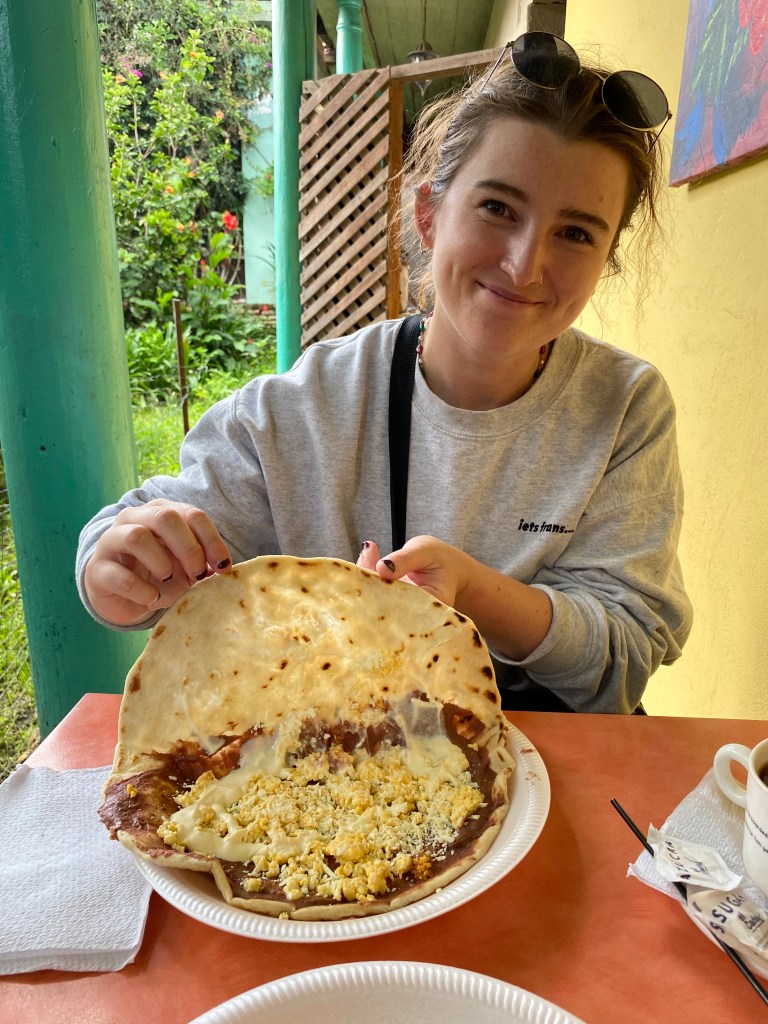
We headed into La Esperanza, the big city just twenty minutes away, in search of food. It was finally baleada time! Baleadas are the national dish in Honduras and absolutely delicious in my opinion. It’s a flour tortilla traditionally filled with refried beans, mantequilla (like sour cream) and crumbled hard cheese, sometimes with scrambled eggs but really you can add anything! We wandered around town a little more including up to a viewpoint over the city and then went back to the hotel.

4 nights in Candelaria

We left Yamaranguila after one night. We were waiting for the bus at the side of the road but also trying to get a lift in the back of somebody’s truck (a very normal practice here) and we ended up getting a lift with two Honduran policemen! They even took us all the way to the bus station!

Our next stop was very special to me. I went back to Candelaria, the town where I lived for a whole year in 2016-17. I got to see my host family, my friends and see how the town has changed (a lot). It’s a pretty small town, about 1000 people, but easy to walk around and see everything in the few days we had here. I was excited to introduce Hannah to my town because while I visited her many times in Yamaranguila, this was her first time in Candelaria.

It really is a bizarre experience to go back to somewhere that means so much to me and see people that I love and miss so much. I had a fabulous four days there, catching up with friends, eating a lot of delicious food (none of which I was allowed to pay for!), celebrating Lempira Day, my favourite holiday, and reflecting on the past seven years. Writing about everything that happened in those few days would make this an immensely long blog so you’ll just have to come back and read more about it in it’s own post!

1 night San Pedro Sula

On our way from Candelaria to our next destination, we stopped in San Pedro for the night to break up the journey. It was about 10 hours to get there but overall, it was a pretty easy journey. We even made it in time to go see a 4pm showing of Barbie which had just come out! We got Chinese food in the mall food court after the film which in itself was a throwback to being 18 because this was a regular activity whenever I was in San Pedro back then.

San Pedro Sula has never been my favourite city. It’s also the one that most people have heard of in regard to Honduras’ dangerous reputation. I don’t think there’s that much to do in San Pedro as a tourist so it’s unlikely that you would spend much time there other than at the beginning or end of a trip or in transit like we were. There are areas of the city that are best avoided, it’s true, but that’s the case if you go to Glasgow or London or any major city in the world. My advice while passing through is to take taxis rather than public buses and stay somewhere trusted. Here I’ll shout out our absolute go to – Hotel Dos Molinos. I have never stayed anywhere else in San Pedro. Blanca and her family make you feel so at home, the perfect start or end to your trip. You can also arrange transfers to the airport or bus station with Blanca.

7 nights in Utila

Our last stop was another very exciting one (although I could say that about all of them!). After a bus from San Pedro Sula to La Ceiba and then a ferry, we arrived in the Caribbean paradise of Utila! Honduras has three islands collectively known as the Islas de la Bahía or the Bay Islands, Utila, Roatán and Guanaja. During my year in Honduras, I visited Utila three times (including once for Christmas with all the other volunteers and once with my mum and twin sister) and Roatán once, when my dad and younger sister were visiting. Utila is known for pretty much two things – scuba diving and partying! My twin sister Amy had actually been working on Utila for the previous five weeks, gathering data for her tropical marine biology masters thesis and leading undergraduate dissertation students in dives. It just so happened that we crossed over! (Or maybe it was planned this way…)

Once again, there is a Utila guide coming so for now I’ll do a little summary of how we spent our whole week there, including a few highlights that won’t be in the guide. We had a very chilled first day, recovering from the two days it had taken to get there. However, in the evening we went along to Amy’s dive centre where she was holding a ceilidh (a traditional Scottish dance) for her students! It was so fun and they picked it up really quickly. It was nice to be able to hang out with Amy at various points during the week. Hannah and I went to visit her, she came down to Underwater Vision and we spent her day off together. We had been able to spend a few days together at home after I moved back from France and while she was up from Essex but before that, the last time we spent any more time together was at Christmas.

The rest of the week was filled with a handful of dives, including a refresher because Hannah hasn’t dived since she was last here in 2017 and I haven’t brushed up on the skills in a while. We were staying and diving at another favourite from seven years ago, Underwater Vision, which is where Hannah and I both initially learnt to dive. Some of the highlights of our dives were seeing lionfish, a stingray, a cow fish, some shrimp, lots of flamingo tongues (a type of sea snail) and a moray eel. From the start of one of the dives, we had a little remora swimming around our legs and it was with me for almost half of the dive. It’s one of the little fish that hangs around a shark but had gotten lost. To be honest, even when you ‘don’t see anything’ (meaning anything bog like a ray or a shark for example) with the coral and the wee fish that live there’s always enough to look at. Utila is on the second largest coral reef in the world which is what makes diving there great! As if the dive wasn’t good enough, we had the most special experience during our surface interval. If the conditions are right, between dives Underwater Vision will take you dolphin spotting! We were lucky to find a school of 15 or 16 rough toothed dolphins (I think) but they were swimming really deep. A few stayed around for longer and were curious about us so they got really close. We were in the water snorkelling with them for about 45 minutes!

Because we were in Utila for a whole week, the longest we stayed anywhere during our whole trip, by the end of our time there we had built a lovely little group of friends. Underwater Vision is a really friendly and welcoming environment so it’s really easy to start talking to people, whether they are staying there too or are just visiting the bar and restaurant. In fact, I got talking to two Irish brothers and somehow we stumbled upon a family connection! Not on my Northern Irish side as you might expect but through my family on Lewis! It turns out their uncle, who I happened to have met in the Uig museum the last time I was in Lewis in 2022, is related to the Morrisons of Geshader (that’s us!). What a small world!

A final highlight that I’ll include here happened on the way back from a night out. Hannah and I stopped at a street stall to get her a baleada and I started talking to the girl making them. I told her that I wanted to learn how to make the tortilla so I could make baleadas at home. She invited me around to the stove to make one myself! She showed me how to flatten it in my hands first which was hard and then using a bit of tin foil. She made it into a baleada and gave it to me for free! I can confirm that baleadas taste even more delicious when you’ve made it yourself.

We got up to so much more during our time on Utila but you’ll have to wait until that blog comes out!

3 nights to get to Panama

And that brings us to the end of our time in Honduras. Utila was our last real stop in Honduras and from there we began our epic journey down to Panama. It took four 10-12 hour days on buses with stops in Tegucigalpa (Honduras), Managua (Nicaragua) and San José (Costa Rica) before arriving in Bocas del Toro, Panama. There will be many blogs about Panama eventually but for now, there’s still a string of Honduras posts to come!

Lessons from Honduras

A few weeks ago I was lying in bed, unable to fall asleep, and I was thinking about Honduras and about China and how one might apply to the other. Honduras was a learning curve in all kinds of ways and there are a few lessons I would like to share that I have found particularly useful in the past few weeks.

First of all, I can do this. I’ve covered this a little in the blogs around the time that I left for China but it was a helpful mantra to help me get over the first hurdle of this year, actually getting here. It won’t make the hard times go away but it definitely helps make them a little easier. It’s something that I know helps my family as well, or at least my mum!

I loved my time in Honduras but that’s not to say that it didn’t come with its difficulties. It could be very easy to only think back to the amazing things I did but I always remind myself that there were bad days too, days when I felt bored or homesick or frustrated. To me, that aspect of the year actually makes the whole experience more worthwhile. Taking the good with the bad, acknowledging the balance, it makes me feel like I achieved more than if the whole year had been easy. The challenges made the good times more enjoyable.

When you’re young, a year away from all your friends and everything you know can feel like the end of the world. A lot can happen in over the course of a year – birthdays, Christmas, holidays. This year alone I’m going to miss Kirsty going through her Highers, Amy finishing her last year of university and graduating, and a million shows, trips, dog walks and family dinners. All these little things add up but for all these experiences that I might be missing, I remind myself that I am making different ones here, ones that I won’t be able to recreate back at home.

For me I have never felt anything but incredibly lucky to have this kind of opportunity, both going to Honduras and also China. I always felt like it was a chance to do something amazing and exciting, and I know that everything I left behind will still be there when I get back. In the grand scheme of things a year does not take up that much of a lifetime and it’s amazing just how fast it can fly by!

Often times thinking about the bigger picture can actually be pretty overwhelming. Become fluent in Chinese, form meaningful friendships, experience all aspects of the culture. Whether these are self-imposed or unavoidable (thanks uni), it is a lot of pressure to put on yourself. There are times, especially in the beginning, when everything that is still to come is too much. In times like that it is a good idea to take joy and take pride in the little things.

Things like understanding something the first time someone says it and not having to say ‘shenme?’ (什么, what?) about three times; ordering successfully in a restaurant without just pointing at the picture in the menu; any time you’ve had a good day, whether that was because you went for a swim, made a friend or just because the weather was nice. Whatever it might be, it’s worth holding on to that feeling.

One of the biggest things I learnt in Honduras was obviously how to speak Spanish. It had been my aim going in to come home with some level of fluency and I feel like I did that. It’s definitely a great achievement but it also comes with a lot of transferable skills. When I was in Honduras, I wasn’t there with the purpose of learning Spanish, it was just a by-product of the environment I was living in. I’ve thought a lot about how I was able to improve my Spanish level and honestly it was mostly how much I was talking to people. For this reason my conversational Spanish is pretty good, if I do say so myself, but my grammar and written Spanish are not as strong.

The advantage of this year is that the whole point is to learn Chinese and all of my efforts can be devoted to that. I can take everything I did in Honduras, plus everything I should have done and combine it into the perfect recipe for fluency. Easier said than done, but I remain hopeful.

Finally, and probably most important to me, is that Honduras taught me I am more than I ever thought I could be. I am stronger and more independent than I knew. I can be both intense and chilled out. I am adventurous, spontaneous and brave. I know just how happy and confident I can be. Knowing all of this is the most valuable thing I learnt from Honduras and I will carry this knowledge with me, not only into this year in China but also into the rest of my life.

Honduras vs. China

Leaving for the other side of the world seems to have become a bit of a pattern with me. It started at 17 and I went to Costa Rica for a month but that clearly wasn’t enough. Once I finished school I took it to the extreme and moved to Honduras to spend a year volunteering with the organisation Project Trust. With those experiences behind me it would be fair to assume I was pretty prepared for moving to China this year right?

WRONG.

Even though I have done this before, the mental preparation felt a little different this time. And to be fair, the situations are more different than they might at first appear.

This year vs. 3 years ago. Look how fresh faced I was!

The anticipation for China was very drawn out while it all happened pretty quickly with Honduras. It went from an idea – hearing about Project Trust for the first time at a school assembly – to a reality – flying away – in just over a year. Meanwhile I have always known I would have a year abroad at university. At first it was just because of the kind of person I am and then because I decided to study languages at uni. I’ve even known I would be going to China since I was 17 so I’ve been waiting to get here for 4 years.

In some ways the long run up was not actually helpful. For so long it was too far away to bother thinking about and there were much more exciting things happening – Honduras and then uni and then BAM! It was time to go! Whereas with Honduras, the year running up to departure was completely devoted to it. I went on Selection, I had to fundraise all year and then go on Training all before even getting to my project.

My project partner, Amy, and I on Training

Expectations are also a big factor in any kind of preparation. I carefully managed my expectations for Honduras. I knew very little about it as a country, not having even heard of it before starting my Project Trust journey and while I learnt the basics during my Training, I tried to keep my mind open and stay away from stereotypes. However I had lots of information when it came to my project. I knew about my host family, the school I would be teaching in, how everything would work. Practically, I was all set but there was still a lot left for me to discover on my own.

With China, things were almost exactly the opposite. I had a lot more information when it came to the country after studying the language at university for two years. Alongside having had to take a Modern East Asian History course, almost all of my tutors were Chinese so I picked up bits and pieces about the culture and life there. In the UK, there is also generally a bit more awareness of China than Honduras as well, though I had to question how much of what I already knew was only stereotypes and preconceived ideas – dangerous things to base anything on.

However when it came to the university I would be attending, Dalian University of Technology (大连理工大学), I knew nothing beyond what the names gives away. We had been given vague information on Chinese universities in general – expect it to be intense, be ready for classes to start at 8am – but especially seeing as Dalian is not an extremely popular choice, there was not much specific information available. I did speak to a 4th year student who had spent her year abroad in Dalian but I was really more interested in what life was like there than what her classes had been like.

Dalian University of Technology (DUT)

Another aspect was that when I went to Honduras I was travelling with a big group so we arrived and experienced the initial culture shock together. For the rest of the year I was part of a pair so everything I encountered was faced side by side with someone who is now one of my best friends. I was pretty much never alone, there was always someone to share my highs with and to support me through the lows. China is a lot more of a solo deal. I’m not the only Edinburgh student in Dalian, or China, but it’s just me in my host family and everyone is spread all over China which is a much bigger place than Honduras!

16/17 Honduras volunteers

One of the hardest things I faced before leaving for China was the feeling that I was leaving everyone and everything behind, way more than when I left for Honduras. I was 18 and had just finished high school, a very pivotal time in my life, and for everyone else my age. We were all starting the next chapter of our lives so everyone was moving on at the same time. Everyone was heading off to something new and different so it wasn’t out of place that I was too – even if I had taken it to a bit of an extreme! It was always going to be a time of change which I think made it easier to adjust.

Meanwhile it felt like I was leaving so much behind me this time. My sisters are both heading into a very important year in their lives, Kirsty her Highers and Amy the final year of her university degree. Of my closest group of friends at uni, only one other is going away on a year abroad so the rest will be living their lives as normal and I am definitely going to feel like I’m missing out a bit. It feels like I’m as much in the middle of a chapter as starting a new one and those feelings are difficult to reconcile.

All looking suspiciously happy at the idea of me leaving…

And finally, this just seemed bigger. My overwhelming feeling about Honduras was excitement, so much so that I was never nervous and not even sad until I said goodbye to everyone at the airport. This time I was nervous. Scared, even.

Despite this, I have one very important thing now that I didn’t when I left for Honduras – the knowledge that I can do this. I obviously hoped and believed I could when I went to Honduras but there is something different about the certainty of previous experience. I’ve done it before, I can do it again. I’ll be fine. That mantra was incredibly reassuring when it all felt a little too much. This is something I love to do, experiencing a new way of life, learning a language, and I have every faith in my ability to make it through this year.

All of these things have made leaving a very different experience, not that that’s a bad thing. Honduras was the only thing I had to compare this to but it will be a different experience entirely. And now I’m here and none of that really matters. All I know is that China has a lot to live up to!

Returning Home to Honduras

I’m back, back, back again! It’s been a long time since I’ve stretched these particular muscles but I have to say I have missed annoying everyone with complaints and dreary day to day movements… ahem I mean cultural insights and inner observations. But anyway, I’m back for one more blog post and one more only! 

As some of you will already be aware I recently returned to Honduras for a whistle stop visit. I was in New York with my family and in my head New York is pretty close to Honduras (news flash: it’s not, it’s still six hours and several flights away) so I thought I had better seize this opportunity lest I have to wait until after university as I had previously thought I would. I was prepared for going back to be an emotional experience in all kinds of ways and it was – it was a very reflective week and gave me a lot to think about which is why I’m back!

Welcomed back to Gracias in style

One of the things I was most excited about was being back with my host family. In the past two years the girls, my host sisters, have grown up a lot, especially Antonella who has gone from a few-month-old baby to a walking, (almost) talking toddler! She obviously had no idea who I was but by the end of my first day back she was already calling me tía, which means aunt in Spanish, which I’ll happily take! Jamie and Daniela had also grown up lots in the few years I’d been away. Jamie was my little shadow while I was there, never letting me go anywhere without her. She is a very nurturing girl and really loves looking after her little sister. Daniela, as ever, is the more independent of the two and this quality has really come out in the past two years. 

Jamie, Antonella and Daniela

As great as it was to be back with family, there was a more mournful side to things. Less than two months before I visited, my host dad Jaime passed away after an extended illness. It has obviously been a very difficult time for everyone, especially my host mum Saida. She has had great support from her family and friends in Candelaria and elsewhere in Honduras, now and throughout his illness but it had been frustrating for me being so far away. There was obviously very little I could do other than tell her I love her and give her my support, but even that felt insufficient as I tried to convey it adequately in Spanish. At the end of the day being back, however briefly, was a little more poignant for me and for Saida after this hard time. Just being able to give her a hug meant so much.

Ice lollies at 9am… why not?

During my visit, however short, I was once again surprised by the generosity around me. This was not something new to me seeing as when I first arrived in Honduras and throughout the whole year everywhere I turned I was met with tremendous generosity and such a warm welcome. Now, back again, I couldn’t walk down the street without meeting a friend that wanted me to come round for coffee or go and get something to eat. An especially heartfelt thank you goes out to Saida, who fed me, put me up in my old room and wouldn’t accept anything from me all week. 

I also spent a lot of time with my friend Karen Yanina, who came running with me and Amy a few times back in the day. Her son Alejandro is also in Jamie’s class at school and good friends with the girls. She has just had a baby as well as having recently opened a clothes tienda and started taking beauty classes in El Salvador. She was kind enough to give me a tshirt so I could rep Honduras once I got home, do my nails for me and come over to Saida’s and make baleadas – my favourite!

With baby Luna Jazmín

Of course I also spent some time with my other family in Candelaria, Lety and Victor’s family, who in my year were the organisers of the project. From the year after me, they have also been the host family for the next generations of Project Trust volunteers. Unfortunately this year’s volunteer was on a visa run while I was visiting so I didn’t get to meet her. One of the first nights I was in Candelaria, the evangelical church that Lety and Victor belong to was having a special service in the town square with some guest speakers and musician. While I’m not religious, I went along with Karen who is also a member, as church was always a good way to practice my Spanish and I especially enjoy the enthusiasm and music that accompanies any service in the evangelical church. I also obviously couldn’t leave Candelaria without procuring, as per my dad’s request, some specialty Honduran coffee from Victor’s dad’s coffee finca

Mi segunda familia

Unfortunately I arrived on the last day of school before the Easter holidays and after the end of the school day so I wasn’t able to go into the primary school and see all of my students again but I ran into many of them all across town, at church or while out playing with the girls. Even though I was occasionally faced with a kid who couldn’t remember exactly which gringa I was, most of them immediately knew who I was followed by a chorus of voices asking where Amy was! I assured them she’d be back as soon as possible, we’ve even talked about coming back together once we both graduate from university in another two years. 

It amazed me how quickly I fell back into old habits once I arrived in Honduras. From the second I landed everything felt familiar, from the oppressive heat and humidity, to being surrounded by Spanish, to the smell of frijoles wafting through the air. Some things came back to me almost immediately – my Spanish for one. This is unsurprising seeing as it had gotten to a high enough level during the year I spent speaking it every day that I can call it back very easily, even if I haven’t spoken it in a while. What did surprise me though was how quickly I fell back into the Honduran way of speaking, not just slang but also the way sentences are phrased and the gestures and body language that accompanied speaking. Eating using my hands and tortilla more than the actual utensils was also an easy enough habit to reclaim, though I have to say, getting used to putting toilet paper in the bin instead of flushing it took a little longer to get used to again!

In the time since I have left Honduras I have often been quite hard on myself, quite critical of my time there. I felt like I could have done more, had more of an impact, made more of the time I had. This visit was able to assuage a lot of those feelings. While I knew I had come away from Honduras with a new family or two, I sometimes questioned if I’d actually made any lasting friends. I said before that every time I was out of the house I would bump into someone I knew and have a chat if not a cup of cafe, proving these worries wrong. I visited my friend Enedina, who lives on the edge of town and who Amy and I made soup with in the early days of our year. I caught up with Eric, the boyfriend of a volunteer from the year before me over a cool bottle of Fresca. I got my hair cut (quite drastically!) by Edwin, the only fluent English speaker in the village, for the bargain price of 50 lempira (less than £2). I bumped into a number of teachers from the kinder, escuela, or colegio on the streets and chatted with friends in comedores, on the football pitch or even the town radio and had others messaging me, even if I wasn’t able to see them. It was incredibly heart-warming to return to a place I consider home with such a welcome. 

Another thing I questioned was whether I had actually made a difference. I want to be careful here not to stray into any sense of saviourism, expecting to change and improve an entire town or culture in one year at 18 years old. That is never what I wanted or expected to do. But as a teacher I at the very least wanted to be able to pass on some new skills and knowledge to my students. There were definitely days while I was still in Honduras that it all felt futile – second grade just wouldn’t sit still, fifth grade wouldn’t stop talking, sixth grade were out of class for the second time that week and no one could remember the same thing we’d been learning for the past month! But there were not as many of these bad days as there were good ones. It was encouraging, two years down the line, to see the kids more confident when I asked them about what they had been learning or quizzed them on some things that I had taught them. Language learning is, after all, an ongoing process and while they may not remember every word I taught them while I was their English teacher, I might just have laid the foundation for lifelong learning, just as I’d hoped. 

In this same vein, it is so great to see the project in Candelaria transforming into something hopefully more long term, as it welcomes its fifth year of Project Trust volunteers after the summer. Amy and I were only the second year of volunteers and thus felt the burden and responsibility, mostly self-imposed, of ensuring the PT volunteers had a good reputation and presence so that this could become something sustainable as we so desperately hoped. At times this felt limiting as we were more reserved, less political, less involved at times than we might otherwise have been. However on returning and seeing the project still running, and hearing about the positive place volunteers now have in the community and how involved and assimilated they have become, I feel like it might just have been worth it. 

Views of the town square

While some worries of mine have been put to rest after returning to Honduras and Candelaria, I have come to accept others. Sometimes I felt like I should have done more with my time in my town, gone out more, gotten more involved, and so on but after returning I found I had forgotten one very important thing – its bloody hot! I was drinking litres and litres of water every day and was still exhausted just from wandering around town. The sun beats down from about 8 in the morning until at least 3 or 4 in the afternoon, depending if it’s the wet or dry season. And I wasn’t just teaching in that heat during my year, I was doing it in jeans! I understand how most days I wanted to spend my afternoons having a nap until it was a little cooler or sheltering from the high temperatures by sitting in front of the fan. I would never use the word regret when talking about any aspect of my year in Honduras, apart from the fact that it couldn’t have been longer, and I think I need to go a bit easier on myself with a lot of these things.

There is a difference, however, in giving myself a break and looking back with rose tinted glasses. As much as I loved my time in Honduras and wouldn’t change it, I have always made sure to remember the bad with the good, not that there was much, just to make sure I am remembering things realistically. Being back did sharply remind me that I didn’t enjoy every single moment of the year. There were times when I was ill, times when I was homesick (usually the same time), times when me and Amy argued (we lived together for a year though, can you blame us?), times when I felt frustrated with the work we were doing and times when it all just felt a bit too overwhelming. However, you have to take the bad with the good and without it I wouldn’t have had the same experience, taken away the same things or appreciated the good times as much. 

I managed to achieve some tremendous things in the year I spent there. Not only did I gain a home and a family on the other side of the world, I made lifelong friends in the form of the other volunteers, some of whom are still my best friends. I lived away from home for a year, without seeing my family for most of that time, showing myself I can handle things on my own. I overcame challenges such as hospital trips and rowdy children. I became fluent in a language that I still love to speak. I curated a blog which provides a powerful look back on to so many aspects of my year, for me and for others. I became a teacher and experienced everything that comes along with it. I cherish all of these things and endlessly appreciate the fact that I had the opportunity to achieve them. If you are one of the many kind people who supported me in any way to get me there in the first place, thank you again. You’ve no idea what you helped me do. 

From One Person to Another

I feel like I’ve always struggled between being the person I am, the person I think I should be and the person I want to be. I was never really happy with the person I was until returning from a volunteering trip in Costa Rica when I was 17. After that I felt I wasn’t quite who I wanted to be, but as if that person was in sight, reachable. I had caught a glimpse of the kind of life that I wanted and the kind of me that I could be in that life.

On returning to school, I felt restless. All of a sudden I knew what I wanted to be doing and it wasn’t being stuck in a classroom in dreary Scotland. I struggled to keep myself settled throughout the year and keep my patience with those around me who, I felt anyway, didn’t understand what I was going through. 

At this point I had already applied and been selected for a year in Honduras with Project Trust and, quite honestly, I just felt like I was wasting time until I could get away again. With the exam results I needed in my back pocket, I focused all my energy on fundraising. I jumped at the chance to go to any Project Trust event and whenever I was there, with other Project Trust people, I felt completely at ease. It was the most like myself I had felt since leaving Costa Rica. 

Honduras drew closer and closer and eventually I was right on the verge of leaving. One last trip to Coll to Project Trust headquarters for our training and then I would be off. Meeting all of the volunteers for the first time felt like meeting up with a group of friends. I don’t think I’ve ever heard a phrase used so often but ‘like minded people’ really is the best way to describe the connection I felt with the rest of my group. It takes a certain calibre of person to decide to move across the world to embark on a year of teaching with very little preparation or training and at only 18 years old! It is this part of us that was attracted to the each other when we met, even if we were different in other ways. Around these people, I didn’t have to think about how I acted or care about what they thought of me. I was able to just be me.

It goes without saying that I have gained an inordinate amount from my time spent in Honduras working as an English teacher. Some things are hard to measure, like the confidence I now have in myself and my abilities and the view I have of the world, but others, like the skills I have gained from being in the classroom and my language acquisition, are very tangible. 

As with any job, there are myriad skills to be gained from the experience and a year with Project Trust is no different. After a year of doing nothing else, I am obviously considerably more comfortable standing in front of a class and teaching and my ever present organisation has been put to good use but I have also developed others skills that have not been so strong in the past. Tolerance has definitely been key at various moments throughout the year, sometimes with my pupils if they won’t stay quiet or focus on the task at hand but also with myself, when the limits of my language or previous experience as a teacher restricted my ability to deliver an effective class. My people skills, while not necessarily lacking when I left for Honduras, have been enhanced by not only having to deal with people in a different language but also with different social cues and expectations. 

One of the more unexpected but most significant areas I have developed has been in my adaptability. Before Honduras, I would let small issues stress me out and everything had to be on time, arranged in advance and I had to know everything that was going on. After living the chaotic lifestyle that is Honduran to the core, I have learnt to adapt a more tranquila attitude. Things happen when and how they happen and there’s not much you can do to change that so why worry about it? This has been somewhat hard to translate into life back in the UK but I’m trying.

Spanish was a crucial part of my decision to spend my gap year in Latin America. My aspirations to become near fluent had an effect on my university decision as well – I chose to study French with Chinese instead of Spanish – so it was important to me that I learnt as much as possible. Language is an integral part of any culture so not only have I improved an invaluable skill, it has also enhanced my understanding of the people and the way of thinking of a vibrant country and region of contrasts. 

There is so much more than this however. The understanding of Honduras that I have achieved after living there for a year is the the kind of understanding that can only be attained with this kind of total immersion in a place. This has exposed me to the thoughts and motivations behind a clearly different style of life to my own, which is something that most people, even those who have travelled widely, may not ever get to see. Understanding a culture means understanding its language, its history, its landscape, its people and so much more. 

Meeting so many people from across the globe while travelling has also shown me there are so many options in life. There is not one set path – life does not have to be school, university, then work. I have seen the many paths you can take and working in the role I have has confirmed the path that I want to take. In my head, my future has always held travel. As this thought grew to become more realistic ideas for a career path, I expanded on that to three criteria: I wanted to travel; I wanted to learn foreign languages and use them; and I wanted to do something to help other people. My trip to Costa Rica introduced me to the idea of working for overseas organisations but it was still vague at best. I now know that I do want to work in this field with charities and NGOs, specifically with education, social development and women’s empowerment. 

As I have said, I have always felt caught between the different versions of me that there are and could be. If Costa Rica opened the doors for me to become the person I wanted to, Honduras had me stepping through those doors. It amazes me how much my self confidence has grown in just a year and with all the changes I have faced I feel more ‘me’ than someone else. It’s like I’ve always been this person but she just needed the right opportunity to come out. I used to feel very self conscious, something not a lot of people might have realised because I was quite good at pretending I didn’t care what anybody else thought of me. Now I actually don’t – I realise how many different types of people there are, either in appearance or personality, beliefs or ambitions, and that all of these should be celebrated. 

Coming home was the hardest part of the year by far. I can see the difference in myself after this year and leaving behind the place responsible for all this positive change pulled at something inside of me. The other volunteers that I had spent the year with had become my family and have been big influences on me. Saying goodbye to my Project Trust family was hard because I was worried that I would be saying goodbye to all the ways I’ve grown this year and I don’t want to. Moving backwards makes it very hard to move forwards. Fortunately this doesn’t seem to have happened, so far anyway, and I’m hanging on tight to make sure it never does!

Being back in Dunblane has been strange. It doesn’t make sense to my mind that I’m back where I was a year ago after having everything be new and exciting. I feel like I’m 17 again and still figuring out who I am and who I want to be. Now I feel like I have that at least partly figured out, being back in Dunblane is making it very hard to reconcile the two feelings. I know I don’t want to go back to how I was before but I feel like Dunblane sits on the new parts of me, the more outgoing, relaxed, adventurous parts and says ‘Sorry, there’s no room for that here’. It’s suffocating and I have been eagerly watching the clock counting me down until I move to Edinburgh for my next adventure. Dunblane will always be my home but I’m not sure I fit here anymore, or that I necessarily ever did.

As I sit on the cusp of my next adventure, it may feel like my Project Trust adventure is over but that is definitely not true. I will not, and cannot, let go of something that has given me so much without giving at least a little in return. Project Trust has done so much for me that I will never be able to adequately put into words and I know that a large part of what is to come will be a result of the experiences I have had throughout my year in Honduras. I want to thank them in a million ways for the effect they have had on me but nothing seems enough. Thank you for this opportunity, thank you for my life-long friends, thank you for giving me a family on the other side of the world, thank you for bringing me out of myself and into the world. Thank you. 

¡Hasta Luego Project Trust!

Don’t worry I’m still here! I have been back in Scotland for a month now and it seems like my time has been split between wishing I was back in Honduras and pretending I am by doing a PT road trip to see Amy in Surrey, Jesse in London and Lucy in Edinburgh. 

Project Trust Debriefing 2017

The last step of the Project Trust journey, after the inevitable, crippling reverse culture shock, is Debriefing. It’s our last chance to get up to Coll and spend a few days surrounded by the only people that are still willing to listen to gap year story after gap year story. It’s not a compulsory course like Training but out of our 20 Honduras volunteers we managed to get 16 of us there – Hannah, Eve, Alice and Norome, you were missed. We were reunited with some of the volunteers we were on Training with who went to Zambia and also had Malawi, Japan and the Domincan Republic volunteers with us. Because we have such a large group, even with our missing members, we made up more than half of the total number!

I took the train up to Oban for the first time, having had a lift and then taken the bus for my previous journeys, and it was incredibly beautiful. There was a big group of us on the train and we were reunited with everyone else in the beloved Backpackers Plus hostel. 

We had two full days back in the Hebridean Centre. The first day was based primarily on looking back on the year we spent overseas. We worked in our country groups with our Overseas Coordinator to look back on our best bits and the challenges we overcame while away. We ended the day with a trip to the gorgeous beach (only gorgeous because it was so sunny!).

Yes. This is Scotland.

Day two focused more on looking forward to how we, as returned volunteers, can stay involved in the PT community. The sense that you get as part of one of Project Trust’s many groups of volunteers is very much one of family. These people that you have been sent away to the other side of the world with you quickly become your family but on coming home it’s like meeting all the extended aunts and uncles and cousins that are all there for you. Just like in Honduras, everyone is related! There are Facebook groups and reunions and local meet ups and professional opportunities all to be found among the 7,700 and something returned volunteers, dating all the way back to 1967!

The legend that is Peter Wilson PT and some of the Honduras gals

It has been almost a week since the ‘official’ end of my year overseas but definitely not the end of my involvement. Project Trust are always looking for people to go into schools and talk to pupils about their experiences, inspire the next generation of teachers and social care workers and adventurers for them to send all over the world. With Global Citizenship being such a large part of going overseas with Project Trust, returned volunteers also go out to schools and run workshops on this in primary and secondary schools. With the experience I have of this from my fundraising, I think if I hadn’t signed up I would have been chased from Coll and told never to return! Finally, as part of a new scheme, you can become a mentor to a volunteer who is in the process of fundraising for their year abroad – you can share your top tips and secret strategies as well as all your best stories (probably best to keep the bad ones under wraps to begin with!).

As ever, no Project Trust course or visit to Coll would be complete without a ceilidh to finish things off in style! What with there being two Latin American countries in attendance, traditional Scottish dancing soon morphed into a reggaeton/bachata party!

Project Trust tradition states that windows MUST be drawn on

Leaving Coll the next morning was a sad affair, though I hope to be back next year as summer staff. Once again, the train back down to Glasgow was filled with PT people. Amy stayed one more night at my house before flying back down to Surrey. This was our final goodbye for the summer, after having seen each other three or four times since getting home. I know it won’t be that last goodbye however, as we already have plans for a trip to Prague at Christmas with Jesse and Lucy and Amy is coming up to Edinburgh for a rugby match in February.

Best partner ever

As for the rest of my Honduran lot, there were a few goodbyes in Oban and some more when we got off the train in Glasgow. A few people stuck around in Edinburgh for a few days and we had one last night out together before we all went our separate ways.  However, apparently there’s already a reunion in the works and I’ll be at uni with Hannah and Eva in Edinburgh, with a lot of people not far away in the likes of Glasgow and Aberdeen.

Coll is such special place because of all it embodies. It is an integral part of any volunteer’s Project Trust journey. It is there for you on Selection when everything is filled with excitement and you can’t wait to get started. It is there on Training when you are are wondering what you’ve gotten yourself into. It is there to welcome you home on Debriefing, showing you that it’s not all bad to be back. It encompasses the heart of Project Trust and all the people you meet along the way, from the staff to the other volunteers even to the people you meet in your project. Coll is a place I love and will always love for I will forever associate it with the best year of my life. 

Project Trust Honduras volunteers 16/17