Working in La Tortuga Hostel

In my last blog I covered how I used Workaway to find a hostel in Tenerife where I spent just under two months volunteering. In this blog I’m going to take you through what that was like, what a normal day looked involved and just generally the reality of working in a hostel. Overall I had a great experience so a lot of what is to come will be positive. However I will be honest about some of the challenges and the more difficult aspects of it as well.

La Tortuga Hostel

First let me introduce you to my lovely hostel, La Tortuga, located in the south of Tenerife in an area called Costa Adeje. In this area saturated by classic Brits abroad and all inclusive resorts, La Tortuga is a bohemian haven. La Tortuga has a laid back vibe, not a party hostel by any means but a very sociable place to stay. The overwhelming majority of guests are solo travellers which results in a lovely atmosphere where everyone is open to talking to each other and becoming friends. In the evening you often find people making plans for the next day with people they didn’t know twenty minutes before. This includes volunteers who are very much a part of this ever evolving community in the hostel. That’s what it feels like to stay in La Tortuga and is very much an aim of the managers and all the staff, for all guests to feel like they are being welcomed into a new family.

With four dormitories and ten private rooms, the total occupancy of the hostel is about 35 guests with 8 volunteers. There are also two full time receptionists and the two managers of the hostel who are all instrumental in keeping things running smoothly. The hostel is actually spread over three houses: the main house (known as Tortuga 1 or T1) with the reception, the principal socialising areas, a kitchen, most of the dorms, a shared bathroom and shared toilet and the housing for volunteers; the secondary house (T2), a mirror image of the main house but quieter and more tranquil with mostly private rooms; and the third house (T3) that has three private rooms and it’s own kitchen and terrace. T3 is the top floor of the building on the main street whereas T1 and T2 are tucked behind so it has a feeling of privacy and seclusion. The hostel’s location is in a more residential part of Costa Adeje, removed from the many large hotels and all inclusive resorts that are common in the town, but only a short walk from supermarkets, restaurants and most importantly the beach. If you want to go further afield there are also bus stops in the immediate vicinity.

Something unique about the hostel was that it had a Whatsapp group that all guests could join and that volunteers were part of as well. I think this was a really nice touch that allowed the hostel to have a real sense of community. It was a great way for people to find others to go to dinner with or open up their plans to more people. That is how a lot of the volunteers would fill their free days. If we weren’t working we were free to do whatever we wanted so lots of people, myself included, would go out and explore with guests. I had a very useful habit of making friends with people who had hired cars, allowing me to tag along on adventures across the island! Even on the days we were working, we would still have most of the afternoon and the evening to ourselves so we might arrange an afternoon trip to the beach (although there were also a lot of days when all I did in the afternoon was take a nap and chill around the hostel!).

It was also possible to arrange a wide range of activities through the hostel. Volunteers got a slight discount on these so I took full advantage! I learnt to scuba dive in Honduras but haven’t done it in the five years since. The price of diving in Tenerife, or at least through La Tortuga, was so ridiculously cheap that I did several over my time there. It was great to get back under the water and it all came rushing back to me. I got to see some incredible things, highlights being two rare angel sharks, one dive with so many turtles that wouldn’t leave us alone and came right up to us and even a few dolphins while on the dive boat! There were also things like paragliding (done!), kayaking, turtle and dolphin trips, tours of the island including to Mount Teide and stargazing. Particularly popular are the surf lessons. La Tortuga actually works closely with a surf school in nearby Las Americas called SurfLife. If someone booking onto a surf camp with SurfLife was looking for somewhere to stay, they would recommend La Tortuga. Sometimes it felt like the hostel was filled with people doing surf camps! From what I’ve heard (as someone who has taken two surf lessons in her life and stood up maybe three times) the surfing in Tenerife can be a bit of a mixed bag. It’s not a bad place to learn to surf but at least during the summer the waves are a bit small for more advanced surfers. Apparently the waves are a bit bigger and better in the winter.

A Day in the Life

Now to share with you what a typical working day would look like. As you’ll see that might involve cleaning or working on reception or even leading groups to a flamenco bar or sunset at the beach. I’m not going to go into too much detail about what I got up to in my time off as we would be here for hours! There will be plenty more blogs all about the places I explored, the things I did and what I would recommend so for now I’m focusing on the volunteering side of things.

Cleaning

In La Tortuga volunteers work 4 days a week, between four and six hours per shift depending on the amount of work. There would be three volunteers working each day. A cleaning shift starts at 8.45am so I would usually get up between 8am and 8.30am. At the beginning I would get up more last minute and just start working but towards the end I actually enjoyed getting up even earlier to enjoy the peace and quiet around the hostel. It obviously depended on how tired I was but the coolness of the air and the tranquillity of the common areas before everyone else woke up were rare so I tried to enjoy them. There was no uniform for volunteers so I would usually wear a pair of shorts with a sports t-shirt (it might have been cool when we started but changing beds is sweaty work!) and either trainers or Birkenstock sandals.

Papped while halfway through a very busy shift

From 8.45am to 9am the priority is getting breakfast out. I say breakfast but it’s really more of a tea and coffee spread. The hostel used to provide a more complete breakfast including things like pancakes but stopped due to covid. I believe it might be making a comeback in the next few months though! For now, we just had to make a couple of types of coffee and set that out with milk and sugar, tea, mugs and a few little cakes that we provided. This was free for all guests as well as volunteers and the leftovers would be available for free in the kitchen later in the day. Anyone could make their own free coffee and tea at any time of the day as well.

After breakfast was out we would start on the common areas. Check out was at 11am so we couldn’t start going into any bedrooms until then. In the meantime we would clean the shared bathrooms, living and dining spaces and the terrace outside. There were 3 volunteers working together so one person would go to T2 and knock that out while the other two stayed in T1. T1 was generally busier in the morning so it took a little longer to clean around everyone hence why two people stayed there. They would also keep an eye on breakfast and refill anything that needed it. This usually took until around 10.30am at which point we would have a wee break for some breakfast. I might have had something quick like a granola bar or a yoghurt before we started and a coffee and a piece of cake while putting breakfast out but this was the chance for something a bit more substantial. Often I would make a cheese and ham toastie from the food provided for volunteers (shoutout to my beloved sandwichito as we would call them!) or sometimes some eggs.

After check out at 11am our lovely, all-knowing receptionists would give us a list of the rooms that needed cleaned, whether that be because someone was checking out, someone had been there for three or four days already (at which point we refreshed the sheets) or it was a dorm room that just needed a once over. The work would be split up between the three people working and then we would just get on with it. We were allowed to wear headphones while working so I would usually put in a podcast and get my head down. Whoever was working primarily in T1 was also in charge of keeping the washing machines going because as I’m sure you can imagine there was always a mountain of dirty sheets needing to be washed. Depending on the day there might also be some extras like cleaning out the communal fridges, doing the windows or a little bit of gardening. If I or someone else finished before the others then we would all muck in to get the work done.

An example of a dorm room

Depending on how much work there was on any given day, we could finish between 1pm and 3pm although it was usually somewhere around 2pm or 2.30pm. The end of the shift was quickly followed by lunch. I’ll talk more about how food and meals worked in the hostel another blog post but basically someone who wasn’t working would make lunch. If everyone not working had gone out to the beach or elsewhere, we would just throw something together ourselves. Once we finished the work of the day we were free to do whatever we wanted!

Reception

While Workaway volunteers at La Tortuga primarily handled the cleaning of the hostel, some are also trained up to work on reception and cover a handful of evening shifts throughout the week. Anyone that spoke Spanish and English well (other languages a bonus) was a candidate for reception training. It was more optional though as there were volunteers at the same time as me who had the language skills but didn’t particularly want to work on reception and that was fine. For me, it’s something that I was keen to get trained up on. I like the people facing jobs, I like talking to people (preferably in a different language), I like solving problems for people and being helpful. On reception you are often the first person new guests meet at the hostel and being the face of that first impression is no small responsibility.

Volunteers are only ever charged with the evening shift, from 5.30pm to 11.30pm when reception closes, as it is much quieter than the morning shift. There is a list of things to go through, such as finishing any laundry from the cleaning shift in the morning, checking the details of the bookings made in the past few days and the arrivals in the next few days, turning lights on as it gets dark, giving the kitchen a quick clean, taking the bins out, feeding the cats and more. You might also have check ins which includes giving them a tour of the hostel. Keeping an eye on the emails is very important so that you catch when new bookings come in. Crucially, do not overbook the hostel! When a booking comes in on one platform like Hostelworld, it doesn’t just need to be logged in the hostel’s own system but blocked off on the other platforms like Booking.com. On my first solo shift, that was the one thing I needed to do, or not do as that case may be, and guess what I did? Overbooked the hostel. But with some help from Pasqui, the manager, the crisis was averted and you can be sure l never did it again!

By the end of my time at La Tortuga I was averaging two cleaning shifts and two reception shifts a week which I liked as a combo. The cleaning shifts were more physically demanding, a lot of running back and forth, up and down the stairs, and if you’ve ever put a fitted sheet on a top bunk, you know you break a sweat! In comparison, the reception shift always left my brain feeling a little frazzled. There was a lot more that you had to be on top of at all times but weirdly combined with stretches of boredom when things were quiet. Finishing at 11.30pm added to the tiredness at the end of it. Having the mixture kept things interesting for me and also means that some days I got afternoons off and some days mornings.

Extras

In addition to cleaning and reception for some, volunteers had some additional responsibilities. The hostel has several organised activities, like an in house yoga class, a group outing to a bar for live flamenco music or a trip to a beach to watch a sunset. Each week one volunteer would be tasked with leading the trip to the flamenco bar and the beach for sunset in the place of a regular shift. In the same vein, someone would be put in charge of watering the grass and general gardening for the week, also in place of a normal shift.
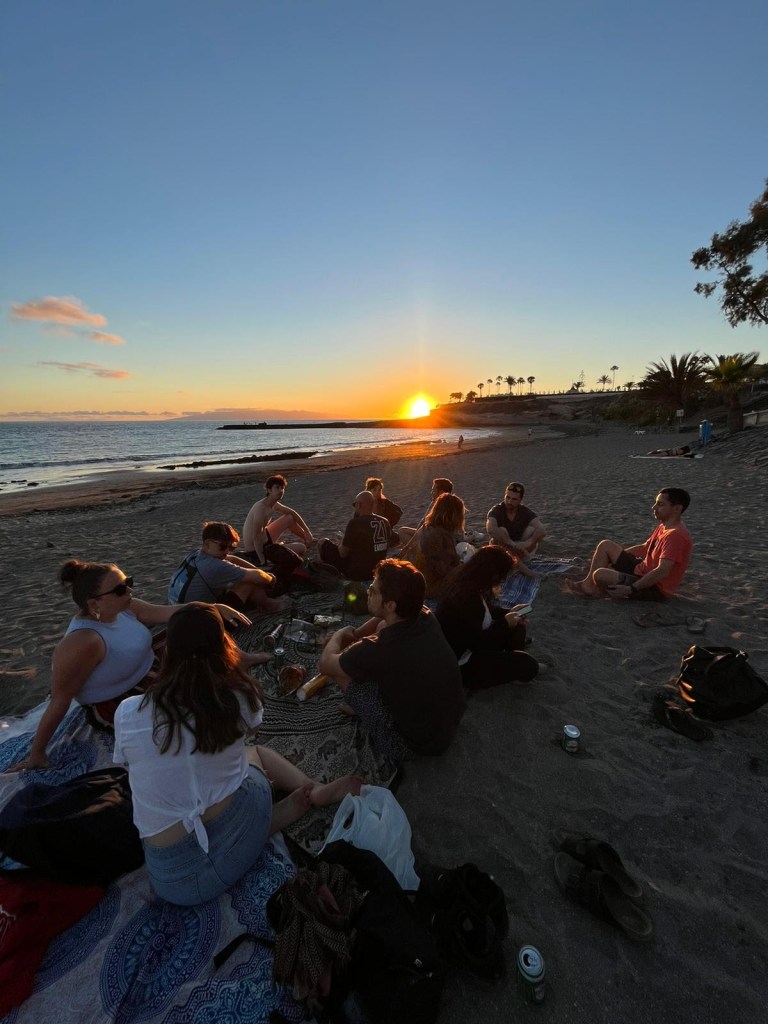
Sunset at Fañabé beach

On top of those more formal duties, there are certain unofficial things that volunteers are expected to do as well. These are just things like nurturing the friendly, welcoming environment around the place and chatting to new and old guests alike. If there was ever a face we didn’t know, that was a sign to strike up a conversation. It was so easy to get to know people really quickly in La Tortuga, it was a bit of a magnet for really sound people, and in a matter of days you might feel like you’ve known that person for much longer. However, as a new person coming into a situation like that, it can be a bit intimidating unless those already included reach out a hand to pull you in as well. Everyone was welcome in this family of tortugeños (the affectionate term for anyone at La Tortuga), no matter their age or where they came from or anything else, and a large part of that responsibility fell to volunteers. This was actually potentially one of the more difficult aspects to the job. Despite being someone who enjoys talking to new people, especially in places like La Tortuga, when this is essentially part of your job it gets a little tiring at times. Everybody has days when they don’t want to speak to anyone, whether it’s because you’re tired, hungover, on your period or just not in the mood.

The Other Volunteers

I was lucky to be surrounded by an incredible group of people for the seven weeks that La Tortuga was my home. In fact, I don’t think it actually was luck. I think they are very good at picking who they want to volunteer and in doing this carefully, they curate a group of people who are not only hard working and willing go the extra mile but also who are almost predisposed to get on with each other. We often joked that time doesn’t exist in La Tortuga, there is no concept of days passing, which means sometimes it all blends into one a little but also means that the forming of relationships are massively accelerated. People come and go throughout your time there, guests and volunteers alike, and there were a few volunteers who left within the first week after I arrived. In just a short amount of time I felt like I got to know these people really well.

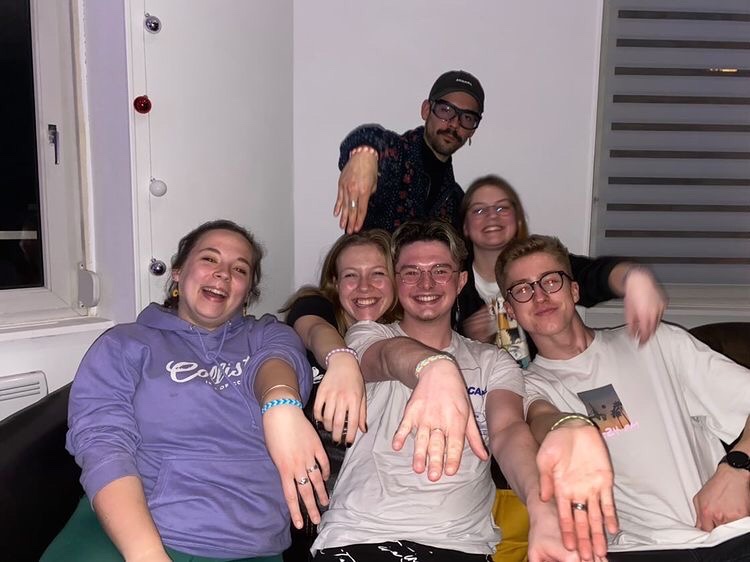
As I settled in more, there was a core group of volunteers that were more or less the same for about three weeks. When I think of my time in La Tortuga, those are the people that I think of. There were people from different sides of the world, four people from Latin America and four from Europe, bringing a mix of languages, cultures and experiences together. We shared dishes from our own countries for each other (like moussaka from Greece or great barbequed meat from Brazil), we shared music with each other (500 Miles by The Proclaimers was put on anytime the Spotify queue got passed around and my new favourite band is Oques Grasses who are Catalan), and we shared ourselves with each other. In this way it reminded me a lot of the relationships that formed very quickly between myself and the other Project Trust volunteers I went to Honduras with. Sharing a unique experience brings people much closer much faster than normal. I know that some of the people I volunteered beside will be friends for life. In fact, I’ve already met up with one of them who happened to come to Edinburgh right after leaving Tenerife, just a few weeks after I got home!

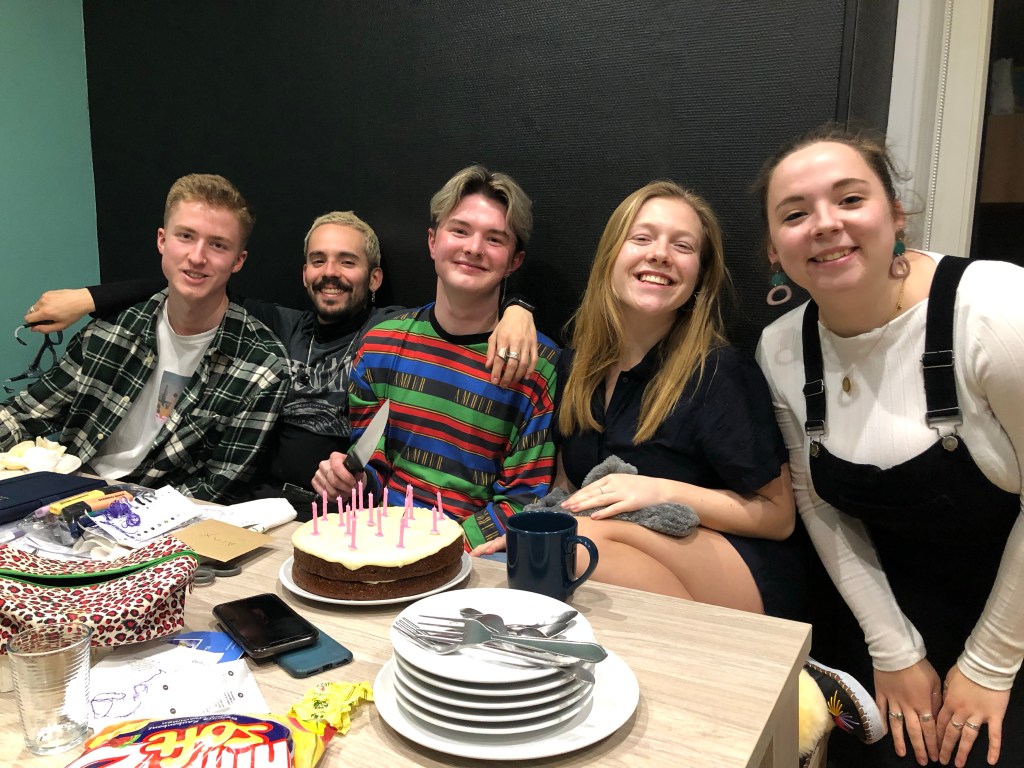
What a team!

Working in a Hostel

Overall, what was working in a hostel like? Pretty much what I imagined. That’s to say a relaxed environment filled with friendly people and good vibes. When I was working it was hard work but nothing too difficult or complicated and I even got to learn a lot of new skills. Even when you’re not working, you are still an integral part of the hostel staff. Here I want to give a proper shoutout to the full time staff members of La Tortuga, Karen and Mia on reception and Ale and Pasqui, the managers. Without Karen and Mia, the volunteers wouldn’t have a clue what is going on. They kept us right with what our work was, they were a steady presence when you arrived at this new place and they were a never ending source of knowledge and advice. If there was ever a question that I couldn’t answer or someone wanted more information that I didn’t have, I directed them to our wonderful receptionists. They both started as volunteers so know the highs and lows well. As for the managers, I only crossed paths with Ale for my first few days as he was away for a well deserved holiday for most of the time I was there. However I can tell that he is the life of the party when he is around and that the hostel is incredibly important to him. During my first day of training all the volunteers and any guests hanging around were summoned outside to cheer and drum, smoke flares in hand, while he climbed on the roof to film a video celebrating the win of his football team! Pasqui was around while I was there and he was a steady hand in a storm, helping me when I accidentally overbooked the hostel, working behind the scenes to keep things running smoothly and popping up randomly at flamenco night, live music evenings and even carnival!

I liked the sociable aspect of working in a hostel a lot as well. I’ve already spoken about the other volunteers but it was great getting to know the guests as well. There are all kinds of people coming through and of course you aren’t going to get on with everyone but I found some real gems who I’m still in touch with now. I did have a little dip in enthusiasm about three weeks in because I found it frustrating that people that I had met and formed a friendship with would leave after a few days, a week max. This might sound obvious but once you’re in that situation, it starts to feel like there’s no point making an effort with anyone because they’re going to leave soon. However, I got over it and learnt to just enjoy the time I had with the people I was meeting.
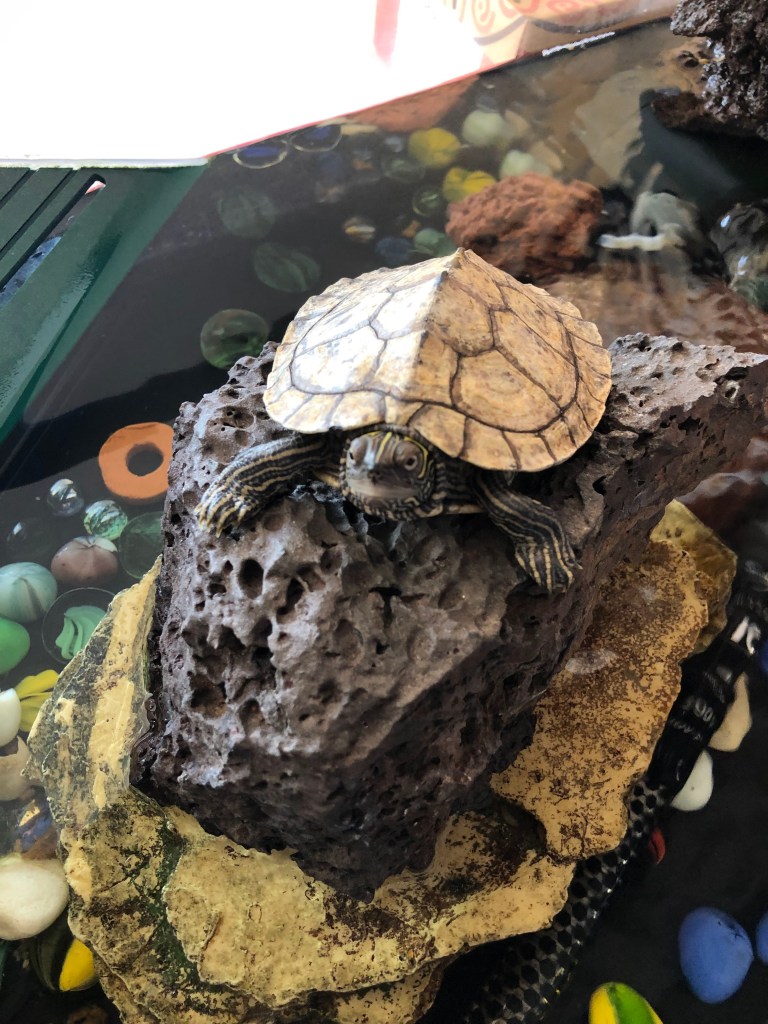
La tortuga de La Tortuga, Pita

La Tortuga is exactly the kind of hostel that I love to stay in myself so any praise you hear from me is genuine. Knowing how much I would love it even if I was just there for a few days as a guest, being able to peek behind the curtain was even more special. Seeing the inner workings of a hostel has given me more appreciation for all the work it takes and the amount of thought that goes into giving a guest the best experience possible. At La Tortuga it’s all about being as friendly and welcoming a place as possible, not profit. I’ve stayed in plenty of hostels over the years and my favourites, the ones I still think about and would go back to in a heartbeat are the ones like La Tortuga. The smaller ones, the ones with a family feel, where you’re not just another wallet walking through. In my opinion it’s what a hostel should be like.

Next up we have a bit of a combination of this post and the last one, looking at how the Workaway profile of La Tortuga compared with what I experienced in real life. It includes more details on the living situation for volunteers, the food provided, what is expected of you and also what I spent while I was there! If there’s anything specific you want to hear about, let me know!

How to Spend 7 Weeks in Tenerife (or Anywhere!)

Here we go, I hope we are all ready to embark on the next series of blog posts. I am now moving away from the travel blog posts and onto the next portion of my summer plans. My plan for this part of the summer was to spend just under two months volunteering in a hostel in Tenerife through Workaway. I had an absolutely incredible experience and there is plenty to tell you about my time in the hostel and on the island. For now I’m going to start with how I was able to do it in the first place. Let me introduce you to a little site called Workaway.

What is Workaway?

When thinking about the best way to go about organising this, I turned to Workaway. Workaway is a website that provides opportunities for work exchanges. This can take many forms whether it be working in a hostel as I did, as an au pair, helping renovate a house, working on a farm or a whole host of other options. The idea is that you as a volunteer or ‘Workawayer’ contribute an agreed upon amount of time into whatever the task is and receive accommodation and some amount of food in return. As a potential Workawayer it is free to browse through the website and look at hosts but if you want to contact someone you need to register an account which costs £42 for a year long subscription. This might sound a little expensive but if you think that this is pretty much the only thing you will have to pay for (other than transport) during your experience and that it’s a one time fee that allows you to arrange as many Workaway stays as you like, I think it is worth the money. You are also paying for their experience and the security of using a trusted platform. Workaway currently boasts more than 50,000 opportunities in 170 countries so the world is your oyster! There are also other features that allow you to find a travel buddy or to find opportunities as a pair with a partner or a friend, although I have no experience using these.

Of course, there are other options out there as well. I can’t vouch for them because I’ve only used Workaway and I will say that Workaway is the biggest platform offering this kind of thing. But in case you want to check out some of the other options, here they are –

Choosing Your Host

When it comes to finding a host on Workaway I think the more flexibility you have the better. You might be looking for a host in a particular country or location, there might be a certain type of work that you fancy doing or specific dates that you are available for. Having one, or at a push two, of these criteria pretty set in stone is fine but the less flexible you are, the more difficult you will find your search for a host. Saying all of this, I did not follow my own advice! (Hindsight is 20/20 right?) I knew roughly where I wanted to go, had a type of work in mind and had a window of time in which to do it. I was searching for hostels mostly in mainland Spain of which there were a decent amount but I have to admit that I did not have a lot of luck. I think a lot of Workaway experiences are organised more at the last minute but being the kind of person that I am, I wanted to have something arranged in advance. Because of this I started looking in February for an arrival date towards the start of May. At that time many places were looking for a more immediate start.

So what should you look for on a host’s profile? Once you have used the filter tools to wade through the thousands of hosts on the site to find the ones relevant to you, the first thing to do is check the availability of this Workaway. Helpfully this is one of the first things on a host’s profile. It will tell you if they are completely full or not looking, if there is a possibility or if they are actively seeking Workawayers. Next, check the description to see if it seems like a good fit for you. You can usually get your first feel of the energy of the project through the description. Depending on where you are looking for a host, their first language might not be English so bear that in mind when reading their profile.

Important things to look for in the description –

  • Working hours – will you be happy working that much?
  • Compensation – what do you receive in return for your work? Does it seem like a fair exchange to you?
  • Duties – what is expected of you? Do you have the skills to carry out these tasks or at least to learn how to do them?
  • Languages – do you need to be able to speak a certain language? (Sometimes specified but many Workaway opportunities double as language exchanges so don’t stress if you don’t speak any other languages)
  • Specific requirements – Will you need a visa in order to enter the country? Do you need a drivers licence?
  • Covid restrictions – do they require you to be vaccinated? (Some hosts have also not been active on Workaway since the pandemic, even if their profile is still live.)
  • Personal preferences – do they fit with any personal preferences you have? Do you need your own bathroom? Would you prefer to be in a non-smoking location? Are you allergic to pets? Is wifi an absolute must for you?

The last thing to do when looking at a host’s profile is to look at the reviews. Absolutely don’t skip this step and don’t just scan the number of stars they have been given. There are often valuable tidbits left in the text of reviews. Hopefully the host will have good ratings and reading these can help form your overall impression but even more important than the good reviews are the bad ones. Whenever I’m booking a hostel, I will read a couple of good reviews and then read ALL the bad reviews. I want to see what people were taking issue with, whether it is something that is important to me, whether I think it is a warranted review or whether this person just had a bad experience, whether it was in their control or not. It’s the same when deciding on a Workaway host. Sometimes people take things too personally or are too harsh so you can disregard those bad reviews but sometimes there are real red flags in them that alert you to a potential issue before you commit to anything.

When it comes to contacting hosts, it is important to make a good impression. All of my messages were sent in both English and Spanish, considering I speak Spanish already and was looking at hostels in Spain. I introduced myself and my skills, why I wanted to work at the hostel and as with any good cover letter, I mentioned something specific from their profile. You might not get a response for a while so don’t be afraid to send a follow up message. Having seen it from the other side while working at the hostel in Tenerife, I can vouch that hosts can get a lot of messages and it can be a bit overwhelming. They might not be active on Workaway until they actually need someone and by then your message will have dropped down so a follow up will go a long way to keeping you in the mix.

Between contacting hosts on Workaway and emailing hostels directly with my CV and a cover letter, I must have contacted at least 30 places. I didn’t get anywhere near that number of responses and the ones I did were all negative. Most of it was that they were either already full for the time period I was looking for or they weren’t looking for volunteers in general. It was disheartening and I did start to wonder if I was going to be able to find anything at all. In the end it took persistence, hope and also relaxing my expectations a little. Once I widened my search a little, that was when I finally got some positive responses and eventually a spot in the hostel that I ended up spending seven wonderful weeks in.

As with anything you have to approach a Workaway experience with a bit of caution. Hosts are all verified but if it’s anything like being verified as a Workawayer, that just involved connecting my Facebook profile to my account. If anything strikes you as suspicious, better to follow your gut. In the same vein, once you arrive you are free to leave any time. There’s no contract so if you don’t like it or worse, feel uncomfortable with anything, you can just leave. For me, I felt comforted by the good reviews on the profile of the hostel I was going to, not a single one under five stars with glowing words of praise from and for the host. I was also comforted by the video call I had with the manager of the hostel. Speaking to someone in person (or through a screen) is so different to messages or emails and it’s much easier to gauge the feeling that way. I could tell from speaking to Ale that this hostel was going to be a good fit for me.

Not a bad way to spend the summer!

My Experience with Workaway

To start with I want to explain what led me to embark on this specific experience. I finished my teaching at the university in Mulhouse in April and had a long four month summer holiday stretching ahead of me. I had a deadline of the second week in July to be back in Scotland for a family holiday but I knew I wanted to pack in some travelling and something a little bit different into the months running up to that. As you can imagine one of my aims in moving to France was to improve my French and it has improved, massively. It’s been a little while though, five years to be exact, since I gave my Spanish any TLC. I thought remedying that would be a good start in figuring out what to do with my summer.

I’ve also always quite fancied working in a hostel for a little while. I always enjoy staying in them. I love the atmosphere and the mix of people plus I feel like my skills are really suited to that kind of environment. I speak a few languages which helps in what is usually quite an international environment. I have experience working in a residential centre for a charity cleaning bathrooms and changing beds and I like to think that I’m a friendly, welcoming person who can create a nice atmosphere for guests. It seemed like now might be a good time to do this and combine it with my desire to work on my Spanish.

I have forayed into the world of Workaway once before but hadn’t gotten very far with it. In March 2020 I was trying to figure out how to spend several months in France on my university study abroad year after being forced to leave China early due to Covid and Workaway was something that I looked at. Of course I never got the chance to see that through because Covid arrived in Europe shortly after I did. This time I returned with a little more hope that I would actually get to see this idea through to completion.

Like I mentioned, I had some pretty inflexible criteria when it came to finding a host. I had a seven week gap between a family event in Dublin and a family holiday back in Scotland. I wanted to work in a hostel and I wanted that hostel to be in Spain. Initially I had been focusing on mainland Spain because given that I was already in Europe it seemed to make more sense and I felt like it would be a cheaper option in terms of transport there and back. However, not having much luck with this (lots of rejections and one unsuccessful interview) I started looking at several hostels in the Canary Islands that were looking for people on Workaway and that actually seemed like they would be a good fit for me.

I was drawn to one hostel in particular on the island of Tenerife that combined their business with supporting a number of social projects, one a paediatric hospital in Port au Prince, Haiti, and the other a free dentist consultation service in Brazil. That caught my attention but you could also feel the good energy through the description of the hostel in the profile. I sent my usual message, an introductory paragraph in both Spanish and English and actually got a positive response! I then arranged a video interview with Ale, one of the managers of the hostel, and by the end of it he was offering me a spot! The only thing that had to be worked out was the timing but in the end I was able to go for exactly the dates I wanted, starting mid-May and leaving just after the start of July. I was thrilled! I have to admit here that I knew very little about Tenerife other than it is a prime choice for British tourists who want an all inclusive, relaxing by the pool kind of holiday, but I was still excited to get to know a new place. I won’t go into everything I learned about Tenerife right now but know that there are plenty of blogs to come on that subject as I share my love for the island.

The star of Tenerife – Mount Teide

Pros and Cons

This will not be an exhaustive list of pros and cons of using Workaway but I want to share a few. Once again, this is focusing on the Workaway website and the general experience and not the one that I had with my specific host.

PROS

  • Workaway is by far the largest platform of this kind – That brings a whole host of advantages including security and variety. It gives you the most opportunities and a bit more trust than the smaller platforms.
  • Meeting like-minded people – By choosing to do something like Workaway, you are guaranteed to meet other people who share the same curiosity and sense of adventure as you. Obviously there are always people you don’t click with but I would say that Workaway is one of those experiences where you are much more likely to get on with the other people doing it. You are at least going to have Workaway in common!
  • It makes long term travel more accessible – There’s no way I could have done the length of time I did if I was just travelling as normal. Something like Workaway where there is an exchange in services allows you to stay somewhere for longer without breaking the bank.
  • You can really get to know a place – Or as Workaway says ‘travel like a local’. It’s another advantage to being able to stay somewhere longer as well as work with people who do actually live there. You get to see a side of a place that you wouldn’t get to just as a tourist. There is always a lot more to see than you can fit in to a one week visit or aspects of life that aren’t visible to outsiders.

CONS

  • The more specific, the more difficult Like you saw with me, if you are looking for something to fit a very specific set of criteria there might not be as many options.
  • It’s volunteering, not work – At the end of the day, even if you are getting something in return for your work, you aren’t getting paid. That means you will still need to have some of your own funds going in. At the very least you will need money for transport to and from your Workaway. You might also need a little money for some food if not everything is covered as well as any activities you want to do during your stay. It’s also good to have some money set aside in case things don’t go to plan and you need to leave early.
  • Workaway can be an intense and sometimes overwhelming experience – Just because of the nature of it, living with a host family or other volunteers, being very involved in life with your host, immersing yourself in local life, that can all get a little much sometimes. There are ways to get around this like taking some time to do something by yourself but embracing it for the limited period of time that you are there can turn this from a con into a pro!

In general I think Workaway is a great way to make long term travel more accessible. It’s a great way to save money by working for just a few hours and there’s a lot you can get out of that work. For example, the whole reason I wanted to do something like this was to improve my Spanish and that’s not an uncommon motivation. It’s a great way to learn new skills – for example I got trained on reception at the hostel where I learnt a lot of new things. There is no way that I would have been able to spend seven weeks in Tenerife on my own dime but with Workaway I was able to use the money that I was saving on accommodation and food to explore as much of the island as I could and have some amazing experiences. While the amount of hours you do depend on the specific host and type of work, it generally leaves you with lots of time off. Saying that, it’s still work and you have to be prepared to put the effort in. It’s not fair on your host if you turn up and then don’t fulfil your end of the bargain. In general and as with anything, you get out of Workaway what you put in.

Next up I’m going to tell you a bit more about the specific hostel I was working at and what that work involved. If you have any questions about using Workaway or anything you want me to cover in the next post about the hostel, leave them in the comments and I’ll do my best to answer them!

Some of the other great Workawayers I met

Bonus Bratislava Blog

Welcome back to another travel blog, a little Brucey bonus for you! This wasn’t a blog I expected to be writing when I embarked on my travels but sometimes you never know where the journey is going to take you. When I first arrived in Vienna I was organising doing a walking tour with my friend Nic and he was telling me the day he spent in Bratislava, the nearby capital of Slovakia. I hadn’t realised quite how close they are but there’s only 80km between them. I thought it would be a great way to spend a day, adding another country into the mix. I convinced my roommate Hannah to join me on her last day, making it three countries in one day for her as she was moving on to Budapest in Hungary that evening.

Our plan was to get the 9.15 train from the central station so we left with plenty of time as Hannah had her big bag with her ready for her train to Budapest that evening. I went to buy the tickets while Hannah found the lockers and I discovered that there is a specific Bratislava ticket. It costs €16 for a day return and also covers public transport while you are there! A pretty good deal if you ask me.

It took just over an hour to arrive in Bratislava where we pointed our noses towards the castle. On our way down we must have been walking through Slovakia’s embassy district and we made a game out of guessing which country they were. It was another glorious day, probably the hottest of my stay, so the walk got a bit sweaty! When we arrived at the castle the views weren’t the best I’ve ever seen although you could see across the Danube and back into Austria. There were a lot of cranes in the way and I think we were looking out onto a bit of an industrial area. The castle itself however was very nice! It had lovely gardens to walk through and the views from those, looking into the old town, were much nicer.

We walked down from the castle to the city walls and came out by St Martin’s cathedral. From there we were on the edge of the old town and just wandering through the streets in the bright sunshine was lovely. Now that we weren’t climbing uphill like earlier it wasn’t that bad! We found the main square with the city hall and several of the statues that are littered throughout the city. One is a man tipping his hat to passersby, there is a Napoleonic soldier leaning on a bench in the main square and the most famous, the Man at Work (or Čumil, the watcher), a worker peeking out of the sewer while taking a rest. There is a legend that says if you touch him on his head and make a wish it will come true, as long as you keep it a secret forever!

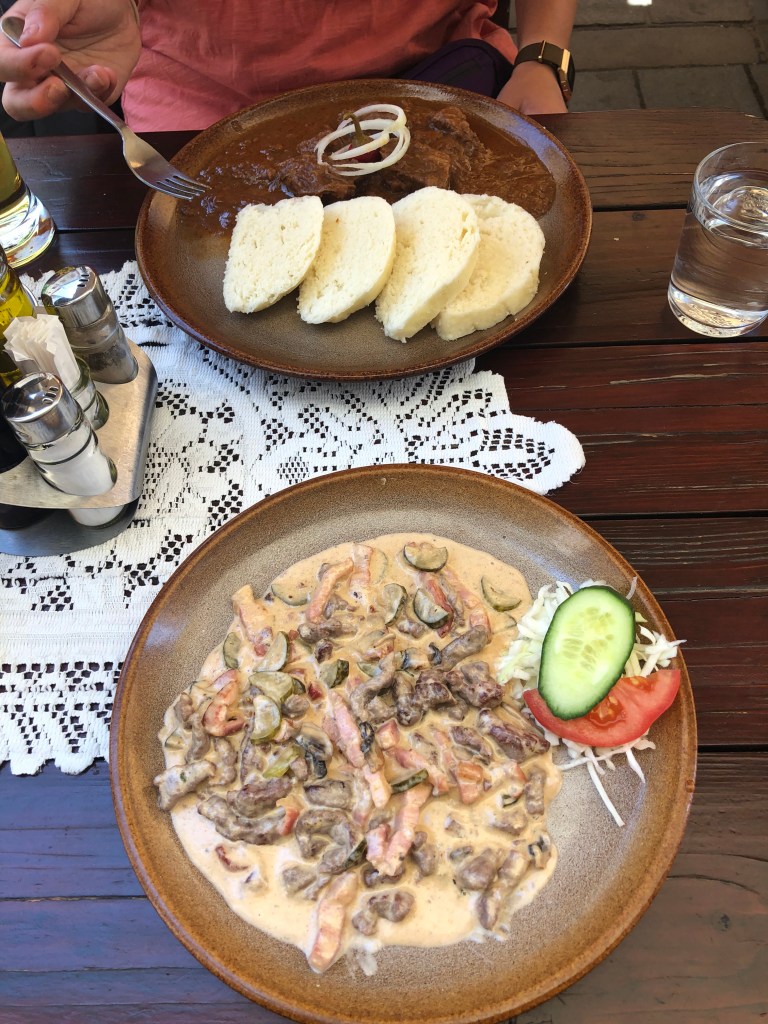
We carried on and out the other side of the old town in search of one of Bratislava’s most popular sights, St Elizabeth’s church. It is a vibrant blue building that is an icon of Slovakia. It was really stunning but completely tucked away behind a school that it was originally built to serve. By this point we were both ready for some food so headed back to one of the streets we had walked down with lots of restaurants. We settled on a traditional Slovakian restaurant where I had a stroganoff with beef, bacon, tomatoes and mushrooms in a creamy sauce (€15 with a beer) and Hannah had goulash with bread dumplings. We had a drink to cool down after lunch (€2 for a beer) and picked up an ice cream (€2) as we were walking back to the train station.

Because Hannah was heading to Budapest in the evening we had given ourselves plenty of time to get to the station in time for our train, which in turn was supposed to get us back to Vienna in plenty of time for her next train. Emphasis on supposed to… When we got to the train station in Bratislava there was a delay which continued to get longer as we waited. Throw in getting on the wrong train when it pulled into our platform and a last minute platform change and the return journey wasn’t quite as easy as the outward journey. Saying all that, we did get back in time for Hannah to dash through the station, grab her bag and make her train!

Back in Vienna, I hopped on the subway back to the hostel because I was exhausted and sweaty and grabbed a few things in Hoefer (€6) before chilling in the hostel for the evening.

Buzzing about passing a Scottish pub, even closed!

I was really pleased to have the opportunity to visit a new and unexpected country for me. Bratislava was beautiful, a really cheery, charismatic place. Of course there is more to do than we were able to fit into 6 hours but at the same time, I think you can fit the essence of the city into a day trip. I’ve heard that the nightlife is very lively so if that’s your thing it would be nice to stay overnight but I would say that one night would be all you really need.

Throughout these travel posts I have been chronicling my spending and it’s time for the big roundup. Here is what I spent on two weeks travelling in Germany and Austria (and a little bit of Slovakia) –

Transport (Mulhouse to Munich to Innsbruck to Vienna) – €91.40 (£77.74)
Accommodation (15 nights in hostels) – €423.93 (£360.57)
Eating out – €220.65 (£187.67)
Groceries – €66.77 (£56.79)
Activities – €40.50 (£34.45)
Miscellaneous (trams, small souvenirs etc.)- €43.30 (£36.83)

And with that, it really is the end of the travelling series! Next stop: Tenerife!

Vienna

Welcome back to the final instalment of this travel series! It’s taken a while to get here because I’ve been caught up doing some exciting things but you’ll just have to wait to read about those! (Or you can follow the blog on Instagram @sara_somewhere_ for more current updates!) My final stop was Vienna, the capital of Austria. Even though I was already in Austria, Innsbruck and Vienna are almost on opposite sides of the country from each other. Saying that, it only takes about four hours to get from one to the other by train. This was my last stop on my trip before flying to Dublin for a family party and quickly moving on to Tenerife to volunteer in a hostel through Workaway. Once again I will take you through what I got up to, day by day, including my costs for each day as well.

The Vienna Opera House

Monday 9 May

I started my journey to Vienna by leaving Innsbruck mid-morning. Now, here I have to admit to a rookie travel mistake. When I was booking all my trains for this trip, I acccidentally booked a train from Munich to Vienna instead of Innsbruck to Vienna. It was a non-refundable ticket so I looked at how much it would cost to book a new ticket from the right city but I also looked at the stops that the Munich to Vienna train would be making. One of these stops was Salzburg, a city just an hour and a half north-east of Innsbruck. I figured out that it would be cheaper to keep the wrong ticket, book one from Innsbruck to Salzburg and then hop on the original service there. Overall the two tickets cost me €53.65.

When I got to the train I saw that it was actually going to Vienna anyway, even though I only had a ticket to Salzburg. I asked the conductor if I could stay on to save me having to wait an hour in between trains and got an expected no but it’s always worth asking. I had one hour to waste in the station in Salzburg where I bought some food (€6) and then it was on to Vienna. The journey was easy, if a little longer than necessary, and I was welcomed to Vienna with some glorious weather. I set out towards my hostel, originally planning on getting the tram but by the time I figured out that I had missed the stop I was already halfway there.

A building along the Naschmarkt

I was staying in the same chain of hostels as I did in Munich, Wombat’s City Hostel. It was right by the Naschmarkt, a 1.5 km stretch of food stalls and restaurants that has been around for 500 years. It was originally a milk market until 1793 when authorities declared that any produce arriving in Vienna using a route other than the Danube river had to be traded here. The hostel was even nicer than the one in Munich, with a small coffee counter as you walk in, a bar tucked further into the back and a large dining space upstairs next to the kitchen. The location was great as well, like I said it was right next to the Naschmarkt that is lined with some really beautiful buildings and it was only a 15 minute walk into the city centre. For five nights in a six bed mixed dorm I paid €141.28.

As I was settling into my dorm room I got talking to some of my roommates. There was an American girl called Hannah who had actually been in the same hostel as me in Munich at the same time although we hadn’t crossed paths and a Honduran guy called Andres! What are the chances! Safe to say we had a good old chat about Honduras. The three of us went for dinner together to one of the restaurants in the Naschmarkt (€14.50) and then had some drinks in the hostel bar (€11.40). It was really fun getting to chat to a bunch of people, although sadly most of them were leaving the next day.

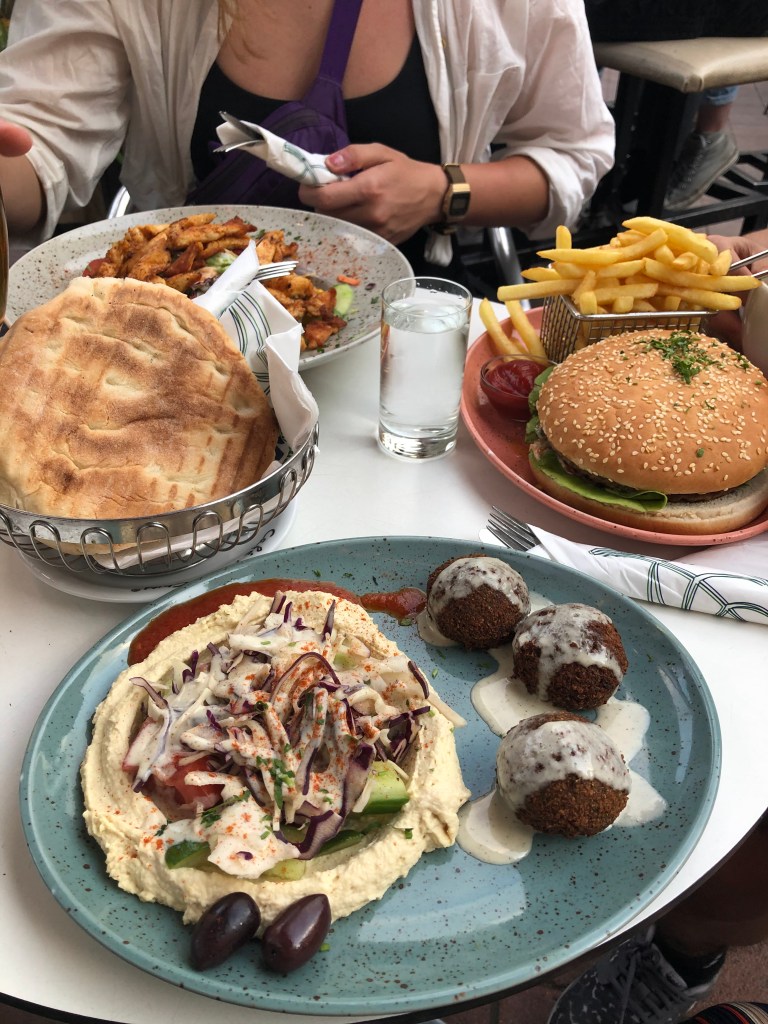
The delicious hummus and falafel I had in the Naschmarkt

My first day in Vienna, not including the transport and accommodation costs, came out at €31.90. You’ll see that my daily spending in Vienna goes up and down a bit more than it did in either Munich or Innsbruck, sometimes managing to stay below my initial budget of €20 a day and sometimes being over even the adjusted €30 a day budget.

Tuesday 10 May 

After only making it on to a walking tour on my last day in Munich, despite being of the opinion that these are great first day activities, I had come to Vienna more prepared and pre-booked a free walking tour for my first full day. I went with Nic, a guy I had met in my hostel in Munich who was in Vienna at the same time as me, as well as (a different) Hannah, a girl from Edinburgh that I had met in the hostel bar the night before. I picked up a quick breakfast from the Aldi next door (called Hoefer in Austria) before we left (€2 for a croissant and a banana plus a €2.20 espresso from the hostel coffee bar).

After a little bit of confusion over the meeting point for the tour we eventually found the guide, a German guy who has been living in Vienna for 10 years and is clearly a bit of a history buff. This tour was with Prime Tours who have a range of options across cities in Eastern Europe and even multiple versions of the tour in Vienna, including the classic one (which I did), one focusing on Hitler and Vienna around 1900 and a craft beer tour. Like with the one I did in Munich, reserving a place on the tour is free but at the end you are encouraged to leave a tip for the guide. You can leave as much as you want, depending on how much you enjoyed it, but I think it’s important to bear in mind that these tours often last a couple of hours and the guide puts a lot of work into them. Specifically in Austria, becoming a tour guide involves taking an intensive 8 month course or the more spread out two year option followed by THREE exams. It can be tempting to take the ‘free’ part of ‘free walking tour’ a bit too literally or just to chuck in a few euros at the end but that isn’t fair on the people that make it possible for us to get to know these amazing cities. Even without the official course and exams of Austria, tour guides everywhere spend years accumulating their knowledge and then present it to you in an understandable, engaging, two-hour package and they deserve to be fairly compensated for that.

The meeting point for this tour was next to the Albertina Museum (apparently one of the best museums in Vienna, if a little expensive), in a small square with a monument against fascism and war. Even though the tour was two hours long, we didn’t actually cover that much ground. We spent a long time working our way through the Hofburg, the imperial palace of the Hapsburg dynasty. You can see several different styles in the different wings that were added over the years and it was interesting to see the influence of the individual rulers who added to the complex. Just behind the Hofburg is Heldenplatz (Hero’s Square) where you can currently find some temporary offices for Austria’s parliamentarians while the actual parliament building is under renovation. You can also find two statues that give the square its name, one of Archduke Charles of Austria and the other of Prince Eugene of Savoy, both on horseback. Despite the fact both statues are meant to commemorate the men as heroes, both suffered crushing defeats either just before or just after the statues were unveiled!

We carried on past the residences of both the Prime Minister and the Chancellor, through some very grand side streets, past Michaelerplatz with the Hofburg on one side and Roman excavations at its centre, finally arriving at Stephansplatz with the iconic St. Stephen’s cathedral. This is one of Vienna’s and even Austria’s most important symbols. This was the end of the tour and after giving the guide his tip (€10) I spent a bit of time recovering from all the walking by chilling in the sun in Burggarten, a cute little garden at the back of the Albertina museum.

Michaelerplatz

After a busy morning out in the glorious weather I had a chill afternoon back at the hostel before going out into the Naschmarkt for dinner with Nic. It was very handy having it right on the doorstep of the hostel because as well as having lots of stalls and shops for buying ingredients there are plenty of restaurants too. We opted for pizza at a place that didn’t look too expensive (because there are some more bougie options around) and we were right because my pizza only cost €12. To top off the evening we went to the bar in the hostel and played some pool with Hannah from my dorm room and some new people we met.

St Michael’s Cathedral

With the €6.60 I spent on drinks in the bar and €3.78 on a few groceries, my total for today was €36.58. I was pushing it a little, even on the new extended budget but I tried not to get stressed about it. The budget was really more of a guideline so I didn’t blow through all my money too fast (or am I only saying that because I did blow through all my money today? You decide…).

Wednesday 11 May 

Waking up to my third day in Vienna, I didn’t really have any solid plans. After the walking tour yesterday, I felt like I had seen a lot of the centre of the city but I wanted to go back and see it again under my own steam. I retraced our footsteps from the day before but a little sped up. I was able to explore the areas I wanted to see a bit more, like Maria-Theresien-Platz where you can find the natural history museum and the fine arts museum. The very central area of Vienna is encased in a ring road that once marked the outer limits of the city. I followed this around to Volksgarten, another beautiful park, and sat there reading for a while. I also passed by the parliament building that is currently being renovated and the Rathaus (city hall).

Natural History Museum

I had the vague idea that I wanted to walk down to the river, for no particular reason, and while I didn’t actually make it there it did mean that I got to walk through some much quieter, less touristy neighbourhoods. On my way I passed by Central Cafe, another icon of Vienna for its beautiful interior and importance to Viennese intellectuals. I contemplated going in to sample a piece of Sachertorte, an Austrian staple, but all the luxury (and the prices!) seemed a bit beyond me! Sachertorte is a chocolate cake with apricot jam that was invented in the city. (Interestingly there is a dispute as to whether the original comes from Hotel Sacher or the Demel cafe. Eduard Sacher first made the cake while an apprentice in Demel and then set up his own establishment, Hotel Sacher.) Instead, I stumbled upon a great little place called Pickwick’s. It markets itself as an English speaking bar and restaurant but is also a bookshop and video store. It was covered in movie posters and had floor to ceiling bookshelves – my kind of place! I got a drink there (€4.30), taking the chance to shelter from the heat and sun for a while, plus it only felt right to get my book out again.

Pickwick’s

My wander through the city had taken me across the city centre and out the other side so when I was ready to go back to the hostel I was quite far away. I figured I had already gotten my steps in for the day so I gave my aching feet a rest and got the U-bahn (subway) back. I spent the evening chatting with Hannah from my dorm and arranging a day trip for the next day. It’s going to get its own bonus travel blog but if you’ve been to Vienna or know the geography of that area, you can probably guess. Hint: it’s the capital of a neighbouring country.

After a few days of upper or over budget spending, today came to a respectable €13.98. On top of my drink at Pickwick’s, I spent €4.08 on some groceries, €3.20 on a coffee and €2.40 on a U-bahn ticket. Not eating out today definitely contributed to lower spending. My normal habits were usually one meal out a day, often lunch while I was out and about, but while in Vienna I also made sandwiches to bring with me a couple of times to save a little more here and there.

Friday 13 May

After my day trip out of Vienna on Thursday (more on that here), for my final full day I had a nice surprise! One of my friends that I had visited in Innsbruck had decided to come through to Vienna for a night! Ciara had been thinking about it for a while and in the end booked a last minute train and hostel. She arrived around lunchtime and had a great suggestion of what we could do. You might remember that in Munich I spent one afternoon at the Müller’sches Volksbad, an art nouveau swimming pool. Ciara suggested that we visit Amalienbad, an art deco style swimming pool built around 1926 in the Vienna worker’s district. It is named after Amalie Pölzer, a social democratic councillor, at a time when most of the squares in the area were named after the royal family. Naming the pool after a worker represented the fact that the pool was built to bring the traditionally more bourgeois activity of bathing to the proletariat. The inside of the pool was stunning but very different to what I had seen in Müller’sches Volksbad. The interior would not look out of place in a Wes Anderson film with the brown and golden tones of the tiles and changing room doors contrasting beautifully with the bright blue of the pool. There were diving boards at one end and sun loungers lining the pool. It was a lovely, chilled way to spend an hour.

Amalienbad

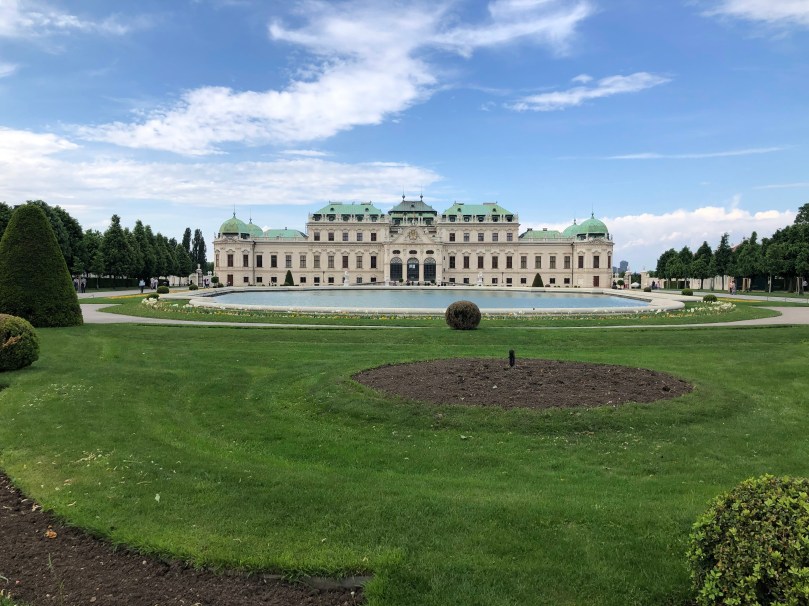
After we finished swimming, we got the tram over to Belvedere Palace. Because I was running about the city a bit more today, the pool being a bit further out, I bought a 24 hour tram ticket for €8. This was a pretty good price considering I could use it the next morning to get out to the airport as well. Belvedere, technically made up of two palaces, was the summer residence of Prince Eugene of Savoy. It was one of the final places that I wanted to see in Vienna so I spent a bit of time wandering around the gardens while Ciara went to visit an exhibition of Black Austrian artists in Belvedere 21, a contemporary art museum in the gardens of the Belvedere. I didn’t have time to go and see the exhibition because I had to get back to the hostel and pack my suitcase but it turned out that it was only opening the day after anyway!

Belvedere Palace

I went back out in the evening to have dinner with Ciara. We met at Stephansplatz, by the cathedral, and wandered around a bit first, enjoying the nice evening light on all the beautiful buildings. We had nowhere in particular in mind for dinner so settled on a nice Italian place that we passed by where I had a pizza, some chips to share and a Hugo for €18.80. It was lovely to spend a little more time with Ciara and have a buddy for the day, even if it was short and sweet. I was leaving quite early the next morning but getting to the airport was super easy. I already had my 24 hour tram pass and I just needed to add on a city limits ticket for €1.80 that would allow me to take the S7 train out to the airport. There is the dedicated CAT train that leaves from Wien Mitte station and takes you directly to the airport in 16 minutes but the S-bahn is much cheaper and really not much longer or more hassle.

For my final day in Vienna I spent a grand total of €31.10. On top of my 24 hour tram pass and my dinner, I also spent €0.69 on a banana and a croissant for breakfast and €3.60 on a latte.

Karlskirche

I was really happy with everything I got to do in Vienna but there’s always things left over. One of the big sights that I didn’t get to was Schönbrunn Palace, the summer residence of the Hapsburg family. It’s a little further out of the city centre and doesn’t really have anything else that I wanted to see around it so I couldn’t make it fit into my plans. From what I’ve seen, it reminds me a little of Schloss Nymphenburg in Munich. The palace(s) are one thing but then there’s also a massive garden where you could waste away a day. Another place still on my list is the Schmetterlinghaus (the Butterfly House). Multiple people recommended this to me when I was asking for things to do in Vienna. In the end I just didn’t have time but I loved Vienna so much that I already know I’ll be back. Finally, something Ciara was really keen to see but that I had never heard of was the Hundertwasserhaus. It was built by Friedensreich Hundertwasser and is a stunning mosaic of colours and shapes. Because I found out about it last minute and Ciara and I had already packed a lot into our day together, it’s just another thing I’ll have to see next time.

Vienna saw the end of my two weeks of travelling. When I left I headed to Dublin for a couple of days for my uncle’s delayed 50th (thanks covid!) and got to catch up with his family who I hadn’t seen in three years. I also got to see my mum and one of my sisters which was nice. In general I loved my two weeks on the road. Seeing new places and meeting new people energises me in a special way and collecting new experiences is always special. It’s tiring as well though! It was nice being amongst family for a few days because there’s an ease to the interactions there but at this point I was also looking forward to getting to Tenerife and staying there for a bit longer. I was pleased with my choices of where I visited and a lot of people I met were doing similar routes, sometimes in the opposite direction and often for longer. For many of them the next stop after Vienna was Budapest as it’s only a couple of hours on the train. Budapest is somewhere that’s always been on my radar and I do wish that I had thought about adding it when I was planning. I had five days in each place which was good because I had plenty of time to get to know each place but if I had shortened my stay by one day in each city, I definitely could have added in Budapest.

Naschmarkt

For now, there is one more bonus travel blog to come and then we are on to Tenerife, baby!

A final breakdown of my spending –
Transport (incorrect Munich to Vienna ticket and Innsbruck to Salzburg ticket) – €53.65
Accommodation (5 nights in a 6 bed mixed dorm room) – €141.28
Average daily spending – €31.91

Check out the bonus travel blog up next for a look at my overall spending for two weeks travelling in Central Europe!

Innsbruck

Next stop on my trip was Innsbruck, Austria. Less than two hours away from Munich, Innsbruck is in the mountainous Tyrol region of Austria, nestled between the Alps. It is a well known destination for winter sports (you can read a little more about one in particular later on). This trip was actually planned around coming to Innsbruck which might surprise some people. The reason I wanted to visit was because I had some friends, Emily and Ciara, that were doing part of their Erasmus year there. I met them while they were in Mulhouse last semester to study French and this semester they have been in Innsbruck to study German. I knew I wanted to go to Innsbruck from the beginning and Munich was a nice stopover after leaving Mulhouse plus I figured that while I was in Austria I might as well visit the capital, Vienna!

I’m going to take you day by day through what I did in Innsbruck, like I did in Munich, although this is less of an itinerary. Innsbruck is obviously a perfect place to do some hiking or outdoor activities but after a little accident (I won’t keep you in suspense for too long, the story is coming next), I wasn’t able to do much of these. My main priority while in Innsbruck was also more to catch up with my friends than to see the city. However, I will still include my costs so you can continue to see my spending over the trip. If you are too impatient, you can also check out the blog on Instagram, @sara_somewhere_, where I’ve already posted a reel summarising my spending over the two week trip!

Thursday 5 May

As I said in the Munich blog, I got into Innsbruck at around half 5. What I didn’t mention is that the first thing I did after arriving was throw myself down the stairs in the train station. I somehow missed a step, lost my footing and just went down like a ton of bricks. My ankle got twisted pretty badly under me and so we had to take a few minutes before I could move. Everyone passing, people travelling or working in the station, were very nice and tried to help but all I really needed was a minute to gather myself. Thankfully, once I was back on my feet, I could still put weight on my ankle and therefore walk. Moving it or rotating it, however, was something different.

Our first stop was my hostel which was a little far from the centre of Innsbruck, about 20 minutes on the tram. It was a Hostelling International hostel so it was a bit more business-like and clean cut than the Wombat’s hostel that I had just come from. Saying that, the room was very nice. I was in a four bed dorm, much more compact than my room in Wombat’s but with enough space. It also was never full during my five nights stay and I even had one night by myself, an absolute luxury! We didn’t stay long, just long enough for me to make my bed and freshen up, and then we headed back into town. Even though the hostel was quite far from the centre of the city, any guests staying more than two nights are given a free public transport card so you can hop on and off the tram and buses as you please! Also included in this Welcome Card are various discounts for mountain cable cars and lots of activities with more becoming available the longer you stay. I didn’t use any of them as a lot of the activities required two working ankles but it would be a great thing if you were looking to get some adventures in during your stay!

Back in town we headed to what is probably the central plaza of Innsbruck, Maria-Theresien Strasse, where we were immediately tempted by an ice cream shop. Ice cream for dinner is not just acceptable but encouraged while on holiday. Shoutout to that ice cream shop which saw me three times in the five days I was there. Fully recommend the passion fruit flavour, fig and walnut and the mango sorbet. Our main destination was a cool bar called Tribe Haus where we wanted to get some food. Unfortunately it was packed so we just had a drink. Since arriving in France I have discovered and become obsessed with a Hugo (not a French boy but a popular apéro drink with the same vibe as an aperol spritz). There’s something about the combo of prosecco, elderflower syrup, lime and mint that is one of the most refreshing things you can drink. It was nice to catch up with Ciara and Emily and find out what they’ve been up to in Innsbruck and how much they miss us in Mulhouse!

It was a nice welcome evening (sprained ankle aside). My foot was feeling alright but a little tender and had definitely swollen a lot by the time I went to bed. This being a travel day, I included the costs at the end of the Munich blog so you can find them there if you haven’t read it already.

Friday 6 May

First priority today was to follow my doctor dad’s recommendation and find a brace to support my ankle. Thankfully I had my German translator with me (dankeschön Ciara) because ich spreche kein Deutsch (I’ll let you guess what that means). After trying a couple of places we finally found one and it gave me immediate relief. I said that my ankle wasn’t necessarily sore unless I rotated it but there was this uncomfortable pressure. I couldn’t actually fit my foot in my trainer in the morning so I was wearing this ankle brace with my Birkenstock sandals. Is that better or worse than socks and sandals? As this was an extraordinary expense I didn’t include it in my budget but we celebrated our success with a coffee and an ice cream (€7 in total plus another €2 for a cheeky supermarket sandwich).

Maria-Theresien Strasse

Emily joined us at this point and we headed out to our main attraction of the day, Bergisel. This is a ski jump overlooking the city that was used for the Winter Olympics in 1964 and 1976. We got the bus over, free thanks to my transport card from the hostel, and then had a short but steep walk up to a viewpoint where you can get a panoramic view over the city. Here you can also find the Tirol Panorama, a museum on the history of the Tyrol region, and the Kaiserjäger Museum, a museum on the Tyrolean Imperial Infantry. Another short but steep walk takes you to the bottom of the ski jump where a student ticket cost me €8 (€9.50 for an adult ticket).

You enter the grounds next to the stands that can hold 26,000 people and get an impressive and rather intimidating view up to the top of the jump. It is 455 steps up to the top of the jump but thankfully there is also a lift in case you are also down one ankle. The lift takes you to the top of the hill but you still aren’t at the top. Another lift takes you up to the top of the building where you get the most incredible view of the valley that Innsbruck sits in. One floor down is a restaurant and also the starting point for the skiers. You can go and stand at the top of the ramp, look down and question whether or not you would have it in you to jump. The ramp is 98 metres long and the landing slope is 37º steep in some places. The official record set here was a jump of 138m from Michael Hayböck.

After taking in the viewing and deciding that none of us had the guts to make that kind of jump, we decided to have a wee drink in the restaurant. I was again tempted by a Hugo that cost me €6. I headed back to my hostel to have some chill time before heading out again in the evening to have some drinks and meet some of Emily and Ciara’s other Erasmus friends. We went to an Irish bar because it doesn’t matter where you are in the world, there’s always an Irish bar called Limerick Bill’s and it always has good vibes. A couple of pints here cost me €15. One of the people I met was from Harrogate in the north of England and actually knew or knew of two of my university flatmates who are also from there! Small world eh?

I really enjoyed today because visiting the ski jump felt like a really random thing to do but was actually really cool and interesting. Because it sits atop such a high hill you can see it from many points in the city, including the tram back to my hostel, and it lights up at night so it’s very visible. In total I spent €38 today, the drinks and the paid activity really destroying my budget for the day. This might be the point where I saw my costs start to go up a bit more so I started aiming more for €30 a day if €20 didn’t feel possible.

Saturday 7 May

I wasn’t feeling great when I woke up this morning but thankfully not because of my ankle which was actually feeling better. I also realised this morning that my hostel came with a free continental breakfast! Emily and Ciara both had some work to do and because I wasn’t feeling great, I was quite happy to accompany them to a cafe and just do some work. It was a very chill day that I spent blogging, once I started to feel a bit better. Overall, not much to report from this day. I spent €6 on a sandwich and then €4.50 on a milkshake later in the afternoon, plus €12.90 on some groceries for my dinner and the next day for a total of €23.50, just slightly over budget.

Sunday 8 May

I was woken up nice and early this morning, in true hostel style, by the group in the other rooms on my floor who I suspect were some kind of teenage sports team with no concept of sharing the space with others. I was meeting Ciara for brunch later in the morning but I was awake so early that I still took advantage of the free breakfast.

We met around midday at a spot that Ciara had been wanting to try called the Breakfast Club. It must be some kind of law that every country must have somewhere with this name. I had an omelette with onion, cheese and bacon (€12.80) and Ciara had toast with this delicious looking almond and spinach spread. Both came with a wee glass of elderflower juice which is very common in this area. The weather was glorious after a few more cloudy days so after breakfast we decided to take a stroll. We walked by Triumphforte, a gate built to honour the marriage of Archduke Leopold to the Spanish princess Maria Luisa. Unfortunately, while the arch was being constructed Leopold’s father died unexpectedly so the south side commemorates the wedding and the north side is dedicated to the memory of his father. We also passed by what is considered the symbol of Innsbruck, the Golden Roof (Goldenes Dachl). It was built by Emperor Maximilian I to celebrate his wedding to Blanca Maria Sforza in 1500.

Triumphforte
The Golden Roof

It was such a nice day that it would have been rude not to get an ice cream (€3.40) before we visited one of the museums in the city. The Taxi Palais Kunsthalle Tirol is a contemporary art museum that shows up to four exhibitions per year. The exhibition when I was there was called GODDESSES and it included various works by four different artists that were installed gradually with performances by Ursula Beiler in between. The first section had paintings by Elizabeth von Samsonow, very abstract and using bright, almost neon, colours which I liked a lot. The second section by Tejal Shah had three or four short films or videos playing on a loop. My favourite part of this section was a poem that was spelled out letter by letter in Morse code. There was a film room showing a film by Karrabing Film Collective, an indigenous Australian grassroots collective, called Mermaids, or Aiden in Wonderland. Karrabing ‘refers to a form of collectivity outside of government-imposed structures of clanship or land ownership’. We came in halfway through so it was a bit confusing to start with but made more sense once we had watched it in its entirety. I say it made more sense but I still didn’t fully understand it, not that that was a bad thing because it meant that I was still thinking about it for a few days after seeing it. The final section of the exhibition was a room downstairs with large square pillows made from beautifully patterned material arranged within a circle of speakers playing choral music in Igbo. The installation, by Emeka Ogboh, was called Ámà (meaning village square in Igbo, the language of the Igbo people of southeastern Nigeria) and is supposed to evoke that sense of gathering and community that a village square represents. It was a very tranquil and relaxing experience, lying down on the pillows and listening to the music. It was only €4 for a student ticket and because of the nature of the exhibit, that it was installed over time (though it was complete when we saw it), you could use the same ticket four times which is great value for money.

Austria is the same as France and Germany in that most things are closed on a Sunday, things like shops and supermarkets at least, so after leaving the museum we sought out the only supermarket that was still open. I spent €8 on a salad for dinner as well as a highly coveted can of Heinz tomato soup! It’s one of the things I sometimes missed in Mulhouse but couldn’t find anywhere so when I saw it in M. Preiss I knew I had to get it. After a lovely day, I headed back to my hostel for the last time to relax a bit before leaving the next morning. My total for the day was €28.20 so just under my new, adjusted budget of €30 a day.

There were definitely plenty of other things that I wanted to do in Innsbruck that I didn’t get the chance to. It would have been nice to get out into the mountains a bit, either using one of the many cable cars in the area or as a hike. Unfortunately my ankle stopped me from even considering that. It’s also a great place for winter sports, as evidenced by the Bergisel ski jump, so skiing here would be really cool. However, my intention was always to spend these few days catching up with my friends and I feel satisfied with the time I spent with them and the things we did together.

As for my final thoughts on Innsbruck, this was a great opportunity to visit a city that it’s unlikely I would have visited otherwise. For me, my highlight was the stunning scenery. Whether it was the sweeping vistas from the top of the Bergisel or the many vivid colours of the buildings, especially along the river, I had my breath taken away multiple times. It was also nice to see Emily and Ciara in their new environment, after seeing them on Erasmus in Mulhouse.

Last but not least, a breakdown of my costs –
Transport (train from Munich to Innsbruck) – €19.50
Accommodation (5 nights in a 4 bed female dorm) – €140
Average daily spending – €29.90

Munich

Welcome to the first of three travelling posts! After leaving Mulhouse at the end of April I had a family event in Dublin in the middle of May so I was looking for something to do in between. I had friends that were studying in Mulhouse last semester during their Erasmus year and who had moved to Innsbruck in the second semester and I thought that this would be as good an opportunity as any to visit them. I was looking for somewhere to go on the way there and Munich, while not on the way, was in the right area. I’ve wanted to go to Munich for a long time so I figured it was a perfect addition to my itinerary. While I was in Austria to go to Innsbruck, I also fancied going to its capital, Vienna. Innsbruck and Vienna are on almost opposite sides of the country but only four hours or so by train. And that was how I decided on my two week itinerary.

I’m going to take you day by day through my itinerary for each city because while some of the things I did were very specific to my own interests (you’ll see what I mean), I think in general I found a good balance of seeing some of the main sights and discovering some nice hidden spots. There’s also always more places that you wish you had time to go to or to see, no matter how long you spend anywhere so I’ll let you know what those are for each place as well.

Something else I’m going to include is a breakdown of what the trip cost me. I think there’s this impression, or at least I had the impression, that this kind of backpacking in Europe is really expensive and more unattainable than somewhere like Central or South America or Southeast Asia. Some things are expensive, like hostels and transport, but on the day to day it’s possible to keep costs down. I started out wanting to keep to a €20 a day budget and by the end of the two weeks I had increased it to €30 a day (not including accommodation or transport). €20 was fine for days when I wasn’t doing any activities that I had to pay for or when I was cooking my own food for all my meals but it didn’t have a lot of wiggle room. Sometimes I wanted to eat lunch or dinner out, especially if I was away from the hostel for the whole day, and if I wanted to do something that I had to pay for, it was impossible. I wasn’t rigorous with the budget, there were days when I went over even €30 but it was a good limit to aim for.

So without further ado, let go!

Saturday 30 April

This was my first travel day. I wasn’t leaving until 1pm so the morning was spent packing up the remnants of my stuff in my flat. Thankfully I’m able to come back in September so I can keep my things there but I’m changing rooms so I still needed to put everything into boxes.

I got to the train station in Mulhouse with plenty of time to spare and loaded up on train snacks (€7.10 for a baguette sandwich, some crisps and a bottle of fizzy juice). My travel involved taking a train to Basel where I changed onto a service heading to Berlin (a whopping 8 hours long!) although I was getting off at Karlsruhe, only 1 hour 45 minutes later. I was only supposed to have 7 minutes in Karlsruhe to change to the train that would take me to Munich but 7 minutes would have been too easy. Instead the train was a little late so it was only 3 minutes to transfer. The conductor was very encouraging when he told us over the speaker that we should have enough time to make it if we hurried! You could tell who was trying to make the same connection because we were all pressed up against the door, raring to go and raced out as soon as the train pulled to a stop. Thankfully we just had to go down some stairs and across a few platforms and I think everyone made it. They might have even delayed the Munich train for a few minutes to make sure everyone could get on. Overall this little adventure from Mulhouse to Munich cost me €28.25 (all my train tickets were bought using my carte avantage jeune, a young person’s discount card).

It turned out that my hostel, Wombat’s City Hostel Munich Hauptbahnhof, was right by the train station (the name should have given it away, bahnhof is German for train station). I stopped in at a supermarket on the way as the following day was Sunday and like in France, not much in Germany is open. I spent €5.10 on some bananas, pasta and pesto, the traveller’s staples!

I immediately liked the hostel when I walked in. It has this great common area with a big high ceiling made out of windows that makes you feel like you’re in a building in a botanic garden. Food was high on my agenda and the first person I met while I was cooking in the shared kitchen was a Chinese girl who studied in Dalian of all places! We were there at different times and studying at different universities but what a coincidence!

After all the travel and commotion of the day, I was very tired so I didn’t actually go out anywhere on the first evening. I chilled in the common area for a while and then went to bed. My spending for the day came in way under budget at €12.20.

Sunday 1 May

For my first full day in Munich I didn’t have anything in particular planned. I have to admit that I was a little underprepared for this trip. Other than asking people for recommendations for the cities I was visiting and putting all the answers onto a Google Map, I hadn’t done much research. In a way this was nice though because I was able to look around the city, read the information boards in the hostel and talk to people who had already been there for a few days to get inspiration. I definitely got some good recommendations that way, both for what to do and what not to do! The weather was also a little limiting while I was in Munich because while it didn’t rain that much other than two evenings, the weather forecast kept threatening that it was going to.

I figured a good starting point would be the main square in Munich, Marienplatz. This is where you will find the Neues Rathaus, the new town hall. The building includes the famous glockenspiel, a clock that reenacts two very important events in the history of Munich. The first is the wedding of Duke Wilhelm V and Renata of Lorraine, commemorated by a jousting competition, and the second is the Schäffler dancers who danced in the streets once the plague was gone from the city. It can be seen every day at 11am and 12pm and also 5pm between March and October. However, today the main attraction was very different. Seeing as it was 1st May, Germany was celebrating May Day or Labour Day. There was a big stage set up with performers and the square was packed with people waving banners and handing out flyers for unions and other organisations. Someone even tried to recruit me until I sputtered out my go to line in German – ‘Ich spreche kein Deutsch!’ (I don’t speak German!).

Marienplatz on May Day

From Marienplatz I headed deeper into the old town, with the vague destination of the English Garden in mind. It’s basically just a massive park but seeing as this was potentially going to be my only day of dry weather I wanted to go and wander around while I could. On the way I passed by the Munich residence which was the official residence of the Bavarian royal family for more than 400 years until 1918 and is the biggest city palace in Germany. I didn’t go in but I walked through the garden and later learned that the building now houses multiple museums so if that’s your thing it’s a good spot!

Just beyond the residence was the bottom of the English Garden. Here is where you will find one of my favourite spots in Munich and a bit of a legendary sight. The Schwabinger river runs into the garden and at the most southern point in the park you can find the Eisbach wave. The rock formations at this point in the river create a wave that is perfect for surfing! It’s only for pretty advanced surfers but even if you can’t partake, it’s fascinating to stand on the bridge overlooking the wave or the banks of the river to watch those that can. It’s such a curiosity and I loved whiling away some time watching the surfers there.

The Eisbach Wave

After being entranced by the surfers, I walked into the actual garden and wandered around for a while, coming across the Monopteros, a small Greek style temple. I was starting to get hungry so I found a biergarten, appropriately enough the Chinesischer Turm Biergarten (Chinese Tower Beergarden) which has a pagoda in the middle. I spent €9 on some currywurst (sausage with a sweet tomato and curry sauce poured over it) and kartoffelsalat (potato salad, pretty much the only reason I got this instead of chips was because when the guy asked me what I wanted, I recognised the words and was very chuffed with putting my Duolingo level German to use!). I was tempted by a beer but the only option was a 1L stein that would have cost the same as my food!

After a busy morning full of walking I was a little tired so headed towards one of the recommendations I’d been given, a coffee shop in the university district to the west of the garden. It was called Lost Weekend and was exactly my vibe! It was filled with young people with their laptops and books out, was part bookshop and has events like open mic nights and poetry readings in the evenings! I got a coffee and read my book there for a while, happy to take a break from being a tourist and blend in for an hour or two.

I dandered back towards the hostel past some of the museums that I was considering visiting later in the week and then stumbled across a square with a Greek style gate called the Propyläen and also the Sculpture Gallery and the State Collection of Antiques which were both in interesting buildings. Back at the hostel I was wiped out so I just made some more pesto pasta, got a beer from the hostel bar (€2.80 for a pint!) and got chatting to an Australian woman about her extensive travels.

My first full day in Munich came out to €14.30 after walking everywhere, just taking in the sights of the city plus eating breakfast and dinner in the hostel. Off to a good start!

Monday 2 May 

My plan for day 2 stemmed from the conversation I had with Lisa, the Australian woman, the night before. She recommended going to see Schloss Nymphenburg. It’s a palace a little further out from the centre of the city but is easily accessible by tram. It was €3.50 for a one way ticket, a little expensive in my opinion, and I was very confused about where to buy it until I realised that the ticket machines are actually on the trams. From where I was staying near the main train station it was about 15 minutes to the tram stop named Schloss Nymphenburg and then the palace is right there. I decided to skip the pais entry to the building, at a certain point once you’ve seen one fancy building you’ve seen them all, and instead spent a few hours wandering around the extensive gardens. There were some nice buildings and statues hidden away amongst the trees and I paused by a lake to read my book as well.

I went back to the hostel for lunch and went back out in the evening to explore Frühlingsfest. One of the things Munich is most famous for is obviously Oktoberfest, a beer festival held every year from mid-September until the first Sunday in October. Frühlingsfest is the much smaller version held in April and May (Frühling means spring in German). In comparison to Oktoberfest’s 14 large beer tents, Frühlingsfest has just 2. Due to the pandemic, Oktoberfest hasn’t happened for the last two years so this Frühlingsfest is the first similar event to take place since Oktoberfest 2019. I haven’t been to Oktoberfest but to me Frühlingsfest felt a little more like a funfair with a few extra beer tents than the mass drinking event that is Oktoberfest. There’s nothing wrong with that at all, it’s a more low key and still very enjoyable atmosphere. I wandered through the rides and the various food stalls until I was tempted by one of them. A Bratwurst sausage in a bread roll and a waffle covered in icing sugar cost me €7.

Inside one of the beer tents at Frühlingsfest

Along with my two tram tickets and food at Frühlingsfest, I also picked up some more groceries, things like cashew nuts, Pringles and some granola bars so my overall spending was slightly over my allotted goal at €23.16.

Tuesday 3 May

I had a slow start to my third full day in Munich because I was waiting around for a phone call that amounted to a job interview for some extra teaching once I get back to Mulhouse in September. I’m sure you’ll be pleased to know it went well! I made it out just in time to get to Marienplatz to catch the 12pm showing of the glockenspiel which I had missed the first day I was there. I went to the neighbouring Viktualienmarkt, a food market, to get some lunch. I had been recommended a stall called Schelmmemeyers and been told to get the rostbratwurst, another form of sausage in a bread bun. I had a proud language moment when the guy asked me if I wanted mustard (senf) and I understood and was able to say yes! I also got a potato rosti purely because it was called an Elsässer rosti and Elsässer is how you say Alsace in German! It was €6 for the two.

My main activity of the day was very specific to my interests. I had been reading the information board in my hostel and came across an ‘off the beaten path’ recommendation from one of the staff members. There is a public swimming pool in a beautiful old baroque building that I thought would be fun to visit called Müller’sches Volksbad. It was a little out of the centre again in a direction I hadn’t explored but not too far by foot so I walked over and got to see a new neighbourhood on my way. It was only early afternoon when I arrived in the area so I found a cafe nearby and got an iced latte for €4.30. Café Blá itself was a great find!

Café Blá

The pool was actually just down the road so I found it easily enough but it took me a couple of tries to find the door because despite the building being very grand and impressive, it’s actually rather inconspicuous. I wasn’t totally convinced from the outside that it was currently in use. It must be a ploy to keep it a well kept secret because inside was stunning. It cost €3.50 for a student ticket which was 100% worth it because when I got through to the actual pool there were barely five other people in there! I don’t know enough about architecture to do a description of the inside any justice but I’ll just say that I’ve never enjoyed backstroke so much! There was so much to look at on the ceiling, even in the changing rooms. There are two pools that used to be separated for men and women but now the only difference is in temperature, with the former women’s pool being a few degrees warmer. Overall, this was actually one of my favourite things I did in Munich!

My evening was spent back at the hostel again with some sandwiches for dinner so adding in a few extra pieces I picked up at the supermarket my total for the day was a respectable €21.76.

Wednesday 4 May 

Several days of well over 10,000 steps a day were catching up to me a bit at this point so I had a more chilled day planned. I wanted to go to a museum or gallery today and one that had caught my eye, again on the hostel information board, was the Museum of Urban and Contemporary Art. I got talking to a guy while I was eating breakfast and he was looking for something to do that day as well so asked if he could come with me. The more the merrier!

The museum itself was really cool. You couldn’t take pictures which was at the same time a shame because there were a lot of pieces that I really liked but also a really nice idea because it lets you just enjoy the art that is in front of you. There were a lot of pieces from Banksy, including one from his Dismaland installation and one entitled ‘Are You Using That Chair?’, based on Edward Hopper’s famous late night bar scene ‘Nighthawks’. My favourites were by an artist called Vhils, sheets of iron that had designs burned on to them with acid. The skills it must take to get the level of detail that there was is incredible. There was also a whole room devoted to Richard Hambleton’s shadowan, an eery silhouette that haunted the streets of Manhattan in the 80s. To top it all off, entrance was only €5!

As we were leaving, the rain that had been promised all week finally arrived. It had rained a bit the previous evening but I was already tucked up in the hostel by that time but I was fully caught in it this time. Luckily I had the foresight to bring an umbrella with me to help me scurry back to the hostel. I ventured out again in the late afternoon once it had stopped raining. The sky still looked pretty menacing though and I did in fact get caught in an even bigger shower, nay thunderstorm. I was in the process of deciding what I wanted to eat for dinner and in the end I was forced into Five Guys as much for shelter as for sustenance.

When I eventually made it back, slightly damp, to Wombat’s I ran into one of my dormmates. When I first arrived I had been sharing my mixed six bed dorm with a group of five Irish guys who were there together and liked to snore and come in loudly at 5am. Safe to say nothing was particularly pushing me to make friends with them but after they left there was a much nicer group of individual travellers that came in. I spent what was my final evening having a drink with some of my dormmates, Mohammed from Afghanistan, Gael from Israel and Nic from the French speaking part of Canada, and playing a board game. It was really nice to hang out with them because while I had gotten chatting to a few people over the course of my stay it was mostly on a one to one basis. I struggled a bit during the first few days with feeling like I was out of practice with the social aspect of travelling. I think everyone’s social skills have suffered a bit since the start of the pandemic as we just haven’t had the opportunities to be amongst people we don’t know and to make new friends and I felt this at first. It was good to shake that feeling off and it turned out that Nic was even going to be in Vienna at the same time as me!

For my last full day in Munich I spent €21.45 on my admission to MUCA and my Five Guys dinner so still more or less on track!

Thursday 5 May 

I was leaving to head to Innsbruck but not until mid-afternoon so I still got the morning in Munich. In a slightly backwards turn of events I was spending my last morning doing a free walking tour. Ideally I would have done it on the first day but the company that I wanted to go with, Sandeman’s New Europe, only had tours later on in the week. It would have been a perfect way to get to know the city centre a little but even though I had already seen a lot of the places we went to, I got to learn more about these places. The main spot that I hadn’t seen until then was the Hofbrauhaus, one of the most famous breweries in Munich. While the walking tour was technically free, donations are suggested at the end. You can pay what you want, depending on how much you enjoyed it and I thought it was great so I gave €10.

Before getting my train I went back to Viktualienmarkt to get some lunch. I wanted to try schnitzel while I was in Germany, which is pounded, breaded and then fried cutlet, usually of pork. It’s very popular and very common but I was a little disappointed. It was like a dry chicken nugget because it’s so much thinner. A portion of schnitzel with chips cost €7. It was a pretty heavy meal but that wasn’t necessarily a bad thing as it would keep me going during my journey to Innsbruck!

I arrived into Innsbruck at around half 5 and was met by my friends. We got the tram out to my hostel (€1.70) and then went out for some drinks (€8). All things together, I spent €28.10 so starting to creep a little higher. For more details on my arrival to Innsbruck and Austria, you’ll just have to wait for the next post!

Theatine Church

I said I would let you know what I didn’t do that I wish I had and that was Schloss Neuschwanstein. This is an iconic castle in the Bavarian hills, if you don’t know the castle I’m talking about have a quick Google search and you’ll recognise it. I really wanted to go but like I mentioned the weather forecast kept threatening rain in the afternoons which either didn’t happen or only in the evening. The castle is about 2 hours away from Munich which is fine if you know it’s going to be worth it. What I didn’t want to happen was that I went all that way and spent the day in the rain without getting any good views of or from the castle. I kind of wish I had just gone but I did my best with the information I have and I guess it just means that I have to go back!

Some final thoughts on Munich – I liked the city a lot although maybe my impression of it was slightly dampened by the weather (boom boom). My favourite thing I did was actually going to the old swimming pool which is maybe a lesson in choosing wisely – sometimes the most popular things aren’t for you but you can surely find something that is. Overall I think I could have done with one day less or even just to have left earlier in the last day. I felt like I had more than had my fill of Munich by the end. Saying that, I would still like to go back, maybe to experience Oktoberfest or even just to finally make it to Schloss Neuschwanstein.

A final break down of my spending –
Transport (train from Mulhouse to Munich) – €28.25
Accommodation (5 nights in a 6 bed mixed dorm room) – €142.65
Average daily spending – €20.16

Up next – Innsbruck, Austria!

À Bientôt Mulhouse

I’m long gone from Mulhouse at this point, having finished two weeks of travelling in the south of Germany and through Austria and am about to embark on two months working in a hostel in Spain, with a quick weekend with family in Dublin in between. With all of that still to come on the blog, I wanted to do one final update from my time in Mulhouse. Recently it’s been all about the various visitors I had in April but there are a few things from before, in between and after that I want to catch you up on.

First of all, rewinding all the way to the start of March, I celebrated Pancake Day with my flatmates and neighbours. Pancake Day obviously happens on Shrove Tuesday but there is actually a French version of Pancake Day not linked to any current religious holidays. On 2nd February there is La Chandeleur (also known as Fête de la Lumière or just jour des crêpes). We missed this but our Pancake Day was full of mini crepes with a range of fillings, British favourites like lemon and sugar and more French choices like emmental, mushrooms and crème fraîche. It just so happened that Pancake Day (or our one anyway, celebrated a day late) was the same evening as the live music night at Shamrock so it was two for one that evening!

There have also been a few birthdays in the last few months. My upstairs neighbours Aaron and Matt both had their birthdays so of course we had to celebrate. For Aaron’s birthday we went out to a Korean BBQ restaurant on the actual day and then had a party at the end of the week. For anyone that hasn’t had Korean BBQ before, it’s super fun! It’s a very interactive experience where you use a grill plate built into your table to cook a range of things, often slices of meat but also vegetables or tofu. There was also a homemade red velvet cake made by Ellie, their lovely flatmate! For Matt’s birthday we went out to an Italian restaurant called Volfoni (good cocktails, average food) on his actual birthday and again had a party at the end of the week!

In the middle of March I took a great day trip to one of Alsace’s popular attractions. Le Château du Haut-Kœnigsbourg is a medieval castle located near Sélestat which is in turn located about two thirds of the way from Mulhouse to Strasbourg. The castle sits atop the Vosges and looks out over the Upper Rhine Plain and on a clear day you can see all the way into Germany. I went with my flatmate Becca as it was one of the last things she wanted to do before she left Mulhouse at the end of March to go back to university in Germany. It was very easy to get to, the train from Mulhouse to Sélestat, which takes about 40 minutes, and then there is a bus that leaves from right outside the station, helpfully marked Château, that will take you the 25 minute drive into the mountains and right to the front door of the castle. The path through the castle directs you through it in a way that I thought worked very well. It was informative and clear where you were going which made the visit very easy and enjoyable! We finished with a slice of cake (tarte aux myrtilles for me and tarte tatin for Becca) and an Elssas cola from the cafe, enjoying the view outside while waiting for the bus back down. Overall if you are anywhere in the area and looking for a day trip to do, Château du Haut-Kœnigsbourg is very accessible, with or without a car, very interesting and beautiful! Big recommendation from me!

Something a bit random that I want to include was the day in the middle of March when the sands of the Sahara blew in. I woke up and there was this strange light coming through the window but I didn’t think much of it. Throughout the morning, while I was teaching, I noticed that it got a bit stronger, a real orange tint to the sky. It was as if there was a filter on the world and eventually I asked my students about it. They explained that it happens once a year pretty much, that the wind brings sand from the Sahara over. It can travel as far as Scandinavia and apparently was particularly strong this year, especially in Spain. In Spanish it is known as la calima but I’m not sure what they call it in French. It was bizarre to experience but quite interesting!

At the end of March I unfortunately had to say goodbye to the first of my friends that was leaving Mulhouse. There are several that won’t be there next year, including the language assistants who have been here for their year abroad as part of their university studies, others who have been in France for a few years and are going back to Scotland or some who are moving to other places in France. Becca, my flatmate, was the first to go, heading back to Germany for the last semester of the German academic year. It was sad to see her go and eventually when it was my turn to leave it was sad to say goodbye to everyone but as with most goodbyes, it just makes me more thankful to have met those people in the first place. I don’t get that emotional with goodbyes anymore because if it’s with someone that I care about enough to get emotional, I know that it won’t be the last time I see them. It doesn’t matter where they live, close to me or the other side of the world, if I care about someone I know that I’ll make the effort to see them when I can.

Matching friendship bracelets

And that pretty much brings us up to date with the goings on in Mulhouse in the last few months. If you follow my new Instagram for this blog, @sara_somewhere_ (shameless plug, I know), you’ll have been able to keep up with my travels since I left at the end of April. I spent about five days each in Munich, Innsbruck and Vienna followed by a quick pit stop in Dublin before heading to Tenerife where I’m writing this from and where I’ll be for the next two months. I hope you’ll join me on Instagram to get more timely updates but otherwise I’ll be working to get the next few blog posts out ASAP to hopefully catch up and be able to write a bit more about where I am now and also some general travelling posts. Let me know if there’s anything in particular you’d like to read about!

What to Do When You Visit Mulhouse

As you know, I had a very busy April, first with my dad and Kirsty visiting Mulhouse and then going away for a few days to go skiing with them in Switzerland. This was all followed closely after by a visit from my friend Anna who is a lectrice in Rouen and also my twin sister Amy! I had picked out some of my favourite places to show them both and also had some new experiences too which was a nice balance. The two visits together give a good overview of what makes a good visit to Mulhouse! There’s a few things that aren’t included here that I think are worth a visit, like the Musée Historique and the Musée de l’Automobile, that you can read about in the post about my dad and Kirsty’s visit. There’s also things that I haven’t done yet, like visit the Cité du Train or go to some of the villages around Mulhouse, that I imagine are also great. It’s lucky I’ve got another year here!

Food and Drink

I’m not ashamed to say that many of my holidays and plans revolve around food and having Anna and Amy visit was no different! I took both of them to some of my favourite places and also got to try somewhere new that I’ve had my eye on for ages!

Gambrinus

Definitely one of my favourite spots in Mulhouse, Gambrinus was the first stop on both Anna and Amy’s trips. I think it’s a great introduction to Mulhouse, not just because it’s popular but it shows that Mulhouse does have a bit of life to it, something that it is sometimes accused of lacking. It’s the ‘trendy’ bar that the young people of Mulhouse frequent, known for its large range of draught beers and its tartes flambées. Both my visitors were big fans of the Alsatian delicacy. Anna sampled the Savoyarde, which was the standard onions and lardons plus reblochon cheese because it reminded her of her year abroad in Sallanches in Haute-Savoie. Amy is vegetarian so she had hers without the lardons obviously but it was still a big hit!

Astronome

Astronome is another place that I took both of them. It’s a fairly new rooftop bar that opened in October but I have only really been taking advantage of it since spring arrived, for obvious reasons. I have to be honest, while the view is incredible and I would kill for their pineapple mojitos, the service is not great. It can take a while to order and get your drinks but if the weather is nice, that’s not the worst thing in the world. When Anna was visiting, we met up with some of my friends there and me and Amy had a wee apéro one afternoon.

NoMad

A hidden gem tucked away in an old industrial complex whose buildings have been renovated, NoMad is a restaurant and bar that has a warm ambience and Instagram worthy decor. Every Sunday they have decadent brunches that I’m yet to try but have heard good things about. Amy and I went to NoMad with a few of my friends post-Gambrinus for another drink. The mojitos aren’t as good as Astronome but I had a Hot Tub (a vodka cocktail with raspberry and pineapple) that was delicious and they have a wide range of alcoholic and non-alcoholic drinks. Their menu looks great too so I need to go back for food soon!

Are we twins or are we twins?

Panettone

I have been desperate to try Panettone since I moved to Mulhouse, after the recommendation of my friend and food blogger Àine from Une Bouchée a Day. During drinks at NoMad, I finally got around to arranging a visit with Àine herself, our friend Lynzie (another Scot!) and of course Amy tagging along as well. It was such a shout because the pizza was fantastic. It was genuinely one of the best pizzas I think I’ve ever had. Everyone but Amy went for the Pomodoro, a delicious concotion of cherry tomatoes, pesto, ricotta salata and your choice of Buffalo mozzarella or burrata to top it off (we all went for burrata). Amy had the Parmigiana with aubergines, cherry tomatoes, rocket and parmesan. It was also great but she admitted to having a bit of food envy!

Homemade English breakfast

With all the delicious food to be found in France, we still decided to go all out and make a full English breakfast on Amy’s last morning. We went up to our neighbours’ flat where some other British language assistants live and toiled away in the kitchen for almost two hours to put together an impressive spread. We had sausages, meat and veggie, bacon, a huge bowl of scrambled eggs, hash browns, grilled tomatoes, mushrooms and even homemade baked beans! There was also a French touch as we added croissants on the side.

A beautiful sight!

Activities

I had a range of activities in mind for when Amy and Anna came to visit, some the same and some different. The same as with the food and drink choices, I had been to some of these places before but there were others that were new to me too! Having visitors is a great reason or excuse to finally get around to doing or seeing the things you haven’t made time for yet.

Strasbourg

An obvious must for both Anna and Amy was to take them to Strasbourg. If you think Mulhouse looks nice, which they both did, wait until you see Strasbourg! I have yet to do a lot of the attractions there because every time I go I just get caught up in wandering around the beautiful streets. Particularly with Anna, the same thing happened. We started wandering through Petite France, the especially picturesque part of the city, and then headed towards the university. Anna is currently considering where to do a masters in France after her doing another year as a lectrice and so wanted to check out the campus. We had the vague idea that we would carry on walking until we got to the European Parliament but luckily we checked before we got too far and found out that it was closed for Easter weekend. Instead we got a baguette and some other bits and pieces and had a picnic next to the river in the glorious sunshine.

With Amy, we at least managed one activity! Just like with Anna, the weather was stunning so we decided to take advantage of that and climb the cathedral tower to enjoy the views over the city in the sunshine. Previously I’ve seen the queue to climb the tower, separate from the one just to get inside, snake all the way across the courtyard next to the cathedral but because this was a random Thursday afternoon we didn’t have to wait that long. It cost €5 as a student (I can get in as a student using my staff campus card) and €8 for Amy at regular price. There are more than 200 steps that wind up a series of narrow spiral staircases. You don’t actually go all the way to the top of the tower but instead to the roof of the main body of the cathedral with the tower continuing above you. The rooftop has viewfinders attached to the fence that point out some of the things that you can see, including the Vosges mountains to the west and the Black Forest in Germany to the east. Going up wasn’t necessarily easy but I have to admit, I found going down harder! Winding down the spiral staircases made me so dizzy I started to feel a little sick! Still very worthwhile though!

Musée de l’Impression sur Étoffes

Back in Mulhouse I took Amy to another one of its museums, but not the more famous car or train ones. I know my audience and I took her to the Musée de l’Impression sur Étoffes or the fabric printing museum. It was actually pretty interesting with lots of beautiful fabrics. Some of the signs were in French and English but some were only in French so Amy had to engage my translation services (I gave her the friends and family discount!).

Basel

As well as a day trip to Strasbourg, Amy got a surprise bonus, the morning she arrived when I somehow got us on the wrong train back from the airport and ended up in Basel instead of Mulhouse! I only noticed when I got a text saying ‘Welcome to Switzerland’! Neither of us were that bothered about it seeing as the trains between Basel and Mulhouse are so regular, plus it makes for a funny story (at my expense). We actually didn’t get the next train back but instead went to a food hall near the train station and had an iced coffee in the sun.

Zurich

Another of the days Amy was here we visited Switzerland again, this time on purpose! Amy has a friend that lives there who she met while volunteering in Mexico 4 years ago. She hasn’t seen her since and she figured that while she was over in this part of the world, she might as well make the short two hour train ride and have a reunion! Lea met us at the train station and there were some very happy hugs when they saw each other again!

Lea works part time at the observatory in the city so our first stop was a private trip up to the observation platform for a usually inaccessible view across the city. From there she was able to point out the main attractions, some that we would go on to see and some that we wouldn’t have time to, considering we were only there for a few hours. We basically walked a loop from the observatory, which is on the main shopping street, through the old town to Lake Zurich and back round. We visited the Großmunster, the large cathedral, which had some beautiful and more alternative stained glass windows inside. We walked down to the Opera, a very grand building, past the lake and then to Lea’s favourite vegetarian restaurant for lunch. It’s the oldest vegetarian restaurant in the world! Lea had to leave shortly after lunch so Amy and I found a park to read in for the last little while before our train. And thus concluded our whirlwind trip to Zurich!

The view from the observatory

Water polo match

Last up on Amy’s visit was a very specific Sara-related activity. I’ve been playing water polo since I was 13 and found a club to play with in Mulhouse as well. It just so happened that the elite men’s team had a match the weekend Amy was here. Some of my friends in Mulhouse have come along to a few matches throughout the year so there were five or six of us that went together. There was a synchro demonstration before the match including one of my friends which was very cool and then the match itself was great! It was very close, coming down to the last few minutes but in the end we won!

Sights

Sometimes just wandering around a place is enough to get a feel for it and see some great things. Mulhouse isn’t big, especially centre ville, so it’s easy to get your bearings quickly but there’s still lots of beautiful buildings to see if you know where to look.

Place de la Réunion

You absolutely cannot come to Mulhouse without seeing Place de la Réunion. It is the main square with the Temple Saint-Étienne on one side, the bright pink Hôtel de Ville on another and a number of beautiful buildings as well. The weekend that Anna was here the cafes and bars around the square had put out their terraces, marking the real entrance into spring and the warmer weather. We were there two days in a row to enjoy a coffee in the sun, with a croissant to accompany us one day. A perfect setting, particularly on a Sunday morning.

Université de Haute-Alsace

While not really of interest for the general visitor to Mulhouse, Amy did request that we take a walk down to the university so that she could see where I work. There is a lovely path running along the river that comes out right at the bottom of campus. It’s not a massive area so we just walked up to look at my building and then turned around.

Parks

One of my only complaints since I moved to Mulhouse is that it’s missing some nice big green spaces. I’m picturing something like the Meadows in Edinburgh, nice to walk through even on a cold, wet or windy day but absolutely glorious on a sunny one. Mulhouse has lots of trees, flowerbeds and even the tramways are carpeted in grass which brightens up the city a lot but I haven’t been that impressed with the parks. However, recently I have found a new appreciation for them. The sunny weather definitely hasn’t hurt. When Anna was here we spent an hour or two reading in the park at Nouveau Bassin, one of the canals cutting through Mulhouse. One of the bigger parks in the centre of town is Square Steinbach, just behind the Musée des Beaux Arts (Museum of Fine Art) and Ballet de l’Opéra national du Rhin. After our lunch at Panettone, Amy, Àine, Lynzie and I went to find a new bubble tea place that has just opened in Mulhouse, right next to the square, and then drank them in the sunshine on the grass. All in all, I think I need to be a bit more appreciative of the parks in Mulhouse!

So, there you go. If for someone reason you end up in Mulhouse and I’m not there to give you a guided tour, you can use this as a starting point for your visit!

Skiing in Switzerland

Before we get into the all important blog content, you may or may not have seen that Sara Somewhere now has it’s own Instagram account! If you have Instagram and would like to follow along there, you can find it at @sara_somewhere_. See you there!

To follow on from my dad and sister’s visit to Mulhouse, we had decided to make our way to Switzerland for a few days skiing. Now, Switzerland in general is known for being expensive, as is skiing as an activity or a holiday so surely skiing in Switzerland was going to be really expensive? I won’t lie, there are definitely cheaper places but the reason that we decided on Switzerland and not somewhere in France or even Germany is because of the accessibility by train. We only had Wednesday to Sunday and didn’t have access to a car so the place we settled on, Grindelwald, was perfect.

As I mentioned at the end of the last blog, my dad and Kirsty left earlier in the day than me to head to Switzerland as I was working until 1pm. I took my wee suitcase with me to work and left directly from there to go to the train station. The first leg of my journey was just to get to Basel, only 20 minutes and a route I know well at this point. I had a solid 20 minutes to change trains, plenty of time to navigate the station – I should have enjoyed it while it lasted… From Basel, I was on the train for an hour and a half to Spiez, a town on the shore of Lake Thun. In Spiez, I only had three minutes to make my connection. THREE MINUTES!!! I panicked when I first noticed that on my ticket, to the point that I googled what platform I was getting into and what platform I was leaving from. Thankfully I got into 2 and left from 3 so all that was needed was a quick hop across the platform. I went another 20 minutes further along Lake Thun to Interlaken, nestled between Lake Thun and Lake Brienz, where there was no need for more panicking because I had 10 minutes to change trains. I was finally on my last train of the day, the one that would wind its way up through the mountains until it reached Grindelwald.

My favourite view from the train ride, looking at Lake Thun

It sounds silly to say this but the landscape in Switzerland is just so… Swiss. It’s exactly what you would think it is, going from the rolling green hills to suddenly great sheets of mountain slicing their way up from the earth to the wooden houses littering the fields. The journey from Basel to Spiez was nice, with my first glimpse of mountains as we pulled into and out again from Bern. From there until Spiez was incredible though. All of a sudden these mountains popped up on one side, sliced through with deep ridges and dusted with snow, and on the other side was Lake Thun. It had this deep turquoise water, darker than the bright turquoise that you might find in the Caribbean. I actually found the area around Spiez much nicer than approaching or around Interlaken. Once we left Interlaken and started heading into the mountains towards Grindelwald, the view out of the train window started to remind me of walking through the edge of Moosch, a small village outside Mulhouse where I’ve gone hiking before. The houses started to get more and more scattered and the mountains more prevalent. We were travelling down a valley, green on either side but heading towards a wall of white. 

I was met at the station by my dad and Kirsty, both waving frantically to make sure that I got off at the right station, Grindelwald Terminal rather than Grindelwald. I didn’t know there was another option! Our apartment was just over the road out of the station, couldn’t have gotten closer if we tried, but we went down to the ski rental shop before going over. The station is part of a big complex that has some shops, ski lockers and very usefully, also the two main lifts to get up to the ski slopes.

The view from outside our apartment, looking towards the Eiger

Along with Lauterbrunnen, Grindelwald is part of the Jungfrau region, sitting in the Bernese Oberland mountains 1034 m above sea level. It is surrounded by mountains, most notably Mönch, Jungfrau and Eiger. The Eiger is the smallest but most well known of the three mountains because of its intimidating north face. The north face is 1,800m high, making it the biggest north face in the Alps and one of the most challenging, and therefore tempting, ascents for climbers. It was first climbed in 1938 but since 1935 at least 64 climbers have died during their attempts. This has earned it the nickname mordwand meaning murder wall in German, a clever play on it’s actual German name, nordwand (north wall). The Jungfraubahn is the railway that climbs from Kleine Scheidegg, one of the main passes and ski stations in the valley, up to the Jungfraujoch, the saddle between Mönch and Jungfrau. It includes a tunnel that goes through the Eiger. It is the highest railway in Switzerland and Europe with the station at the top being the highest in the continent as well.

Grindelwald has three main areas for skiing, Kleine Scheidegg, Lauberhorn and Männlichen. As a ski resort, Grindelwald is great for beginners because it has blue slopes relatively high up, meaning the good snow isn’t kept just for those capable of doing black runs. After an 8 year break, it’s safe to say that that isn’t me anymore! It’s not just skiing though, there are also a number of tobogganing routes and winter hiking paths. Nothing sounds worse to me than winter hiking but we saw lots of people out enjoying them.

Männlichen was where we started on my first day of skiing since I was 16. It hadn’t been quite as long for my dad and Kirsty but still a good three or four years. Because we’d all had an extended break and because we only had a short amount of time to get back into it, we had decided to get things going with a private ski lesson. We took the bubble lift (Männlichenbahn) up from Grindelwald Terminal to Männlichen and I could barely contain my excitement on the way. We met our teacher, Mela, at the top. She was lovely and throughout the lesson was really encouraging. It was good to start things off with someone who could lead us down some runs and fix our technique. We went down a blue run that turns into a red following the Männlichenbahn down to the Holenstein mid station, the halfway point. It being the start of April we were approaching the end of the season so the snow in general was a little icy but not too bad to ski on. Earlier in the season, with better snow, it is possible to ski all the way down past Holenstein and right back to Grindelwald Grund.

Going up!

We basically just went up and down the same run three times over the course of the two and a half hour lesson. Mela gave us some exercises to practise certain things, like short turn, bending our knees and leaning forward for body position, holding our poles in front of our body and keeping something between them, practising hockey stops (basically emergency stops), 360˚ turns and skiing backwards. I was so surprised by just how quickly it all came back. On the first run, I was a little slow and cautious but by the end of the lesson, it was like I never left! I was always a fan of a bit of speed and I felt that coming back a bit too. What also came back however, on a slightly less fun note, were the muscle pains. Skiing takes a lot of physical effort and after just a few minutes my thighs were screaming and I had some cramp in my feet. For me, it wasn’t too bad and was just part of the normal process of adjusting to your ski boots. Anyone that has ever gone skiing knows that the best part about wearing ski boots is taking them off! Kirsty on the other hand was suffering too much from her boots so stopped in at the equipment shop that is at the top of the Männlichenbahn to get them changed.

At the end of our lesson we stopped in at a cafe at the top of the bubble to have a coffee and some chips. In a bid not to bankrupt ourselves with Swiss prices we had brought some homemade sandwiches with us for lunch but it was nice to get a little hot food and drink as well. We actually decided to head home after our snack because we were all knackered after skiing again for the first time in years. We spent the rest of the afternoon in various stages of passing out, with just a brief trip out to the closest supermarket for provisions.

After a great, if short, day 1, I was ready to get back out there and have a jam packed day 2. The weather had other ideas though. The wind was supposed to be a little heavier today plus there was a chance of rain and was just generally warmer than yesterday. We headed into the station at Terminal to get our stuff from our ski locker and then had a look at the lift map. Because of the wind, the Männlichenbahn was shut and was going to be all day. But never fear, there was another option. The Eiger Express is a gondola that takes you up to the highest point you can ski, the Eigergletscher station.

The wind really picked up as we were going up in the gondola, to the point that we could hear it whistling through our bubble and could feel it swinging about. It really wasn’t pleasant so Kirsty and I distracted ourselves by singing In the Heights until our dad pointed out how inappropriate the song choice was! It was the longest 15 minutes of my life to get to the top but get there we did, only to find out that the Eiger Express was now closed due to high winds. We must have been one of the last groups to get on and got to feel the exact reason that it had been shut.

When we got to the top of the Eiger, there were a few options. You can change to a train heading for Jungfraujoch, via the actual Eiger (which we weren’t going to do because it takes 45 minutes to get up there and costs an extra 60 CHF per person). The next option is to just start skiing, either on a blue, red or black run or there is the train that goes down to another station, Kleine Scheidegg. We decided to take a minute to figure out what to do because none of us had been happy in the gondola and didn’t want to ski in wind like that. In the end we decided to get the train down to Kleine Scheidegg because the high winds meant that there was only one chairlift open. It’s all well and good to find a run to ski down but it’s no help if you can’t get back to the top again! 

A (half) view of the Eiger

Kleine Scheidegg is actually the same height as Männlichen and it is possible to use the runs and lifts to work your way over from one to the other, not that that was something we did or really wanted to do. We took the blue run down from there to the chairlift that was open but the blue was actually quite difficult! For anyone not familiar with difficulty levels for ski slopes, green is a learner slope, usually wide and flat. They aren’t very common in Austria and Switzerland, Grindelwald doesn’t have any. Blue is a beginner slope and red is intermediate. The reds can sometimes be challenging the whole way down or be relatively easy for most of it but have one more difficult section. Black slopes are expert slopes – much steeper and much more challenging! This particular blue run wasn’t steep at all but it was really narrow which none of us liked. There was a red run starting from the same place and ending at Arven as well so we gave that a go and it was much better despite a fairly steep section in the middle that was a bit mogully.

In general, the snow today was much wetter and heavier than the slightly icy snow we’d had the day before and this wasn’t helped by the fact that everyone else that wanted to ski today had also flocked to the area around Kleine Scheidegg and the only chairlift that was consistently running. The slope got worse with each run we did and Kirsty was really struggling with cramp in her feet and shin splints, made worse by the bad snow. We stopped for a little break at the restaurant in Kleine Scheidegg and got some little pizzas to share while we figured out where we stood. It was frustrating because we all wanted to ski more but the weather was really working against us. We got the train down from Kleine Scheidegg to Grindelwald Grund, another small station a short walk away from Terminal (15 minutes with ski boots on, 5 minutes without). It was really cool to wind our way down the mountain, at much closer proximity than in either the Männlichenbahn or the Eiger Express.

After a frustrating but ultimately out of our control day 2, day 3 was exactly what we were all hoping for! It had snowed during the night and still was when we left the house. Most of the lifts were open too which was encouraging to see after yesterday. We started by heading up the bubble to Männlichen but were met with a new issue – visibility was really low because the snow was still coming down. None of the runs had been pisted either so there was a thick layer of powder. We hung around until it cleared a little, although it was still not great. We took the run that we knew well from our lesson on day 1 but it was still really difficult to get down and very tiring. Powder is great when you know how to ski on it, which we all used to but not anymore. We didn’t even make it down to the midstation and we were already exhausted and not having fun. We got a chairlift back up to Männlichenbahn (side note, it had a cover that you could pull down to protect yourself from wind and snow. Great for staying warm, less good if you’re claustrophobic!) and went into the cafe again to regroup.

The same view as above at the end of day 3 with a fresh coating of snow!

The final decision was to get the bubble back down and brave the Eiger Express again. Thankfully the wind was a lot lighter than yesterday so we were able to get to the top without fearing for our lives. We got down to Kleine Scheidegg and went down the same red run as yesterday and it finally felt like things were clicking into place. The snow was still quite thick but manageable plus it was a slope we were familiar with. I even began to enjoy the steep section with moguls! The other two tried a path that skirts around that bit and were happy with that. We were bombing up and down there several times, happy as Larry with just a few pauses to go to the bathroom and for falls. It was absolutely the best part of the whole week for all of us. It was a shame that this only came on the last day but at least we got a good day in at the end after a rockier first two days.

The next day we headed home, back to Mulhouse for me and home to Dunblane for my dad and Kirsty. It was so so so so lovely having them here (can you tell I had a good time?). I enjoyed being back on the slopes and it’s made me want to try and go more regularly next year. You can ski in the Vosges, the mountain range in Alsace, so it’s right on my doorstep and ever since I went to Andorra in October, I’ve been tempted to go back for some skiing! My favourite bit of their visit though was just having them in Mulhouse and showing them my life there. Sharing my favourite spots, giving them a tour of my apartment, introducing them to the local cuisine, it made me feel even more at home there because of how comfortable I felt doing it. It’s a good thing I like it so much because there were more visits coming up straight away!
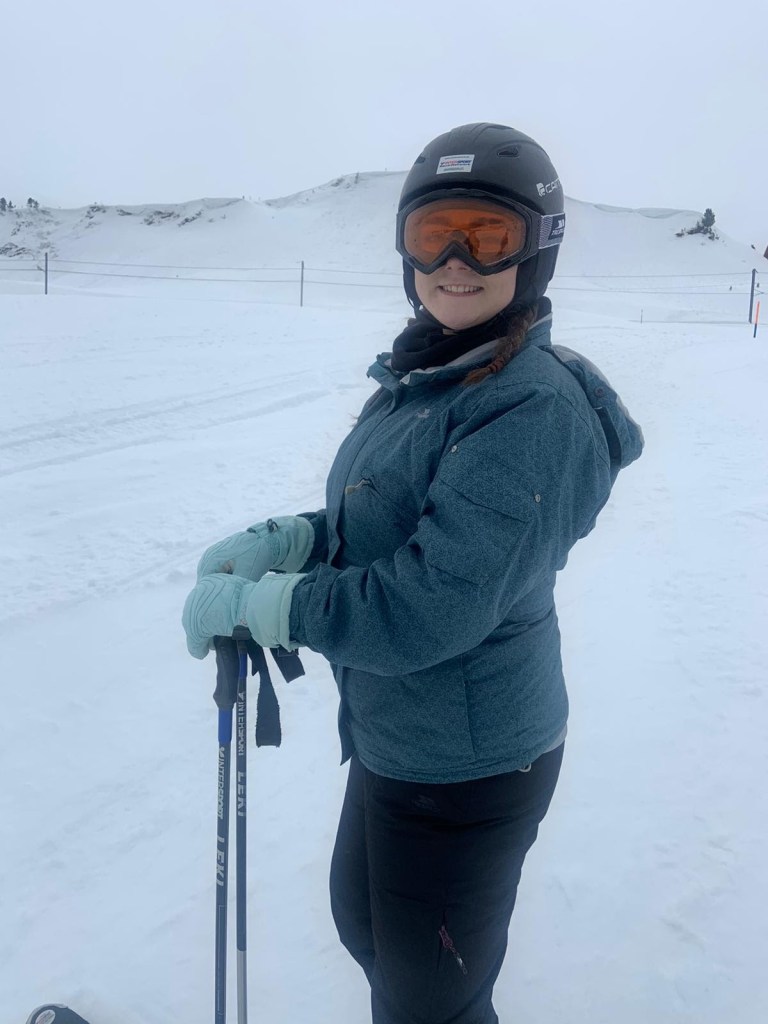
Official Tour Guide Duties Begin

I am winding down my last week in Mulhouse, at least for this year – it feels crazy to write that! – but I have a lot to catch you up on from the last few weeks. April has been very busy, filled with lots of lovely visits from lots of lovely people. I started with my dad and younger sister Kirsty who spent a few days in Mulhouse before we all went skiing in Switzerland together. Next up was Anna, my fellow Edinburgh University lectrice who works in Rouen who came for a long weekend over Easter. Last but not least was my twin sister Amy who was here last week. I loved having them visit me and being able to show them around not just the city of Mulhouse and the region of Alsace but also the life that I’ve built here. I’m going to split all of these visits into a couple of different, more bitesize posts so there are multiple to enjoy!

Starting with my dad and Kirsty, I went to pick them up from the airport and took them to their AirBnB. They had booked a place right next to le mairie (the city council) which was perfect as it’s right next to centre ville and a tram stop, making it easy for them to get around. The AirBnB itself was lovely, as was the owner. I joked that it was even nicer than my apartment! Our first stop was lunch, which was going to be at an Alsatian restaurant but the AirBnB owner told us that the restaurant I had in mind just reheats their dishes and gave us a better recommendation, Le Cellier. It wasn’t open for lunch but we noted it down for later in the visit.

A lot of places in France that open for lunch will close at 2pm when most people’s lunch hour ends and we were cutting it close to that. We ended up at Le Crêperie Crampous Mad which has non-stop service through the day so no worries about it closing on us. I’ve been here a couple of times before and it is great. Kirsty and my dad went for the classic option of a crêpe complèt with ham, cheese and egg while I had one with goats cheese and parma ham.

Kirsty had arrived pretty exhausted after having just finished a week of performances of her college musical, Carrie. Her energy levels were pretty low so we left her in the apartment for the afternoon to have a nap while my dad and I went to the car museum. The hope was that she could have a few chill days in Mulhouse and catch up on her rest before we went skiing. The Musée National de l’Automobile is the private collection of the Sclumpf brothers and I didn’t really know what to expect from that. It is one of the things that Mulhouse is known for and attracts a lot of people to the city. We got there just over an hour before it closed, which was actually the perfect amount of time to wander around the collection. The museum itself is housed in an old woolen mill that the brothers bought in 1957 to hold their collection.

The museum covers 20,000 m2 with 400 cars on display from 98 manufacturers. Apparently it has the largest displayed collection of automobiles and is the largest and most comprehensive collection of Bugattis in the world. There are three sections, the Automobile Adventure area, the Car Racing area and the Masterpieces area. The main room houses the Automobile Adventure which is absolutely packed full of cars that can walk you through time from 1878 to almost the present day. Interestingly, the lamp posts that are spread through the room are exact replicas of those on the Alexandre III Bridge in Paris! There were a lot of Ferraris, Mercedes Benzs and Peugots, some Renaults, Rolls Royces, and so many more. The racing car section had some rally cars, cars from Le Mans and even F1 cars including ones driven by Michael Schumacher, Mika Häkkinen, Fernando Alonso and others. It was hidden away through in a side room so we almost missed it but it was a great surprise! Finally the Masterpieces room has 80 of the most prestigious cars from the 1930s. I actually enjoyed the whole thing a lot more than I thought I would!

To top off their first day in Mulhouse, I took my dad and Kirsty to Gambrinus, one of the most popular bars in the city. It’s a vibrant and lively spot, particularly energetic at the weekend but still has a good buzz any day of the week. It’s a good place to sample one particular local delicacy – tarte flambée or flammekueche. These are like Alsatian pizzas, a very thin and crispy pastry base, creme fraiche as the sauce and with the traditional toppings of bacon lardons and thinly sliced onions. Me and my dad both got the Munster, topped with local munster cheese, and Kirsty had the Champignon, so with mushrooms. Gambrinus has a wide selection of draught beers as well which we sampled as well. We were going to stay for a few but Kirsty’s energy levels were dipping so we headed back to their AirBnB for some more chilled drinks there.

The plan for Sunday was to have a chilled day, as befits a Sunday in general but especially in France where most things are closed. We didn’t even make it out of the AirBnB until mid-afternoon, having given Kirsty a long lie-in and then waited until the very important, absolutely cannot be missed football match finished. When we did finally get out, we wandered around centre ville in search of a caffeine kick. We ended up at a cafe that I’ve been meaning to try out for a while, Le Temps D’une Pause. It was a really nice vibe inside and there were several people with their laptops out so I’ve filed it away as somewhere I can go and work in the future.

After our coffee we walked down to Place de la Réunion, the main square in Mulhouse where you can find the cathedral and hôtel de ville (the old town hall), and decided to go to the historic museum that is in the Hôtel de Ville and is actually open on Sundays. Free entrance was a bonus! I thought it was going to be really small but it actually had a lot inside, telling the history of Mulhouse. The museum was founded in 1864 and covers three different topics – local archaeology, the history of the city and Sundgauvian folk art. The original interiors of the town hall have been preserved in some rooms and in others, traditional Sundgauvian living conditions have been replicated (Sundgau is an area in the south of Alsace). There was also a whole room dedicated to Alfred Dreyfus and the Dreyfus Affair. Alfred Dreyfus was a military officer of Jewish descent born in Mulhouse in 1859. In 1894 he was convicted of treason for revealing military secrets to the Germans. New evidence came to light in 1896 but the military justice system refused to admit its mistake and it took until 1906 for Dreyfus to be completely exonerated. The Dreyfus Affair divided French society at the time and is still a well known symbol of miscarraige of justice and antisemitism. It was something I had heard of before but didn’t know much about and I definitely didn’t know that Alfred Dreyfus was from Mulhouse!

Outside the Hôtel de Ville where the historic museum is

After visiting the museum, we walked towards my apartment so they could see where I live and then back to the AirBnB for some dinner.

Unfortunately I still had work this week so I wasn’t able to spend the day with my dad and sister on Monday or Tuesday but I set them up with some plans in my absence. On Monday they headed out to Strasbourg and enjoyed the beauty of the city while I was running assessments with my classes. I finished work at 4pm and headed back to my apartment quickly before meeting up with them just after they got back from Strasbourg. We decided to go out for a wee apéro, basically the French version of an after work happy hour. We went to Gambrinus again so that Kirsty could experience without her exhaustion induced haze!

After a drink there we headed back to the AirBnB to have raclette for dinner. For anyone that isn’t aware of what raclette is, it features my favourite food group – melted cheese. When you have raclette at a restaurant, they bring out half a wheel of cheese and clamp it over a flame so that it starts to melt and you can scrape the cheese off to eat with your chosen accompaniments. At home raclette involves using a portable grill with little trays to melt slices of raclette cheese under. You give it a few minutes until its molten and bubbly before dripping it over the usual sides of boiled potatoes and saucisson plus whatever extras you want. Cornichons, or gherkins, and mustard are must haves with raclette.

Ready for raclette!

I was working again the next day, my busiest day of the week as after I finish my classes at the university I have to race over to Epitech, an IT school where I do a weekly conversation workshop. I finished there at half 5, raced home to change and freshen up before meeting my dad and Kirsty at Le Cellier for dinner, on the recommendation of the AirBnB owner. The two of them filled me in on their day, a rather chilled one after their big day trip to Strasbourg the day before and before a whole day of travelling to our ski destination in Switzerland the next day.

Le Cellier is an Alsatian restaurant so it was only fitting that we started with a bottle of Alsatian crémant, a sparkling wine. Kirsty had started with snails (when in France, right?) and I shared a charcuterie board with a mix of Alsatian meats and cheese. For mains, Kirsty had steak-frites, choucroute for my dad (basically sauerkraut topped with various meat and potatoes) and I had a new Alsatian dish, for me at least, bibeleskæs. It’s a kind of cottage cheese-creme fraiche concoction with garlic, shallots and chives. Mine was served with a little lettuce, a large block of munster and a little pot of cumin seeds. It was nice and surprisingly filling but not my favourite. It was still good to try a new Alsatian dish though. We were all pretty full but we decided to share a café liégeois, coffee ice cream topped with chantilly cream and with a shot of espresso to pour over.

Lucky we ordered the café liégeois to share!

It being the first Tuesday of April, we had arranged to meet some of my friends at Shamrock, an Irish pub where they sometimes have live music. The band was already in full swing by the time we got there and the place was more packed than I’ve seen it but we still managed to get the last table in the place. It was a good evening, everybody chatting. Kirsty had a bit more energy than any other day so it was nice to see her socialising and getting on with everyone.

And that concludes my first visitors in Mulhouse! They left the next morning to head to Grindelwald in Switzerland for a few days of skiing and I followed in the early afternoon after I had finished my classes for the week. It was lovely having them in Mulhouse and being able to show them all my favourite spots, everything I’ve discovered since living here. There might not seem to be that much to do as a visitor in Mulhouse but I think we managed to fill the days pretty well and there’s more than you might expect if you dig beneath the surface a little.