Casa en el Agua

For our last destination along Colombia’s Caribbean coast, Hannah and I headed somewhere pretty special. Months before we got there, when we were still in Scotland and planning the trip, we were trying to figure out a rough itinerary. Seeing as it was a long trip, two and a half months over three countries, we wanted to leave room for flexibility. The itinerary for Honduras was pretty set but beyond that, we had started to figure out where we wanted to go and a rough order but considering we were going to be travelling in low season for Central America, it wasn’t necessary to book everything way in advance.

That is, other than this place. I can’t remember exactly how I came across it but I think it was on Instagram. A picture perfect location that honestly didn’t look real and definitely not like somewhere I would ever have thought I’d be able to visit. Except, it was just a few hours from Cartagena where we already knew we would be going! Because it’s such an incredible place, it books up fast all year round. So the first part of our time in Colombia was built around the nights that we were able to book in what is possibly heaven on earth – Casa en el Agua.

Casa en el Agua touts itself as an eco-friendly hostel and is located in the San Bernardo Islands, about two hours by boat from Cartagena. Ten islands make up the archipelago, nine natural and one man-made, and Casa en el Agua is found just off the largest one, Isla Tintipán, and near Santa Cruz del Islote, the artificial island that is known for being the most densely populated island in the world (you might want to fact check that though). Almost all of the staff come from the surrounding islands. The hostel is in Parque Nacional Natural Corales del Rosario y San Bernardo and does everything it can to respect and protect the beautiful surroundings. This park holds the biggest coral reef on the Colombian Caribbean coast and you can find 170 species of fish, 52 types of coral and 25 sponges.

To get there, you have to book the boat journey through the hostel’s partner boat company, Tranq It Easy. It leaves the main pier in Cartagena at 9am and costs $70 for the return journey. You can pay this online as well as for the hostel but make sure to bring cash for your bar tab, any tours and extra food! It’s also recommended to leave your big bags on the mainland as space on the boat and in the hostel is limited. We had stayed in Republica hostel in Cartagena, partly because we had seen that they have bag storage (and it was a great hostel anyway).

As soon as you get off the boat, you’re welcomed with a drink and a snack (an empanada for us) and then we got shown to our hammocks. Upstairs, there are a number of private rooms and one dorm but running around the outside is a balcony full of hammocks. We had opted for this because the dorm was sold out and the private rooms would stretch the budget even more than we already were! I actually loved being in a hammock though – I love sleeping in a hammock, the balcony got a nice cool breeze at night and seeing as it’s literally a floating hostel, I didn’t have any concerns about leaving my stuff lying around. There is a bit of noise that comes up from the party downstairs at night that might bother you if you leave early but that’s just part of what you sign up for.

Downstairs, there are plenty of spots to lounge including hammocks, the central table used for meal times, other tables and sun beds. Hannah and I had gotten a bit confused in our research and initially didn’t think that food was included in the price but it turns out it was! Breakfast, lunch and dinner were all included which made the more expensive beds (or hammocks in this case) better value in our eyes. Breakfast was usually eggs, some Colombian pastries and fruit. For lunch and dinner, there’s either a fish or veggie option plus you can change it to fresh crab and lobster for an extra £8. There’s a bar where you can buy drinks and snacks (though the meal portions were big enough that I didn’t need anything!), all done through a wristband you get when you check in. Plus, there’s coffee, tea and drinking water available for free all day!

First things first after we arrived, it was into our swimsuits and that was pretty much it for the weekend! I found my friend Jing who I had originally met in the bus station in Santa Marta on our way up to Punta Gallinas. I introduced her to Hannah and she introduced us to a Dutch girl called Rachel and we became a little crew, not just for our time in Casa en el Agua but beyond! We met lots of great people while we were there, only a night for some of them but there’s a few that I still keep in touch with. There were Carlos and Ana, a couple from Gran Canaria, a group of English lads that I definitely stereotyped before we got chatting to them but who were actually lovely (I figured out that one of them had lived in China as well and spoke Chinese too so we baffled the group by having a conversation together!), Rachel and Evan, an English couple on a big South America trip, and a Colombian guy called Daniel.

The afternoon was basically spent alternating between swimming and reading which is my idea of heaven. It was such a picture perfect place, a photoshoot had to be had and then we sat around taking in the beautiful sunset before grabbing a shower. The showers are only available in the evening for a couple of hours. They’re not great, really just a trickle of fresh water but it’s good to wash the salt off. That’s all you really need seeing as most people are only really there for a day or two and you’re just going to get straight back into the ocean. The toilets were not as bad as I thought they would be either. Casa en el Agua has dry toilets meaning that they don’t flush or use any water so you just have a pee into it or if you have to go number two, you pour some sawdust and lime onto it which helps it decompose. It’s another part of the eco-friendly nature of the hostel.

In the evening, the vibes really pick up and the party starts! I was having a great time, having a bit of a boogie and decided to join some of our new friends for a night time swim which was great fun! Until… I got stung by a jellyfish! Something was irritating my neck and then there was this sharp pain across my elbow and a little over my stomach and back. I knew what it was because I’ve been stung before but it doesn’t make it hurt less. I got some ice and one of the girls that works there got me some vinegar. Thankfully the pain didn’t actually last as long as the last time I was stung and the ice helped relieve it. I stayed up for a little longer having a dance and then slipped away to go to bed.
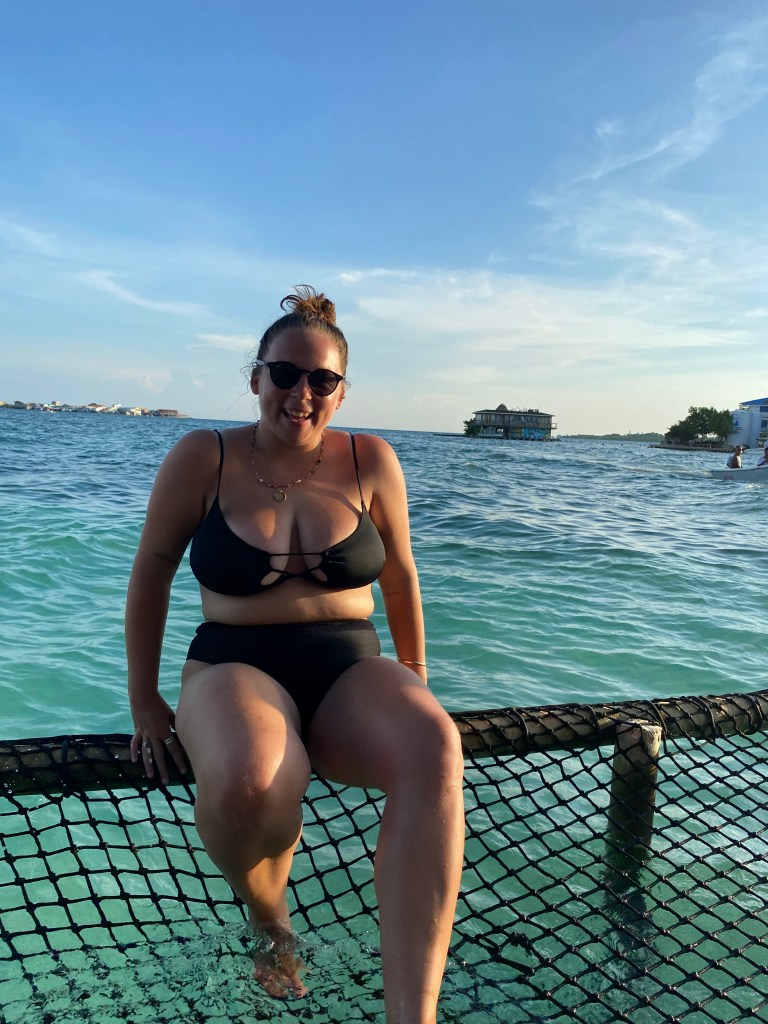
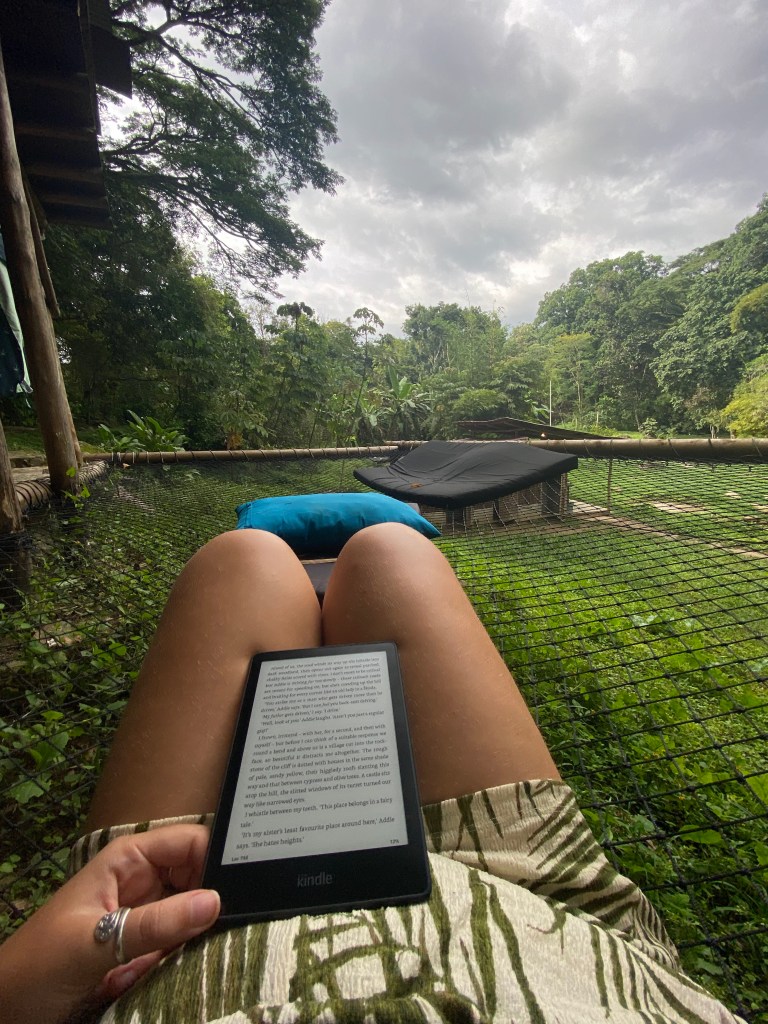
I woke up with the sun on our second day but was quite happy just chilling in my hammock for a while. Then it was bikini and shorts on, kindle in hand, ready for the day. We said goodbye to those people that were leaving after breakfast and then the day alternated between reading, swimming, playing some cards before watching the sunset again. The hostel does have equipment you can use for free like snorkels and ones you can rent like stand up paddle boards, kayaks and wakeboards as well as tours but Hannah and I were mostly happy doing nothing. We did do a lap of the hostel with some snorkels and I watched Hannah jump off the platform upstairs. I wasn’t feeling as much in the party mood that night and it seemed like most of the people I had been spending time with also opted for an early night. I quite enjoyed lying in my hammock with my book, listening to the music from downstairs.

On our last morning, I got woken up at 4am by the biggest clap of thunder and ended up watching a thunderstorm across the water which was a bit magical. Other than the faraway storm, it was quiet with most people still sleeping and the temperature was lovely and cool. I got a little more sleep before getting up properly at 6.30. I decided against getting in the water, as much as I was tempted, but I didn’t want to be damp on the boat back and it was actually a little chilly! I spent the morning reading more (why break a habit of a lifetime!) and then it was back to Cartagena to pick up our bags and head to the airport to move onto the next stage of our Colombia trip…

This was an incredible experience, I’m so glad we did it and two nights was the perfect amount of time but it is also a very expensive experience. We stayed in hammocks for 230,000COP (£46) a night and the return boat ride was $70 (£56) so a total of £148. I think the bed (or hammock in this case) price is justified because that also includes three meals a day. However I do think the boat is overpriced even if it is a two hour journey. I have no regrets but I recognise that it’s an expensive thing to do, especially if you add on tours or activities while you’re there. I was more than happy to do nothing and appreciate what we were paying for – the stunning location and the novelty of staying in a floating hostel. For me, it was worth it.

Punta Gallinas

At this point in our trip Hannah and I were six weeks in with four to go. We had been exploring the northern coast of Colombia for ten days and after visiting Minca, Hannah wanted to do the Ciudad Perdida trek. Also known as the Lost City trek, it’s four days of hiking through the jungle to an ancient archaeological site. I knew from the beginning that I didn’t want to do it (four days of trekking in extreme humidity isn’t my idea of fun) so I was looking for something else to do for a few days.

I decided to visit Punta Gallinas, the most northern point not just in Colombia, but in South America. There are many reasons to explore this often overlooked area of Colombia, not just because it’s cool to say you’ve been there! The desert landscape of the region of La Guajira is unlike anywhere else in the country, the beaches are stunning and you can get to know a little about the indigenous Wayuu culture.

It’s not really possible to go further than Manaure (the first stop on day one of most tours) by bus because La Guajira doesn’t have much of a public transport system. I booked a three day tour through Expotur which, after doing some research, seemed like the most reliable option. They have a two day tour but that only takes you halfway to Punta Gallinas, the three day tour, which is the one I did and would recommend, and a four day tour. I met some people later on in the trip who had done the four day tour and wouldn’t recommend it because it was basically the same as the three day tour but with a beach day in the middle. The price for their tours depends on how many people are on the tour but for the three day option it ranges from $190pp for six people to $665pp for one person. I had two others on my tour so it ended up being somewhere in the middle at $275 or £215. It was a bit of a splurge but I don’t regret it. The tour was amazing and I wouldn’t have been able to experience that region by myself in the same way. The price includes all your food, accommodation, transport and a driver/guide (English or Spanish speaking). I took some snacks with me and didn’t even touch them so you’re well looked after.

General road conditions beyond Uribia

I started my tour in Riohacha, although there was the option to get picked up from Santa Marta and dropped there afterwards. I opted to just get the four hour public bus from Santa Marta which I’m pleased about because I made a friend, Jing from Germany, who was also headed to Riohacha and hoping to get on a tour up to Punta Gallinas. She only had one day so she didn’t end up coming on my tour but I did see her again (stay tuned). I left my big backpack in our hostel, Masaya Santa Marta, where I would meet up with Hannah after our respective trips. I would recommend doing this because space can be a little tight in the car. If it’s not available at your hostel, you can leave your bag in the Expotur office either in Santa Marta or Riohacha. I also really recommend the Masaya hostel in Santa Marta. It’s a small chain across Colombia and I can personally recommend the one in Medellín and based on these good experiences, I imagine the rest are also great!

Once I arrived in Riohacha, Jing and I shared a taxi to our nearby hostels. I stayed in Hostel Riohacha 1545 which was absolutely fine for one night. I didn’t do much while I was here other than checking in at the tour office before departure the next morning and going out for dinner. My Lonely Planet guide book didn’t have much to say about Riohacha but it did suggest Casa de los Mariscos which was just around the corner from my hostel so that’s where I went. I wanted something with octopus and asked the waitress what she would recommend. I ended up with pulpo gratinado which was very tender octopus in a cheese sauce and topped with more cheese. As much as I love cheese, I was sceptical and I wasn’t expecting this to be as good a combo as it was!

Tours to Punta Gallinas are weather dependent and mine was touch and go for a while because there had been heavy rain in the past few days. I saw why that would have been an issue once I saw the roads (or lack of!). Thankfully, when I turned up at the office on the morning of the tour, we got the go ahead. There were two others on my tour, a pair of Italian friends called Matteo and Federico, and we had a local driver called Wilder who was the tour guide as well. It seemed like a good group to have for the next few days together. I got given the front seat so the guys could spread out in the back seat and I wasn’t complaining!

We drove for about an hour and a half to our first stop, the Manaure salt flats. The salt flats were interesting but it was a very quick look around with a couple of other tour groups, ironically more Italians who had their own guide translating. We actually ended up seeing them and a few other groups at most of the stops that day and some the next day too. The best part was getting to do a passion fruit salt hand scrub at the end! From Manaure we kept driving towards Uribia, at this point still along proper roads, until the path was blocked by lots of trucks. I’m not quite sure what was going on, it might have been some kind of strike, but it was the first test for the 4×4 we were in. Beyond Uribia, you almost exclusively see 4x4s, motorbikes and horses anyway.

As we were driving down the more unofficial route, we came across the first instance of the road being blocked in some way, in this case by some rope but at other times by a strip of cloth or even a bike chain. This happened when we were driving through land belonging to the Wayuu people (the local indigenous group). We saw it a lot more on the second day as our surroundings got more rural. To pass through, it’s polite to offer something as a sort of tax, it could be a couple of hundred pesos but we had various things to give them like bags of water, guava sweets, crisps or dehydrated cane sugar. Sometimes it was frustrating when there were ten right after each other but in general I understand why they do it.

We actually arrived in Cabo de la Vela, where we would be staying the first night, around 1pm and in time for lunch. Cabo de la Vela isn’t big, just one road along the coast, and isn’t big on tourism but what tourism it does have is built around kitesurfing. For lunch I had opted for a Colombian classic, chivo, which is goat! It wasn’t terrible but not my favourite either.

The rest of the day was spent visiting some nearby attractions. The first stop was Playa Arcoiris (Rainbow Beach) which is more of a viewpoint than a beach, called that because of the way the water catches the light when it splashes up. Just around the corner is the Pilón de Azúcar (the sugar pile, so called because when the sun hits it, it appears white from afar). It’s a sacred site to the Wayuu people. It was a short but steep scramble up to the top but worth it for the views! And guess who I saw at the top? The girl I met on the bus, Jing! It turns out that we were also going to the same, very exciting hostel together a few days later and then also on the same flight to Medellin! After descending the pilón very carefully, we had a bit of time to relax at Playa Dorada (Golden Beach) at the bottom before moving on to the next spot.

We squeezed in a quick stop at the Ojo de Agua, a beach with a small freshwater pool where there is also a hill known as a La Tortuga because it looks like a turtle! Personally I thought the view from the ‘turtle shell’ back to shore actually looked more like a turtle but to each their own. Our final stop was at the lighthouse for sunset which was incredible. After the sunset, it got dark very quickly so we just headed back to the hotel. Our accommodation for the night was in chinchorros , traditional hammocks that are a bit bigger than the standard with decorative edges, with the beach just steps away. It wasn’t the best night’s sleep but I was tired enough from the busy day that I fell asleep at 9pm.

On day two, the journey towards Punta Gallinas, the most northern point in South America, continued. I woke up with the sun and to the sound of the waves which was pretty cool. Our first stop was Bahia Hondita, about three hours’ drive from Cabo de la Vela. On the way there, there were lots of stops for the unofficial taxes that we’d encountered the day before. We had a couple of hours at Bahia Hondita to swim and read and that’s where we had lunch as well. It was one of the most beautiful spots of the whole tour but the pictures I have just don’t do it justice.

The next and maybe most anticipated stop was the dunes of Taroa where you can sand board. This went… about as well as I expected! I knew there was no chance I could do it standing up like some other people were. I sat myself down and tried to go slowly so I could enjoy it (a lesson I learnt from volcano boarding in Nicaragua years ago). Just before the beach there was a pretty steep drop that I tried to slow down for which caused me to tumble off anyway though! I wasn’t hurt, just covered in sand, and I actually think it made it more fun! I just immediately got in the water to wash everything off. The last stretch of driving for the day brought me two of my highlights. We had a very quick, unofficial stop at Mirador de Casares which was my favourite view of the tour. I also didn’t have belting out Flower of Scotland with two Italians on my Punta Gallinas bingo card but I loved it! It was even one of the Italians that had it downloaded on his phone, not me!

Mirador de Casares

And then we made it to Punta Gallinas itself! We were just in time for sunset which was so beautiful, thankfully because the most northern point of South America was actually a bit disappointing, just another weird, spindly lighthouse with a beach. We had some time there so I walked along the beach a bit. Our accommodation was just along the coast a little where we got shown to our chinchorros and had time for a shower before dinner. While the previous day there had only been bucket showers, here there was an actual shower but the water pressure had me longing for the buckets! Once it was dark, there wasn’t much to do other than take our time chatting over lobster rice for dinner.

Day three of the tour is just about making your way back down to Riohacha. From Punta Gallinas to Uribia, where we stopped for lunch, it was about four and a half hours. It was another hour and a half to Riohacha and from there I had organised a transfer to Santa Marta through Expotur for an additional fee. I feel like it was a good choice because I only got there at 8pm and it would have taken even longer on the public bus. 13 hours on the road was already long enough for me! I was reunited in Santa Marta with Hannah who had just finished the four day trek to Ciudad Perdida, having left the day I went to Riohacha. What made Hannah such a good travel companion (one of many reasons) was that we were happy spending so much time together but were also really good at letting each other have our own time and space. Sometimes that meant one of us chilling in our room and one in the common area of the hostel, it could be Hannah going for a hike while I read my book in a coffee shop or me saying I don’t want to hike for four days but I love that for you, go ahead!

This tour was a little more of a splurge than I would usually go for while travelling but I do think it was worth it. I spent £215 on a three day tour but I didn’t have to spend any extra money within that time. There really is no other way to visit Punta Gallinas and everything on the way, unless you want to hitchhike the whole way (…through a desert…). The Guajira region was so different to anywhere else I saw in Colombia that I feel like it highlighted to me the diversity that exists in the country. Going from the lush Tayrona National Park to the desert in Guajira to sparkling Caribbean water to big cities like Medellín and Bogotá, Colombia really has it all!

Minca

In an unusual turn for a Sara Somewhere blog, I’m not warning you to settle in for a long one. In fact it’s the opposite. As much as I liked Minca, I don’t expect this to be a long blog because I didn’t actually get up to much here. If you’ve read this blog about how and why I moved to Costa Rica, you’ll know that Minca is where I simultaneously prepared for my interview with GVI while also having a minor breakdown over whether I even wanted to take the job. With all of this going on, I didn’t get out into Minca and the surrounding area as I much as I would have otherwise. Thankfully, Minca is actually a pretty good place to do nothing (or prepare for a job interview).

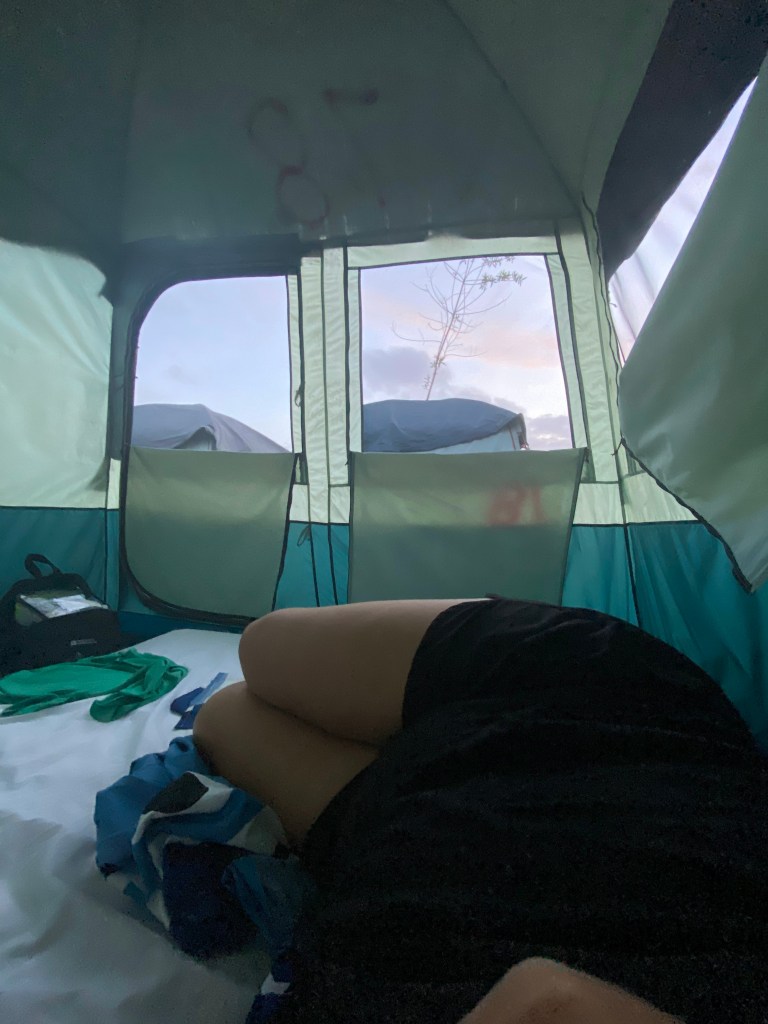
After spending the morning leaving Tayrona national park, it wasn’t a long journey to get to Minca. Right as we exited the hostel where we had picked up our luggage, a bus going to Santa Marta pulled up. After a quick transfer, we were driving up through the mountains to the cooler climes of Minca. Because of its altitude above Santa Marta, nestled in the Sierra Nevada mountains, Minca is a lot less humid which was lovely. It did also seem to have torrential rain showers that always started right as we left our hostel! We stayed in Río Elemento on the edge of the centre of town. There are a lot of cool hostels around Minca but many have to be reached by motorbike from the bus station. One of the reasons Río Elemento was great was because it had the same secluded feel but only a five minute walk away. There were a couple of hostels that some friends had recommended to me that we wanted to stay in too, the Journey Hostel and Masaya Casa Viejas, but that were unfortunately full. Even the hostel that we did stay at was almost completely booked so we stayed in a tent which actually provided some very good night’s sleep. There was a double mattress, a fan and even a power strip inside!

I won’t bore you with the emotional turmoil that I was going through over our three night stay (although you can read about it here if you want to enjoy my suffering). Instead, I’ll tell you what I did enjoy in my respite from interview preparation. After arriving, we didn’t get up to much but in the evening we got a message from a girl we had met in Bocas del Toro, Panama saying her group of friends were in Minca as well so we went for a drink together.

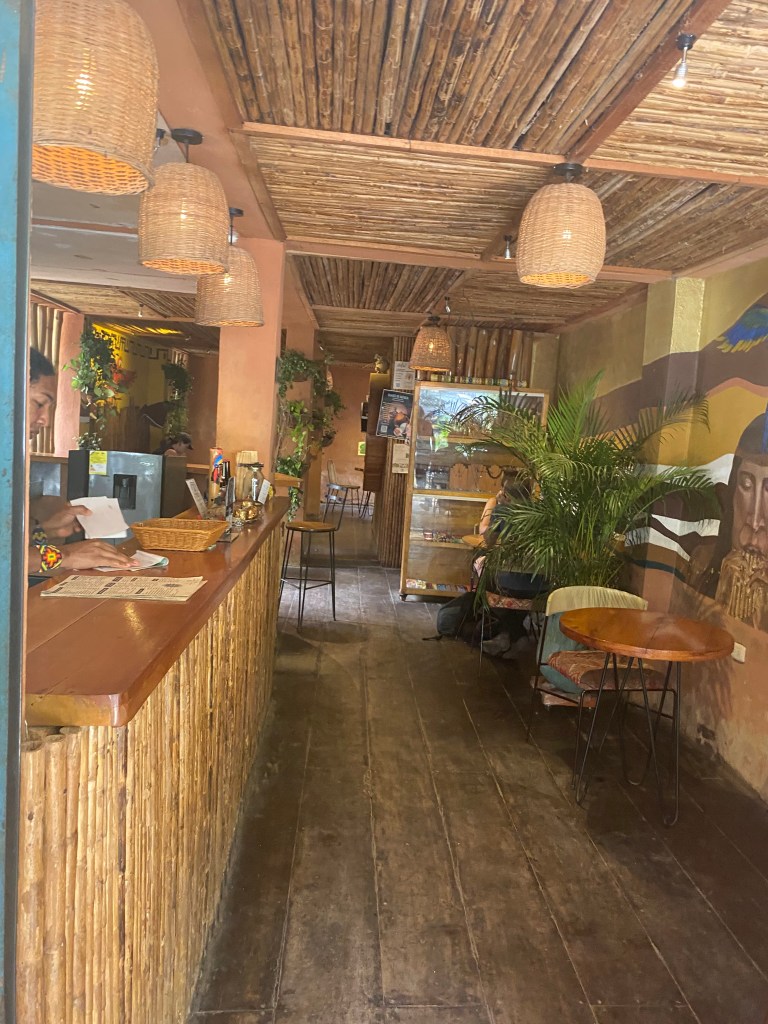
The following day heralded the best discovery of the whole trip. After a relaxed morning, we decided to head into the town to have a nosy around. While on a walk the previous day, Hannah had found a cafe that she wanted to take me to. It served not just as the perfect place to shelter from one of the previously mentioned torrential rain showers but became our home-away-from-hostel while we were in Minca. It was called Waira Cafe and is an absolute must visit spot. I was there three out of four days and Hannah went every day! Among the sweet treats we sampled, the banana bread and cinnamon roll were excellent but there was a clear stand out. We chatted to the baker there the first time we went together and he told us that they’d had pistachio croissants that morning and probably would the next day. That was enough to tempt us back and while there were no croissants, the baker remembered us and brought us out a taster of something he had baked for the first time and wanted us to try. Three magical words – pistachio lava cake . Quite possibly the best thing I’ve ever put in my mouth, we went back on our final morning, expressly for one more pistachio lava cake. Waira Cafe is at the end of town in the direction of the waterfalls (a popular activity around Minca), so just keep walking (it’s not actually far!).

While out for another walk together one day, Hannah and I walked out of Minca on the other side of town from Waira Cafe and stumbled across Hostel Mirador. As the name might suggest, there was a great viewpoint from their bar (but you’ll just have to take my word for it because I didn’t take a picture!). If you’re not a guest, you can pay $5000COP (£1) as an entrance fee but $4000COP of that can be put towards a drink. We were there in the afternoon but I imagine that it would be beautiful at golden hour! We were there for a while enjoying the view and playing some cards and it was a lovely break from staring at my computer all day.

That was kind of it in terms of Minca, at least for me. Hannah went for a longer walk one day to visit the waterfalls that are (supposedly) one of highlights. They were nice, according to the intrepid explorer, but because we were in Minca over the weekend they were absolutely packed! Additionally, there’s supposed to be a nice swimming hole, Minca is a great place to learn about the coffee and cacao process and is also known for its birding. It’s a place that, if I was ever back in Colombia, I would go back to so I could enjoy it a little more. Not that I didn’t enjoy it, our hostel had a great pool, bar, restaurant and plenty of peaceful spots to read, the cool temperature was delicious and do I have to mention the pistachio lava cake again?

Finally, the day was upon us. Time to leave Minca but not before the job interview. Spoiler alert – it went well because I’m now ten months into my job with GVI in Costa Rica! After a farewell trip to Waira Cafe for a debrief (and one last pistachio lava cake), we headed back down to Santa Marta. Despite having passed through it a number of times already, this was the first time we stayed the night. I wasn’t a big fan of Santa Marta – from what we saw it was pretty dirty and I didn’t feel that safe – but we did stay in the lovely Masaya hostel – which I highly recommend! It was really clean and had a lovely rooftop terrace with a kitchen and bar. You know the hostel is cool when there’s people getting tattoos in the common area! As tempting as it was, I didn’t join them… this time! Other than venturing out for some pizza for dinner, we rested up for the big few days that were to come. Santa Marta was only really the starting point before Hannah and I actually split up for a few days. She went off to do the four day trek to the Ciudad Perdida (the lost city, a sacred indigenous site). I didn’t fancy it (four days of incredibly humid hiking doesn’t appeal to me) so instead I went off somewhere else but you’ll have to wait to find out where!

Tayrona National Park

Going into my Colombia trip, I asked everyone I knew who had been there for recommendations of where I should go, where I shouldn’t and what I should do. Every single person had at least one thing in common on their list – Tayrona National Park. Described by one person as the most beautiful national park they’d ever been to, it quickly shot to the top of my list and was one of the things I was most looking forward to. I’m happy to say that it absolutely lived up to the hype and was one of my favourite things that we did. I’m now passing it on to you, it was such a highlight for me that I think it’s unmissable.

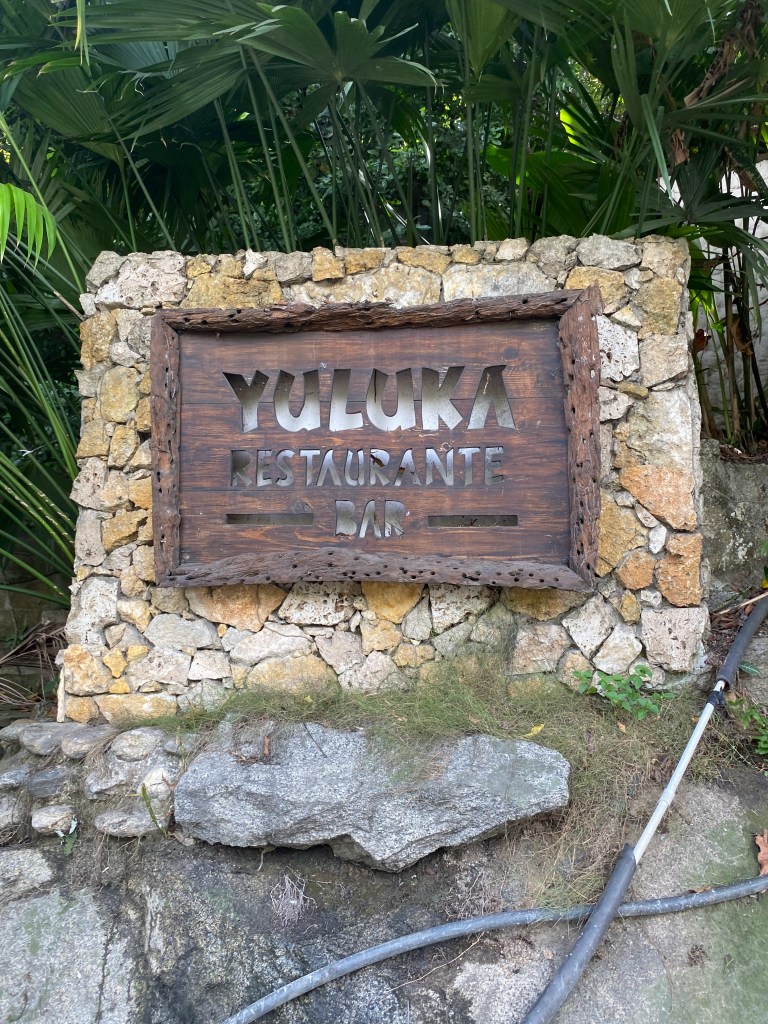
First things first, Hannah and I were coming from Cartagena which involved a bus to Santa Marta. From there it was supposed to be another bus but we teamed up with a girl from our bus to get a taxi up the road. Our plan was to spend a night in the park (lots of details on that later) but first we had a night in a hostel just outside so that we could rest up and be out bright and early the next day. We stayed in Eco Hostal Yuluka. It was a really cool space, right on the main road but with such a private and secluded vibe that you could barely tell. There was a lovely wee pool to cool off in and a restaurant on site. Importantly for the next day’s activities, they let us leave our big bags there so we only had to take our small backpacks with us overnight in the park. They also had a free shuttle to the park entrance at 8am.

Now, when it comes to staying in the park there are lots of options. For those with more cash to splash there are a number of hotels and guesthouses that you can stay in. For those on tighter budgets (like us), there are campsites spread throughout the park. The biggest and most popular option is Cabo San Juan. We chose here because it is also one of the few beaches in the park where it’s safe to swim (not all the beaches are safe for swimming but it’s very clearly signposted) so we liked that crossover. It also has a restaurant where you can get some dinner and there are toilets and showers on site. There is the option of a hammock, either in the tower overlooking the water or in the main campsite, or a tent. Initially we wanted a hammock but by the time we arrived at the entrance to the park where you reserve your space (before you pay your entrance fee) all the hammocks were taken so we booked a double tent instead for $70,000COP (£14) each. The next thing you have to do is pay your entrance fee which usually involves joining a long queue. While you’re waiting, there are people selling insurance which you might question but it is compulsory to have. If you don’t buy it there, the ticket person will just send you back to get it. It was $6000COP (£1.15) per person per day that you are staying. The entrance fee is a one off $62,000COP (£11.80) per person.

Once you’re inside the park, you can take a colectivo (a minibus) to the start of the trails for $5000COP (96p) but we decided to walk because we’d heard that there was a good chance to see monkeys. It took us about an hour to reach the start of the trails but we did see some monkeys swinging around so it was worth it! We had been alone along the road but once the trails started, it got a lot busier. The terrain is not too challenging, a lot of boarded walkways and stairs or well worn paths. Most day trippers walk from the start of the trails to one of the swimming beaches, Piscina or San Juan, which takes a couple of hours. Luckily, the benefit of staying overnight is that we weren’t in a rush. On our way we saw some more monkeys and after a while of walking through the jungle, we came to the sea! The views were just breathtaking and I understood why so many people had recommended it.
The hardest part about the hike is honestly the humidity! Take lots of water with you and I would recommend some electrolytes as well. There are a few sellers at various points down the path that you can buy water from but you still have to walk quite far to get to them so it’s better to bring your own supply as well. I don’t deal well with humidity but it definitely helped when we came across one such seller who had paletas, aka ice lollies! I was at a bit of a low point and a passion fruit paleta pulled me right out of it.

It takes about two to three hours to get to the main swimming beaches but because we were staying overnight we took our time. We had another break at a restaurant on the route to have some juice but then we discovered that it wasn’t that much further to the first swimming beach, Piscina. We didn’t hang around here because it was really busy and it wasn’t that much further to our campground at Cabo San Juan. Check in for our tent (yes, there was a check in time!) wasn’t until 2pm so we went to find a spot on the beach, got a beer and played some cards until we could leave our bags in the tent. When it started to rain, we moved to the on-site restaurant for shelter which is the only option when it comes to food. We had a surprisingly good dinner there, sharing grilled fish with shrimp in garlic sauce and patacones (smashed plantain fritters) and tamarind shrimp with chips.

While we were eating, someone came over to me and said ‘excuse me’. I didn’t know who it was and initially I thought I had dropped something or maybe I was about to get a compliment on my bikini or one of my tattoos. Instead, they asked if I’m Amy Morrison’s twin! This isn’t the first time in my life that I’ve been asked that, it happens a lot when you’re a twin. It turns out that Polly and Charlie volunteered with Amy in Mexico in 2021! They recognised me from across the restaurant and wanted to say hi! This wasn’t the only coincidence that happened while we were in Tayrona either, although I didn’t find out about the other until we left. I posted a selfie that I had taken on the beach on Instagram (the one above) and a girl that we had met in Panama replied saying that it was her sunbathing in the background! I somehow didn’t realise at the time, even though she was barely five metres away.

I won’t lie, the tent was a bit gross but for one night, we survived. It was quite hot and I woke up once it got light but I didn’t mind that. The day before, Hannah and I had both walked into the park via the El Zaíno entrance but there is another option called Calabazo. It looks shorter on the map but the route is a lot more challenging and takes about five hours. Hannah wanted to give that a try but I was happy to go back the way we came so we split up. Hannah left quite early, around 6am, and my plan was to wait until the restaurant opened at 7.30, grab some breakfast and then leave. In the end I was awake at 6am too and I felt like making the most of the lovely, cool morning to start walking so I headed out earlier than planned. Unfortunately, during the walk the day before my hiking boots, which were my mum’s from the 90s, had broken so I started the hike in my Birkenstock sandals. When the terrain changed from sand back to the walkways, I changed into my boots and secured the sole that had come away from the shoe with some spare hair bobbles! It did the job and they lasted until I got to the end of the trails.

For the last half an hour of the walk, I was having to fight against the incoming tide of people who had arrived on the morning’s tour buses. I got frustrated because at various points the path would narrow between some boulders or at some stairs and I would have to wait sometimes whole minutes for someone to let me through. There were waves of people coming the other way and I was only one person. It wouldn’t have taken a lot for one person to let me through but that apparently didn’t cross many people’s minds.

By the time I got to the end of the trails where the colectivos take you back to the exit, it was only 9am which meant it had taken me two hours from the campsite in comparison to three and a half the day before, albeit that was with many more breaks. I didn’t feel like I needed to walk back along the road so I got the colectivo out and then got some breakfast at a place across the road from the entrance. I walked back along the road to Yuluka, where we had left our bags. Another reason that I would recommend staying there, other than it being a cool place and having bag storage, they also let me shower when I got back! It was very needed after a sweaty two days. I reorganised my bag and then waited for Hannah in one of the hammocks. When she arrived, it turned out that the path to Calabazo was very overgrown and unclear so she had turned around to come back the other way. When she hadn’t found me at the campsite, she figured that I had just left early and followed me out.

Once Hannah had also had a shower and sorted herself out, we went onto the main road to wait for a bus to take us back to Santa Marta. Serendipitously, one pulled up right as we went outside. We changed buses on the edge of Santa Marta to take us to our next destination, Minca – a sleepy town nestled in the Sierra Nevada mountains known for its variety of birds, coffee and much cooler temperatures!

Cartagena

We have finally reached Colombia on the blog! It’s almost a year since I set out on this trip and I’m still enjoying writing about it so much. It’s a great chance to look back on some of the incredible places I’ve been and things I’ve done. I feel like I’m experiencing them all over again!

It’s not possible to travel from Panama to Colombia by land because of the fearsome Darien Gap so we took our first flight since arriving in Honduras a month earlier. Being on a budget, we had gone for a very early flight and we hadn’t made things easier for ourselves by having a big night out in the city with some friends who were parting ways. The early morning and a bit of a hangover meant that arriving in Colombia was a bit anticlimactic. It was also one of the most humid places I’ve ever been and I really struggled with that. We had some time to kill before we could check into our hostel so we dropped our bags off there and then went out in search of food and air conditioning! The only time I set foot in a Starbucks on this trip was that afternoon, purely because I could feel the cool air blasting out as I walked past in the street!

Even just wandering around was amazing though. Cartagena is a beautiful city, interesting just to walk around and one of the most colonial cities that I’ve seen in Latin America. To end our first day, we went on a late night stroll in search of arepas. An arepa is a very popular dish in Colombia (and Venezuela, although it’s a bit different) made of corn dough filled with pretty much whatever you want!

Now, we didn’t have that long in Cartagena, just one full day, although we would be back later for another night after spending about two weeks exploring the Caribbean coast of Colombia. With the heat and the humidity, we had decided that we wanted to do something that would get us out of it. If you’ve been following along, I’m sure you can guess what Hannah and I chose… scuba diving! We had spent some time the previous day messaging a bunch of dive shops to see if anyone could squeeze us in at the last minute and the amazing Paraiso Dive were able to! They are actually based on Tierra Bomba, an island sitting in the bay in front of Cartagena about a 20 minute boat ride away. We can now say we dived in each country on this trip! Jota, the owner, and Andrés, our dive guide, were great, they kept us safe and comfortable, showed us some really cool things, all on top of squeezing us in in the first place!

We went to two dive sites, the first at a site called the Underwater Museum where there are three shipwrecks and then some sculptures installed by the Navy for training purposes. We got to swim through one of the wrecks and it was cool to see the sculptures. We saw some lionfish, scorpionfish, lots of juvenile fish and two squid. After some juice, a fresh passion fruit and a little break on the beach during our surface interval, it was back out for our second dive. We went back to the same area, off a peninsula of the mainland called Barú, to a dive site called La Torreta. It’s called that after a tower there that came off a wrecked warship. We saw lots more of the same amazing fish on this dive but were a bit preoccupied with avoiding some of the other divers! There was an older couple who were the definition of ‘all the gear, no idea’ – they had rocked up with all their own kit but were incredibly annoying to dive with. The woman went GoPro first into everything, the man had no buoyancy control so would rise up or sink down into people or coral and neither had any self-awareness! Regardless, we had two amazing dives and once we finished, we were able to hang out in the resort where Paraiso has their dive shop!

In need of some relaxation, we headed back to our hostel in the bustling district of El Centro. We stayed in República Hostel both times we were in Cartagena. They had air conditioned dorms (definitely a necessity!), nice common areas and a great pool! They also had baggage storage which was important for us when we were back for the second time, as we went off on a side quest for a few days and wanted to leave our big bags there. It’s in a good location in El Centro, the old town of Cartagena, just a short walk from Getsemani, where most of the nightlife is. Along with a few people we had met at our hostel, we headed there in the evening. We had heard Plaza Trinidad was the place to be, a very lively spot with lots of street food options. There are also lots of streets with bars up and down the pavement. We met up with two French snorkelers that had been on our dive boat that morning and had a drink together while getting serenaded by a roaming singer!

We were leaving Cartagena the next morning to head a little further along the coast. Our bus was at 11am so we were at the bus station a little early to make sure we got tickets. This sounds like a very mundane part of my travels to be writing about but I do so for good reason. It was in this bus station that I got an email from Chrissi at GVI, offering me an interview for the Education Coordinator position in Costa Rica! That moment led me to where I am now, almost a year later.

Fast forward 11 days and we were back in Cartagena after visiting Tayrona, Minca, Punta Gallinas for me, Ciudad Perdida for Hannah and Santa Marta. We had one more night in Cartagena before staying in one of the coolest places ever. But before we get there, we chose to do a walking tour to find out a bit more about the city for our last day in Cartagena. Even after already having spent a few days there, we felt like we didn’t know that much about it. Thankfully the weather was actually pretty bad, raining a little with thunderstorms in the background. You wouldn’t think that’s ideal for a walking tour but it took away some of the humidity.

We booked a tour with Nexperience Colombia and had a great tour guide called Liss who took us through some of the old town and then ended in Getsemani. We learnt some cool facts about Cartagena’s flag which is red, green and yellow rectangles with a white star in the middle. The red represents the blood of Colombians, yellow for the sun , green for hope and the star for the 8 municipalities that make up Cartagena. It was the flag of Colombia at first but the current Colombian flag has a yellow stripe for the riches of the country, a blue stripe for the sky, sea and rivers and a red stripe for the blood spilled fighting for Colombia’s independence. It is so similar to Venezuela and Ecuador because at one point they were in a coalition.

Cartagena was our introduction to Colombia and while it wasn’t my favourite place that we went, it was a great start. Once you get over the heat, Cartagena is a lively, vibrant city. It has a lot of history to dive into and I feel that I only scratched the surface of it. Coming back for an extra night was a good bonus but I had so much fun in the time in between our stays. Coming next – one of the most beautiful national parks I’ve ever been to!