Classes at DUT

Today I’m going to introduce you to one part of my life here in Dalian – all the classes I’m taking here at DUT. I am in Elementary 3, class A (初三A班) of the Chinese language programme, which has about 20 students in it. The composition of the class is mainly a mix of Thai, South Korean and Japanese students, but also has one student each from Russia, Venezuela, Turkmenistan and Britain (me!). This means that the common language between many of us is actually Chinese which, while it might have made things a bit awkward and difficult to begin with, is actually proving to be an added bonus dimension to studying Chinese.

I start class at 8am every day, so anyone that has ever complained about having 9ams (including me last year) can keep it to themselves. I have two classes before lunch lasting an hour and a half each, with a five minute rest halfway through and a 30 minute break between the two, meaning we finish for lunch at 11.40. One day a week I have one more class after lunch as well. My two elective classes, HSK 4 and calligraphy, are in the afternoons on a Wednesday and Thursday respectively. The other elective options were HSK 5, business Chinese or martial arts.

Comprehension (综合 – zonghe)

Comprehension is my main class as we have it every day and the teacher kind of acts as our form teacher too. The teacher is very friendly, very supportive and has a good sense of humour, which is good because it means she’s able to laugh at our mistakes! Our textbook is based around a text, with accompanying vocabulary and grammar. An exciting aspect of not just this class but also the others is homework due in the next day! Everyone’s favourite kind! And also regular vocab tests two or three times a week! Sarcasm aside, the homework assignments keep us on our toes and the regular tests makes sure we actually have to learn the new vocab we’re studying.

Speaking (口语 – kouyu)

I have speaking three times a week where we use a textbook with new vocab and two short texts in each chapter. We work through them and then use what we have studied in our homework tasks. Our teacher puts us in groups, trying to mix up the different nationalities all the time, and gives us a topic to write a dialogue or short scene about that we then present to the class in the next lesson. To start with I was not a fan but changing up the groups has been a great way to get to know my classmates and also helped me realise that we are all more or less on the same ability level and I actually quite enjoy it now. I really like my speaking teacher, she’s very no nonsense but good fun as well. She’ll get the job done but we still have a good time doing it.
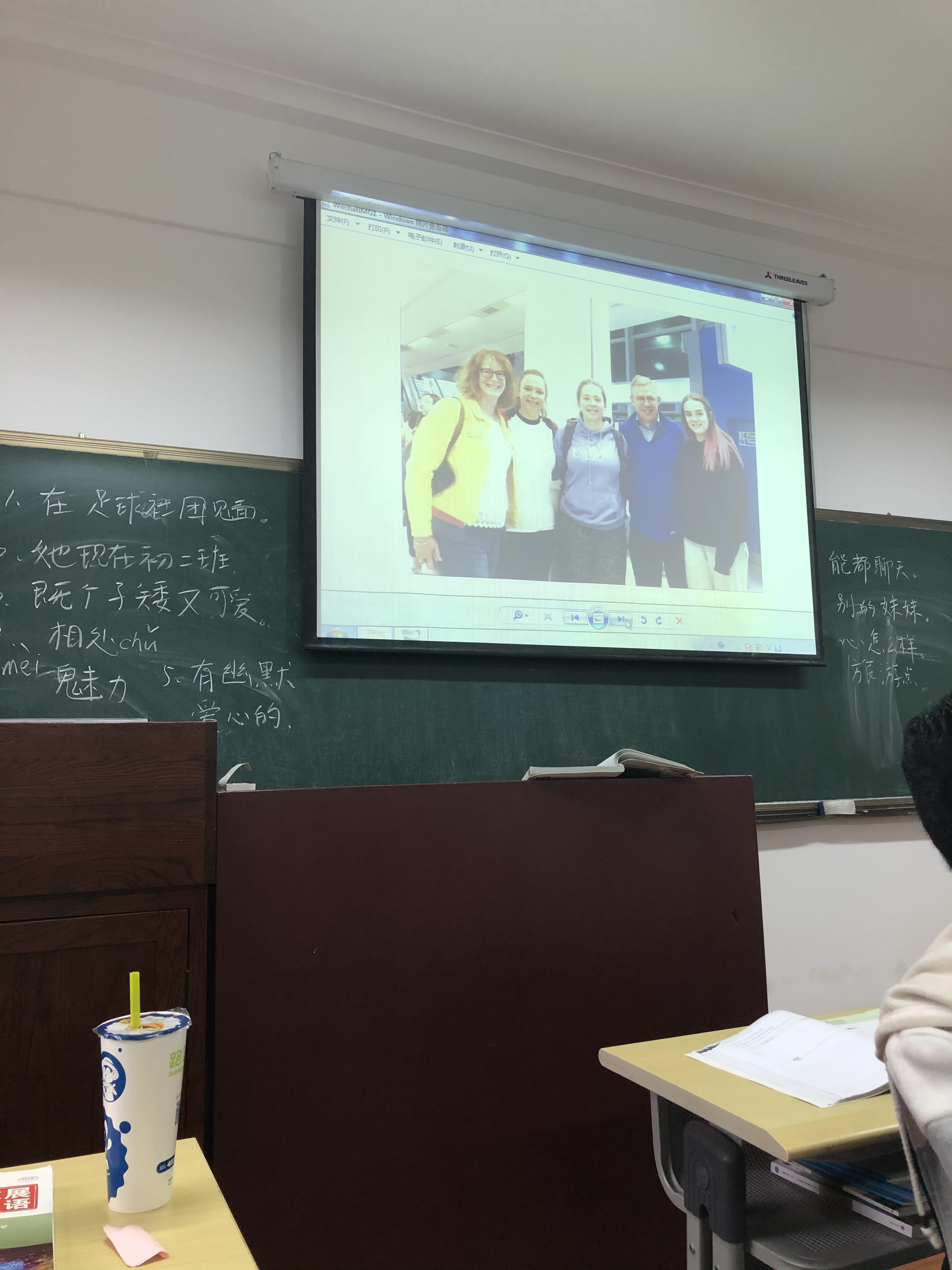
My family made an appearance in a speaking presentation

Listening (听力 – tingli)

Happening twice a week, each textbook chapter has a broad topic, we listen to several dialogues based around this topic and have various activities to follow. We often have to try and remember as much of what we listen to as we can and repeat it back. Our teacher is lovely, very soft and gentle and encouraging but most importantly speaks very clearly!

Reading and Writing (读写 – duxie)

Reading and writing only happens once a week and I won’t lie to you, I’m glad. I find the class very confusing, it has random topics, no apparent flow to it and not even a new vocab list. It’s more about reading skills but still, not my favourite. The silver lining is the teacher, she’s quite young and likes to play music and chat to us before class and during our break.

HSK 4

HSK stands for hanyu shuiping kaoshi (汉语水平考试) and is the official Chinese proficiency exam. The levels run from 1-6 and I am taking level 4, mostly as a way to learn some extra vocab and just be exposed to even more Chinese rather than because I actually want to take the exam. That’s not to say I won’t though! The class was a little different to what I was expecting as it seems to focus more on exam skills rather than content but once I adjusted to that I have actually found it really good for my oral comprehension as well as reading because all of our notes are completely in Chinese.

Calligraphy (书法 – shufa)

This was my fun choice when picking my electives, I wanted to balance out the ‘sensible’ choice of the HSK class. It was between martial arts and calligraphy but martial arts clashed with the HSK 4 class that I knew I wanted to pick so my decision was made for me. We’ve only had three classes so far but we’ve made good progress I think! We have learnt how to correctly draw a number of strokes and so far put them together into simple characters like 上 (shang, above) and 下 (xia, below). I really enjoy it as it somehow serves as both extra Chinese practise and a break from actual Chinese learning.
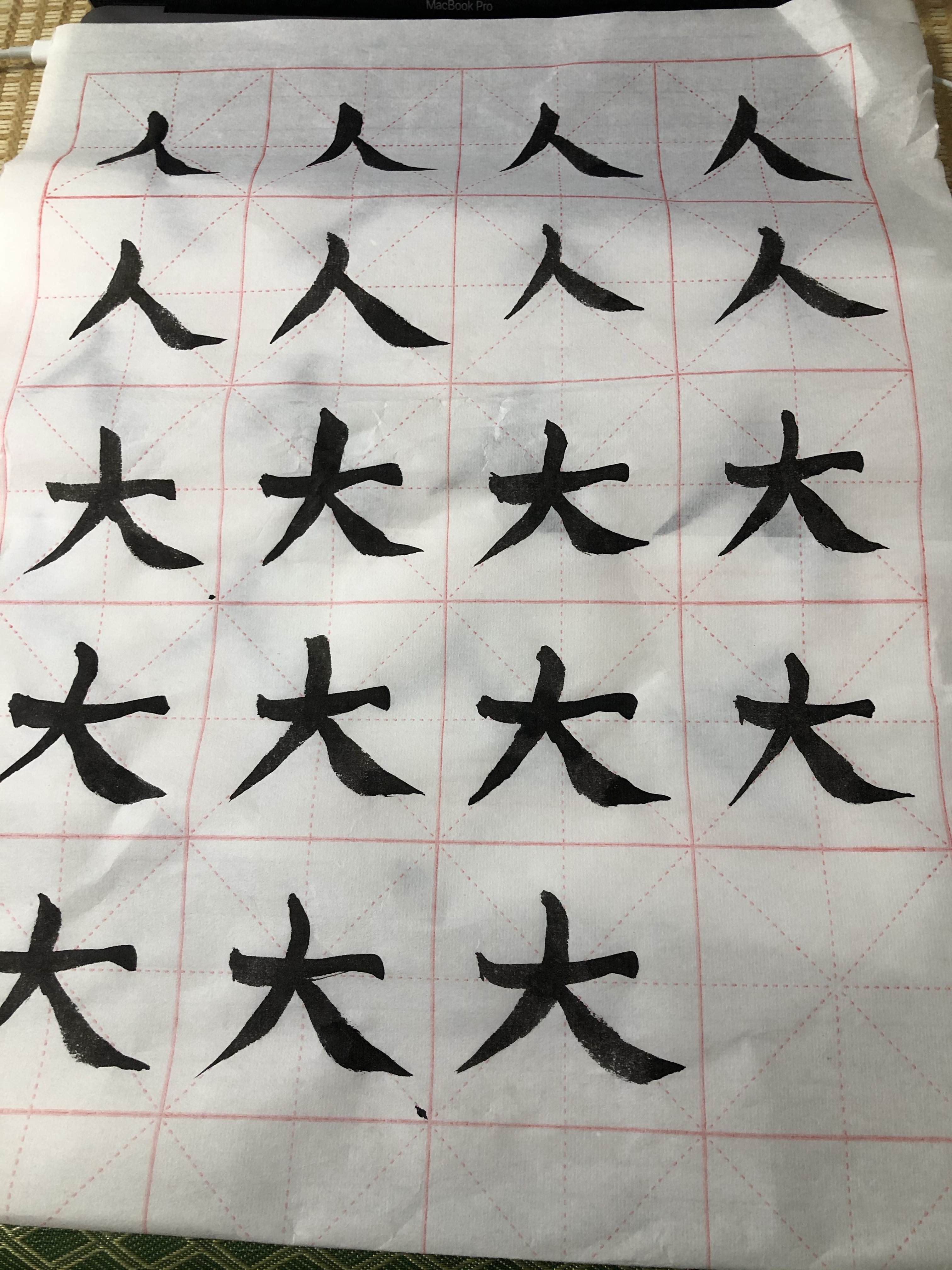
人 (ren – people) // 大 (da – big)

French (法语 – fayu)

Amongst all of this, while it’s not technically a class, I’m also trying to keep up with my French. Edinburgh has an online course for all French students to do while they are on their year abroad, whether the majority of that is being spent in France or elsewhere. As well as the online course, I’m trying to do other little things that might be able to help, like listening to some French music and reading French books in my spare time. One of my Chinese friends has also just started learning French too so I’m helping her and I also have a some Moroccan friends who I make speak French with me too!

All in all, two months in, things are going well! It’s a bit non-stop with constant homework and tests but I like my timetable, having all my classes in the morning. Midterms have crept up on me and are next week but I’m feeling ok for them. Hopefully things keep going well!

Sneak peek at the content of my midterm

Lessons from Honduras

A few weeks ago I was lying in bed, unable to fall asleep, and I was thinking about Honduras and about China and how one might apply to the other. Honduras was a learning curve in all kinds of ways and there are a few lessons I would like to share that I have found particularly useful in the past few weeks.

First of all, I can do this. I’ve covered this a little in the blogs around the time that I left for China but it was a helpful mantra to help me get over the first hurdle of this year, actually getting here. It won’t make the hard times go away but it definitely helps make them a little easier. It’s something that I know helps my family as well, or at least my mum!

I loved my time in Honduras but that’s not to say that it didn’t come with its difficulties. It could be very easy to only think back to the amazing things I did but I always remind myself that there were bad days too, days when I felt bored or homesick or frustrated. To me, that aspect of the year actually makes the whole experience more worthwhile. Taking the good with the bad, acknowledging the balance, it makes me feel like I achieved more than if the whole year had been easy. The challenges made the good times more enjoyable.

When you’re young, a year away from all your friends and everything you know can feel like the end of the world. A lot can happen in over the course of a year – birthdays, Christmas, holidays. This year alone I’m going to miss Kirsty going through her Highers, Amy finishing her last year of university and graduating, and a million shows, trips, dog walks and family dinners. All these little things add up but for all these experiences that I might be missing, I remind myself that I am making different ones here, ones that I won’t be able to recreate back at home.

For me I have never felt anything but incredibly lucky to have this kind of opportunity, both going to Honduras and also China. I always felt like it was a chance to do something amazing and exciting, and I know that everything I left behind will still be there when I get back. In the grand scheme of things a year does not take up that much of a lifetime and it’s amazing just how fast it can fly by!

Often times thinking about the bigger picture can actually be pretty overwhelming. Become fluent in Chinese, form meaningful friendships, experience all aspects of the culture. Whether these are self-imposed or unavoidable (thanks uni), it is a lot of pressure to put on yourself. There are times, especially in the beginning, when everything that is still to come is too much. In times like that it is a good idea to take joy and take pride in the little things.

Things like understanding something the first time someone says it and not having to say ‘shenme?’ (什么, what?) about three times; ordering successfully in a restaurant without just pointing at the picture in the menu; any time you’ve had a good day, whether that was because you went for a swim, made a friend or just because the weather was nice. Whatever it might be, it’s worth holding on to that feeling.

One of the biggest things I learnt in Honduras was obviously how to speak Spanish. It had been my aim going in to come home with some level of fluency and I feel like I did that. It’s definitely a great achievement but it also comes with a lot of transferable skills. When I was in Honduras, I wasn’t there with the purpose of learning Spanish, it was just a by-product of the environment I was living in. I’ve thought a lot about how I was able to improve my Spanish level and honestly it was mostly how much I was talking to people. For this reason my conversational Spanish is pretty good, if I do say so myself, but my grammar and written Spanish are not as strong.

The advantage of this year is that the whole point is to learn Chinese and all of my efforts can be devoted to that. I can take everything I did in Honduras, plus everything I should have done and combine it into the perfect recipe for fluency. Easier said than done, but I remain hopeful.

Finally, and probably most important to me, is that Honduras taught me I am more than I ever thought I could be. I am stronger and more independent than I knew. I can be both intense and chilled out. I am adventurous, spontaneous and brave. I know just how happy and confident I can be. Knowing all of this is the most valuable thing I learnt from Honduras and I will carry this knowledge with me, not only into this year in China but also into the rest of my life.

National Week (Part 2)

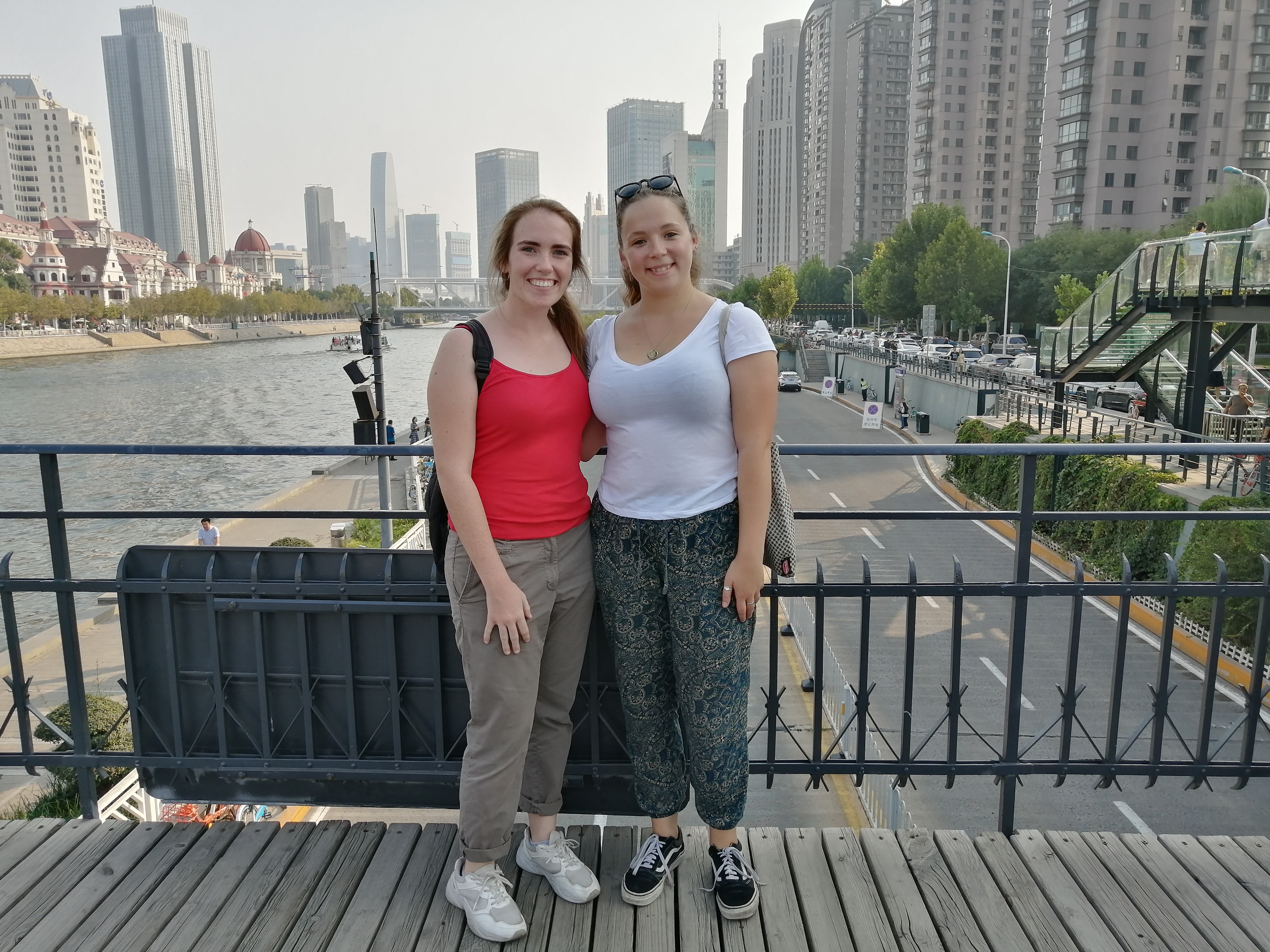
We’re back for round 2! After a more chilled day, hiding from the National Day madness, I threw myself back in. On Wednesday I headed over to Tianjin (天津) for the day, a city about 80 miles east of Beijing. I was going to Tianjin because in a serendipitous series of events one of my friends from high school has also ended up in China this year, for her second year in a row. And as my mum pointed out to me Andy Murray was also in Beijing at that time so that makes as least three Dunblane folk in China! There’s no stopping us…

Kayleigh and I!

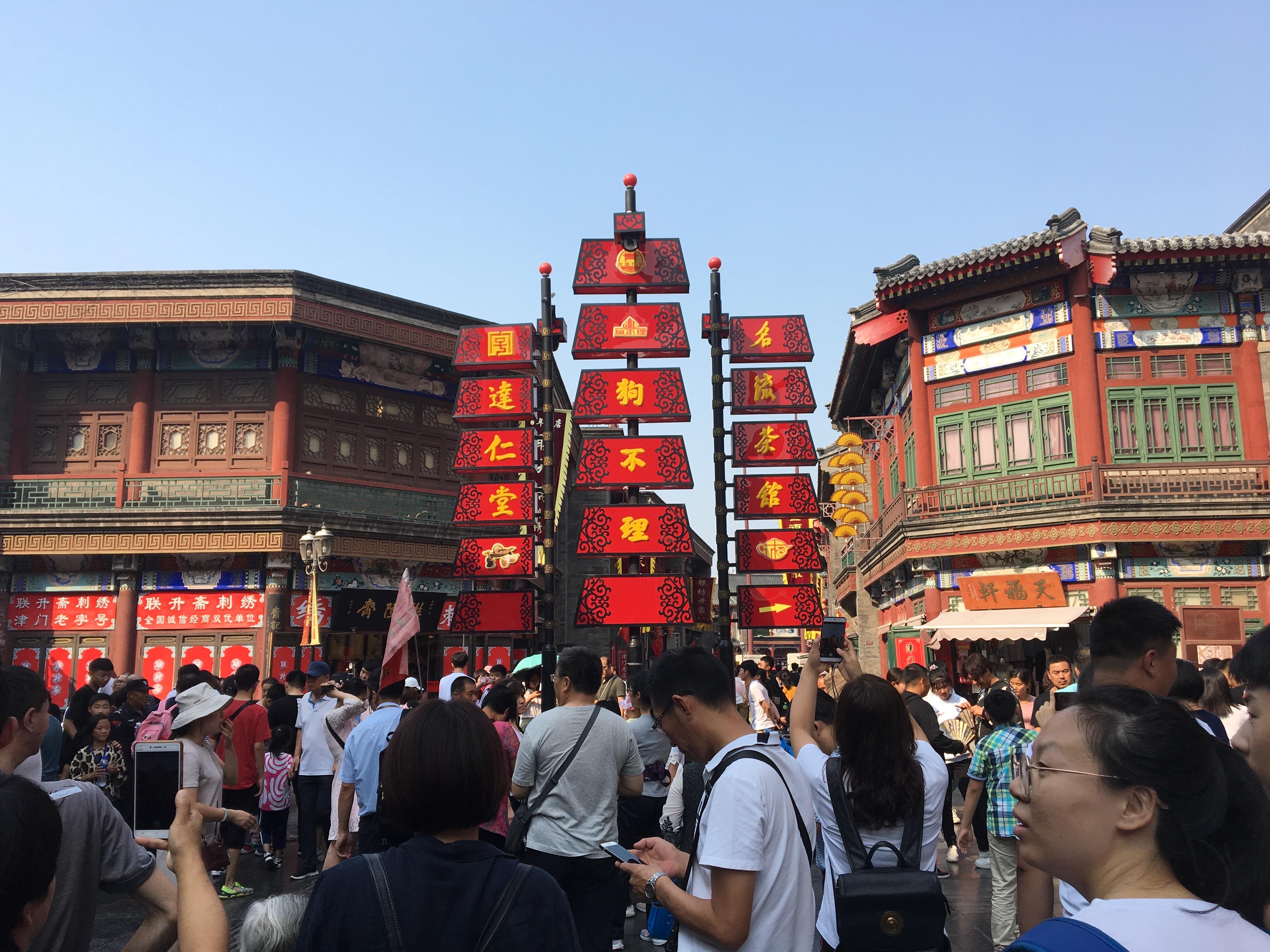
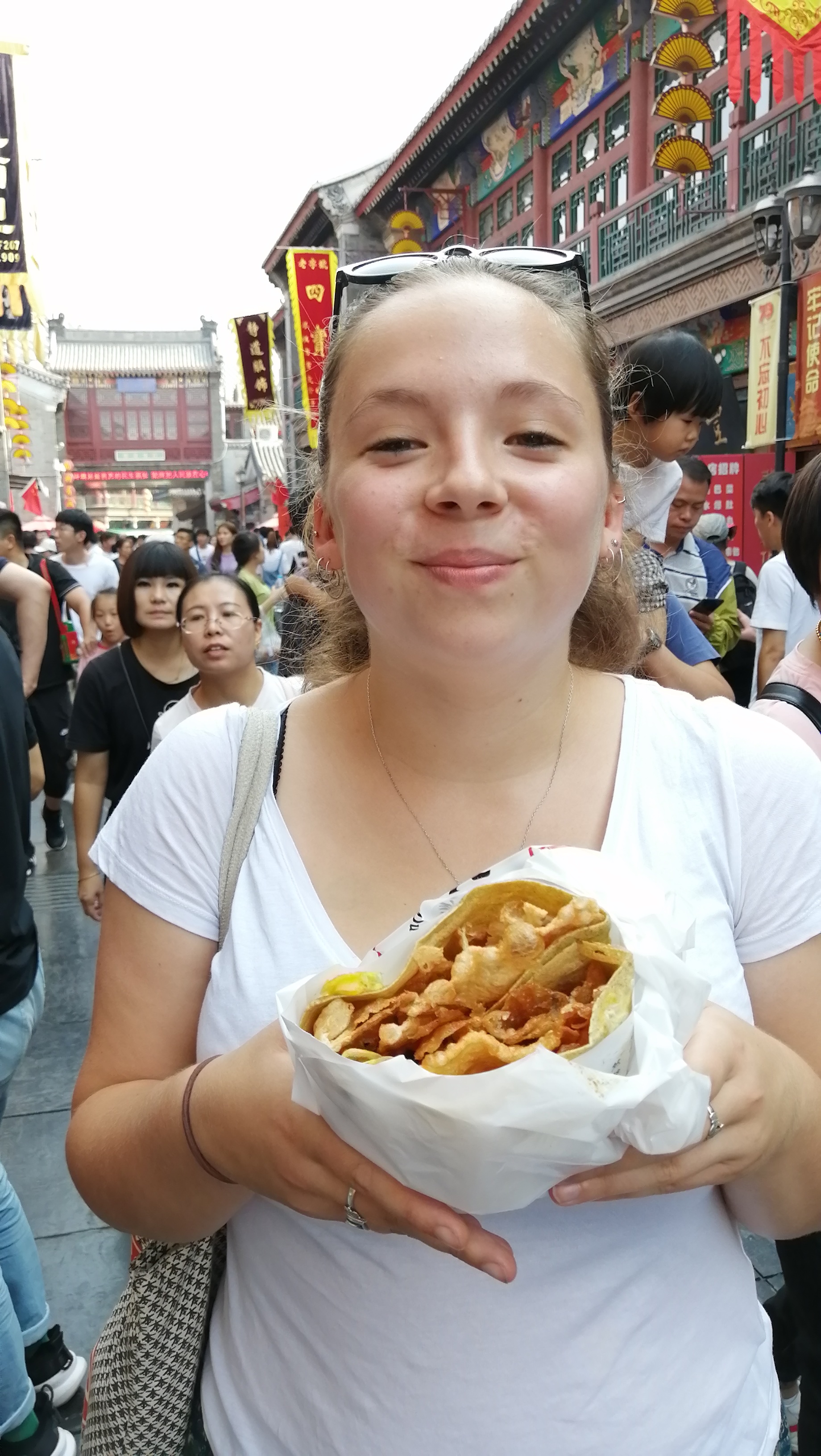
Kayleigh was acting as my tour guide for the day so I had left the itinerary to her. Our first stop was Ancient Culture Street (古文化街), a wonderful assault on the senses. It was packed full of lots of people, delicious smells and even more people! While we were there I tried jianbing guozi (煎饼果子), a Tianjin specialty. It’s a wrap with egg cooked into the outside and filled with what is essentially a thick poppadom (or at least that’s the only way I can think to describe it) and various sauces.

Ancient Culture Street (古文化街)

Next up we headed over to see where Kayleigh studies, at Tianjin Normal University (天津师范大学) to see where she lives. We also got mala tang (麻辣烫), a kind of build your own soup to have for dinner. Our final stop was Minyuan Stadium (民园广场) which was originally built by the Scottish athlete Eric Liddell who was actually born in Tianjin and returned there after his sporting career. The original stadium was torn down in 2012 and redone so that it is more of a public square but the running track remains.

It was a fantastic day and so nice to catch up with Kayleigh – it had been a while!

Due to some unforeseen issues with my phone over the next few days my exploring was more limited but I did manage to get over to see the Drum Tower (鼓楼) and Bell Tower (钟楼) in the centre of Beijing. The Drum Tower was originally built for musical purposes and then became a way of marking time for the residents of the city. They stand at opposites ends of a courtyard and on a clear day give you an excellent panoramic view of the city (or so I’ve heard, my day wasn’t particularly clear as you can see from the photos I got).

Looking over to the Drum Tower from the top of the Bell Tower

The Drum and Bell Towers are situated in an area of Beijing that is still dominated by hutongs (胡同), narrow alleyways that used to make up the majority of Beijing. They are characterised by their one storey buildings that form courtyard residences. Many hutongs were demolished starting from the middle of the 20th century to make way for the development and modernisation of the city. Many of the remaining hutongs now have protected status to preserve this chance to look in on the city’s past. I took the chance while I was in the area to have a stroll around.

The Bell Tower

And then all of a sudden it was my last day! I had been trying to get out to the Temple of Heaven (天坛) before I started having phone problems because so many people had told me that it’s their favourite place to go in Beijing. I finally got there on my last day and it just so happened to be blue skies and sunshine too! The Temple of Heaven is located in the south of Beijing and is actually a large park that was used by the emperor for various kinds of ceremonies and rites in imperial times. It has been open to the public since 1918 and is one of Beijing’s 8 UNESCO Heritage Sights.

The main event is the Hall of Prayer for Good Harvests (祈年殿), the largest building in the park. This is the first time I can say I really noticed the immense number of tourists that were in Beijing this week. It was packed around all of the main buildings with queues to even get in to some buildings! However the park covers over 2.5 square kilometres so it’s easy enough to find a quiet spot around the edges or in the forest areas. That was actually my favourite part, just wandering around the gardens enjoying the nice weather. It was a really nice way to spend my last day in Beijing.

The Hall of Prayer for Good Harvests

It was interesting to be back in Beijing for a bit longer than I was last time. It gave me a chance to get more of a feel for the city as well as be shown around by some people who know it better than me. I got the chance to think back on my first impressions and see if any had changed.

The public transport system is definitely easy to use – I used the subway a lot to get around which was super easy to navigate, I attempted the bus while accompanied by responsible adults (aka Beijing students who knew what they were doing) and I also learnt about the public bike system which, while I couldn’t use it because I didn’t have the app, is a cheap and super convenient way to get around Beijing as it’s as flat as a pancake.

The food is definitely great just like I thought. I already mentioned the mouth numbingly spicy and delicious Sichuan food but a special mention also has to go to the cheese tea I tried (definitely not as disgusting it sounds), biangbiang noodles, which use the most complicated character I’ve ever seen to the point that it’s not even used in menus and my computer’s Chinese character keyboard doesn’t have it, as well as the delicious food I tried in Tianjin.

Mid way through my 煎饼果子!

I knew two days wasn’t enough, especially jetlagged, but even a week wasn’t long enough! You’ll probably have noticed that I didn’t get out to the Great Wall – I had planned to go but the weather turned and it was windy, cold and raining that day. There’s lots more I still want to do, I haven’t been to the Forbidden City at Tiananmen or seen Beihai Park so I guess I’ll just have to go back!

National Day (Part 1)

It’s been a while since my last post, both due to very poor internet connection and being away for the week, both of which were as a result of the National Day holiday (国庆节). I had decided to take advantage of what will be my last bit of time off until January(!!!) and go back to Beijing to explore a bit more. I had a great time and crammed as much in as I could so I have a lot to write about! Because of this I’ve decided to split the blog in two so you don’t need a whole week to read about it. I also took many, many photos so there will be lots of those in here too!

I left pretty early on Saturday and got a D train from Dalian to Bejiing which, even though it only takes 6 hours to cover almost 600km, is considered the slow train! There is another which only takes 4-5 hours. It was a very comfortable ride, lots of leg room and remarkably smooth considering we were travelling at upwards of 185 miles per hour! Once I got to Beijing I had secured luxury accommodation for myself – a sofa in some of the other Edinburgh students’ flat. A big thank you to them! They live in a pretty studenty area in the northwest of Beijing called Wudaokou (五道口), near to Peking University (北京大学) where they study.

Beijing Railway Station (北京站)

For my first day in Beijing, after a travel induced lie-in, I decided to head to the Summer Palace (颐和园) as it is one of the sights closest to where I was staying. The Summer Palace is a large park based around Longevity Hill and Kunming Lake that dates back to 1153, although it was massively enlarged in the 18th century by Emperor Qianlong. Kunming Lake is entirely man made and the excavated earth was used to construct Longevity Hill. Because of these feats of landscaping and engineering, the Summer Palace was designated a UNESCO World Heritage Site in 1998.

I entered from the north gate and splurged for the all access ticket (a whole 60 yuan/£7, hey big spender) so that I could hit all the added bonus buildings, museums and gardens inside. I went in by the north gate so started with Suzhou street which has cute walkways along the river and is supposed to look like the famous canal town, Jiangsu (江苏).

A teahouse (茶馆) on Suzhou Street

Then I had to climb up to the top of Longevity Hill and wandered through the Buddhist Temple of the Sea of Wisdom, the Buddhist Fragrance Pavilion and the Cloud Dispelling Hall before coming across the most beautiful view of Kunming lake, dotted with little boats and glittering in the sunshine. I wandered along the Long Corridor down the side of the lake and finished my day at the 17 arch bridge.

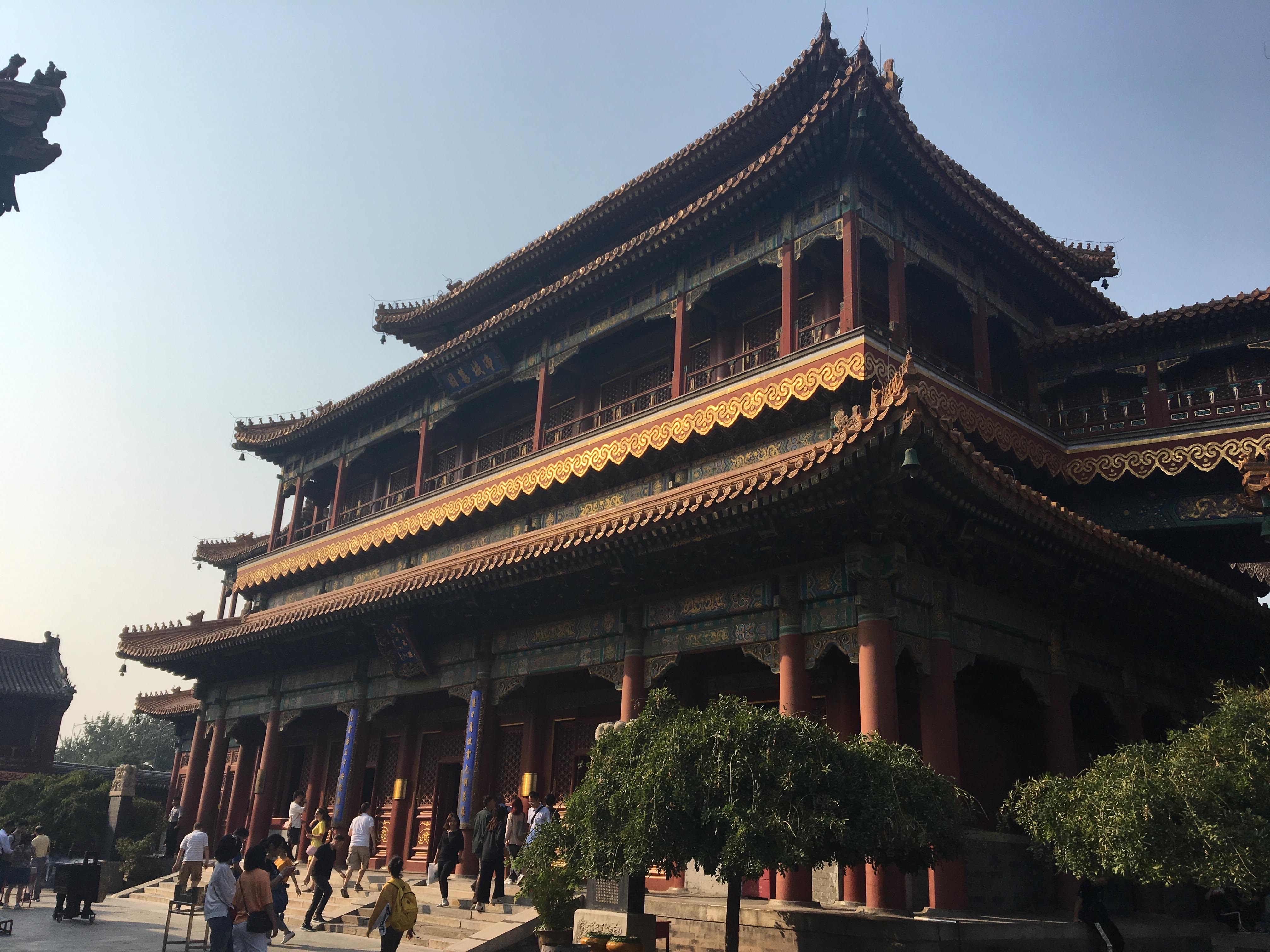
For day 2 I headed to the opposite side of Beijing to the Lama Temple (雍和宫), also known as the Palace of Peace and Harmony. The temple used to be the royal residence of Emperor Yong Zheng but was converted to a lamasery in 1744. It survived both being the site of an uprising against the Nationalist government in 1929 and also the tumultuous period of the Cultural Revolution, completely intact. 

It is actually still a functioning temple and also a wildly popular tourist attraction. Because of this, some visitors are actually there for religious purposes and work their way around the five main courtyards, burning incense and praying. I really enjoyed walking around the temple. It was very relaxing and absolutely beautiful, with its mix of Han and Tibetan styles, strong colours and intricate designs.

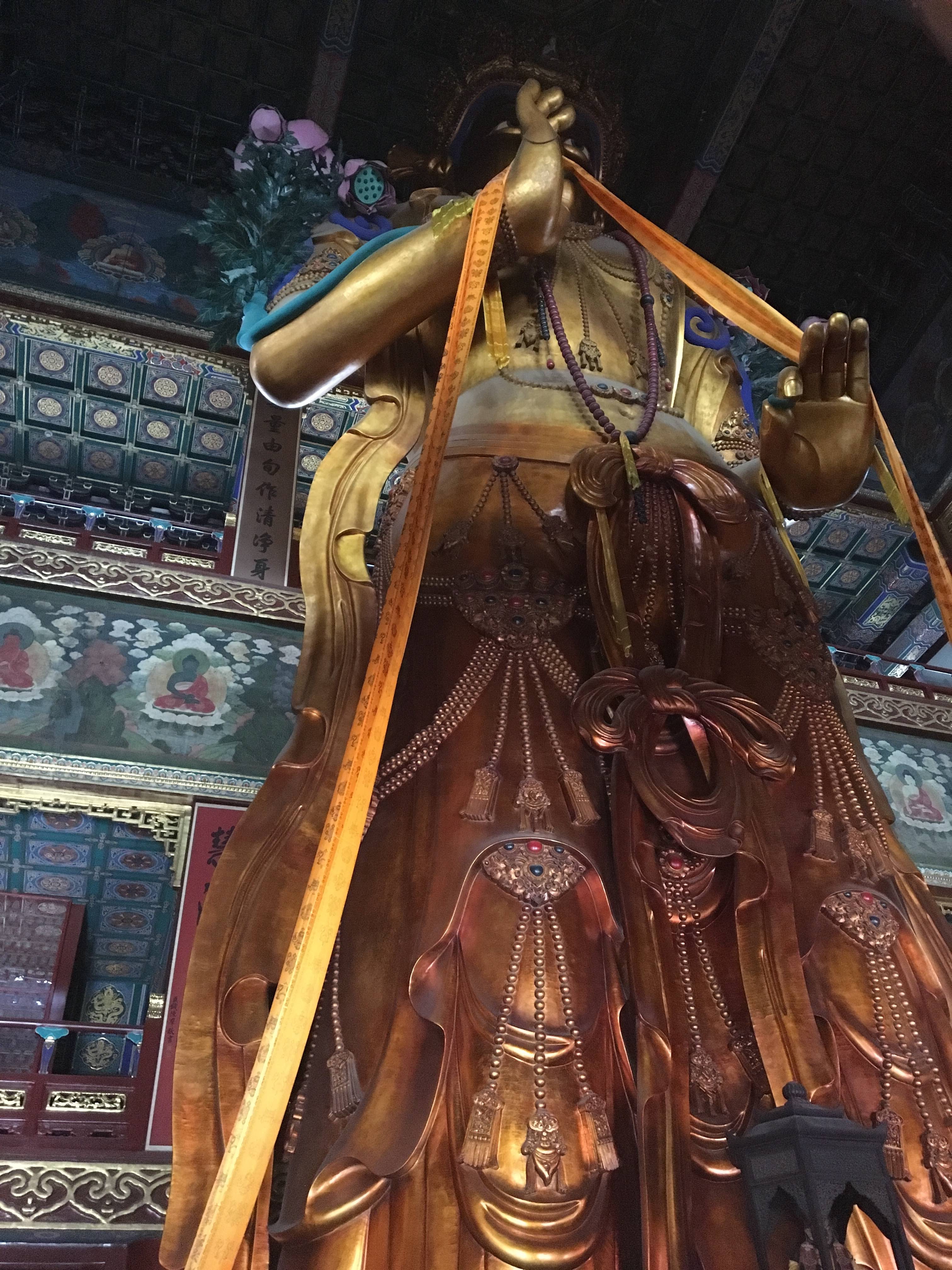
My favourite, and most unexpected part was the massive, 18m high Buddha statue! It was carved out of one block of sandalwood, each toe is the size of a pillow and it even has a plaque of recognition from the Guinness book of records! It was a gift from the seventh Dalai Lama to Emperor Qianlong and it took three years to transport from Tibet.

Tuesday 1st October was the day the whole country had been waiting for. National Day marks the anniversary of the founding of the People’s Republic of China by the Communist party on 1st October 1949. It is one of three Golden Weeks in China, along with the Lunar New Year Week in January or February and the Labour Day Week in May. These weeks are hotspots for domestic tourism which is a burgeoning industry while also allowing people to make long distance trips to visit family, the idea being to improve everyone’s standard of living. For the important anniversaries, like the 70th anniversary this year, there are huge military parades around Tiananmen Square. Internet connection also becomes slightly more limited and VPNs are also cracked down upon so sorry if I left anyone waiting for a reply last week!

I had a pretty quiet National Day because a lot of transport and shops were closed so I just hung out with friends. Another advantage of staying with friends, other than saving some money, was that in the days I could do all the touristy stuff and then the evenings were spent hanging out, eating amazing food and having a few drinks. I was introduced to the spicy wonders of Sichuan food and took part in my first ever karaoke performance, a group rendition of 500 Miles (what else were a group of Scottish uni students going to choose?). A big thank you again to Tom, Ruby, Cameron and Thomas for putting up with me on their sofa all week!

That’s it for now! I’ll fill you in on the rest of week soon.

1 Month In China

I can’t believe I’ve been here for a month already! The time has really flown by, what with everything that’s been going on. In the past month, I have spent a few days in Beijing, registered for uni, started classes and gotten to know my new home! There’s been a lot to get used to in the past month but also a lot of time for thinking. I want to do this kind of blog, which will be a more reflective one, when I hit some of the big milestones. So expect something similar around the 3, 6 and 9 month mark!

Not having been here all that long, I’ve been taking joy in the little wins. These have been things like finally adjusting to the heat and humidity, getting the hang of using chopsticks or finding my way around campus without getting lost.

On a slightly larger scale, I’ve noticed a big improvement in my Chinese in just the last month. Constantly being surrounded by Chinese characters means there is always something new to learn and constantly overhearing it everywhere has helped tune my ear in to the sound of it more. My comprehension has improved rapidly, though I would say my speaking still needs to catch up a little.

I also had (and won!) my first argument in Chinese! Well, argument might be a strong word. It was more of a misunderstanding. I didn’t get given the right change after paying for my lunch and a lengthy explanation on my part and help from a girl waiting in the queue who seemed to understand what I was getting at. A team effort but still a win!

Self-esteem is something that I’ve been struggling with since I got here. I’ve always lacked confidence when it comes to speaking Chinese. I think it stems from coming into university with no previous knowledge which made me feel like I was always behind. That, combined with no experience speaking it outside the classroom had me a bit apprehensive before I even got here. While my confidence has definitely improved while being here, there are still days when I question myself. The class I’m in is the right level for me but it still feels like a lot of my classmates can have more fluent, complex conversations than I could even imagine having.

Socialising has also been a bit difficult too. I’ve made friends with lots of my classmates but living with a host family, as good as it is, sometimes has me feeling like everyone is getting to know each other and having fun without me. Not true (hopefully). There also isn’t as much of a culture around activities as in the UK so I haven’t found any clubs to join yet either. Lots of people play basketball, football or volleyball on the courts or use the pool but there’s not as much organised sport. I have heard rumours about a swim team though and also various teams in the School of International Education. Stay tuned…

One of the biggest adjustments I’ve had to make, which is actually quite small, is drinking hot water. You can’t drink the tap water in China which means a lot of people boil water and will just drink that. I can handle it but it’s not my favourite. There’s one thing that makes it much more bearable – adding instant coffee!

Another minor adjustment has been the toilets. In a throwback to Honduras, you can’t flush toilet paper here so have to put it in a bin next to the toilet. Turns out its just like riding a bike. A more uncomfortable addition is that fact that squat toilets are abundant and as pleasant as they sound. Often requiring you to bring your own resources (tissues, hand sanitiser, a nose peg for the smell), the ‘squat’ has been one of the hardest things to master. 

My high points so far have come from the little things – going for a swim, eating lunch at my favourite hot pot place, spending the day at the beach or having a successful day in class. I think embarking on something as new and different as moving to China can be overwhelming and a year can feel like an extremely long time, so it can be helpful to hone in on the little things that bring joy.

One particularly hard moment while I’ve been here was watching all of my friends go back to uni in Edinburgh but in general there haven’t actually been many low points. There’s been a few moments, for sure, moments of homesickness, worry or stress but these have been few and have all passed. 

At the minute I am looking forward to going to Beijing next week. We have a week off to celebrate National Day, the anniversary of the founding of the People’s Republic of China, so I’m heading out of Dalian for a bit. I want to see more of Beijing because I didn’t really do much when I was there last time.

After that I head into a 16 week stretch of class – not sure if I’m looking forward to that or dreading it. I’m kidding, it will be good to get stuck into class as the three weeks up to now have had a fair bit of disruption. It’s definitely going to be a long road but I want to plan a few weekend trips to have some breaks to look forward to.

And now for some goals for the next few months. I obviously want to keep improving my Chinese and my main focus will be on oral Chinese. I want to be able to have what feels like a smoother conversation, using more complex language and phrases.

On the other side of things, I want to try and join a club of some kind. As I said before I’ve heard about a swim team and a few other options so I’m going to investigate those. This might help me with another goal which is to make some more Chinese friends. I have one or two but its hard as the language course is kept pretty separate from everything else and because I don’t live on campus either.

And there you have it! 1 month in and I’m feeling excited about the ones that are still to come!

Learning Chinese So Far

It’s been a long journey to get to where I’m sitting today, and I’m not talking about the 10 hour plane journey. I’m in my third year of studying a Chinese degree and at times it has felt much longer. There was a lot to pack in to the last few years and it’s had its highs and lows. Let me take you through how I got to where I am today.

One of the most common questions I get is ‘Why did you choose to study Chinese?’ Funny you should ask. This is a story my mum delights in telling because the decision kind of came out of nowhere. Picture this – it’s September 2015, peak uni open day season. My mum and I are visiting the University of Edinburgh, my top (and only) choice, and are sat in a Modern European Languages talk. At that point in time my plan was to (hopefully) go to Edinburgh and study French and Spanish. I also already knew that I would be going to Honduras for a year between finishing high school and starting university.

That was when it hit me. Why was I going to spend four years studying Spanish after a whole year speaking it, teaching in it, living in it and, if all things went to plan, essentially becoming fluent in it? Knowing myself and what I’m like, I knew I would get bored doing that – I like a challenge too much. I turned to my mum and threw that curveball at her (I think she’s still recovering).

Me circa September 2015

I’d always said that if I was ever to take up a third foreign language that I would want it to be something different to what I already have, as French and Spanish are both European, romance languages. With this in mind, our first stop was Japanese studies but unfortunately there was no option to do a joint honours with French, which I was still set on studying. With Arabic and Persian also an option, it was Chinese that I was drawn to next, not really for any particular reason. I like that it is from a different area of the world, uses a different script, is one of the most widely spoken languages in the world and the fact that it is notoriously difficult was also attractive to me!

Two years later, I was ready to start studying Chinese and French at Edinburgh University, just as I’d hoped. In that time I’d gone from knowing zero Chinese to being able to say ‘ni hao’ (hello) and count to ten (then I actually learnt how to count to ten and found out I had been doing it veeeeery wrong). Overall still not a lot.

Lucky for me, the course at Edinburgh contained a real mix of abilities. There were people who could speak it fluently (or so it sounded to me) but couldn’t write, people who had spent a year in China already so could do both pretty well, some who had studied it in school as well as others like me who had never done any. This meant that we got stuck straight in and learnt a lot very quickly. Sometimes my progress in Chinese feels frustrating, like I’m not improving as fast as I should or want to, but then I think about just how far I’ve come in such a short time and I’m pretty proud of myself.

During this time, I’ve obviously had to get to grips with the four basics of Chinese, and any language – reading, writing, speaking and listening. I definitely find the reading and writing side of things easier but that’s where I’m hoping this year in China can help improve my oral Chinese. Alongside the expected grammar and vocabulary lectures, one of the classes I had that was more specific to Chinese was character writing. The way Chinese characters are composed is complicated, fascinating and confusing all at the same time and is something I want to talk about more in another blog. For now, I will say that I should have appreciated this class more at the time because in hindsight it was teaching me a lot of really valuable skills, not just the correct way to write the characters but how figure out what an unknown character might mean.

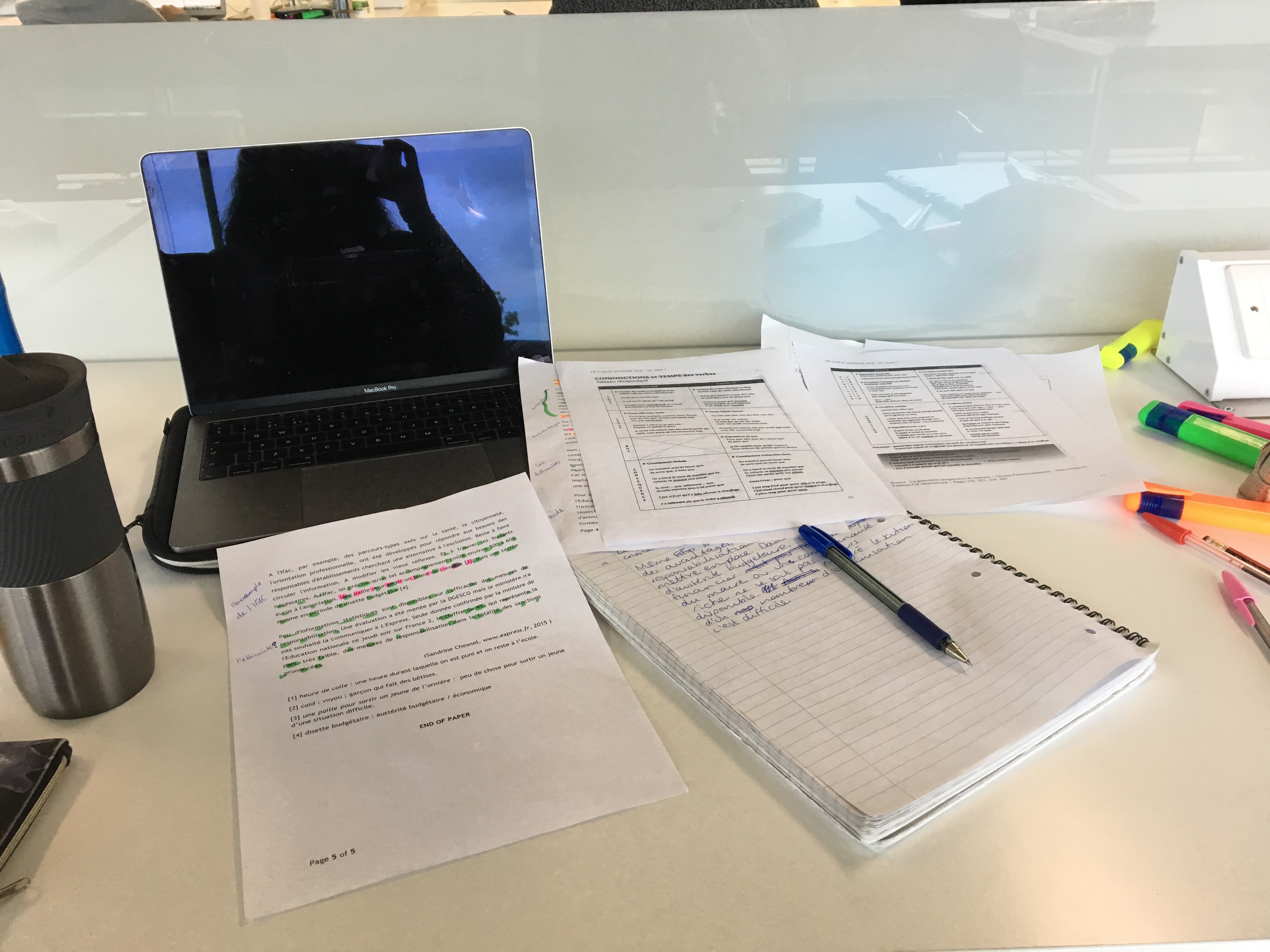
My spread while mid studying

One of the things I’m asked a lot when people find out I study Chinese is ‘Isn’t it really hard?’ It is a difficult language, there’s no doubt about that. The grammar is completely different (though it’s a myth that Chinese just doesn’t have any. It might have come out of the fact that there are no verb conjugations and the verb also doesn’t change to express the tense either) and there’s also the tones to consider. Using the wrong tone can completely change the meaning of something – for example, ‘mai’ (买/卖) can mean both buy and sell, depending on what tone you use.

But in general I usually say that it’s not the difficulty that gets to me the most, its the amount that there is to learn. Every time you learn a new word you have to learn it 4 times over – how to say it, what tones to use, how to write it and what it means. Exhausting, really.

As well as learning the four main elements of the language, I’ve had a few extras added on to my Chinese journey. In first year I had to take a Modern East Asian History course which was useful in contextualising a lot of China’s recent history, societal structures and international relations. There was also my Classical Chinese class in second year. Is it possible for Chinese to get any harder? The answer is yes, all you have to do is go back a few thousand years. As much as I complained about it all year, it was actually quite a useful class in exposing me more to traditional characters as well as allowing me to study texts from some of China’s most treasured philosophers, such as Confucius, Zhuangzi and Mengzi (孔子,庄子,孟子).

Another compulsory course I had to take was Academic Skills for Asian studies. This was not one that I look back on with fondness but I did get one very interesting thing out of it. The very last session of the year was about reflection. I was thinking about my motivation throughout the year, the reason why I went to every single lecture, would not miss a tutorial for anything and put so much effort into my independent study. At the start of the year it was all out of fear. I was scared I would fall behind my already last place position and never be able to crawl back. I worried that I wasn’t good enough. I was terrified that I couldn’t do it. It had been very overwhelming to begin with and I think I got a bit lost in that for a while. But then, slowly but surely, my motivation changed from fear to enthusiasm. I settled into studying such a different language and the adaptations in my learning style and techniques that I’d had to make to accommodate that. I learnt more and became more sure of myself. I also realised that I had definitely made the right decision. It turns out that my love for languages does extend to Chinese.

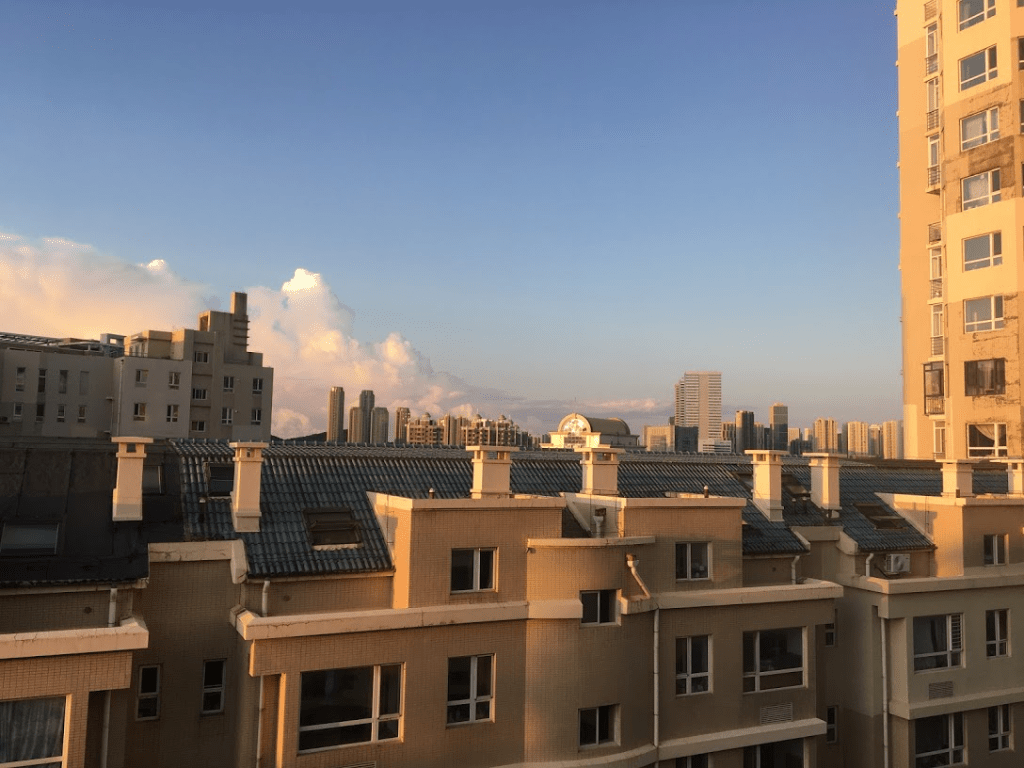
Dalian at sunset

Mid-Autumn Festival

Barely a month into living in China and I’ve already experienced my first festival – Mid-Autumn Festival (中秋节)! Second only to Spring Festival (春节), or Chinese New Year as it is more commonly known in the West, Mid-Autumn Festival is a big deal. It actually ended up being quite a quiet day for me but I want to tell you a little bit about the legend and history of the holiday and the traditions and celebrations that go along with it.

Mid-Autumn Festival can also be known as moon festival as it happens around the time when the moon is roundest and brightest. It is known as a harvest festival too. Ancient Chinese people recognised the link between the moon and the seasons and agricultural output so followed the moon’s progress closely.

This year Mid-Autumn Festival took place on Friday 13th (!!!) September because that was the 15th day of the 8th month of the Chinese lunar calendar. In mainland China, Mid-Autumn Festival means you get that Friday off work or school though it can differ in other places – in Taiwan you get the day of the festival off, and in Hong Kong and Macau it is the day after the festival, whatever day that may be.

Celebrating the moon at this time of year can be traced back to the Zhou Dynasty (周代, 1046-256 BC) but with a few differences – it was observed on the Autumnal equinox among people of royal class and not in the context of a festival. A closer iteration of today’s festival can be seen in the Sui (隋朝, 581-618 AD) and Tang (唐朝, 618-907 AD) dynasties when common people adopted the date that is now used as it was closer to the full moon than the autumnal equinox. By the Northern Song Dynasty (北宋, 960-1127 AD) the celebration of the moon had transformed into a universally celebrated festival.

The main legend behind Mid-Autumn Festival is the story of Chang’e (嫦娥). In Chang’e’s time, there were 10 suns in the sky. She was married to Hou Yi (后羿), a great archer, who shot down nine of the ten suns to save the people from torturous heat. As a reward Hou Yi was given an elixir of immortality by Wangmu (王母), the Queen of Heaven. However there was not enough for Hou Yi to share with Chang’e and so he did not drink it, preferring to live out his life with her.

But then one of Hou Yi’s students broke in to try and steal the elixir. To save it from thieves, Chang’e drank it and flew to the moon where she became the moon goddess while her husband remained on Earth. In honour of Chang’e, Hou Yi and others made offerings to the moon and searched for her on its face.

Many of today’s customs still revolve around the moon, admiring and appreciating it, eating moon cakes as well as thinking about family and friends that live far away.

My mooncake and hazelnut latte set-up

Moon cakes (月饼) are the iconic food associated with Mid-Autumn Festival. They are sacrificed to the moon and also eaten in celebration. They are like a sweet pie with a pastry crust and usually filled with sweet bean or lotus seed paste, decorated on top with an intricate lattice-like design. They come in many flavours and while I have only tried Wuren (mixed nuts) and black sesame, other popular choices include red bean or white lotus flavours. Their round shape symbolises family reunion so links to the practice of longing for faraway friends. Giving someone a moon cake expresses your wish for them to have a long and happy life.

As my first taste of Chinese cultural celebrations, I would say Mid Autumn Festival has eased me in gently. As I said before, I had a reasonably low key day. It was raining pretty heavily that day so I had to cancel plans I had with a Chinese friend to visit one of Dalian’s islands. Instead I spent the day in 1949, the campus coffee shop, doing work, writing a previous blog, and eating mooncakes and then video chatted with my flatmates back in Edinburgh so I think I still hit a good few of the traditions!

My Mid-Autumn Festival dinner

Getting to Know DUT

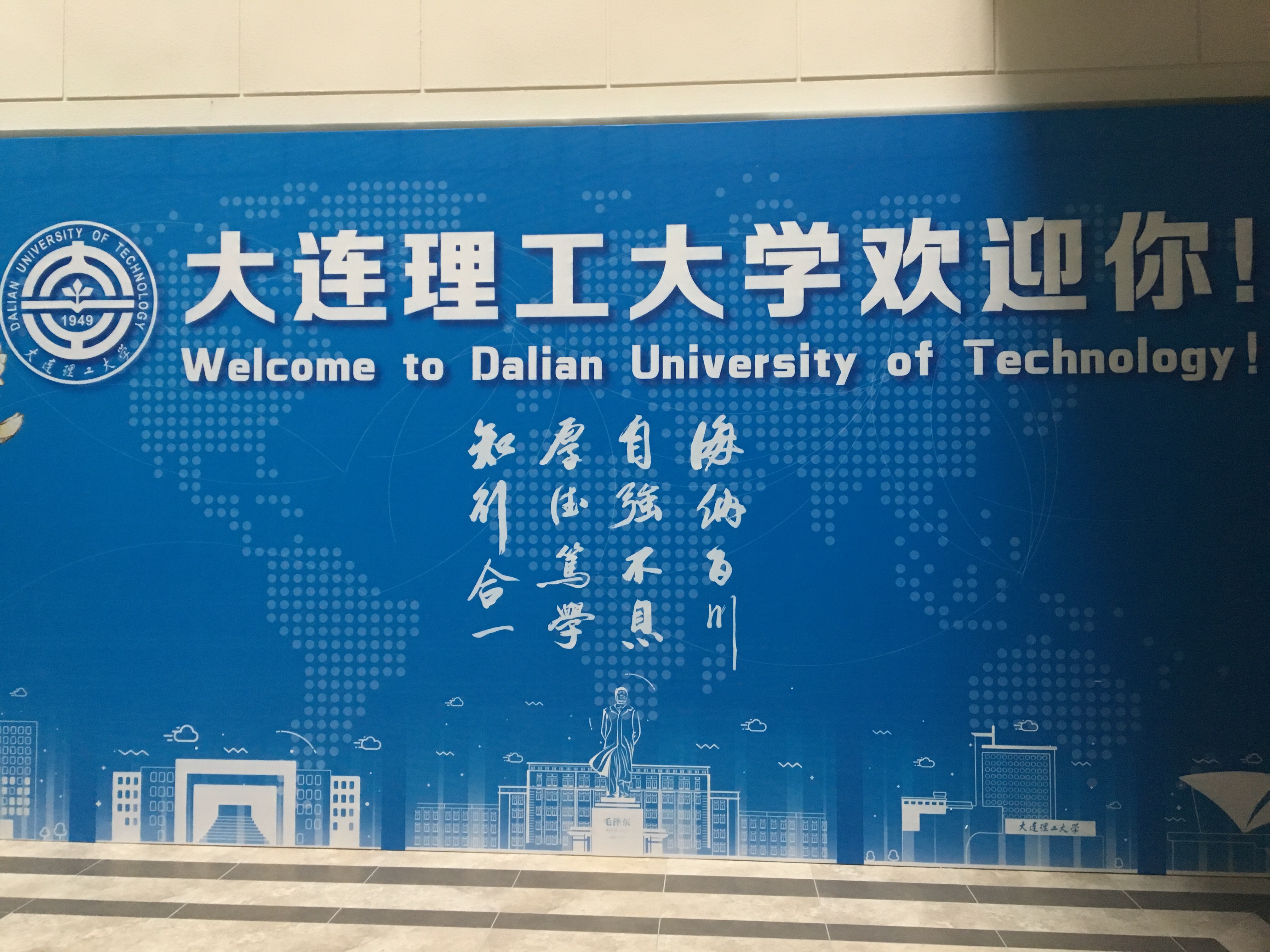
Over the past two weeks, as well as exploring the city of Dalian, I’ve been getting to know my new university – Dalian University of Technology (大连理工大学). DUT was established in 1949 so is celebrating its 70th anniversary this year, the same as the People’s Republic of China. It is renowned as one of the big four technology universities in China and there are about 31,000 students so it is only a little smaller than Edinburgh University.

In terms of international students, DUT has agreements with 128 institutions in 21 countries across the world. In the Chinese language programme, Joe and I are the only British students and one of only a handful of European students. The majority of the Chinese language students seem to be Japanese, South Korean and Russian, as I expected, but there is also a large Thai contingent and a big group from Turkmenistan.

From where I live it is only a 15 minute walk to get to the east side of campus but DUT covers almost 20 square kilometres! So if I want to go to class, it only takes 20 minutes but to get to the library, for example, which is on the other side of campus it would take me a full hour to walk there! (I can get a bus so this is only for comparison, trust me). Seeing as it’s so big I’m only just getting the hang of where everything is, or at least all the buildings I need to know. I still have no idea what a lot of the buildings are!

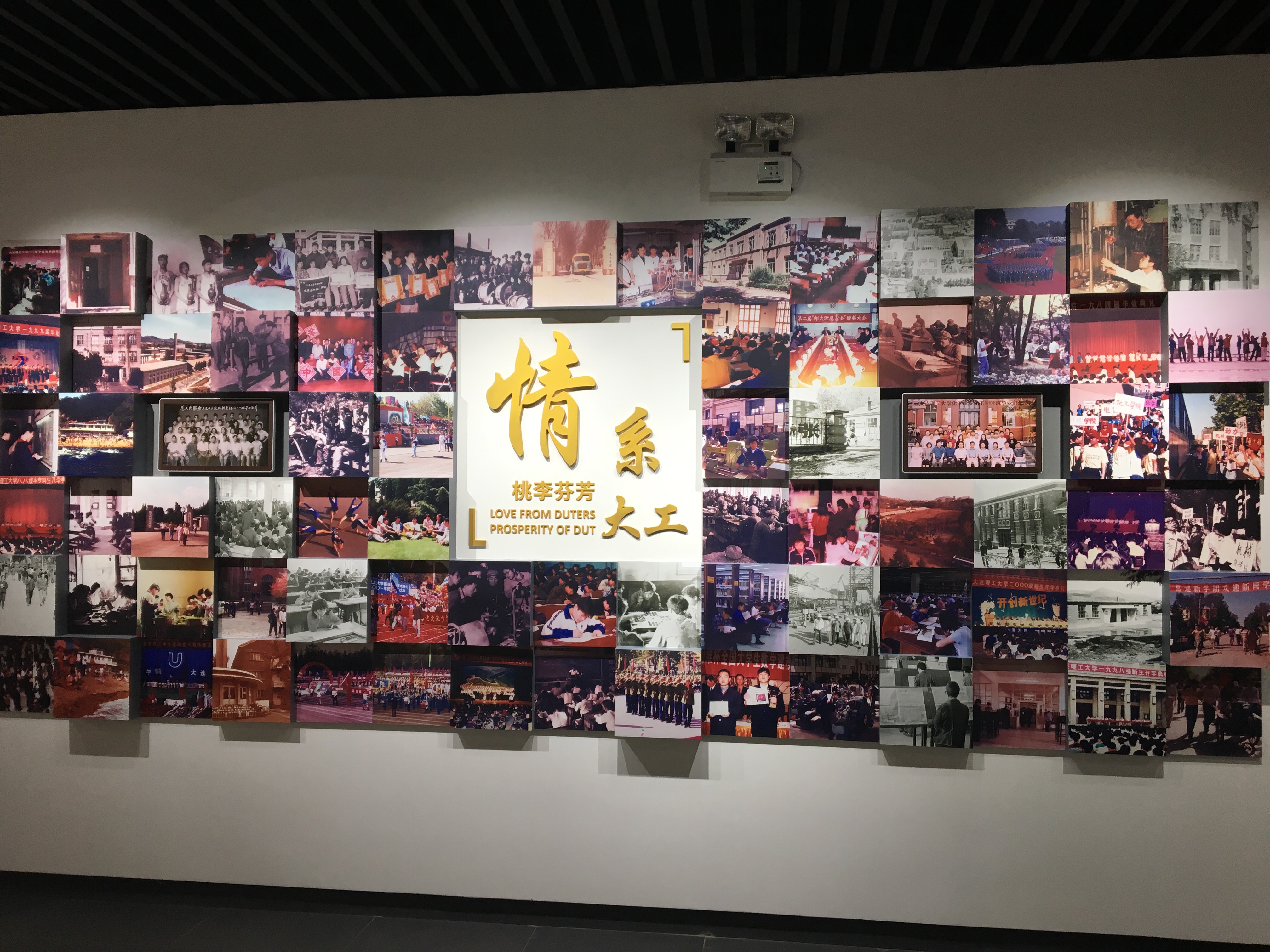
A map of campus in the School History Museum (校史馆)

Walking around the campus is very nice, especially since it has so far mostly been sunny. There’s a lot of trees so it’s a very green campus but notably lacking a park or something like the Meadows in Edinburgh to hang out in. There’s basketball courts littered throughout which makes sense seeing as it’s China’s sport of choice. There’s shops dotted around too but out of the north gate there is a pretty main road with a plethora of food and drink options that I’m enjoying working my way through.

My favourite place that I’ve found on campus so far is 1949 Coffee. It’s where Joe and I studied for the placement test (more on that further down) and discovered our love for hazelnut iced lattes. It’s a bit on the pricey side but with all the rest of the food and drink I buy being so cheap and it being so delicious – it’s definitely worth it. And it’s still only the price of a coffee back in the UK which is how I’m justifying my nearly daily order. There’s also a string of little food places next door and a supermarket where I can grab some lunch or snacks if I can’t be bothered going off campus.

1949 Coffee

Another important discovery was the uni swimming pool! It’s part of a larger sports complex with a gym and various sporting rooms. I was waiting a while to try it because I had to get my student card but I finally got that this week! It’s a big pool, with 10 lanes and somewhere between 25m and 50m long. It was great getting back in the water, stretching out and doing some exercise. One weird thing is that there’s buckets hanging off the starting blocks that people spit into! Spitting is a weird and all too common habit in China…
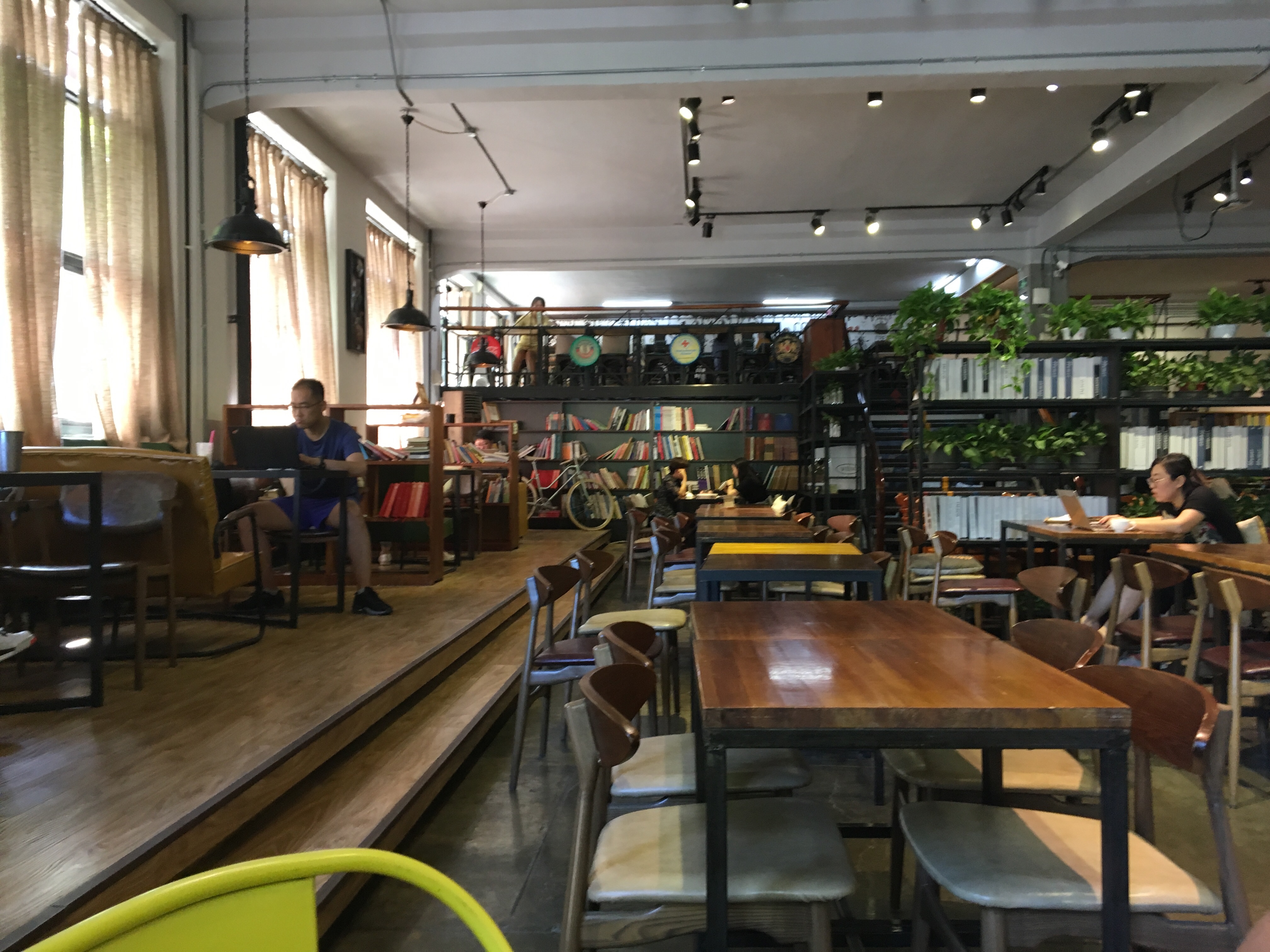
No news yet on whether there’s a water polo team or not but I’m not holding my breath (pun intended)! I haven’t figured out what the deal is with other sports teams either. Basketball and football are both popular options and I’ve also spotted volleyball being played. Apparently the School of International Education have a football team (well, at least a men’s one…). I really want to get involved with some kind of team sport, both as something to do and also a way to make Chinese friends and keep practising my Chinese.

The Liu Changchun Gymnasium (pool inside!)

The first uni related thing I had to do was go through registration. This was a two day long process that felt like it lasted the whole year. It involved multiple steps and many, many hours of waiting. There were a few hiccups, like being asked to pay 16,000 yuan (about £2,000) in tuition fees which Edinburgh are supposed to do and not having enough photos for the visa office, but eventually it was all sorted!

Next up was the placement exam. After a long summer and probably not enough Chinese practise, I was keen to make sure I was able to get into a class that reflected my actual level not necessarily my current one. After several days of studying I was ready to accept however it went. There were two levels, elementary and advanced, and I took elementary. The day after the exam there was a short interview where I got asked a few questions about myself and then talked about my home town. I felt better about how the exam went than the interview but I did my best in both.

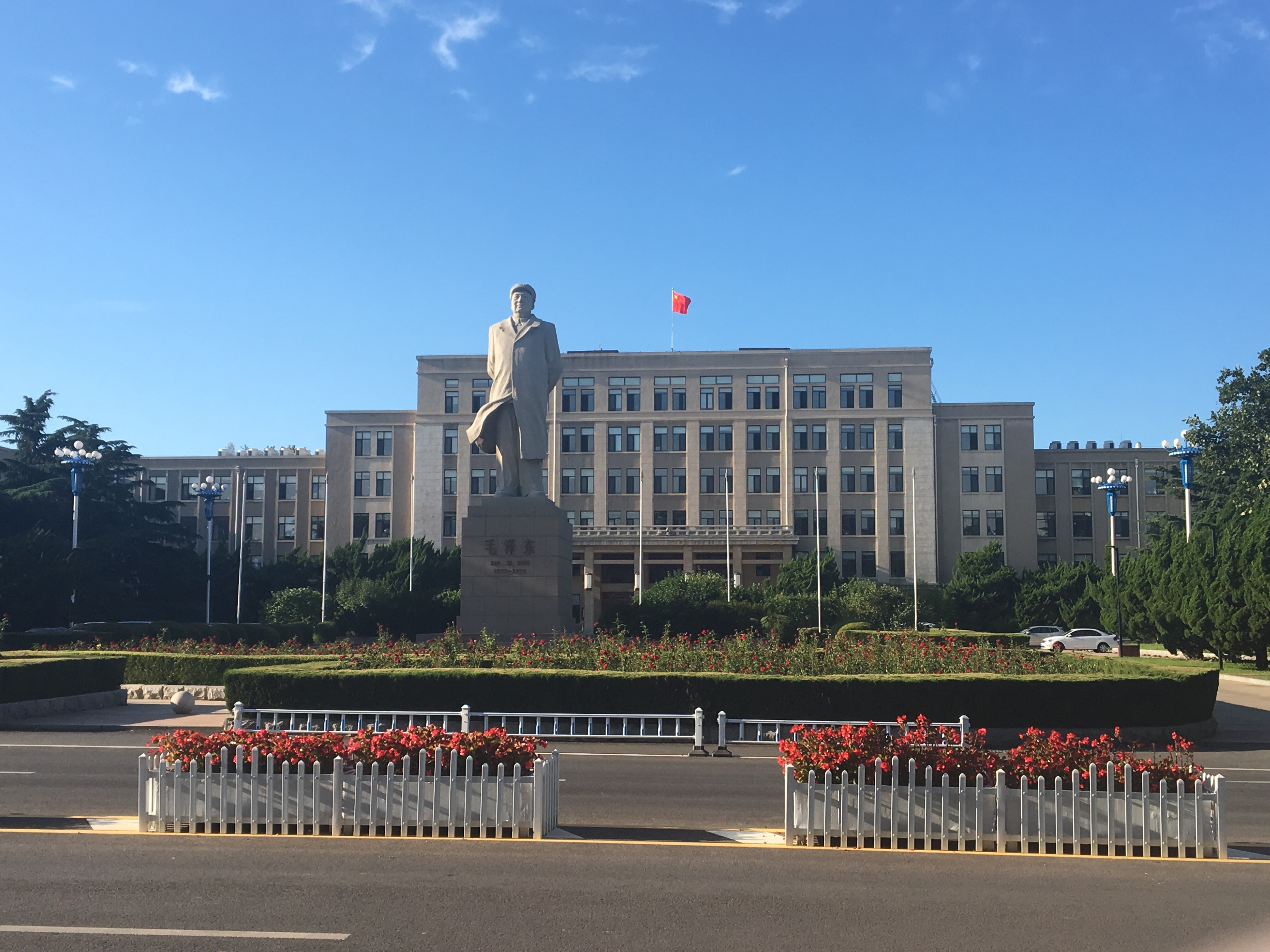
The main building of DUT feat. Mao Zedong

And so we finally started classes this week! I am in Elementary 3, Class A (初三A班) which seems to be exactly the right level for me. All but one of my classes are in the morning which suits me and there are four different kinds – comprehension (综合), speaking (口语­), listening (听力) and reading and writing (读写). I’ve been enjoying getting back in the classroom, even if it’s been a bit disrupted this week with orientation talks, medical examinations and then today being Mid-Autumn Festival (中秋节).

All in all a very positive start and I’m looking forward to the rest of the year!

我爱DUT!

First Week in Dalian

After almost two weeks of being here in Dalian, I’m finally feeling settled enough to sit down and write about it. I’ve wanted to just enjoy being here and give myself some time to see what things are like before trying to put it all into words. The past two weeks seem to have flown by but at the same time I can’t believe I’ve only been in China for two weeks!

Anyway in an attempt at brevity I’ve split the last few weeks into two – settling in to Dalian and getting to know the university. Here is Dalian so far!

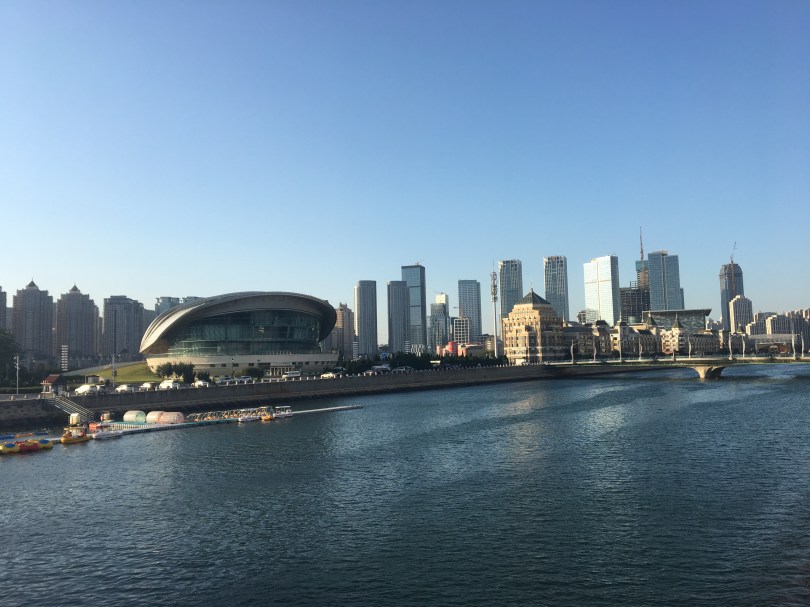
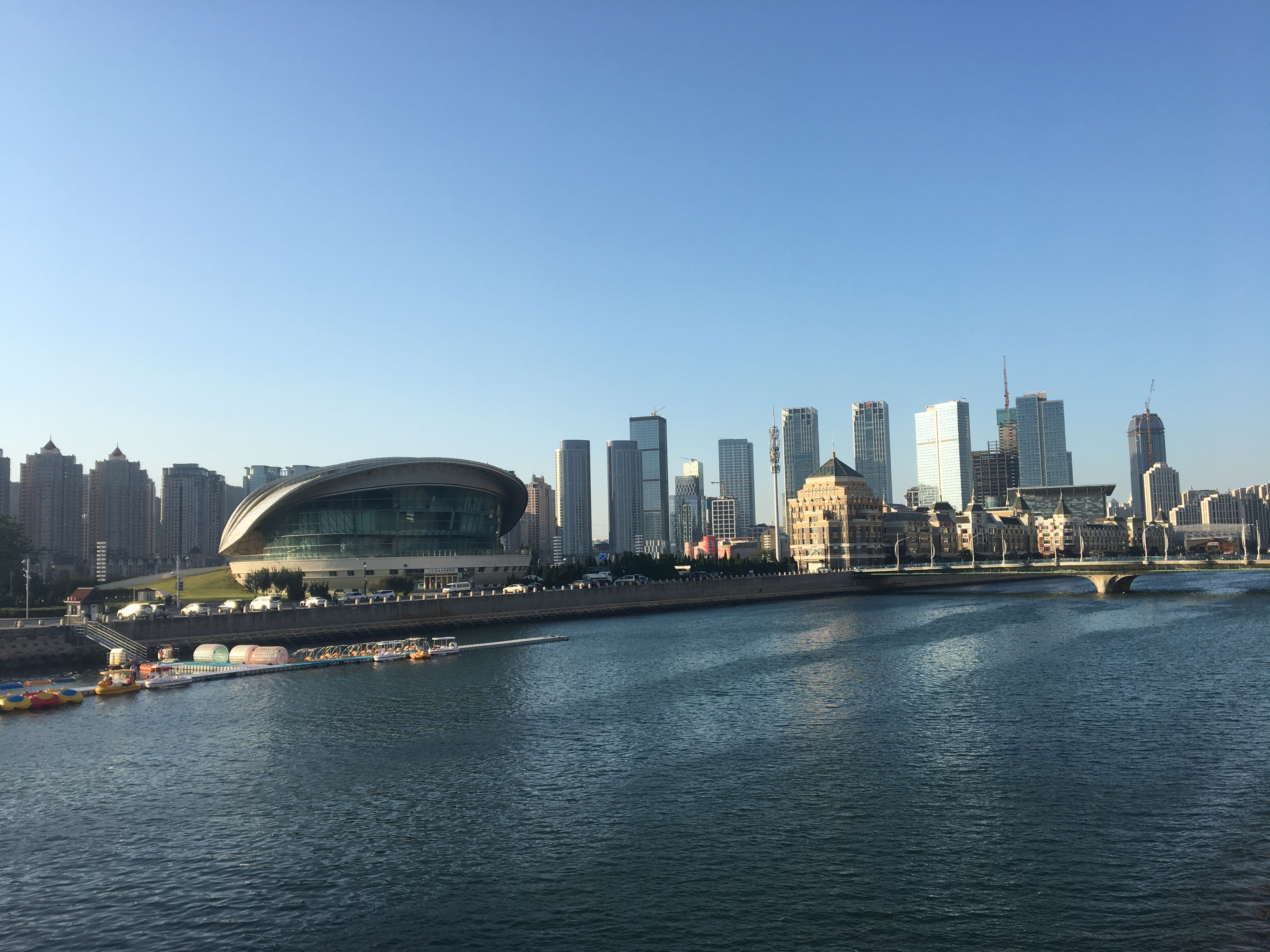
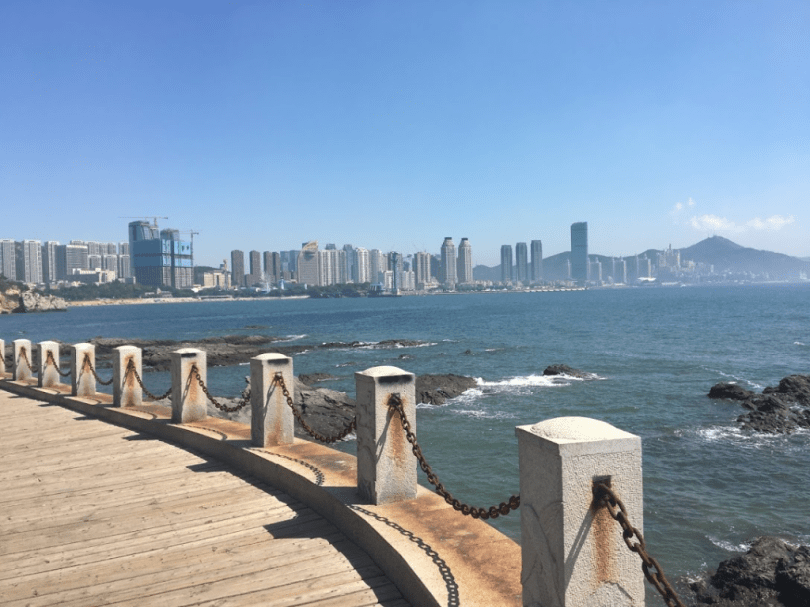
Looking out towards Xinghai Square (星海广场)

I arrived in Dalian on Tuesday 27th August after spending two days in Beijing. I enjoyed spending time in Beijing, and was glad that I’d given myself that time to rest up and ready myself. However I hadn’t really had any cause to speak Chinese there so I was looking forward to getting started with the purpose of this year. I had a very early start meaning that it was only 9am when I landed in Dalian. My host family met me in the airport and we got the subway home, dragging my massive suitcase along with us.

In the run up to leaving for China, I had been in contact with my host mum via WeChat (kind of like an all purpose Chinese WhatsApp) which was very reassuring to me, both in being able to get to know her a little and in the fact that my Chinese held up to the task! On meeting her in real life she was just as lovely as she had seemed over text. Her name is Wang Yu (王宇) but she told me to call her Ayi (阿姨) which means aunt. She has a daughter whose name is Wang Jiayin (王嘉音) who is 11. I mostly call her meimei (妹妹) meaning little sister and she calls me jeijie (姐姐) which means older sister. They are so nice and friendly and have been really welcoming to me, despite some initial difficulties with the language.

Meimei and I enjoying some baozi (包子, bao buns)!

Speaking of, actually using Chinese has been very overwhelming and as I expected very different to the little I managed in Beijing. I have never been more aware of the difference between academic, classroom vocab and real, daily life vocab. That is something I discovered I am completely lacking in. On arriving in my new home I couldn’t even verbalise some of my most basic needs like taking a shower or understand what food we were eating. I felt so out of my depth, a feeling I have only ever experienced in Honduras before and the feeling is so much the same that on a few occasions I have opened my mouth and almost (and once or twice actually) come out with Spanish! But in just two weeks I have noticed a difference from constantly being around Chinese. I’m learning the language that I need around the house, common phrases and responses and I am able to understand and pick up more of what I am listening to as well. And this is all before starting classes! At times it can feel discouraging to have no idea what someone is saying to you or how to communicate with them but then I remind myself that I have a whole year, an intense year, ahead of me to get to that point.

On arriving on China one of the first things you have to do as a foreigner is register with the police. For us, this is the first step in getting our residence permit. For now, I’ve got a month to go back with a few things from uni to get the full permit.

My first full day in Dalian was spent exploring a bit of the city with my host family. With my language still on the rocky side my general approach to everything was to smile, say yes and hope for the best! It seemed to work, for the day at least! First we went to the Dalian Natural History Museum (大连自然博物馆) which is right on the waterfront. It was interesting to look at everything inside but again, I was limited because of my language level. Somewhere to go back to!

Dalian Natural History Museum (大连自然博物馆)

I mistakenly thought we were already in the centre of town but we clearly weren’t as we got on the bus again and went to get lunch in a restaurant on Youhao Square (友好广场) which is actually in the centre of town. While I was in the middle of slurping down a bowl of Guizhou noodles, I was asked if I would do an interview for some advertising I think? And in the spirit of the day I warned them that my Chinese is not very good but why not?

On the way home we stopped at the the People’s Square (人民广场) where Dalian’s government is and also went into the Dalian Planning Display Centre which was actually super interesting! Or it would have been had I been able to understand any of it… Another place to go back to. We also made a stop in a bookstore and a library at the request of Meimei – we seem to have a mutual passion for books!

Early morning view from my bedroom window

I’m not the only Edinburgh University student in Dalian. There is also Joe who is staying with a host family just a 10 minute walk away from mine. It’s been great to have someone I know so close by over the past few weeks as we’ve been able to go out and explore together. It also means there’s been someone here going through the same things, a bit of culture shock, maybe a bit of homesickness, just the general turmoil of having moved across the world!

For the first week or so I was in Dalian, other than the big day out, I spent most of my time in the area I live in. However after a while I was ready to get out and explore a few more places. One of the must-see spots in Dalian is Xinghai Square (星海广场). It’s right on the beach so Joe and I even went for a swim! The water was lovely and refreshing, making a nice break from the surprising amount of heat and humidity! It’s been in the high 20s most of the time I’ve been here with humidity reaching up to 90%! My little Scottish body can’t take it!

Xinghai Square (星海广场)
Xinghai Beach (星海海滩)

One of the other errands I wanted to do to set myself up was get a Chinese bank account. To do that however, I had to get a Chinese phone number and to do that I had to wait for the first of the month unless I wanted to pay for the entire month of August with only a few days left. Ayi came with me and Joe to set our phones up (and it might have come with three months free? Or I might have misunderstood that…) and also to the bank which was invaluable support.

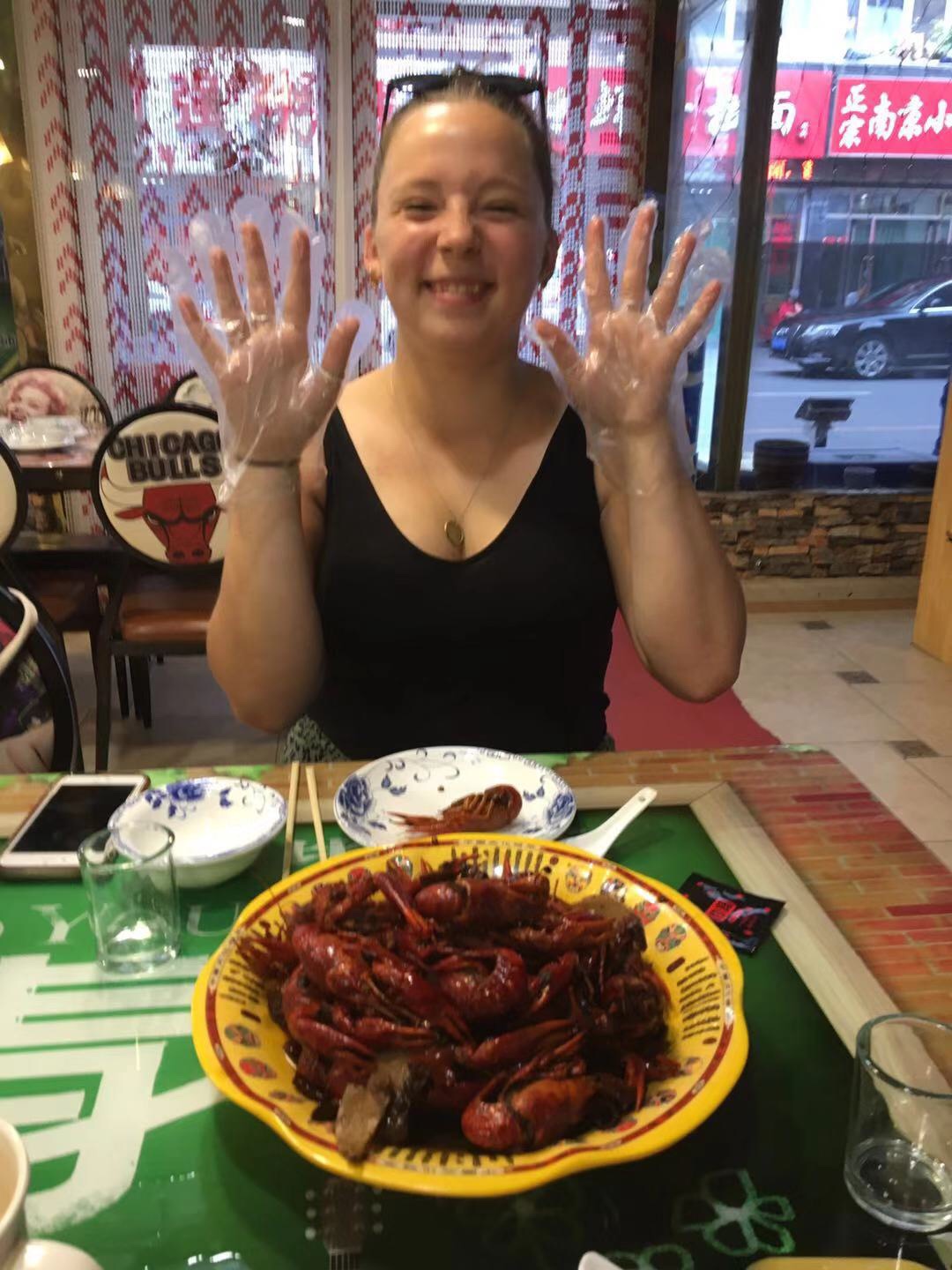
On Saturday it was Joe’s birthday! We headed into the centre of the city to one of the other sights, Zhongshan Square (中山广场). It was built by the Russians and is surrounded by buildings that were all built in the period that Dalian was under the control of the Japanese. We walked around for a bit and then found some lunch. We went to a seafood place and ended up with a bit of a lucky dip from the menu, including a big bowl of crayfish, some barbecued skewers, peanuts and rice. I went over to Joe’s for dinner as well and his host mum had gotten a cake!

Zhongshan Sqaure (中山广场)
Ready to dive in!

Anyway, so far so good. Classes start tomorrow and I’m very excited to get going as it feels like that’s all I’ve been waiting for!

Honduras vs. China

Leaving for the other side of the world seems to have become a bit of a pattern with me. It started at 17 and I went to Costa Rica for a month but that clearly wasn’t enough. Once I finished school I took it to the extreme and moved to Honduras to spend a year volunteering with the organisation Project Trust. With those experiences behind me it would be fair to assume I was pretty prepared for moving to China this year right?

WRONG.

Even though I have done this before, the mental preparation felt a little different this time. And to be fair, the situations are more different than they might at first appear.

This year vs. 3 years ago. Look how fresh faced I was!

The anticipation for China was very drawn out while it all happened pretty quickly with Honduras. It went from an idea – hearing about Project Trust for the first time at a school assembly – to a reality – flying away – in just over a year. Meanwhile I have always known I would have a year abroad at university. At first it was just because of the kind of person I am and then because I decided to study languages at uni. I’ve even known I would be going to China since I was 17 so I’ve been waiting to get here for 4 years.

In some ways the long run up was not actually helpful. For so long it was too far away to bother thinking about and there were much more exciting things happening – Honduras and then uni and then BAM! It was time to go! Whereas with Honduras, the year running up to departure was completely devoted to it. I went on Selection, I had to fundraise all year and then go on Training all before even getting to my project.

My project partner, Amy, and I on Training

Expectations are also a big factor in any kind of preparation. I carefully managed my expectations for Honduras. I knew very little about it as a country, not having even heard of it before starting my Project Trust journey and while I learnt the basics during my Training, I tried to keep my mind open and stay away from stereotypes. However I had lots of information when it came to my project. I knew about my host family, the school I would be teaching in, how everything would work. Practically, I was all set but there was still a lot left for me to discover on my own.

With China, things were almost exactly the opposite. I had a lot more information when it came to the country after studying the language at university for two years. Alongside having had to take a Modern East Asian History course, almost all of my tutors were Chinese so I picked up bits and pieces about the culture and life there. In the UK, there is also generally a bit more awareness of China than Honduras as well, though I had to question how much of what I already knew was only stereotypes and preconceived ideas – dangerous things to base anything on.

However when it came to the university I would be attending, Dalian University of Technology (大连理工大学), I knew nothing beyond what the names gives away. We had been given vague information on Chinese universities in general – expect it to be intense, be ready for classes to start at 8am – but especially seeing as Dalian is not an extremely popular choice, there was not much specific information available. I did speak to a 4th year student who had spent her year abroad in Dalian but I was really more interested in what life was like there than what her classes had been like.

Dalian University of Technology (DUT)

Another aspect was that when I went to Honduras I was travelling with a big group so we arrived and experienced the initial culture shock together. For the rest of the year I was part of a pair so everything I encountered was faced side by side with someone who is now one of my best friends. I was pretty much never alone, there was always someone to share my highs with and to support me through the lows. China is a lot more of a solo deal. I’m not the only Edinburgh student in Dalian, or China, but it’s just me in my host family and everyone is spread all over China which is a much bigger place than Honduras!

16/17 Honduras volunteers

One of the hardest things I faced before leaving for China was the feeling that I was leaving everyone and everything behind, way more than when I left for Honduras. I was 18 and had just finished high school, a very pivotal time in my life, and for everyone else my age. We were all starting the next chapter of our lives so everyone was moving on at the same time. Everyone was heading off to something new and different so it wasn’t out of place that I was too – even if I had taken it to a bit of an extreme! It was always going to be a time of change which I think made it easier to adjust.

Meanwhile it felt like I was leaving so much behind me this time. My sisters are both heading into a very important year in their lives, Kirsty her Highers and Amy the final year of her university degree. Of my closest group of friends at uni, only one other is going away on a year abroad so the rest will be living their lives as normal and I am definitely going to feel like I’m missing out a bit. It feels like I’m as much in the middle of a chapter as starting a new one and those feelings are difficult to reconcile.

All looking suspiciously happy at the idea of me leaving…

And finally, this just seemed bigger. My overwhelming feeling about Honduras was excitement, so much so that I was never nervous and not even sad until I said goodbye to everyone at the airport. This time I was nervous. Scared, even.

Despite this, I have one very important thing now that I didn’t when I left for Honduras – the knowledge that I can do this. I obviously hoped and believed I could when I went to Honduras but there is something different about the certainty of previous experience. I’ve done it before, I can do it again. I’ll be fine. That mantra was incredibly reassuring when it all felt a little too much. This is something I love to do, experiencing a new way of life, learning a language, and I have every faith in my ability to make it through this year.

All of these things have made leaving a very different experience, not that that’s a bad thing. Honduras was the only thing I had to compare this to but it will be a different experience entirely. And now I’m here and none of that really matters. All I know is that China has a lot to live up to!