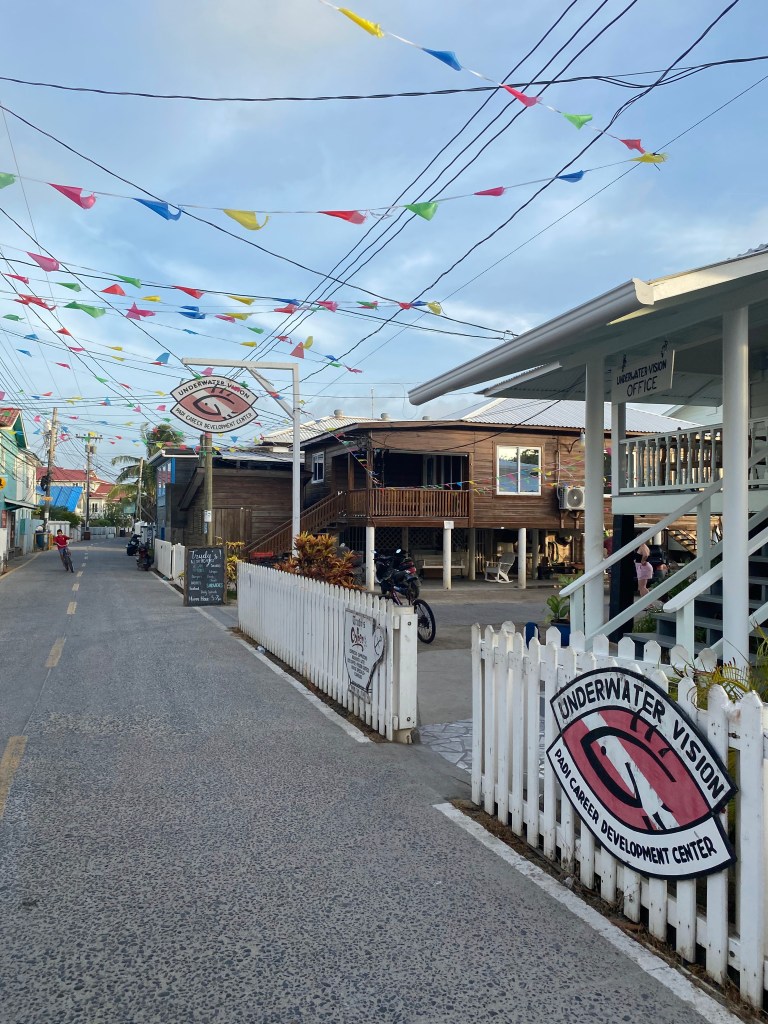
Highlights of Nine Months in Costa Rica

Time is a funny thing – at points in the last nine months it has flown by and at times it has stretched on. It’s still hard to believe that nine whole months have gone by. I’ve still limited the amount that I’ve shared from my job and about being in Costa Rica, although my last few posts (here and here) are changing that a little. I want to take a moment to share some of the highlights of the last nine months for me. I want to make clear that there have been lots of low moments since I’ve been here and maybe one day I’ll write more about those. But for now, this is very intentionally a highlight reel!

Having great colleagues

I feel so incredibly lucky to be working with some incredible people that have made these nine months much easier and more enjoyable than they would have been otherwise. On base in Cartago, I work most closely with Andrés, the programme manager. From the very beginning, Andrés and I have gotten on like a house on fire. Sometimes we joke that we share a brain cell because we’re so on the same wavelength. He’s supported me through my training, getting a hang of the job, pushed me to go further, introduced me to sides of Costa Rica that I haven’t seen before (including his family) and just been much more friend than just a colleague. I had an especially hard time in April because my grandad broke his hip and then passed away a few weeks later and I wouldn’t have been able to get through it without having Andrés to lean on. I can’t say thank you enough.

We also have Alicia, our cook. She feeds us throughout the week and does it so well. She is from Limón, the region covering the Caribbean coast of Costa Rica so her food has a lot of Caribbean influence and flavour which means it’s absolutely delicious! I’ve also worked with Indie, the coordinator of the groups programme that I helped out on a couple of times. I had met Indie before I worked with her as she stays on the Cartago base before or in between picking up and dropping off groups in San José. We got on from the beginning but became even closer after working together (in one group it was just the two of us and on the other we also had Isa, a Costa Rican who I got on with really well too). Indie, who is from England, is in a similar position as me, being far from home, working in a country and a language that is not her own and having been living abroad for the last couple of years. I’ve also really appreciated that support from her in having someone who knows what it feels like and relates to how I’m feeling to talk things through with.

Our students

I don’t think I’m a natural born teacher. Not that I think I’m a bad one, I just don’t think it’s my vocation or my calling. I’ve kind of fallen into it as a profession and am currently trying to find my way out of it a bit. Saying that, there are aspects that I love, and that’s mostly down to the kids. The students in the school we work in are lovely, happy, fun, sometimes challenging, energetic, intelligent, interesting, curious, welcoming children. We teach from three to twelve years old and there are definitely age groups or classes or even individual kids that I like more (yes, teachers always have favourites!) but overall, even on my worst day this year, and there have been some really tough ones, going in and hearing cries of ‘Profe! Profe!’ and having a kid run up for a hug or to show me something can change my mood for the better for the whole day. Our other classes also have some really special students. Our senior adults class always puts a smile on my face. Our single mothers’ class is great for a laugh. The conversation club is filled with students that have become friends. And although they’re not students, a shout out to the gardeners at Parque La Libertad, especially Yhan who has also become a dear friend.

TAICA ❤

One of the best things to happen since I’ve been in Costa Rica is absolutely being adopted by an adorable little tabby cat who we named Taica. One day in October, only a couple of weeks after I arrived in Cartago, two little kittens turned up in our garden and refused to leave. After a few days of feeding them but keeping them outside, we relented and let them into the house. As well as Taica (who’s name was based on the scientific name for a Siberian tiger), there was also a black cat we called Onca (after the scientific name of a jaguar). Sadly, after a couple of weeks Onca decided to un-adopt us so it’s just Taica now. I’m honestly obsessed with her. She’s a cat so she’s not obsessed with anyone but herself and it’s also very much a case of affection on her terms. At the same time, she loves besitos en la panza (aka belly kisses) and while she usually sleeps in Andrés’ room, she often comes and has a cuddle with me as I’m settling down to sleep. On another note, we really tried to raise her as a bilingual cat but despite living in a house with mostly English speaking volunteers, Taica speaks Spanish much better. She loves a chat too, she’s very talkative! She’s so silly, she loves chasing flies and will play with your feet even if she’s only just met you.

Finding a Tico family

As well as having found really great friends in Andrés and Indie, I feel like I’ve found a Costa Rican or tico family. Every Thursday night we run a conversation club and through that we met Naty and her three kids, Dariana, Abigail and Mathias. We get on really well with them all, especially Naty who is a loud, bubbly and gregarious person. Our relationship with all of them, including Naty’s husband Diego, moved beyond just conversation club when they invited us to their house in December after some of our volunteers at the time expressed an interest in learning how to make tamales, a typical dish eaten at Christmas. We actually ended up going to Naty’s dad’s house and making tamales with her Colombian stepmother (they are known amongst their family and now us as Papi Roy and La Parce). It was such a fun day but we were there for 9 hours! First we had to clean the plantain leaves then cut them into the right size, prep the fillings (rice, peppers, chickpeas, carrot and pork), make the massa, (the main tamal mix) and then put it all together, wrap it up and eat it!

A very special experience was when we got invited to Abigail’s quinceñera. A quinceñera celebrates a girl’s 15th birthday and is a very important event in countries across Latin America. Family is such an important aspect of a quince so to be invited was a huge compliment. On the day, there were some lovely speeches from family members, a samba band and Andrés even broke out some flaming torches and juggled! As well as the tamales and the quince, we’ve been to Papi Roy’s house for karaoke as well as for Easter lunch, learnt how to make empanadas with Naty and had a few barbecues all together, including for my birthday. It’s been so nice getting to know them all and having that familial connection when I’m so far away from home. It’s really helped me through some tough moments and some of my favourite memories that I’ve created here have been with them.

Actually finding a water polo team!

One of the first things that I Googled when I got this job was if Cartago has a water polo team. I found out that they do, Cartago Piratas, but on closer inspection after I got here, it looked like they only had junior teams. I thought that was it. I contacted them anyway once I was here just to be sure and it turns out that they do have adults that train, just not a team that plays matches, and I was welcome to come along! I was so happy to have found this and I loved the training, even if it took a bit to shake off the cobwebs at the beginning. Playing water polo makes me feel like myself and it was nice to have a way to meet new people and an excuse to get out of the house and have some time to myself.

The coach and the team have been so lovely and welcoming to me. I’ve been invited to take part in multiple beach water polo tournaments, although I unfortunately haven’t been able to go to any because they always clashed with weekends when I had to work. I also got invited to play with one of the San José based women’s teams in the Costa Rican championships but had the same issue with work as well as being away for one of the weekends. Something I was able to take part in was a friendly, mixed tournament that was fundraising for the Costa Rican women’s team. The pool was outside which is always a novelty for me and had a beautiful view of the mountains around San José. I was put in a team with one of the boys from the Cartago team and three others. It was four aside so thankfully we did have a sub! We may have lost all of our games but I scored a goal and had a lot of fun so that’s all that matters.

Another really lovely moment that I’ve had with this water polo team was around my birthday. The weekend before my birthday had been filled with lots of celebrations (more on those below) but my actual birthday was a Monday and was quite relaxed. I went to training in the evening and was surprised when the coach’s wife, who is really lovely and I get on with really well, walked in with a cake!

Finding my favourite spots

A great way of exploring and getting to know a new city is trying to find my favourite spots. A few have climbed their way above the rest here in Cartago. First and foremost, there’s a cafe two blocks down the road from the GVI house called Mist City and it’s a definite favourite. I like going there for a coffee or their amazing chocolate cake. A common activity for everyone in the GVI house of an evening is to go out for ice cream and there’s only one place we go (unless it’s shut, in which case we go around the corner to the chain ice cream place). Dolce Gelato has incredible ice cream, my favourites being the maracuyá (passion fruit), Nutella and pistachio.

The GVI house is halfway between the centre of the city and TEC, one of Costa Rica’s public universities. I think this is the reason why there are quite a lot of good, cheap restaurant options within a ten minute walk from the house. One block away is Pollo Bros, our go to spot for fried chicken, especially when we’re feeling lazy and don’t want to cook or really go out anywhere. Just next door is El Calchetón, a soda which is the traditional kind of restaurant in Costa Rica so has all of the classics. My favourite dish here is the chichaldosa which is actually a bit of a hybrid. It is based on a caldosa which is ceviche served in a packet of crisps with ketchup and mayonnaise. Chichaldosa is a version with chicharrones instead of ceviche. A couple of other places nearby that I like are Cantarana, a gastro market with a range of options (the best are the smash burgers), Pardo’s, another food park with lots of options, and Cantarito’s, our go to bar that has, you guessed it, a great burger!

Thursday routine, swim and coffee

Over the years, as I’ve lived in different countries, I’ve come to realise what is important to me when it comes to settling into a new place. Part of this is finding a bit of a routine, enjoying the small things in life. We don’t work on Thursday mornings so my routine has become going for an early swim and then a coffee in my favourite cafe near the house with my book. I don’t always do the coffee part and sometimes not the swim, depending on how I’m feeling but more often than not, that’s where you’ll find me on a Thursday morning. If you follow the Sara Somewhere Instagram account (@sara_somewhere_), this is also often when I post the weekly catch ups!

Seeing Charne and Maddie in SJO

I’ve said it before and I’ll say it again, the world is a small place! An example of this while I’ve been in Costa Rica was when I got a message from a girl I played water polo with in university that she and another teammate were coming to Costa Rica in November on a group tour. They had an extra day in San José at the end and I was able to go through and spend it with them! We didn’t really do that much other than wander around Sabana Park, near where they were staying, and then hang out at their hotel, drinking chocolate milkshakes and playing cards. Another small world moment, one of the girls’ younger sisters is at uni in Glasgow with my younger sister and my sister was her sister’s mentor this year!

Starting the year strong

I have been lucky in my nine months here that I haven’t really had any terrible volunteers. Of course, there are some that have been better than others, with better motivation or better energy, who have more teaching experience or are great with the kids, volunteers who personally I’ve gotten on better with. However, at the start of 2024, I feel I got particularly lucky. Our first group of the year was three volunteers who were joined by a group of four more after two weeks. The average stay on our base is four weeks but this group had a couple that stayed for six weeks and even one who stayed for three months! This group felt really special and that has been seconded by Andrés who has worked for GVI for three years so has seen many more volunteers than I have. Even he agreed that the vibes of this group and these volunteers individually were something a bit special. For two months, the house was full of energy and laughter, more nights than not we were hanging out in the living room, watching movies, playing cards or just chatting. It’s not that we, as staff, don’t do this with every group. To an extent, it’s part of the job description, socialising with volunteers when we’re not on project and creating a warm and welcoming environment for them. However, with this group it was a bit different. I don’t necessarily get a lot of time to myself in this job but I actually wanted to spend this time with these volunteers. It was a great way to kick off 2024!

Birthday week

I was made to feel so special around my birthday this year and it really was a whole week of celebrations. It started the Thursday before my birthday when there was a plan weeks in the making. Andrés faked having a job interview so he could come into school late just so that he could ‘forget’ to bring our dinner bag. After conversation club, he pretended to have messed up again and that we had no transport back to Cartago. Naty and the course organiser Glori said they could give us a lift. Low and behold, we didn’t head back to Cartago but to a pizza restaurant where we ate dinner. There was a cake with candles, birthday signs, table football and a few tears on my behalf! I was so surprised, I really had no idea at all. It was just so nice that everyone had done that for me.

There were some more planned activities over the weekend. We went out for drinks on the Saturday with our volunteers at the time, Naty and Glori, some German volunteers that work with us at the school and the PE teacher. Unfortunately, the day in between the surprise pizza party and these drinks, I got really ill so was on medication and could only have one beer! On the Sunday we had a barbecue at the house which was lovely but there was one more surprise. A few weeks before, we had put together a birthday video for Yhan, the gardener that we usually work with, with messages from lots of past volunteers. It turns out that Andrés had put something together for me too! That in itself was a lovely surprise but it didn’t end there. I was stunned when it changed to a video of my best friend of 20 years and continued with messages from my nearest and dearest. I was already crying and then it ended on a video of my grandad which I wasn’t expecting and brought fresh floods. It turns out he had enlisted the help of my sister and Amy loves this kind of thing so went all in. As mentioned earlier, my actual birthday was very chill and ended with cake at water polo training. Sounds perfect to me!

As previously mentioned…

Last but not least, there’s a few things that have been highlights of this year but that I’ve already written about (in depth) so I’m not going to elaborate too much here. I had a couple of great weekends away to the beach, one in Dominical and one in Puerto Viejo. I particularly enjoyed visiting the Nauyaca waterfall near Dominical and my hostel in Playa Cocles, just outside Puerto Viejo, is one of my favourite places I’ve stayed. I also really enjoyed the times when I got to work on some of GVI’s group trips a few months ago. Working with school and university groups is a very different dynamic to the volunteers we have on the Cartago base. The day to day is very different too – here in Cartago we are primarily teaching English but on the group trips, time is split between cultural activities and more environmental volunteer work.

Still to come

These have been the highlights of my time so far but there’s still some things to look forward to in the next few months! We are heading into a busy period with our volunteer numbers getting up to 7 or 8 which is a lot considering that our average number is 3 or 4. I’m looking forward to the change in pace, so far I’ve only had one other group as big as this at the start of this year. In about a month’s time, I’m heading to the region of Guanacaste for the first time to have a weekend in Playas del Coco. Since I got here, I’ve really wanted to find somewhere to dive and this is supposed to be THE place to dive in Costa Rica, particularly to see manta rays and bull sharks. Last but not least, some of my family are coming to visit in September! I’ve already planned their itinerary and I can’t wait to show them Costa Rica.

Work Trips to Paradise

I haven’t written much, if at all, about what my work in Costa Rica actually involves. Some of that is coming, I want to share a little of what my day to day looks like but this isn’t that… yet. Instead, this post is about a great work opportunity I had recently, or more specifically two great opportunities, where I got to do something a little different to my normal. GVI has three bases in Costa Rica, two core bases and one base for groups. Normally I work in the core community base in Cartago, that’s to say a permanent base that works on the regular, mostly education based programmes that run for individuals. There is also the core conservation base in Kéköldi. All participants have to be over 18 (unless coming as part of a family and then they can be 14) and most people come by themselves, although it is possible to come with a friend or partner. 

Another area of GVI is the group trip programme. This most often serves schools or universities but there are also general under 18 programmes which bring together young people who don’t necessarily know each other. This is the type of programme that I did myself in Costa Rica when I was 17. I had the most amazing time and from that point I wanted to work for GVI one day. I was actually initially interested in working on the groups’ side of things before I got my current position, at least in part because of my own experience in 2015. Currently, the groups’ base is in Gandoca in the Limón province on the Caribbean side of Costa Rica. At the start of the season, they were a little short staffed and my base was quiet so I was able to go and fill in!
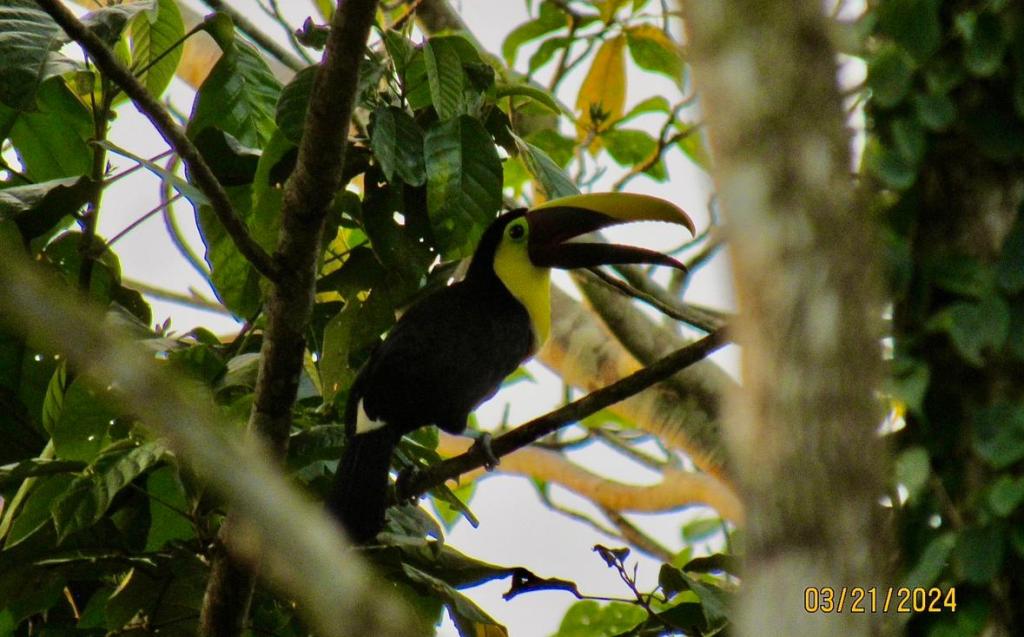
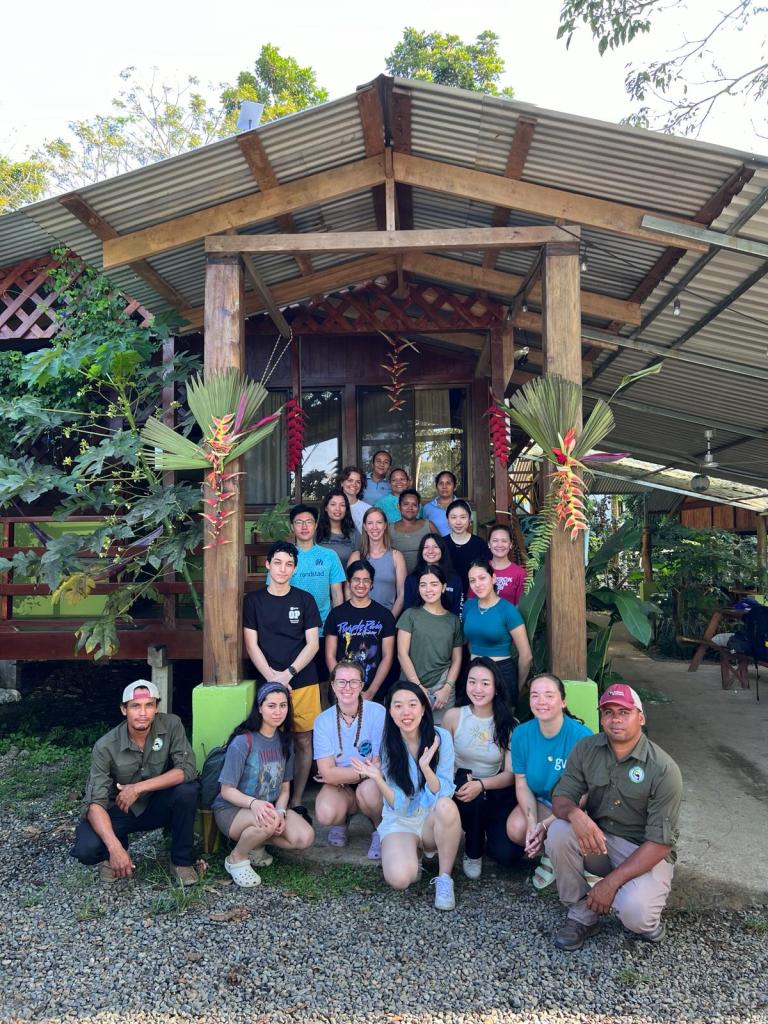
I helped on two groups, one in March and one in April, both a week long each. The first group was from NYU and it was part of their alternate spring break programme. They were honestly such an easy group, we had no problems and four of them were fluent Spanish speakers which was very helpful! The second group were students from a bilingual French high school in Los Angeles, so all around 16 years old. Working with under 18s was a very different dynamic to the university students that we had previous time, you always had to be on your toes! 

The first step is actually getting the groups to the base. After the groups arrived at the airport in San José we stayed the night there and set off the next day. It’s about a six hour drive to Gandoca in a minibus, driving through Braulio Carrillo national park which, fun fact, has Costa Rica’s only road tunnel going through a mountain. The scenery on the part of the road is stunning and it actually gets a bit chilly, a welcome change before the humid Caribbean weather. We stopped in Cahuita for lunch, a town known for its national park that we would visit at the end of each trip. This area of Costa Rica that includes Cahuita, Puerto Viejo and Gandoca, where the base is, is almost entirely surrounded by Panama. As you drive down one of the last roads of the journey, you can see Panamanian mountains. This area is also home to a lot of banana plantations that line the sides of the road. The bus sometimes has to stop so that the bananas can cross the road! (That’s not the first part of a bad joke, there’s a transportation system of rails that allows bunches of bananas to be quickly, easily and efficiently moved around the planation.)

Gandoca itself is a small town of only around 350 people. The GVI groups programme works in conjunction with a local business called Gandoca Experiential Learning. They provide sustainable experiences focusing on environmental, cultural and adventure activities to promote rural tourism and economic development in the town. As part of that we stay at their accommodation, Posada Casa Tucán Tranquilo, known as Casa Tucán for short. Most of the people that work in Casa Tucán (and most people in Gandoca actually) are family or as good as. Most of the families in Gandoca have been there for generations. There’s always a big welcome from the staff, the place is beautiful and there’s a spread of fresh fruit to eat and coconuts to drink. The rest of this first day was pretty admin heavy, there was a welcome presentation and a risk assessment to get through but at some point there was also a folkloric dance presentation from some of the local children which is a lovely way to kick things off. 

There’s a couple of things that usually happen on the first full day in Gandoca which help to introduce the groups to the community that they’re in and give them some context for the rest of the week. The first thing is a presentation on the history and culture of the town, presented by the founders’ mother and translated by a member of staff or a participant, depending on their level of Spanish. She talked about the history of the town, that her family came here in the 1920s and they were very self-sufficient, they would grow pretty much everything they needed. The families that live there now might not be fully self-sufficient anymore but they still grow a lot of their own food.

In the afternoon, we took the groups out on a tour of the community and down to the lagoon. Like I said, Gandoca is a very small town with one main gravel road that runs through from one end to the other where it stops at the beach. There is a primary school and a high school, although previously the children had to travel over 13 km to the high school in Sixaola on the border with Panama, sometimes by bus but often by foot. There’s a pulpería, basically a corner shop, but no bigger supermarket. There’s a church and there are a few hotels or cabins for tourists to stay in. After walking through town, we split the group in two for half to take a boat through the lagoon and the other to carry on walking and would swap for the way back.

There are a lot of areas of ecological importance in Gandoca, including the lagoon which is a Ramsar site. This means that it’s a wetland of international importance, recognising its biological richness. The lagoon supports the only mangrove forest on the Caribbean coast of Costa Rica and is a very protected area so you can only use electric motors and fishing is limited to fish of a certain size. It’s also a great place to see birds, monkeys, caimans and, if you’re very lucky, a manatee. When there’s been a lot of rain, the lagoon actually links up with the sea. When that happens, it’s not the best time to swim but when we were there it was safe enough to get in the water near the beach. Swimming there was weird because some of the water was super hot but would swirl with super cold water! There were more coconuts to drink and fresh fruit which was delicious. When my group walked back along the beach on the way home, we heard a little from staff members Andrey and Justin about the turtle protection and conservation efforts along Gandoca beach. The whole beach is patrolled every night by volunteers in two shifts across three sections. The threats the turtles face range from poachers to the erosion of the beach. We would learn more about these efforts later in the week and get to contribute to their work. 

As well as participating in a number of cultural activities, many of these group trips are built around volunteering and service work. The high school group from LA in particular had lots of volunteering worked into their schedule because they were all on a programme that required a certain number of hours. With them, one of the things we did was go to the high school where we planted some cassava and plantain that the students will look after and then will be used in the school meals. We also painted a table and benches in bright yellow, pink and blue to spruce them up a bit! With the NYU group, their volunteering was in Casa Tucán’s new plant nursery. Similar to at the school, the idea is to use what they grow in the kitchen, to feed the GVI groups and any other guests they have. Any surplus will be shared with the community or given to the school kitchens. The plant nursery was still very new, nothing had been planted yet, so the volunteers were building up the plant beds and digging holes around the edge so that a roof could be built to protect it from the intense sun and the equally intense rain. It was hot, sweaty work but with lots of water breaks and rotating through the different tasks, we helped make some good progress. 

With the LA group, they had the chance to do a bit more volunteer work. They had two sessions working on cacao farms in the town and over the course of the week they got to see most of the chocolate making process, from harvesting to drying to roasting to grinding the beans. The first step was to cut the ripe cacao pods from the trees. There are two colours of pods – unripe green pods which turn yellow or orange when they are ripe and purple pods which turn red. If there are any black pods, they’ve gone bad so need to be cut from the trees but not collected. The ripe pods were collected and brought back to the group that was opening them, avoiding the many orb weaver spiders on the way! The pods are opened with a machete so that you can take the seeds out. You can eat the seeds at this point but they taste nothing like chocolate. To me, the white flesh tastes like soursop (guanabana in Spanish) or maybe pear and if you bite into the bean, it’s purple and very bitter. Another day on another cacao farm, rather than collecting the pods, we were doing some maintenance on the trees. We had some people raking around the base of the tree and others cutting off the sucker plants that take nutrients away from the main tree. We were supposed to be there for about two hours but we did roughly forty minutes in the end because the mosquitos were the worst that I’ve ever seen! Once you have the beans, they go into the drier for the fermentation process. Once you have the dried beans, you roast them over a fire and peel them. If you taste the cacao now it’s still bitter, but crunchy with a slightly smoky, almost coffee flavour. Lastly (for us anyway) you grind the beans into a paste. This is where we stopped the process. That evening we mixed the paste with water (or you can use milk) and a little sugar to make hot chocolate!

A very important part of the group’s experience is the turtle conservation part. Gandoca is a nesting site for three of the world’s seven sea turtle species, mostly leatherback but also hawksbill and green turtles. With all groups, they start with a presentation about turtles from Andrey who is extremely knowledgeable. He has spent decades doing this work, both in Gandoca and elsewhere. Andrey does a lot of work with COASTS, the Costa Rican Alliance for Sea Turtle Conservation Science, a grassroots non-profit organisation that he and his wife founded. Sea turtles return to the same region, if not the same beach, that they were born on when it comes time to nest. Turtles only nest at night, crawling out of the ocean to dig an egg pit. From every 1000 eggs that are laid, only one will make it to adulthood which I found to be a shocking statistic!

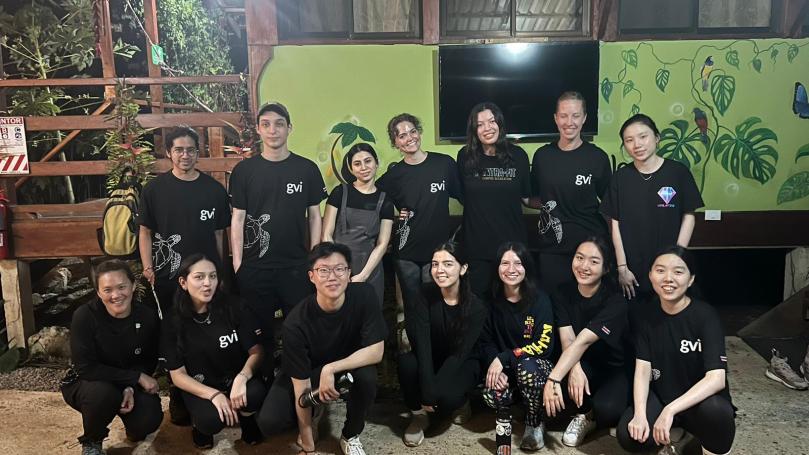
The second part is a turtle walk along Gandoca beach in the evening, leaving around 8pm and finishing anytime between 10pm and midnight, depending on the group and the weather. Every night COASTS have volunteers patrolling the beach to protect the turtles from poachers and keep track of them. You have to wear all black and no phones are allowed on the beach to keep the environment as natural and undisturbed as possible. When we did need to use a torch, it had to be a red light. If turtles feel disturbed once they come out of the water, they can do what is known as a false crawl which is when they return to the ocean without laying any eggs. We were out for a couple of hours before we had to come in early because of the rain. I went again the next night with a smaller group but we didn’t see turtles either night. Both the trips I was on were at the start of the turtle nesting season so chances were slim but it was still nice to be out on the beach in the evening.

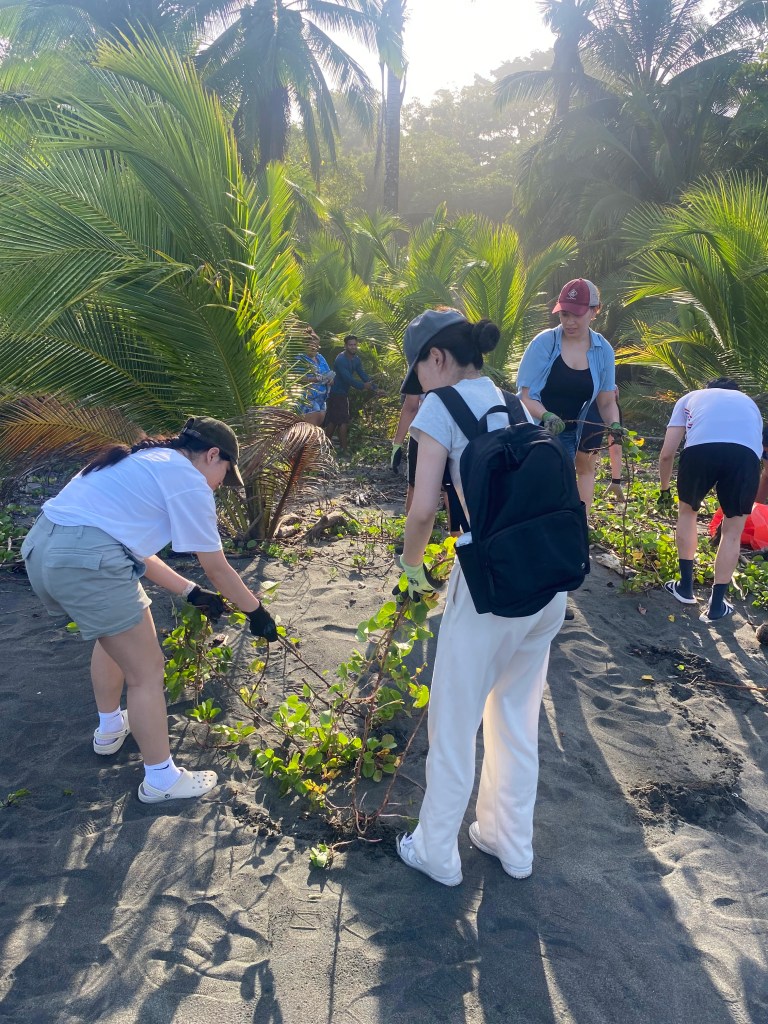
Another activity during the week that counts both as volunteering work and also contributes to the sea turtle conservation efforts is the beach clean. We actually focused more on pulling up roots and vines in the areas that the turtles like to nest rather than plastic, although obviously we also picked up any rubbish that we saw. At some points on the beach, there were some huge logs in the way but with a team of 8 or 10 people, it was light work! Even under the very hot sun, doing pretty physical work, the groups both got really into it. I think a beach clean gives you that immediate feeling of satisfaction and it’s easy to see the difference you’ve made. After one of the beach cleans and after some of the volunteering work with one group, we took them to the local football field to have some free time to let off some steam. Some of the students got into football games with whichever locals were around, others were passing around a volleyball and others making the most of the pitch being one of the only spots in town where you can get phone signal! 

While the volunteering and conservation work are important parts of the group trips, it’s also a chance for the students to get to know more about Costa Rican culture. Part of this is a Spanish class or more specifically ‘Talk like a Tico’! There’s not enough time to start from scratch with any students that don’t speak Spanish but then there are also some students that are already fluent in Spanish. With such a mix of abilities, the Spanish class focuses more on Costa Rican slang. For example, ‘el tico no trabaja, el tico bretea’, ‘tico’ being a Costa Rican and ‘bretear’ being the word they use for work instead of ‘trabajar’. If you want to learn any of it, have a look at a video on YouTube called Gringo Pinto! 

There is also a cooking class because food is such an important part of culture. All the GVI groups learn how to make tamales, a very traditional dish that is made across Latin America. The preparation is a little different from country to country and even regionally so these are Caribbean Costa Rican tamales, before anyone disagrees! It is made with a corn based dough that is filled with meat, vegetables and rice and wrapped in a banana leaf for cooking. The banana leaves that are used as wrapping have to be prepared before you can use them so they get wiped clean, cut down to size, and the strong centre vein of the banana leaf is separated to tie the tamal. The corn had been cooking over a wood fire the day before and the first thing to do was grind it up. The massa is mixed with spices, salsa lizano (a staple in Costa Rican cooking that is like a thicker Worcestershire sauce) and some of the cooking juices from whatever meat is being used. Every tamal gets some rice, potato, onion, carrot and pepper and then we had a range of other fillings. Pork is traditional but we also had chicken or you can leave them without for the vegans and vegetarians. We also separated some of the massa so it wouldn’t have the meat stock in it. When it comes to wrapping the tamales, you have to make sure it’s tied nice and tight so that no water can get in during the cooking because that ruins the flavour and texture. We made them in the morning so there was time for them to cook during the afternoon and then we ate them for dinner! 

Probably my favourite part of the whole week was the 10 km hike from one side of the Gandoca-Manzanillo Wildlife Refuge to the other. We started on Gandoca beach at around 7.30am so that we could get a good distance out of the way before it got too hot. We walked along the beach for about an hour which was the most physically demanding part because the loose sand is harder to walk on. Beyond that it was mostly in the jungle with a few short stretches on the beach further along. It was so fun, such a nice level of difficulty, a good pace and so beautiful! Some of the most challenging moments were steep slopes that were a bit muddy because I only had trainers without much grip to them but I managed not to fall! Not everyone can say the same… What made these sections even more difficult is that a lot of the trees along the path are pochotes that have thick spikes all over the trunks so if you do slip or fall, you absolutely can’t reach out to catch yourself on the tree or risk shredding your hand to pieces. At around the halfway point we stopped at a coconut farm for a break, fresh coconuts included! What could be better? It was a breathtaking place to rest, ready for the second half of the hike. 

With the NYU group, we completed the hike in four and a half hours. They were the first trip of the year but compared to the groups from last year they were second fastest, coming in after the group of high level student athletes so they did well! The LA group finished in five and a half hours, we just had a few more breaks along the way with them. The hike ended inside the main part of the Manzanillo national park where we managed to see a sloth! After a long hike, we had a well deserved lunch at a local restaurant of a very typical Caribbean dish, pollo caribeño and rice ‘n’ beans. To get back to Gandoca, rather than walk the opposite way back, we got a couple of boats which was great because both times I did it I saw turtles! 

On the last morning of each trip, after saying goodbye to most of the team in Gandoca and leaving the lovely Casa Tucán behind, we head up to Cahuita, another national park on the coast. It’s not a huge park and entrance is by donation for anyone visiting. There’s only really one trail that heads along to an absolutely stunning beach, the perfect place to have a swim before you head back down the same path to the entrance again. Even though it’s small, there’s so much to see in Cahuita! Every time I’ve been there, I’ve seen at least three sloths and most of them were quite low in the trees. There’s also lots of monkeys, sometimes howler monkeys or capuchin monkeys. It’s also possible to see morpho butterflies floating lazily through the air, easy to spot because of their bright blue colour. With a good guide (which we had, Braulio from Casa Tucán), you can also see the harder to spot animals like tiny poison dart frogs or bright yellow eyelash viper snakes. 

After lunch in Cahuita, it’s back into the bus for the final five hours to San José. Both groups had a night there and left at the end of the following day. With the NYU group, I had actually already arranged to have a weekend in Puerto Viejo, the most touristy town in the same area as Gandoca, Manzanillo and Cahuita. Because the group programme was short staffed and I was helping them out at the last minute, I was able to stay in Puerto Viejo so missed the final day with the NYU group. I was there for the second group with the LA school though. It’s much more relaxed than the rest of the week because after such a jam packed schedule, everyone was pretty exhausted! There was some admin to be done, a goodbye presentation, feedback and reflection and then we went to the national museum and San Jose’s central market to wrap things up. 

I really enjoyed the two group trips that I worked on. It was really interesting to see a different side of what GVI does and I loved working with the partners in Gandoca as well. For the first group, with NYU, it was just me and Indie who manages the groups programme but for the LA group we also had Isa who worked on some of the groups last year. It was a great team to be a part of and I’m very pleased that I got to have this experience! For now, it’s back to Cartago and normal life but it wasn’t so bad working in paradise for a while.

A Tale of Two Beach Trips

Before the blog posts move from Panama on to Colombia, I’m going to take another short break to write about a few different things. First up, I am almost nine months into living in Costa Rica (and there might be something coming soon to celebrate that!) which I can barely believe. Obviously one of the things I love about living abroad is the opportunity to get to know new places and make the most of where I am by travelling around. Unfortunately, for a variety of reasons, it hasn’t been as easy to travel while I’ve been here, although I have managed to fit in a few weekends away and also been able to travel with work a little bit. Today, I’m telling you a tale of two beach trips, one to Dominical on the Pacific coast of Costa Rica and one to Puerto Viejo on the Caribbean coast.

Before Christmas, I didn’t really travel much because I was saving my pennies to be able to visit my sister in her new home in the British Virgin Islands. However, I knew that I wanted to go away for the weekend around my birthday as a treat to myself. Initially, the main requirement was just that it was by the beach because I needed some time by the ocean. I decided on Dominical, a tiny town on the Pacific coast, in between Manuel Antonio and Uvita. It is basically two roads, one down from the main highway that has all of the shops and restaurants on it and then another that runs along the beach. Dominical is a popular surfing spot so the town has some of that laid back, no shoes kind of energy to it. However, this area is home to a lot of Americans who have bought property so it has developed to accommodate that as well, with more upmarket options. I really liked Dominical, it was perfect for the weekend break I wanted but I will say that it is overwhelmingly filled with tourists, mostly Americans. It feels like that takes away some of the authenticity and maybe some of the charm of it. That’s not to say it’s not worth visiting! I just think it’s important to bear in mind.

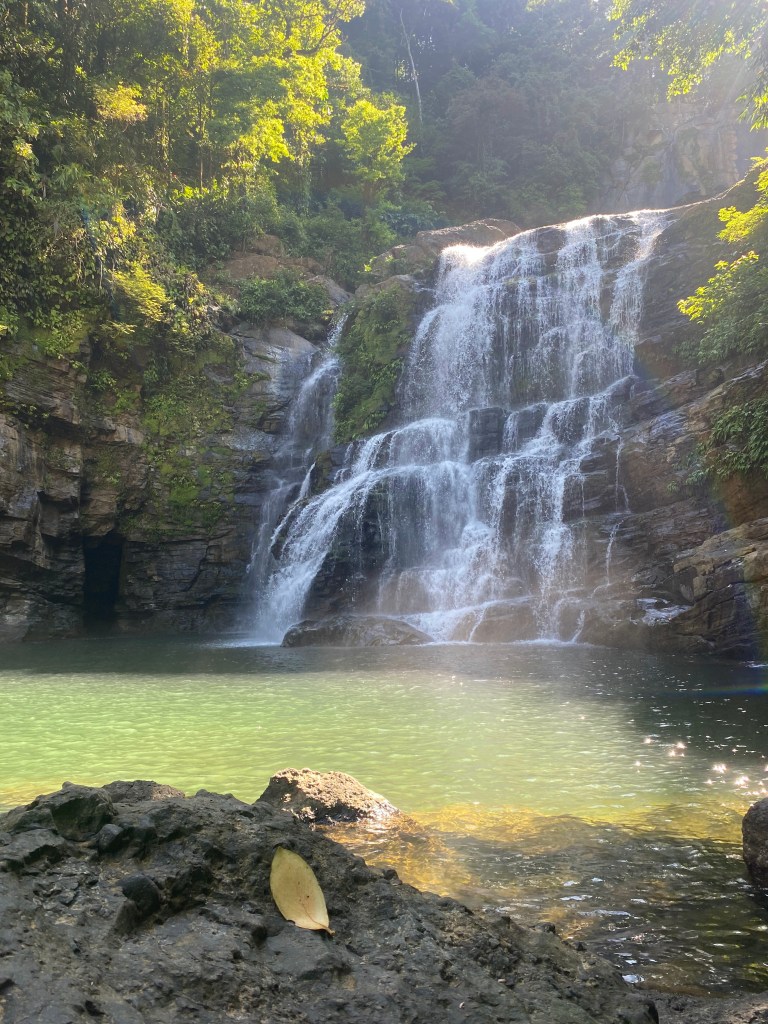
The main reason I chose Dominical, other than wanting to be by the beach, was because it’s the best jumping off point for visiting the Nauyaca waterfall which had been recommended to me by a friend. From Dominical, I got the 6.20am bus towards San Isidro and asked the driver to let me know when we got to the waterfall. It was about 500 colones (70p) and only about 20 minutes. It sounds really early but it meant that I got there right when the ticket office opened at 7am and otherwise it can be tricky to get there and back by public transport. If you arrive by public transport, there is a bus back to Dominical that passes at 12,20, stopping at the bus stop just opposite the ticket office. It also meant that after I had hiked through, I was one of the first people there and by the time I was leaving it was only just starting to get busy. There are a few options when it comes to tickets. I went for the cheapest, $10 just for access which means hiking 5 km either way. You can also pay $32 to take a pick up truck both ways or pay an extra 6000 colones on top of the access fee to get the truck just on the way back. There are also horseback riding tours for $80-90.

The first stretch is 2 km of paved road down to the car park that is very steep! It took me twenty minutes going down but I reckon it would have been double that walking up. From there, the road is more of a track, clear enough but a bit bumpy and I imagine it would be muddy if it had rained a lot. Most of it was flat or with a slight incline with some steeper stretches for about 3.5 km. The second section took me an hour on the way there and only 35 minutes on the way back because it was mostly downhill. Only a couple of people passed me on foot and 300m from the end, the first pick-up truck that you can take went past and I got a big cheer from everyone on board which was lovely. Even though I started early, it was already very hot and humid! I recommend bringing lots of water, electrolytes and some snacks because there’s nothing after the ticket office, though there are taps with drinking water at the entrance to the falls themselves. It was pretty much my perfect hike, not too long, not too hard and beautiful. I really enjoyed the walk, it’s a lovely area with beautiful surroundings and has the best reward when you get to the end of it.

Nauyaca is technically made up of two falls, the upper and the lower ones. You can swim at both but I think it’s nicer in the lower falls. I went along to the upper falls first and they really are quite impressive. They have such height to them. I’ve seen a lot of waterfalls over the years, they’re a dime a dozen across Central America, and sometimes they can feel the same or a bit disappointing but I thought this one was really special. There was something about the way the sun, which hadn’t risen over the top of the falls yet, reflected off the water falling over the top that made it seem like a scene out of an anime film. I lounged around reading my book for a while, enjoying the peace before many other people arrived before going for a swim. A top tip for getting photos of yourself when you’re on your own: ask the group of Gen Z girls that have just been having a photoshoot!

I made sure to leave in plenty of time for the bus I wanted to get back down to Dominical. I passed a lot of people on my way out and there were already a lot more at the falls when I left so I think going early, particularly on a Saturday, was a smart thing to do. It only took me 40 minutes to walk back to the car park where I took a break. As I started walking back up to the road (which, as I had imagined, was much worse uphill), I managed to hitch a ride with a couple I had spoken to earlier. It was definitely a more bearable journey that way! 

The bus back down to Dominical was supposed to pass by at 12.20 but it was a little late. Once I made it back to my hostel, I made some lunch and spent the rest of the afternoon reading my book in a hammock. That’s pretty much my happy place so I was very content. This feels like a good moment to give a massive recommendation to the hostel I stayed in, Cool Vibes. From what I can tell it’s one of only two hostels in Dominical. I loved it, everyone was really friendly, the staff were helpful, there’s a big kitchen, lots of chill common spaces and a small pool for relaxing. I was in a dorm with a mosquito net and a personal fan which was helpful for the heat. It’s actually right next door to the other hostel in town which I read some bad reviews about and looked a bit dingy, although it also looked like it was under renovation.

Cool Vibes is also less than 100m from the beach! Caribbean beaches in Costa Rica are generally deemed to be a bit nicer but the Pacific coast has one big advantage – the sunsets are beautiful! I took advantage of this and went down to the beach both evenings I was there (I arrived just after dark on my first night so missed the sunset). Then, after getting up at 5.30am, I was in need of an early night! 

On my second full day, I wanted to walk to the neighbouring beach, Dominicalito. It’s supposed to be nicer than Playa Dominical with smaller waves better for beginner surfers (not that I was surfing) and for swimming. You can walk all the way along the main beach, cut up onto the road briefly and then back down onto Dominicalito. It was beautiful! It took just under an hour to walk there, I’m not quite sure exactly how long because I stopped a couple of times to talk to a friend or to read and enjoy the view. Once I had arrived on Domincalito and spent a bit of time there, I walked out of the main entrance to the beach and stopped for a smoothie at Kunjani Cafe, between the beach and my next destination. I had an orange and passion fruit smoothie while trying to finish my book which was my mission for the weekend. Along the road from Kunjani, across the river and up the hill a little there is a track off the road that leads to another waterfall! Very different from Nauyaca, Poza Azul is a lovely wee spot, entrance is free which is a bit of a rarity in Costa Rica and it’s usually pretty quiet. The water was quite low because it hasn’t been raining a lot but the pool is still quite deep at the centre. Deep enough anyway to use the rope swing at the edge of the pool but not enough to jump of the top off the falls, although apparently you can at times!

From here I headed home, spent more time in the hammock during the afternoon, finished my book and headed down to the beach for sunset. I had decided to take myself out for a nice dinner on my last night (otherwise I was making food in the hostel to save money) because this was, after all, my birthday trip! I went to a place called Phat Noodle where I had a delicious pad thai with pulled pork which was an unexpectedly good combination. The staff were also super friendly and very surprised when I actually spoke Spanish!

The next day I headed back to Cartago, down a different route than I had taken to arrive that basically went through two national parks, Tapanti and Los Quetzales. It reminded me a lot of driving through the mountains on the way to Candelaria in Honduras. This was my first weekend away to explore Costa Rica since I arrived in October and it reminded me how much I love to travel. Almost as soon as I got home, I booked another trip for not long after!

This second trip was also to the beach but on the opposite side of the country. Around Easter we had a few extra days off school and the volunteers were all planning on travelling that weekend as well. That gave me a long weekend to play with, making a trip to the Caribbean side a lot more worthwhile as it’s a little further than the Pacific. I ended up being in the area for the week prior, helping on a GVI school group programme (more on that soon) which worked out to give me an extra day so I was actually there for four full days. The main town that people visit on the Caribbean coast is Puerto Viejo, a very laid back place. It’s popular with surfers, hippies and Costa Ricans alike. The area is also known for having more of a mix of cultures, blending Costa Rican culture with afro-caribbean influences and aspects of the indigenous Bribri culture.

I actually opted to stay in Playa Cocles, 1.5 km down the road from the centre of Puerto Viejo. I was staying at the fabulous Playa 506 Beachfront Hostel and it really is right on the beach. I stayed in a 6 bed female dorm and paid a bit extra to have air con which I really appreciated. There’s a restaurant and bar on site but they’re quite expensive in my opinion. Saying that, I did treat myself to a cocktail the size of my head on the first night! There’s also a big kitchen where you can cook and a supermarket a five minute walk away. From the restaurant you can walk 20 metres to get onto the beach. It was the perfect place to relax and in the perfect location with the beach just out the back of the hostel. I think this beach is much nicer than any in town and the water is cleaner for swimming in as well. It’s also a good place to base yourself with Puerto Viejo and Cahuita on one side and Punta Uva and Manzanillo on the other.

After what had been a busy week with work, I went to bed early and slept for 12 hours! The plan for the first day was that there was no plan. I spent a bit of time on the beach but there was a shaded hammock area between the hostel and the beach where I spent most of the weekend. I did rouse myself a little more the next day and headed into Puerto Viejo. I was meeting a friend who was passing through on her way to the GVI conservation base in nearby Kéköldi. We went for breakfast at a place called Bread and Chocolate which was great. There are a lot of good food choices in Puerto Viejo, nice coffee shops, brunch spots and bakeries. There are also lots of bars and a good nightlife but I was having a more chill time so didn’t experience these for myself. Another spot worth a visit is Gelateria Deelite where I had incredible pistachio and tiramisu ice cream.

Through the work I had been doing in the area I had met a local tour guide and took the chance to join him on a tour one day. I joined a tour with a British and a French woman to a cacao farm and medicinal plant garden in the indigenous town called Bribri. It was so interesting, there were so many plants growing around the place that I never would have noticed by myself. So many of them can and still are used to treat many different conditions and illnesses. There was also a frog nursery where we saw poison dart frogs. We got to take some cacao beans through the whole process of roasting, crushing, grinding and then making the paste into a drink. It’s very bitter, a bit too much for me, but I loved it when we put some of the chocolate paste into a roasted banana.

It was really interesting to learn more about the Bribri culture as well. The language of Bribri is still spoken but much less than it previously was. We learnt some phrases in Bribri during the tour like ‘miska‘ which means let’s go, ‘weske‘ means come in and ‘mia mia‘ means thank you. The language has been taught in schools since 1985 but by then, some of the damage was already done and the language was on the decline. Nowadays there is more of an effort being made, you can study Bribri at the University of Costa Rica, but in general there is a worry that outside influences and especially new technology and the digital space are threatening the preservation of the Bribri language and culture. The name Bribri comes from the word for ‘strong’ in their language and families are organised into matrilineal clans. This means that the lineage is passed down through the mother. Women also have very important roles within the society, they are the only people who can own land and the only ones allowed to prepare the cacao drink that is very important to many of their rituals. In the early 20th century, the Bribri faced some land struggles because of the presence of the United Fruit Company who forced the Bribri off their territory in order to plant bananas. After much opposition and issues with disease on the plantations, the United Fruit Company completely withdrew from the region of Talamanca, taking everything including the railways they had built. In 1977, the Costa Rican government created indigenous reserves including for the Bribri. This granted them control land ownership although some legal settlers from before 1977 have refused to leave, causing tensions.

The second part of the tour was a visit to the Bribri waterfall for a swim. The water was lovely and cold and you could swim all the way up to the waterfall. When we climbed back up from the waterfall, the guy who owns and charges for the parking (actual access to the waterfall is free) has coffee, pejibaye (a weird fruit that tastes a little like a sweet potato and is eaten with mayo, called a peach palm in English) and pineapple on offer for guests. You can also buy a cold coconut and pay a little more to make it a coco loco, a rum based cocktail. He is also a musician and if you’re lucky you might get a tune, not that he needs much persuading!

For my last full day I wanted to make the most of the many beautiful beaches up and down this part of the coast. I rented a bike from my hostel ($10 for 24 hours or $7 for a half day) and wanted to cycle to Punta Uva. I actually went to Playa Grande first, around the far side of Punta Uva. A lot of the beaches blend into one another so Playa Grande actually merges into the beach in the town of Manzanillo but it can be a bit busier at that end because there’s the entrance to the Gandoca-Manzanillo Wildlife Refuge. Playa Grande was super quiet, just one small surf class happening and otherwise I had it to myself. Next I stopped at the actual Punta Uva beach which is supposed to be great for snorkelling but it was absolutely packed! Because I was there the weekend before Easter, there were a lot of Costa Rican holidaymakers and this beach is actually quite small so I didn’t stay. On the way back to the hostel, I stopped off at what I think is part of Playa Chiquita. It was quiet and there was a spot in the shade where I lay for a while to enjoy the peace and quiet.

Another early night and then a 5.30am bus took me back to Cartago and back to real life. There’s still much of Costa Rica that I want to explore, I haven’t been to the very popular La Fortuna with the Arenal volcano, I’m desperate to get to Tortuguero National Park, preferably during turtle season, and I also have Uvita during whale season on my list. I’ve also never been to the region of Guanacaste which is known for having gorgeous beaches! It gives me a few things to plan and look forward to over the next few months. Finding a balance between work and pleasure is something that I’m still trying to figure out as well as balancing the budget sheet but I hope there’s a happy medium to be found. Wherever I get to next, you’ll be sure to hear about it!

Panama City

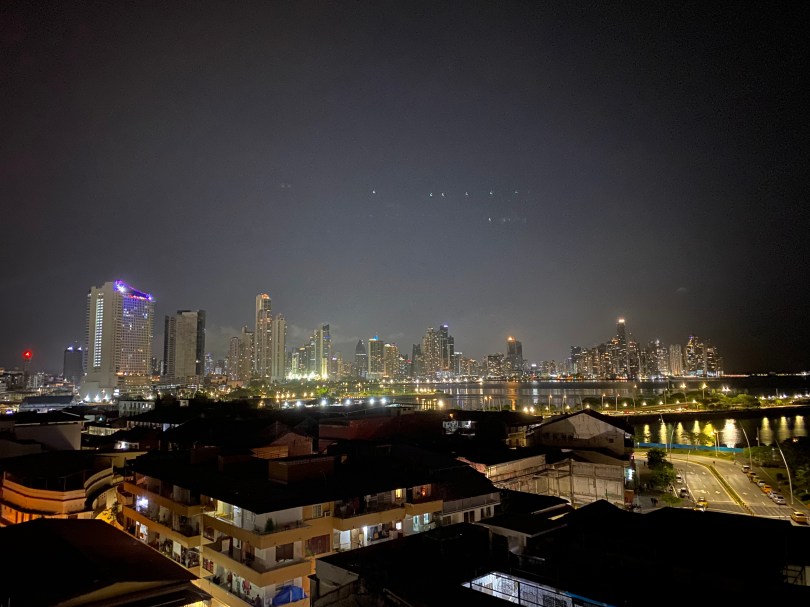
Panama City is unlike any other place I’ve been in Central America. It is a large metropolis and doesn’t look like anywhere else in the region with its skyscrapers on one side and colonial town on the other. After a week and a half of discovering everything else that Panama has to offer (and it’s a lot!), finishing in the nation’s capital felt like a must. It was our last stop in Panama, a country that really surprised me and that I really enjoyed. Panama City wasn’t my favourite of the places that we visited but I still had a great time!
Getting from Boquete to Panama City involved a long travel day, 10 hours in total. Our hostel was called Magnolia Inn and honestly, it was like a luxury hostel that felt a little more like a hotel. I really liked it though it wasn’t necessarily the most sociable place as a lot of people seemed to be there as part of a group or a family. This didn’t bother us too much because as you’ll read about later, we actually knew a number of people who were in Panama City at the same time as us! The hostel itself was beautiful, had a great big kitchen, a HIGHLY air conditioned lounge (no complaints here!) and is very central in the neighbourhood of Casco Viejo. This is the old district of Panama city. It’s a UNESCO World Heritage site and dates back to 1673, although it all looks pretty new as there has been a big effort to renovate it recently. One day we did a walking tour to learn a little bit more and while it was interesting, I also thought the guide was a little dry. He clearly knew his stuff but I think he suffered from having done it so many times because it was all a bit rote. It was still good to be led around Casco Viejo a little more, see some new areas and learn a little more.

There’s obviously one thing that comes to mind when most people think of Panama City and we’ll get there but we actually did a lot of other great things! At Hannah’s request we went to MAC Panama, the modern art museum. Sometimes modern art goes a little over my head but I really enjoyed this museum, especially the exhibition ‘Esto es lo que hay‘ by Donna Conlan and Jonathon Harker. It wasn’t trying too hard to be clever, it just was clever and it was fun! The exhibit called itself ‘una retrospectiva seriamente juguetona‘ – a seriously playful flashback. One video used empty bottles of national beer to play the American national anthem, also used as a drinking song by a London gentlemen’s club. The names of the Panamanian beers – Panamá, Soberana and Balboa – reflect aspects of the country’s history and identity, evoking the complex relationship between Panama and the US and shows how national symbols can be arbitrary and deceiving.

After visiting the MAC, Hannah had another request. She wanted to head to the well known Mercado de Mariscos (the seafood market) to try ceviche! Ceviche is a classic dish in Panama and I had never had it before but I have to say, I’m not the biggest fan. We made a bad choice with the black conch because it was extremely chewy but the white fish and shrimp options were better. Some other good spots for food and drink that we tried in Panama City- Tantalo has a great rooftop bar and so does the Selina hostel, both in Casco Viejo. We ate twice at Nomada Eatery, near our hostel. The food was decent but more importantly it’s cheap, the vibes were good and we had a good time sheltering from the rain playing Jenga one night. Panama can be a little more expensive than its Central American neighbours (other than Costa Rica) so La 10 is a great place to save some money! Beers and cocktails are all $1.65 and they also have cheap small plates (though they’re not very good).

A pleasant surprise was Parque Metropolitano, a massive park in the centre of the city which is the perfect place for some hiking, to hang out with some turtles, see sloths and get a great view of the city. It was lovely to have such a big green space in the centre of such a large metropolis and it only costs $1 for nationals and $4 for foreigners. The park boasts almost 300 species of birds, 64 mammal species, 39 species of reptiles and 21 of amphibians. There are a selection of trails but even the most challenging is pretty short and manageable. There are lots of things to look at which makes the perfect excuse to stop for a breather if you need to! It was the kind of hiking that I like where it wasn’t really hiking, more of just a walk around. It was a bit steep up the final bit to the viewpoint but it was nice to look out over the city in one direction and then out to the canal on the other side.

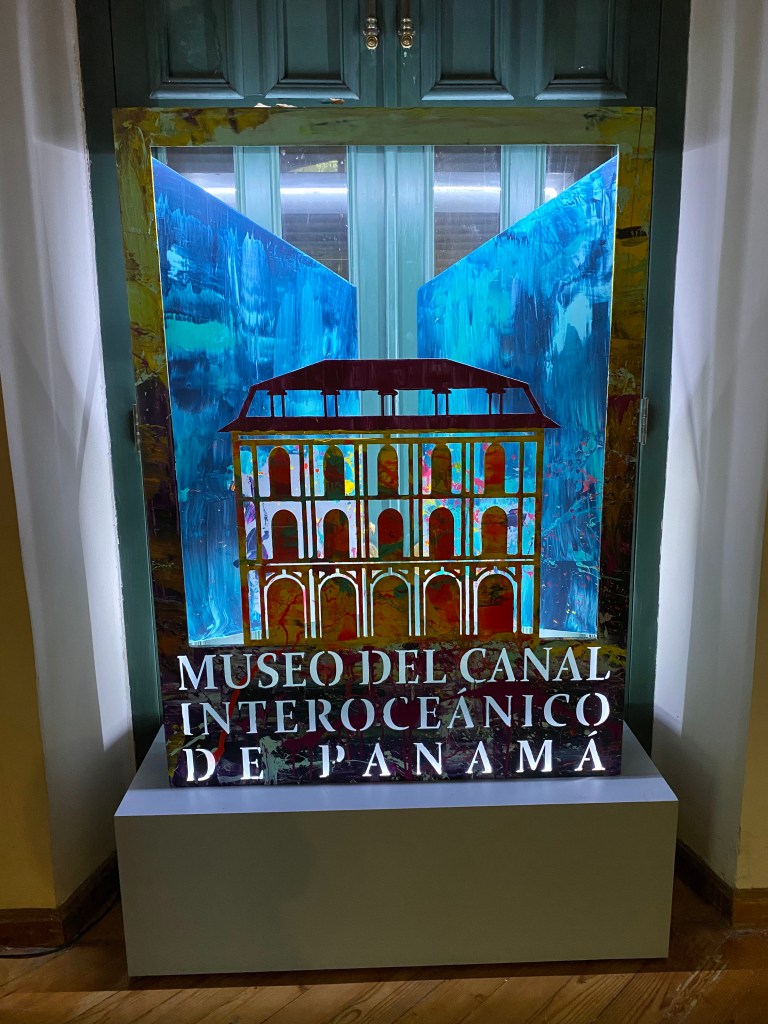
Now time for the main event, or almost. Something I would recommend doing before you visit the Panama canal itself is to visit the Canal Museum which is in Casco Viejo. Visiting the museum before the canal gave us more context for what we saw the next day. There’s so much information inside, some of which I found a little dry, but some really interesting and you can pick and choose the areas where you want to spend more time. One area that I was particularly impressed with was the booth where anyone can go in and record their own account of the events of December 1989, the US invasion of Panama. I think this is an incredible use of the museum to allow anyone who has a story to tell to share their own experience and to make it accessible to everyone visiting the museum. History should be told by the people who lived it but often it’s only a very limited and specific group of people who get that opportunity. Particularly in the case of much more recent history, where the effects might still be unfolding and the experiences are still fresh, I think it’s important to record that. I would love to see more of this in museums.

When it finally came to visiting the canal itself, I was really looking forward to it! I’ve always been quite fascinated by the idea of the canal so it was my one non-negotiables of our visit. To get to the canal, there are various tours or you can just do it yourself. It’s a bit difficult by bus so Hannah and I plus another friend went via taxi. Our first taxi driver in Panama City was super friendly and had given us his number in case we needed anything. He took us to the canal, waited for 1.5 hours and took us back for $30 total (he also gave us some information on things that we passed on the way). It took us about 20 minutes to get there from where we were staying in Casco Viejo (with no traffic on a Saturday morning). We got there at 8am because we had been advised that the last boat of the morning would be passing through around then and there wouldn’t be another until 2.30pm. I definitely think it’s worth asking around about these timings to make sure that you don’t make the trip out there for nothing.

Saying that, all the tour groups had the same idea so it was very busy! Luckily we got through just in time to see the last boat make its way through, even if it was over the heads of a crowd. Other than watching the boats go through, there is also a 45 min film narrated by Morgan Freeman included in your entrance fee. It was interesting but there were a few areas that I think it glossed over. It’s the only other thing to see around the canal which is why I think going to the museum before is a good idea because you can approach the (very positively framed) film a bit more critically. The most interesting thing I learnt about the canal (although I can’t actually remember where) was related to the tariffs that boats pay to go through. This is calculated by weight and a modern cargo ship can expect to pay around $800,000. The smallest fee was only 36 cents and was charged to travel writer Richard Halliburton in 1928 when he swam the length of the canal!

Overall, I was really pleased that I finally got to visit somewhere that I’ve been interested in for years. A big part of what made it so great was our taxi driver, Ariel! He was the first person Hannah and I met in Panama as he took us from the bus station to our hostel when we arrived. We immediately warmed to him after he found out we were from Scotland and started talking about the Scottish boxer, Ken Buchanan. He was a huge fan and even though we had never heard of him, Ariel’s enthusiasm was infectious! He gave us his number in case we needed a lift anywhere else while we were in Panama City and we ended up using him a few times, both for the canal and then to go to the airport. He was good fun, kept things appropriate, acted as a bit of a tour guide on the way to the canal and then changed a flat tire in about five minutes on the way home! On the way out of Casco Viejo to the canal, we also got a view of Ancon Hill, the home of the largest Panamanian flag! Ancon Hill was previously controlled by the US government and was home to administration for the canal. In 1977, Panama was given back control over the canal and the flag the size of a football field was erected here as a symbol of Panama’s sovereignty.

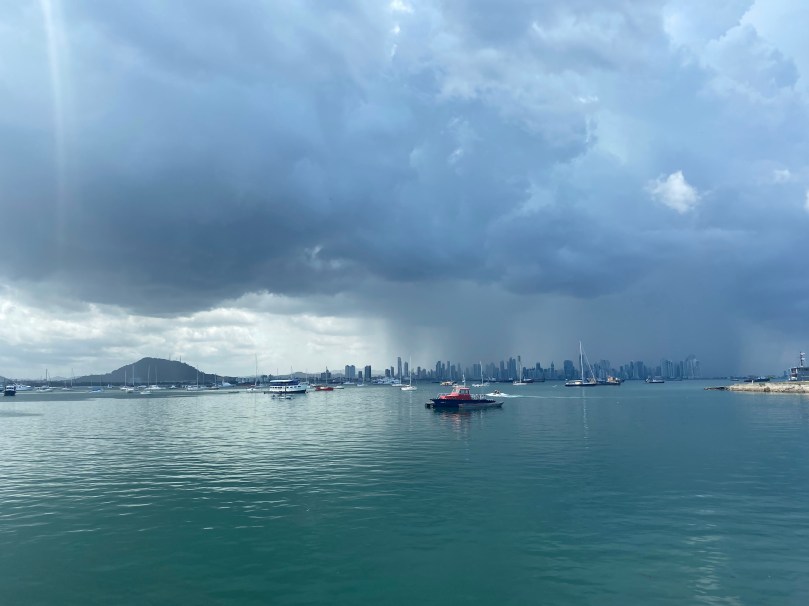
Panama City was a really special place for me because of the people we met or reconnected with. From my time working in France, I actually have a friend from Panama City who I had reached out to before we arrived. Mafe gave us some recommendations (going to Parque Metropolitano was her idea so thank you!). We had a bit of a chaotic afternoon when we tried to meet up with her. We agreed on meeting at the Amador causeway, a 6km strip extending into the ocean away from the city, built out of the rock excavated from the Panama canal! We got dropped at the far end of the causeway, planning to walk back but we definitely underestimated the heat that day! What was cool though was that from the beautiful weather on the causeway, we could look over the water to the skyscrapers of the city and see dark clouds and rain rolling in. Eventually we caught up with Mafe and her friend Ricardo at a restaurant. It was great to see her again and a lovely reminder that the world is a small place!

There were others that we got to reconnect with while in Panama City, all people that we had met in the Lost and Found hostel. Makenzie, an American girl who we had arrived at Lost and Found with, arrived to our dorm in Magnolia Inn and came to the canal with us. We also got to see the Dutch trio, meeting up with them for some food, drinks and an embarrassingly bad game of beer pong! They were such a lovely group and we were sad that we didn’t get to see more of them. Saying that, we did see one of their number, Tomas, when we were in Colombia but Livia and Youri headed home from Panama City. We also saw more of Makenzie in Colombia, right before flying home.

This brings me to the end of our time in Panama. Initially, Panama was only really meant to act as a stopover between Honduras and Colombia. It was also going to be the last country I had to cross off in Central America, I can now say that I’ve visited them all! But in the end, it was so much more than this. Panama has such a variety of things to offer, the infrastructure is pretty good for tourists, I found the people to be welcoming and helpful and I think that it attracts a type of traveller that I’m likely to get along with (maybe with the exception of the party hotspot of Bocas del Toro). Now that I’m living in Costa Rica, Panama is just next door and I’m definitely hoping to get back there again!
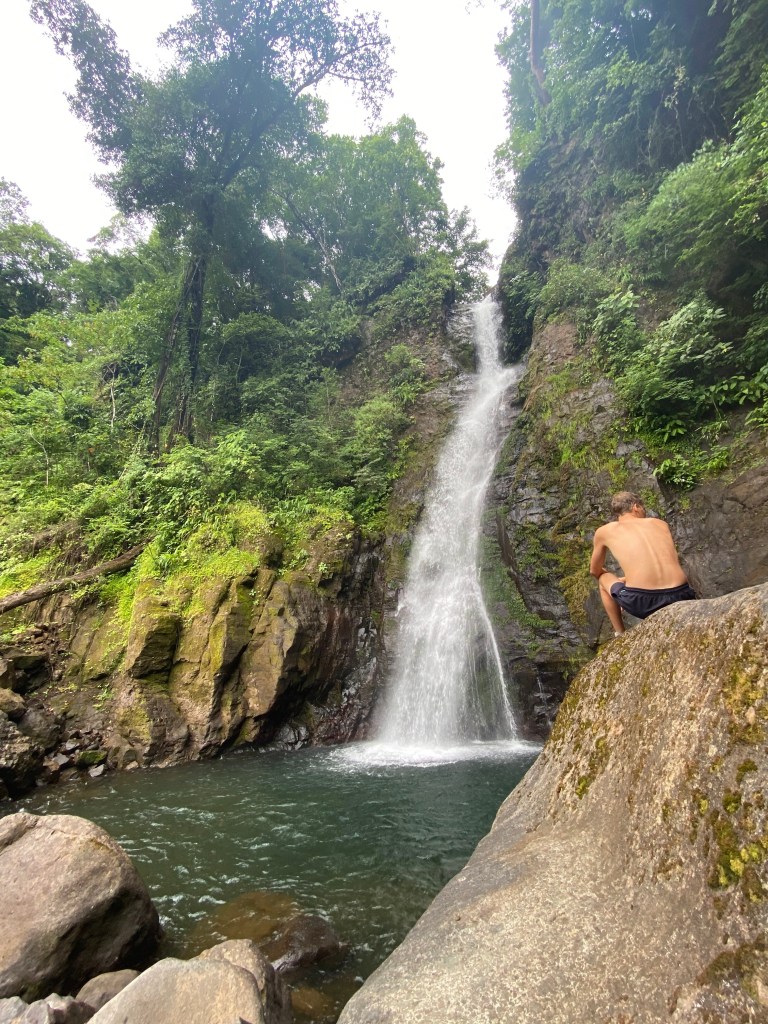
Boquete

After leaving the Lost and Found hostel on the side of a mountain in Panama, we really didn’t go very far to our next destination, Boquete. As the crow flies, it’s less than 50km away although it’s almost three times that distance by road. We had a packed few days here although when we first arrived, all we knew was that Hannah wanted to climb the volcano and that I did not! Boquete is known for the Barú volcano, the highest point in Panama. It’s an all day hike that many do overnight in order to watch the sunrise from the top. You can actually see Volcán Baru, the background to Boquete, from the terrace of Lost and Found!

The view of Volcán Baru from Lost and Found hostel

I actually really enjoyed our few days in Boquete, not just because the weather was a bit cooler and fresher. Despite this, and arriving on an air-conditioned chicken bus (quite the novelty!), things quickly went downhill when we were trying to find our hostel. We stayed in Blasina Beer Hostel which was associated with the town’s brewing company. Originally we were booked in somewhere else but when we were staying in Lost and Found we found out that we could get a discount at Blasina so we cancelled and rebooked. It was about half the price of the other place which was great but it wasn’t my favourite hostel. It was pretty simple, not much of an atmosphere and there were ants in the room (not uncommon but annoying). It was also impossible to find! The original location that we headed to (according to Google Maps) was next to the brewing company but it was a construction site and clearly being renovated. We had no idea where to go and I could not for the life of me find a number to call. We managed to get on the still functional wifi and found a different location on Hostelworld. We headed to the second spot but it just looked like a normal house, not a hostel. We asked in the sandwich shop across the road and the owner wasn’t sure but phoned someone to ask where Blasina was. It turns out that it was somewhere else entirely but Nuria, the lovely sandwich shop owner, drove us there (only a few minutes away) and helped us find the right place.

Hannah decided to get her climb of the volcano out of the way on our first day, leaving at 3am in order to try and get to the top for sunrise. Unfortunately, the weather was terrible so she couldn’t see anything! She still enjoyed the climb, though she said it was pretty hard. I had most of the day to myself but there wasn’t anything in particular that I wanted to do. In fact, I didn’t want to do much at all! I went for a walk in the morning that had me almost literally bump into a German couple, Jennifer and Victor, who we had met at our previous hostel! They had decided at the last minute to come to Boquete for a night and were also staying in Blasina so I offered to walk them there otherwise they would never find it! For the afternoon I found a nice coffee and chocolate shop called The Perfect Pair and settled there to work on a blog.

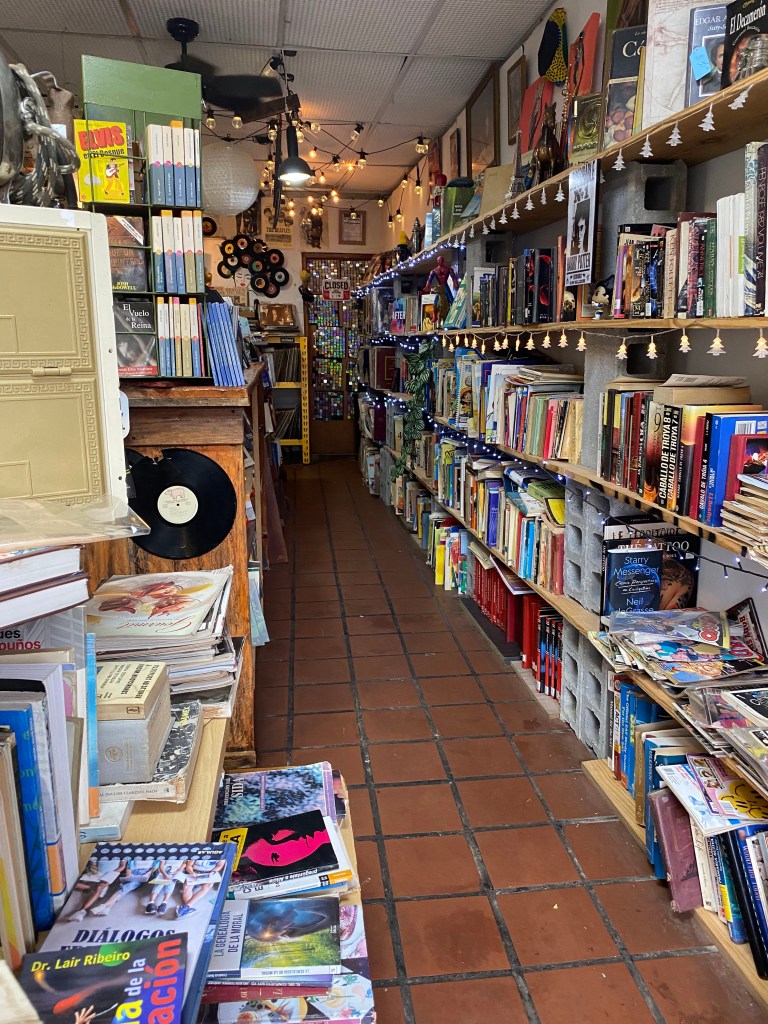
I met Hannah back at the hostel when she finished and she was on a high, not tired at all! We went for a walk to see some more of the town together. Right across the road from Blasina there was this incredible bookshop called Librería Bloise. It’s like a treasure trove of second hand books in both English and Spanish, of all genres and a great place to peruse the packed shelves. Later in the evening, we met Vincent and Jennifer at the Boquete Brewing Company because it was linked with our hostel and we got a discount. It was a fun place to hang out and try some of their specialty beers. There is also a food truck in the court yard called Aqui Va la Niña that sells incredible burgers! They are the perfect accompaniment to some beers.

There are some aguas termales outside Boquete that we considered going to the following day but they were a bit difficult to get to by public transport. Another popular thing to do in Boquete is a coffee tour but Hannah and I were already planning on doing that in Colombia so we were looking for something else. We settled on something that was a little different for us, visiting the Jungla de Panamá, a wildlife sanctuary a $5 taxi ride outside of Boquete (it’s best to arrange with the driver to come back and pick you up). We basically got a private tour to see all the animals, including giving Daisy the spider monkey some fruit! We also got to meet the monkeys, coati, goats, horse, rabbits and birds. A lot of the animals, including Lupita the coati, were pets and were given up and brought to the sanctuary. Hannah loved the birds the most, I… did not. I prefer birds from a distance but I did have a nice chat with Paco the parrot! It was a $25 entrance fee which I personally think was very steep, especially considering it only took an hour to see everything. Everything I had seen online said that it was free or donations as well. I think $10-15 would be a much more appropriate price point. We still stayed when we discovered the price because we had already arranged for our taxi to come back in an hour and a half and at least the money is going to a good cause. A side note, it was all in Spanish and I’m not sure if it would be possible, at least in as much detail, in English.

In the afternoon, we were also doing something a little unexpected. That might be the word to describe Boquete in general, maybe because I didn’t have that many expectations to begin with, but it was all good! Remember the coffee shop, The Perfect Pair, where I went while Hannah was climbing the volcano? Well, we went back there to do a chocolate making class! It was $39 for a two hour class with a free drink included and three chocolate bars to take home at the end. We were initially a bit sceptical about the price but it was absolutely worth it in the end. We had Christina guiding us through the chocolate making process. She was fantastic, engaging, fun and really knew her stuff! Some chocolate facts that I learnt in the workshop – beans are fermented for 7-9 days, they spend 2-3 days drying in the sun and then are roasted for 40 mins at 142ºC. If chocolate tastes too bitter, then it has been roasted for too long or at too high a temperature. Roasting is what gives chocolate the nutty flavour. The Perfect Pair wasn’t using their own cocoa beans yet, they are two years into growing their own supply but it takes 4-5 years for them to be ready. The Perfect Pair uses their own cocoa butter instead of oil to mix with the blended cacao nibs as it is solid and keeps the chocolate from melting as easily. Oil is extracted from a second batch of cacao and the remnants are used to make cocoa powder! The province of Bocas del Toro produces the most cacao in Panama because of the higher temperatures. We got to use coloured milk powder to make patterns for our chocolate bars and then we tempered the melted chocolate which means cooling it down from around 37º to around 25º so it has a nice shine and snap. There’s a machine that does it for big batches but we did it by hand which involves spreading it across the countertop and moving it around. We added toppings like various nuts, coconut or Oreos after we poured the chocolate into the mould and voila! We had our own, handcrafted chocolate bars!

Our last night in Boquete was a relaxed affair. At this point in the trip, budget strings were bring pulled a little tighter so we started cooking for ourselves a little more. In Honduras, it’s generally just as cheap to go out as buy groceries, especially if you eat at the comedores. Panama was a bit more expensive and we still had a while to go on the trip so we wanted to make our money go further. It was also nice to choose exactly what we wanted to make as well. We spent the evening cooking some mac and cheese with a nice salad. Hannah went on a walk after we ate but came back to get me because she’d stumbled on an artisan’s market that she wanted to show me! It was a great wee find, good for some souvenirs and to add to my ever growing earring collection. Then it was off to bed early before a big travel day to Panama City!

Lost and Found Hostel

Stop number two in Panama was all about the hostel rather than the place itself. But when the hostel is in the middle of the cloud forest on the side of a mountain, you can understand the appeal. Touted as Panama’s only hike-in jungle hostel, Lost and Found hostel is the experience in and of itself. That’s not to say there isn’t plenty to do in the area if you want to, as you’ll see, but it’s also a great place to do nothing. I discovered Lost and Found on Instagram somehow before Hannah and I really started planning the trip and worked the rest of our Panama itinerary around it. It was also conveniently on the road from Bocas del Toro to Boquete, which would be our next stop.

The boat tour that we did in Bocas came with a deal on a shuttle from the ferry that would drop us off at the bottom of the hill to Lost and Found. This was very helpful because it’s pretty much just a random spot on the side of the highway. If you are visiting and not getting a shuttle, there are in depth directions on their website from all the destinations you might be coming from and most of the bus drivers will know where it is anyway! The trek up from the road isn’t too bad, only about 15 minutes but pretty steep. I would say just take your time, I definitely did because I had sprained my ankle a few weeks before the trip, and I would recommend arriving during the day because I wouldn’t want to do the hike up at night. The main area of the hostel is built around the dining area with some hammocks and big tables perfect for meeting people and making friends. There’s also a comfortable living area and a fairly big kitchen that I used once but it’s not that great. Group meals are available each day though. All of the meals are vegetarian, if not vegan, and cost between $5-6. The pancakes for breakfast were delicious but so huge that I couldn’t finish them by myself! I ended up sharing with other people most mornings. For one lunch I had bean burritos with plantain chips and chickpea coconut curry one evening for dinner.

We were welcomed by a beautiful sunset on our first night, a recurring theme throughout our stay. The common area looks out over the trees and you can actually see Volcan Baru in the distance, which Hannah would be climbing a few days later! There was lots of wildlife around including lots of hummingbirds coming to the feeders that were hung everywhere. There were also a lot of bugs, moths, caterpillars, spiders and unfortunately mosquitoes. Definitely make sure you have bug spray. There was also a really cute cat! The rooms are in a smattering of buildings a little further down the slope from the main communal area. We were in a dorm but were the only people in there to start with!

That evening, Hannah wasn’t feeling great so she went down to bed to chill but I hung out with the other people that were around. We were lucky that even though the hostel was quiet, we met a few great groups of people. I think it’s easy to make friends with other travellers who are often doing the same thing as you with a similar mindset, although you’ll still meet people that you just don’t vibe with. However I also think that the environment can make that easier or harder and this was an easy place to get talking to others. In fact, almost everyone we became friends with here, we had either crossed paths with before or met up with afterwards! There was an American girl, Makenzie, who arrived on the same shuttle as us who we saw a week or so later in Panama City and then right at the end of our trip when we were all in Bogota before flying home. We met a pair of Spanish cousins who had been on the same dive boat with us a few days before in Bocas del Toro. On our second day we spent the evening with a German couple that I almost literally bumped into on the streets of Boquete a few days later. We also became good friends with a Dutch trio who we saw again in Panama City with Makenzie, one of whom, Tomas, we met up with again in Salento in Colombia and travelled with for a week.

For our first full day, we were met with heavy rain and strong winds which we took as a sign to get cosy and slow down for a few hours. It did eventually start to brighten up so Hannah and I went to explore some of the trails around the hostel with another girl. I wasn’t out for that long before I decided to turn around. The paths were very steep and after the rain, very slippery and I was worried about injuring my ankle again. The rest of the afternoon was spent planning the Colombian portion of our trip, enjoying the hot showers in the cool climate and just generally chilling. There is a little bar on site that they open if there are at least five people who are interested. It doesn’t sound like a lot and it wouldn’t be in the high season but as we were there in the low season which is also the rainy season, it was pretty quiet. We managed to gather the troops that evening though and played some giant dare jenga with $1.50 beers that were cheaper than the fizzy drinks!

The rain continued the next day but we didn’t let it stop us! We headed down the mountain with a group of girls, hoping that there would be better weather. And we got it! We got the bus down to Gualaca, thirty minutes down the road in the direction of David, which is known for its canyon. It’s a ten minute walk from the main road that goes through Gualaca and was a beautiful spot filled with locals enjoying their Sunday. The canyon really looks like the ground has been cracked in half, running narrowly for 40m or so before it opens up. If you jump in at one end, the current will float you down to the pool at the other end. After swimming a bit and lying on the rocks in the sun, our wee group split up a bit with some people heading to their next destination, others wanting to hit up some nearby waterfalls while Hannah and I wanted to relax some more.

I was a bit tired that evening and wasn’t feeling in the mood for socialising and meeting new people. Sometimes those kind of evenings are very necessary, especially as there’s usually quite a high turnover among the people you meet which can be quite draining. Thankfully I shook myself out of it that night and went up to the bar with Hannah and a new group of guests. This is when we got to know the German couple, Jennifer and Vincent, and the Dutch trio, Tomas, Liv and Youri, who we would see again elsewhere. I really enjoyed their company, they were the kind of people that I find it really easy to get along with and have that almost immediate sense of familiarity with.

We were checking out of the Lost and Found the next day but Boquete, our next stop, was only a couple of hours away so we decided to go on one more adventure before leaving. We went with the German couple and Dutch trio to discover the Cuatro Cascadas (Four Waterfalls). We got a bus ten minutes down the road to Los Planes where we paid the $1 entry fee for access to the waterfall hike. We walked along to the last waterfall and worked our way back. Each waterfall had a little trek down and then back up to the main trail to get to it. The first two were nice but nothing too special, although they had nice big pools for swimming in. The third waterfall had a longer trek down and the fourth was the hardest but the most spectacular. On the way down to this one there was supposed to be a hot spring as well. Maybe this was on me but I was thinking about the ones in Gracias in Honduras so I was expecting a little pool that we could have a dip in (the waterfalls were very cold!) but it was really more of a trickle, much more suitable for dipping your toes into.

We hiked back up to the road and again it was time to part ways. This time it was Hannah and I heading back to the hostel to get our bags while the rest of the group headed down to Gualaca to the canyon. The hike up to the hostel was still tough, despite having done it a few times at this point. We actually ended up having a really nice travel day, not just because we had time to actually do something fun before spending several hours on a bus. We first had to head to David and from there change to a bus to Boquete. To get a bus anywhere from Lost and Found (that isn’t a private shuttle), you head down to the main road and just wait for one to drive past and hope it has space and stops! In this case, one came along almost immediately and once we arrived in David we were able to get straight on a bus to Boquete. It was probably the easiest travel day of the whole trip!

Bocas del Toro

The second country on my big summer trip was Panama, the last country in Central America that I had yet to visit. When I was planning a trip to Honduras and Colombia, I thought that Panama would make the perfect stop on the way. At first, I’ll admit that it was a bit of a tick box exercise to ‘complete’ Central America but in the end, I was so pleasantly surprised! Panama doesn’t get as much attention as some of its neighbours but I definitely think it’s worth a visit. I’m going to have a dedicated blog to each destination we visited and I think that we had a great variety of activities in our two weeks there.

Leaving Honduras, one of my favourite places on earth, was already difficult enough but for some reason, Hannah and I decided to make it even more challenging by spending four days on buses to go from Utila, Honduras to Bocas del Toro, Panama. The reasons for this are honestly kind of blurry now but I think it was to do with flights being very expensive and awkward. This journey took us via Managua, the capital of Nicaragua, and San José, the capital of Costa Rica (at this point I didn’t know how soon I would be back here!). The last part day of the journey involved crossing the border into Panama, managing to get help across the border and a cheap minibus ride to the ferry and finally the boat to the island archipelago of Bocas del Toro. There are three main islands making up Bocas del Toro: Isla Colón which houses the main town, confusingly also called Bocas del Toro; Isla Bastimentos; and Isla Carenero.

Hannah and I stayed in a hostel called Aqua Lounge on Isla Carenero. Despite not being on the same island as the main town, it is visible from Aqua Lounge, just a few hundred metres across the water. You can take a water taxi for $1 (USD is the Panamanian currency) which takes 30 seconds and really easy to flag down. It’s known for being a bit of a party hostel but because we were there in low season it was actually pretty chill. There seems to be a lot of good places to stay in Bocas and a lot of hostel bars like in Aqua Lounge and Selina (a chain of hostels you’ll find all over Central America and Colombia) are open to the public so you can still go and hang out there and meet people. I will say, because of the humidity in Bocas, I think air con for your room is a must! Hannah and I had splurged for it in our private room which was a bit of a treat in itself (although sometimes a private room is the same price as two dorm beds) but after our arduous journey we felt like we deserved it!

The view from Aqua Lounge across the Bocas Town

For our first full day in Bocas, we had done something a little out of the ordinary for us but it ended up being one of my favourite days of the whole trip! We signed up for a tour of some of the best spots around the islands. After so many days on buses, the idea of someone telling us where to go and then taking us there was very appealing! It was good value for $30 and came with a deal on a shuttle to our next destination for $15. Our first stop was the aptly named Bahía de Delfines (Dolphin Bay). We had just seen rough toothed dolphins in Utila but the ones we saw here were grey dolphins. They come to this area particularly during breeding season, when we were there, because there are a lot of jellyfish for them to eat. The jellyfish are also why you can’t get in to swim with the dolphins here. Even though you couldn’t get into the water with them, it was so fun to be around the dolphins. They were enjoying playing in the wake of the boat, jumping out of the water and following us around for a while.

The second stop was in Cayo Zapatilla, an uninhabited island, great for snorkelling because of how shallow it is! We saw lots of fish and even two sleeping nurse sharks only 10m from the shore. We had an hour or so of free time here so Hannah and I also took a wee walk through the forest and our boat captain John macheted open a coconut for us! We stopped for lunch at a floating restaurant at Coral Cay, near another snorkelling spot called ‘The Garden’ that we would go to after eating. Lunch was included in the tour, I chose creole octopus which came with rice, salad and patacones (fried plantain fritters).

We had a quick stop at a place known as Hollywood because there are so many starfish. They weren’t very easy to see but our hostel had a lot of starfish visible from the dock anyway so I wasn’t that bothered. And then as a bonus, Captain John took us to see his friend, Pepe the sloth! We actually saw three, including a mother holding a baby! The mother was climbing down the tree and considering that sloths only do this when they need to go number two, we all know what was about to happen.

For our second day in Bocas, we went diving! I’ve never been diving anywhere in Central America other than Honduras so I was excited to see what it would be like. We went with La Buga Dive and Surf who were great (big thanks to our divemaster Anna who had actually come in from another company, Pirates, to help for the day). We headed there a little bit early because they have kayaks and paddle boards that you can use for free before or after your dive that we wanted to make use of. La Buga also has agastro market so it’s a nice place to get some food or a drink which we did after our dives. The dock area is a cool place to hang out and if you look around the edges of the swimming hole, you might spot some baby squid like we did! We also saw a porcupine fish (aka a puffer fish) off the dock!

We went to a site next to Isla Solarte first, known as Magic Wind or Buoy Line. We saw so much! A nurse shark, lion fish, two nudibranchs making more nudibranchs (if you know what I mean), two stingrays, one of which was massive, so many sea cucumbers, arrow crabs, a cowfish, lots of colourful brittle stars and some baby trumpet fish which are cute. There’s a wreck as well so we got to swim around and then through the window!

Our second dive was at a site that Ana had been telling us about before, her favourite called Sachen. It’s basically a big mound under the water but is super colourful and with lots to see. We saw another nurse shark, a couple of spotted lobsters, two scorpionfish, disco fish, fireworms, a giant hermit crab, squirrelfish and blue tangs. It was actually a really challenging dive because the current was pretty strong. To start with we were swimming against the current so not moving anywhere really fast and then it was really shallow so we were getting battered about a lot. It was better once we were able to just go with the movement though.

That covers the main things we did while in Bocas del Toro. We enjoyed the chill vibe of the islands a lot, recovering from a long journey to get there. There are a lot of nice looking cafes and places for food, some of which we tried and many more that we didn’t. Bocas can also be a bit of a party town if you want it to be. We went for a few drinks one night, crossing the water from our hostel and meeting some people at the bar in the Selina hostel. We also happened across karaoke which was fun (to watch!). One of the main attractions to Bocas though is the Filthy Friday island party crawl. It’s similar to the Sunday Funday pool crawl in San Juan del Sur, Nicaragua that Hannah and I both went to when we were 18 and living in Honduras. Unfortunately, we were leaving Bocas on a Friday so we didn’t get to experience it for ourselves. I’m sure we could have rearranged things a little in order to attend but we also didn’t really want to. Overall, this trip was more chill, enjoying a few drinks at the beach, with sunset or with new friends and with only a few of what could be called big nights out.

This trip is getting further and further in the rearview mirror but writing these blogs gives me a great chance to reminisce on an incredible trip. I’ve always said that I write this blog for myself more than anyone else reading it so even as more time passes, I’m still just as keen to get it down on paper, so to speak. It’s something that I can look back on and gives me a chance to reflect. Saying that, I hope you’re still enjoying reading them as much as I am writing them!

Christmas in the Virgin Islands

There’s still plenty to come from my big summer trip to Latin America, although it is getting further in the rearview mirrors. Panama is up next but while I’m on a little break from writing about that trip, I want to take the chance to tell you about another, slightly more recent trip. Christmas while living far from home, friends and family can be a difficult time but I have to say that this year I had a blast! The programme that I work for was closed for two weeks because the school that we work in was shut over Christmas and new year, thereby leaving us with nothing to do. In my eyes, that’s a great opportunity to head somewhere exciting!

The exact same day that I got my job in Costa Rica, my twin sister also got her dream job! She had just finished a masters in tropical marine biology in Essex in the southeast of England but the last time I checked, there’s not many coral reefs in that part of the world. Instead she found herself a job in the British Virgin Islands, working for a dive shop and conservation organisation. For those of you reaching for your phones to look up where the BVIs are, I’ll save you the trouble. They are a series of more than 50 islands, alongside the US Virgin Islands, just to the east of Puerto Rico. Basically, island paradise.

Amy moved out there around the start of December so she hadn’t been there long when I went to visit. I wasn’t sure when else I would be able to get a couple of weeks off at a time so even though she was still settling in, I took the chance to go and see her. I had to work until the 23rd so I didn’t set off until the early hours of the 24th. Nearly a full day after I left my house in Cartago, I arrived at my final destination of St Croix. While Amy lives on Tortola, one of the four main islands of the BVIs, we were actually spending a few days over Christmas in St Croix which is one of the US Virgin Islands. After such a long journey, I wasn’t up for much so we just went out for a few drinks, some food and called it a night.

My first full day was Christmas day! And what better way to spend it than scuba diving. We went out on two dives and saw some Caribbean reef sharks, a sleeping nurse shark and lots of turtles, a few swimming and a few sleeping, which made Amy very happy. Whenever she sees a turtle while diving, she does a happy dance! When we were back on dry land, we were starving so went to a popular burger spot called Schupe’s. We had big dinner plans later so split a burger and some chips while we made some of the obligatory phone calls home. We were staying in Christiansted in the east of the island, one of the two main towns, but in the afternoon we went through to Frederiksted, the other main town, in the west. We had been invited to a beach barbecue with our dive shop from the morning through someone Amy knows who works there. It was a really nice atmosphere, a collection of other lost souls far from home in search of some kind of community to celebrate Christmas with. We enjoyed some great food, a beautiful sunset and then went back to our apartment for a few more drinks. Overall, not the worst Christmas I’ve had away from home (at least I wasn’t coming out of covid isolation…).

Boxing Day was exactly as it should be, a day for rotting, relaxing and recovering from Christmas Day. Albeit a lot hotter, sunnier and sandier than it would have been in the UK! We headed to Hotel on the Caye, a resort on a small islet in the bay of Christiansted. The beach is open to the public, you just have to pay $5 for the round trip boat to get there. This is actually a great spot because Christiansted doesn’t really have a beach otherwise. We ended the day at a very popular pizza spot in town called The Mill – big recommend.

And that was our time in St Croix and the US Virgin Islands over. We had to take two ferries to get back to Tortola, the island in the BVIs where Amy lives, travelling via St Thomas. We arrived at Road Town, the main town on Tortola, just before the end of the work day so headed over to Amy’s dive shop to see who was around and could give us a lift home. Amy lives with some of her colleagues who all work for We Be Divin’, a dive shop who run private excursions, mostly for people coming in on cruise ships. All the girls who work at We Be Divin’ also work for Beyond the Reef, a marine conservation non-profit working on coral reef health, building artificial reefs, doing cetacean surveys, beach clean ups and community outreach. They work closely with another business of the same owner, Commercial Dive Services, doing things like ghost net retrieval. It really is amazing the work that Beyond the Reef does. Amy had only been there for a couple of weeks when I was visiting so she was still settling into her job but since then, she’s been regaling our family group chat with envy inducing stories and photos of the kinds of things she is doing every day. More importantly, this is the kind of work that she has always dreamed of doing and that she has worked so hard to get to do and she deserves this so much. I was so happy to see her in this environment, flourishing and thriving, living her dream.

Amy lives on the other side of the island from Road Town but it’s only a ten minute drive or so. We got a lift home with Buzz and Margy, Amy’s flatmates/colleagues, and Margy’s adorable dog Starboy. The bay where they live is absolutely insane, I can’t believe that’s where she lives. It was sunset as we were coming down the hill into the bay and the view was incredible. After a fairly long travel day, we were both tired so we made dinner, chilled out and Amy gave me some of the things she brought me from home! This included some toiletries top ups that I can’t get in Costa Rica, some photos and a chocolate orange that my mum sent me because she always gets me one for Christmas!

Amy was still having to work while I was there so there were some days that I had to entertain myself. My first day on Tortola was one of those days. I got a lift into Road Town with Amy and settled in a coffee shop for a while. After having lunch with Amy, I decided to try out these open air truck tours that are mostly aimed at cruise ship passengers. When it came to the truck tour, I paid $25 for the 2 hour version, deciding to skip the beach stop that adds an hour and an extra $5. This ended up being a good decision because the beach stop is right in front of where Amy lives so I could go there for free whenever I wanted! The tour itself was fine, there was some commentary from the driver but even with his microphone it was hard to hear. The views were of course stunning but it ended up being a loop down to where Amy lives and back to Road Town so I had driven most of it before. At the end of the day, it was something to do and I saw a bit more of Road Town as well but it wasn’t a highlight of the trip by a long stretch.

Instead of going with Amy the following day, I decided I wanted to have a beach day to myself. Who can blame me on such a beautiful island! One end of the beach is super touristy, full of cruise ship passengers most days, with sun loungers, umbrellas, bars and restaurants. The other end of the beach however, on the other side of a small pier, is an untouched stretch. Beautiful white sand, no big waves, a few palm trees for shade and barely ten other people there throughout the whole day!

One of the benefits of having a sister whose job it is to go diving? Sometimes you get to dive for free with her! In this case, I didn’t actually end up diving with Amy because she had gotten an ear infection after our dives in St Croix, but I got to go with some of her colleagues and some volunteers on Beyond the Reef’s coral health surveys. After a quick lesson on the boat, taking me through a few of the most common types of coral, it was time to dive and have a go at identifying them. I was surprisingly good! Unfortunately a lot of the coral is unhealthy, bleached or dead but a lot of Beyond the Reef’s work, and particularly Amy’s part of that, is to monitor and treat coral. We did two dives before heading back to the shop to find Amy and go home for an afternoon on the beach.

Amy was working on Hogmanay (New Year’s Eve for the non-Scots in the room) so I had another chill day in the flat, not so much on the beach because it was drizzling a little. I was fine with a relaxed day though because we had big evening plans! Jost Van Dyke, one of the other main islands, is apparently one of the best places in the world to celebrate the New Year. Along with Amy’s flatmates, we had bought tickets to the main celebration that happens at a bar called Foxy’s. The ticket was $70 which is a bit expensive but the specific ticket we bought included the return ferry ride from Tortola which is $40 so maybe not as bad as it seems. It also meant I got to see another island, even if only for a few hours and in the dark. Foxy’s is a great big bar but the party was in a large area out the back. There was a big stage and throughout the night there were various musical performances from DJs and notably a great band who had really committed to the vague Game of Thrones theme! I enjoyed their performance the most, lots of rock songs and the keyboard player was Scottish! Just before midnight, bottles of water were handed out so that we could welcome the new year in ‘carnival style’ in their words. That meant opening the bottles and spraying the water over everyone around you! The night was great but we headed home at 2.30am so that we weren’t stuck waiting for the next ferry at 5am. There’s not much to report from the first day of 2024 – our biggest achievement of the day was getting down to the beach for a swim!

I had one more beach day to myself while Amy was at work but she had taken my last full day off so we could spend it together. We were ticking off another island, heading to Virgin Gorda to meet up with Amy’s friend who works at a dive shop there and to visit the Baths. These are unique geologic formations and are in one of BVI’s national parks. A series of large granite boulders nestled in between two beaches harbour small lagoons beneath them. There is a one way loop that will take you down to one beach, then through the baths themselves and out onto another beach that is back near the entrance. We had a swim at the first beach and then got caught in a little queue to go through the baths but there were worse places we could have had to wait. Going through the caves involved a bit of clambering, ducking under rocks, wading through water, going down ladders. We had a bit of time at the beach on the other side and then got some lunch at a restaurant at the entrance. I had a Caribbean dish called roti which was a curry stew wrapped in a flatbread which was delicious.

Before I wrap this up, there’s a few random but interesting things I noticed while in the Virgin Islands (and a few observations from Amy as well) – in the Virgin Islands they drive on the left but most of the cars are American so the drivers are also on the left side. People are very friendly and saying hello to anyone you pass in the street, whether you know them or not, is common. It’s also common to use ‘good night’ as a greeting in the evening whereas it’s usually something I would say as a goodbye. Despite this friendliness, customer service is not great. Travel between the islands is expensive, $40 return for a 20 minute ferry to Jost Van Dyke or a 30 minute ferry to Virgin Gorda. There is obviously a large ‘expat’ community but particularly in Amy’s work, it’s overwhelmingly South Africans and Filipinos. In the BVIs, rum is not taxed so the pours are heavy!

Cruise ships are prevalent, I saw them both in Tortola and St Thomas. Tortola is a big cruise ship destination, there was only one day during my stay when there wasn’t a single cruise ship in port and even the girls that live there were surprised because it’s such a rare occurrence! It’s like an invasion on docking days and the people coming off are not necessarily my favourite type of tourists. I think the nature of cruise ship travel can be a little superficial, mostly because of the time constraints. Yes, you get to experience a range of places in a short period of time but you often only have a handful of hours to see a new place. I found that this made some of the cruise ship passengers very impatient and borderline rude as well as entitled. This is of course not the case for everyone but it’s always the worst ones that you remember.

Something that Amy has talked to me about is the levels of wealth that she has noticed the longer she’s been there. The relative remoteness of the islands makes it expensive to get there (I can attest to that!) and once you’re there, costs are high because a lot has to be imported. In terms of visitors to the islands there are different levels, ranging from those coming in on the cruise ships, people staying on the islands and day chartering a boat, those who charter boats for the duration of their stay, crewed charter boats and even mega yachts. There is also a large wealth disparity between the ‘expats’ that move there from the UK, US or elsewhere and the locals.

It was a jam packed two weeks but I was glad that we were able to make it happen. There was a short period of time when I wasn’t sure if Amy was going to get there in time because of the waiting period for her visa. Even though she had arrived so soon before I visited, I was glad to be there. Now I feel I have an insight into Amy’s life, her work and her new home and I feel like I can follow along with her stories. I also know exactly how hard she has worked to put herself into this position and the sacrifices that she’s made. Being able to see those be worthwhile was incredible and I’m enjoying watching her build her life there.

2023 Bullet Journal

After several requests (from my mum, my gran and my bujo bestie), I’ve bowed to the immense pressure and I’m back with a review of my 2023 bullet journal. I started bullet journalling in 2022 after taking inspiration from my friend Aine from Une Bouchée a Day. Last year, a lot of my monthly themes were based on something that I did during that month or a celebration that was coming up. This year I decided that each theme would start with the same letter as the month. Sometimes I had to stretch it a little bit, especially if I already had something in mind that I wanted to use but it was nice a challenge to get more creative.

January

The January theme came to me quite easily – jigsaws! I kept it in black and white for simplicity, though I made it complicated for myself in other ways. I was really pleased with the variety of layouts that I came up with. My favourite was the weekly spread with the solid background of patterned jigsaw pieces. It took a long time to fill in but it’s the kind of work and drawing that I really enjoy, quite repetitive and monotonous.

February

For February I chose the theme of fruits, particularly citrus fruits like lemon, lime, grapefruit and orange. I like the block style of a lot of these, although they took a long time to draw and colour in. I also think the slices for the mood tracker are really cute!

March

March = marine. The colours on this are some of my favourites, all the different shades of blue and then the black fine line drawings of whale tails, jellyfish, coral, starfish and shells. This one got the thumbs up from my marine biologist sister so what more could I ask for!

April

I think this month was one of my favourites of the year. The theme was technically abstract but I specifically wanted to do it in the style of Piet Mondrian, an early 20th century Dutch artist. This was actually inspired by a trip to a wine bar in Mulhouse, where I was living at the time, with my friends Àine and Sam, that was also themed after the artist. In general, I like my themes to have limited colour schemes and I think the red, blue, yellow and black were really effective. It was also really fun to play with the spacing more on some of the spreads.

May

Now this. THIS. This is potentially one of my favourite things I have ever or will ever create. I’m so proud of this one and so incredibly pleased with how it turned out. I’ve had this theme in my head since I started bullet journalling and I finally used the month of May and the theme of mosaics to do it. This design is based on the palau de la música catalana in Barcelona. I first saw this place on a trip with my mum and sisters in 2018 and we all loved it. A few years later, my sister got a calendar from Hebe Studio that had painted versions of beautiful places around the world in it, including the palau. I cut out the print of it after the year was over and started using it as a poster on my wall and that is what I copied from for this month’s spread.

I held back from doing this in March, which also would have fit with the mosaic theme, and instead did this in May because at this point, I was still living in France but had finished my job there. This meant that I had a lot of down time that I could spend on this and it needed it! I know I just said that I like a limited colour scheme but that’s mostly for convenience, so I don’t have to carry around a lot of different coloured pens. I also love the maximalist design aesthetic and this definitely leaned much more into that! It took a long time to initially pick out the colours for each pillar for the cover page but it was a little easier for the rest of the month after I knew what I was doing. I think I actually managed to get the mosaic tiling to look pretty close just using my felt tips pens.

June

After the mammoth effort the month before, my most important criteria for June was that it be simple. I went for the theme of jewels, although I think that it ended up being a little more like crystals. It’s not my favourite thing I’ve ever done but it served a purpose and I really like the font that I ended up using.

Summer

I was travelling for a lot of the summer, throughout most of July, August and September, and I knew that I wouldn’t be needing my bullet journal as much as usual. I wanted to keep the theme simple so that I could take just a few pens with me and so that I wouldn’t be spending lots of time doing it. I went for a compass motif, roughly based on the necklace that I’ve been wearing since I was 18. I also made sure that I prepared all of the, albeit more limited spreads, that I would need while away ahead of time. One thing that I did want to do while I was away was a little drawing a day to keep track of the highlights of the trip. This was something that I did when I was travelling around Central America in 2016 and I love looking back on it. I enjoyed doing it again this time, although I did end up having to go back and finish it after the trip.

October

October was the first month after I moved to Costa Rica and I wanted something that reflected that as well as sticking to a theme that started with ‘O’. I think that in the end I went with outdoors as a theme, leaning towards tropical. You can see that throughout the year I’ve stretched the idea of having a theme starting with the same letter as the month to fit with the ideas that I had already but it’s my bullet journal and I’ll do what I want!

November

November rolled around and I really struggled to pick a theme. There wasn’t a lot coming to mind that started with ‘N’ that I thought would look good or that I would be able to do well. In the end I settled on novels, basically books, and I think that it worked out! Anyone that knows me knows that I love reading and being around books is very relaxing. I feel like I got the same feeling from drawing out these spreads!

I have to say, however, that by November, I was a bit tired of doing my bullet journal. Already in October I hadn’t used it as much, finding that it wasn’t as necessary in my new job. I was also finding myself resenting the time that it took to set everything up and prepare each spread, because it really does take quite a lot of time. All the time that I spent on my bullet journal in November, I was wishing that I could be doing something else, mostly blogging! I had already been thinking about stopping at the end of the year but it got to the point that I didn’t want to be doing it anymore so I stopped. I’m a little disappointed that I don’t have anything to show for December but it wasn’t serving me anymore.

So surprise! At least for now, this will be my last post about bullet journalling. I’ve enjoyed doing it for the past two years and I don’t regret the time that I’ve spent on it but for now, I’m moving on. Maybe one day I’ll come back to it, who knows?

Utila Recommendations

If there’s one place that entices travellers off the beaten path (you know, the one that usually skips Honduras entirely), it is the 45 km2 island of Utila. The smallest island of the Islas de la Bahía, Utila is known for two things – diving and partying. This is the place that I learnt to dive and I’ve indulged in it’s other pastime plenty as well! In the year I lived in Honduras I visited 3 times, once for Christmas and New Year with the whole group of volunteers, once for a random long weekend and once when my mum and twin sister were visiting. I was happy to be able to go back for a full week as part of this trip. Hannah was equally excited – she was supposed to come here to do research for her undergraduate anthropology dissertation but that was in the summer of 2020 so I’m sure you can imagine what happened… Anyway, we were finally back and ready to make the most of it. Our days alternated between diving, relaxing and good food, drinks and company! If you ever make it out there, I wanted to share a few of my recommendations though there are plenty more not included here!

WHAT TO DO

Scuba Dive

This (even above partying) is the number one reason that people go to Utila. It’s actually where I learnt to dive seven years ago and still where most of my dives have been. The Caribbean side of Central America is home to the world’s second largest coral reef which is a large attraction for scuba divers of all levels. Utila is also one of the cheapest places in the region to dive. There is incredible diversity on every dive – with most dives on the reef, there’s an abundance of coral to see (unfortunately not always healthy) and a large variety of fish. It’s also common to see larger marine life such as rays, sharks and dolphins. Even if you don’t see them on your dive, you can go dolphin hunting on your surface interval! This is what I did during the summer and we ended up having over an hour in between dives because it was so incredible. There were 15 or 16 swimming at a greater depth to start with and then three came up to the surface and swam right next to us for a while.

My go-to in terms of a dive shop has always been Underwater Vision. A friend recommended this place to me before I even went to Honduras, I ended up learning to dive there over Christmas 2016 and it’s the only place I’ve ever gone since. They have always had great instructors and divemasters that I’ve felt safe and comfortable with. Some other places that I’ve heard good things about are Utila Dive Center (right next door to Underwater Vision) and Alton’s Dive Center but I can’t vouch for them myself. 

See whale sharks

I don’t have much that I can personally add to this one because I’ve never been lucky enough to see one but Utila is one of the best places in the world to see whale sharks. Despite the name, whale sharks are actually the largest species of fish, known for their distinctive patterns of white spots. They can be found in Utila’s waters all year round but the best chance is between February and April. You’ll still need a lot of luck though!

Neptune’s Beach

While Utila is a bit of an island paradise, it’s not lined with beautiful beaches all the way around. Bando beach is a small private beach at one end of Utila Town and Chepes beach is a small public one on the other side of town but if you want an idyllic beach day, head to Neptune’s. When I visited in the summer, my twin sister Amy happened to be working on Utila at the same time, leading a coral research team. Their base, Coral View Dive Center, was right next to the dock where you can take a 50 lempira (£1.60) boat through the mangroves to Neptune’s. Technically the beach is called Coral Beach and the restaurant is called Neptune’s but everyone just refers to the whole place as Neptune’s. You don’t have to order from the restaurant or bar but I would recommend it – definitely get the onion rings!

One side of the beach has live corals that come right up to the shore so you can’t swim there but on the right side of the jetty the shore is just sand so it’s safe to get in. Further out on this side there are also coral reefs that you can swim to and snorkel over. This is one of the best snorkelling spots on the island! One of my favourite dive sites, Black Coral Wall, is also just off shore around here.

Rent bikes

One thing I’ve never done, the previous times I’ve been to Utila, is explore outside the town much. To remedy this, Hannah and I rented some bikes to see some new places! You’d think it would have been too hot but the movement actually created our own breeze which was really refreshing. We stopped at a few places like Scott’s Driftwood Beach which has incredible sculptures, a random spot with a beautiful view out to the ocean and later at a little pulpería for a nice cold drink. I’m not a goal oriented hiker or cyclist it turns out, so when we wanted to stop to take pictures, look at animals or drink emergency electrolytes (true story), we did it! It was nice to get out of the traveller bubble of Utila town. What we saw reflected a little more of the Honduras that we know from the mainland. We rented our bikes from Golf Cart Rentals along Main Street for $10 for 24 hours though they are also available for just a couple of hours at a time. The bikes weren’t in great shape and it took us a while to figure out the brakes but Utila is pretty flat other than the hill going into town from the back so they got the job done.

Jade Seahorse

A bit of a hidden gem, both due to the fact that it’s under appreciated in my opinion and also somewhere you could walk past without really noticing, is the Jade Seahorse. While technically a hotel with rooms that you can stay in and home to the Treetanic bar (slightly random opening hours mean I have never been there for a drink), Jade Seahorse’s real attraction is the mosaic garden. The 50 lempira entrance fee is well worth it (the owner will most likely be sitting somewhere in the garden and will ask for it as you’re walking around). There is so much to take in that you won’t know where to look. Take your time and enjoy all the little details.

WHERE TO STAY

Trudy’s

Just like Underwater Vision is the only place on the island that I’ve ever dived, Trudy’s, the hostel attached to Underwater Vision, is the only place I’ve ever stayed. I find the rooms to be clean and comfortable, whether that’s a dorm or a private room. There is a restaurant with great food, particularly breakfast, and nightly specials like pizza or wings and a bar that has various events throughout the week like karaoke and quiz nights. These are a great way to get to know other guests but also draw people from elsewhere on the island so it’s a really social place. It’s not, however, a party hostel and most nights things quieten down around 10pm or 11pm (the exception being for divemaster graduation ceremonies but these are a spectacle in themselves). While there’s not a beach, Trudy’s is right on the water with it’s own dock where you can swim and where the dive boats leave from. There is a large sandy area that is perfect for sunbathing (with lots of suncream on!), playing beach volleyball or chilling in a hammock in the shade. If you stay at Trudy’s and take a course with UV, there are discounts on the accommodation prices which is an added bonus.

I’ve stayed there in a big group, a small group, with my family and this summer just as a pair and I’ve always had a great experience. It’s easy to get talking to anyone, whether it’s on a dive, swimming by the dock or having a drink in the bar. All of the instructors and divemasters get involved with the guests and are friendly faces around the place. This summer, Hannah and I built a great wee group, a trio of girls from Germany, Austria and Norway, one of the divemasters and the first of two great Dutch T(h)oms of the trip. I also, absolutely unbelievably, managed to find a few long lost cousins from the Isle of Lewis by way of Ireland! That’s a story for another day but it still baffles me not just that we met on this tiny island in the Caribbean but that we managed to figure out the connection!

Other options

As I’ve said before, Trudy’s is the only place I’ve stayed but I have heard bits and pieces of other places. Mango Inn is the name of the hostel attached to Utila Dive Center which is supposed to be nice. Whereas Underwater Vision and Trudy’s are in the same spot on the waterfront, UDC and Mango Inn are separate. UDC is right next door to Underwater Vision but Mango Inn is about a 15 minute walk away, in the centre of Utila Town. You could also stay in cabins at the Jade Seahorse that I mentioned above, each room with a different theme. There are a lot of options to choose from around the island and anywhere in Utila town is not very far from anywhere else.

WHERE TO EAT

Mama Rosa’s

Due to its proximity to Underwater Vision, cheap prices and large portions, this is a go-to spot of mine in Utila. Baleadas are great anywhere really but Mama Rosa’s are huge and you can get them all loaded up with chicken, beef, avocado, salad and more. They also have massive pupusas, large stuffed tortillas that are a favourite of mine. They also have things like burritos and quesadillas as well as great fresh fruit juices.

La Casita

What drew me to La Casita was initially the bright colours of its exterior but also the amazing smells every time I passed by. It has all kinds of things on the menu from baleadas and burgers to pasta and seafood. I had the special of the day when we went which was birria tacos and they were delicious.

Camilla’s Bakery/Pizza Nut

A very versatile spot, Camilla’s Bakery serves breakfast and lunch during the day and then reopens at night as Pizza Nut. As far as Camilla’s Bakery goes, they have a great selection of bagels that have saved me on more than one worse-for-wear morning over the years. I have actually never been to Pizza Nut but hear nothing but good things!

The Pelican 

The Pelican is right opposite Underwater Vision but was new since I was last on Utila. Hannah and I figured that we should check it out one night but it was actually completely full when we first tried to go! It’s a pretty small space but is very popular so it’s actually somewhere that I would recommend booking if you want to make sure you get a table! We booked for the following day and enjoyed an incredible meal. I went for the Thai yellow curry which actually wasn’t on the menu but had been the special the day before. The server remembered that we hadn’t been able to get a table then and offered us the option of the curries that were on offer the previous day. It was absolutely delicious and I was very grateful for the chance to enjoy it! As good as most of the other options around Utila are, having some lighter food made a nice change from the heavier Honduran and American options.

Pink Flamingo 

I met my sister here on her day off to have a wee brunch and it is such a stunning spot. You could be forgiven for missing it because it’s hidden from the road and is very inconspicuous. Once you enter, you are greeted with a wooden structure that stretches out into the most stunning turquoise water that surrounds the whole of Utila. Pink Flamingo really leans into the aesthetics of its surroundings, making it a very Instagrammable spot. It was a place I could have quite happily stayed for several hours, enjoying my book in one of their hammocks or swing chairs. The food was good too, I had a Mexican style brunch option but their salads, bowls and sandwiches had me wanting to go back and work my way through the menu! It’s a little more expensive and with smaller portions than some other places but I think it’s worth a visit for the vibes!

The Point

On the recommendation of a new divemaster friend we met at the start of the week, we had a spare day with no plans and decided to head to The Point. It’s a restaurant and bar looking out onto the water that also has a small chlorinated pool. I love being in the ocean but there’s just something about being in a chlorine pool that makes me feel so clean and so at home. On the menu are American staples and I enjoyed a great buffalo chicken burger. Hannah and I enlisted a couple of our new friends to come along with us and we spent most of the day there, playing cards, reading and chatting in the pool.

WHERE TO DRINK

Ask around for the best place to go depending on the night!

There are endless options on an island that is known for its party scene and it mostly depends on the night. Talk to people at your hostel or around town and ask where will be good that night. Back in the day, Tequila Tuesdays at Tranquilos and Ladies Night on Thursdays at Vinyls were the place to be and still to this day. Hannah and I have fond memories (if a little fuzzy in places) of both of these nights when we were 18 and we did actually go back to Tequila Tuesday this summer. I don’t know if it was my advanced age of 25 or just not being in the mood on the night but it didn’t hit quite the same.

La Cueva

Something that I did love and the thing to do on Monday nights is karaoke at La Cueva! My sister and a lot of her research students plus Hannah and I and our group from the hostel (and pretty much everyone else) were packed into the bar. I’m not a big karaoke singer but I am an avid and enthusiastic audience member. There were lots of great performances, Taylor Swift from Amy and her friend, some Patti Smith from Hannah and someone sang the Cha Cha Slide which I’m definitely stealing in the future.

Utila Brewing Company

This was more of a one off experience or at least monthly rather than weekly, but we happened to be on the island for one of Utila Brewing Company’s big jungle parties. The brewing company was actually set up by the instructor I had for my Advanced diving course seven years ago! Normally it’s only open at the weekends but the jungle parties are usually Friday nights. It was 100 lempira (£3.20) to get in and there was a great DJ, and even though it was mostly techno music which isn’t usually my thing I really enjoyed it!