

I always say that I write this blog primarily for myself and that is very true. This is the kind of post that I like to look back on, one that chronicles a part of everyday life that it’s easy to forget about once you become accustomed to it. Looking at what I eat every day or a snapshot of a week is something I’ve done both when I lived in Honduras and in China (and it still makes me hungry to re-read them!). Food is such an important part of culture and so intrinsic to understanding and assimilating to a new place. It’s a great way to get to know people, to share time with them and build connections. It tells stories and hold history. It’s so much more than just what is put on a plate.
Costa Rican specialties
Over the course of the year I’ve eaten (and also learnt how to cook) many typical Costa Rican dishes too. So let’s dive in! I really like Costa Rican food, it reminds me a lot of Honduran cuisine. They use a lot of the same base ingredients at least but some of the dishes are very different. Costa Ricans are definitely big fans of meat but it’s not impossible to be vegetarian or even vegan here. Once you take away the meat, many dishes are vegan anyway. There’s lots of fruits and vegetables in the diet and as long as you like rice and beans, you’ll be ok! One of the most traditional lunches here is called a casado which has all the classics – rice, beans, some kind of meat, salad and sometimes cheese, plantains or tortillas. The name means ‘married man’ and comes from when wives would send their husbands off to work with this wrapped in a banana leaf.


(L) Pintortilla – This is an example of a very full traditional breakfast, in this case from a restaurant in Cartago called La Tortillería. There’s a big corn tortilla topped with gallo pinto, scrambled eggs, cheese, plantain and a small dish of natilla. This is kind of like sour cream, similar to Honduran mantequilla. Gallo pinto is Costa Rica’s national dish, I would go as far as to say it’s part of the national identity. The base for the dish is rice and beans but gallo pinto is so much more than the sum of its parts.
(R) Tortilla de queso con natilla – I have a favourite cafe near the house called Mist City. I often go for a swim in the morning and sometimes go there for breakfast afterwards. This is my go to. Deliciously cheesy and I love the natilla on the side.


(L) Rice ‘n’ beans and pollo caribeño – If I had to pick a favourite Costa Rican dish, this would be it. It’s a speciality of Limón, the region on the Caribbean coast. Alicia, our GVI cook, is originally from this part of Costa Rica so she makes this for lunch sometimes. I’ve also eaten it in Limón and personally I think Alicia’s is the best! Rice ‘n’ beans, which is the name even in Spanish, does what it says on the tin but is cooked with coconut milk as well. It’s typically served with Caribbean chicken in a delicious, coconut sauce that I could drink straight out of the pan!
(R) Vigorón – This dish has chicharrones, boiled yucca, shredded cabbage and chimichurri (a tomato salsa). I LOVE chicharrones. They can be either fried pork belly or fried pork rinds, one chewy and the other crunchy and crispy. The chicharrones pictured were actually made by my friend and colleague Andrés’ dad!


(L) Chifrijo – The name of this dish comes from the combination of two of its main ingredients – chicharrones and frijoles (beans). As well as the pork and beans, there is rice, avocado, pico de gallo and tortilla chips.
(R) Olla de carne – Literally ‘pot of beef’, this is a beef stew that is very popular. It’s prepared for a lot of special occasions and if you ask many Costa Ricans what their favourite meal is, this is their answer! As well as beef, you can pretty much throw in any vegetables you have, including but not limited to potatoes, corn, green plantain, chayote (a type of gourd that is one of the biggest crops in this area and is like a watery potato), squash and yucca. Andrés’ mum made this for me when I was last visiting his parents after she heard that I hadn’t tried it before!


(L) Picadillo de plátano – Picadillo is a dish of chopped vegetables, think of something like a stew, but there’s a lot of scope within that. This one is a specialty of one of my friends, Naty, and is made with green plantain, onion, garlic, a little butter, evaporated milk, regular milk, spices and some coriander for serving. You wrap it up with a tortilla and enjoy!
(R) Sopa de mariscos – Another soup eaten for special occasions but very specifically at Easter. It’s traditional in Costa Rica to eat seafood for Easter and this soup has a little bit of everything. I’m not the biggest soup fan in general or the biggest seafood fan but I did enjoy the arroz con pescado (rice with fish) that we had at the same time.
Those are some of Costa Rica’s specialties and as much as I love them, that’s not what I eat everyday. Both when I was in Honduras and China, I had a host family cooking for me and while it’s a little different this time, here in Costa Rica I’ve been very lucky that we have Alicia who cooks for us during the week. She still makes a lot of typical Costa Rican food for us with a few other things thrown in there. We very much couldn’t survive without Alicia! Having a great breakfast to start the day, a hefty packed lunch and coming home from project to dinner made for us is invaluable. The following sections will give you an idea of what a more typical day looks like.
Breakfasts


There are about four breakfasts on rotation during the week. From least favourite to most, first we have oatmeal. I don’t normally eat this at home but it’s better when you add peanut butter or Nutella, banana and granola for crunch. Next in line is pancakes, also topped with Nutella and banana. I’m more of a savoury breakfast person so I like it when we have toast and scrambled eggs but my favourite has to be gallo pinto! It’s rare but occasionally we’ve had huevos rancheros, omelette-like eggs in a spicy tomato sauce and it’s always a good day if it starts with that. We also always have coffee (of course) and fresh fruit. Costa Rica has ruined pineapple for me because it’s so sweet and delicious here, I don’t think I’ll be able to enjoy it the same way at home anymore.
Lunches

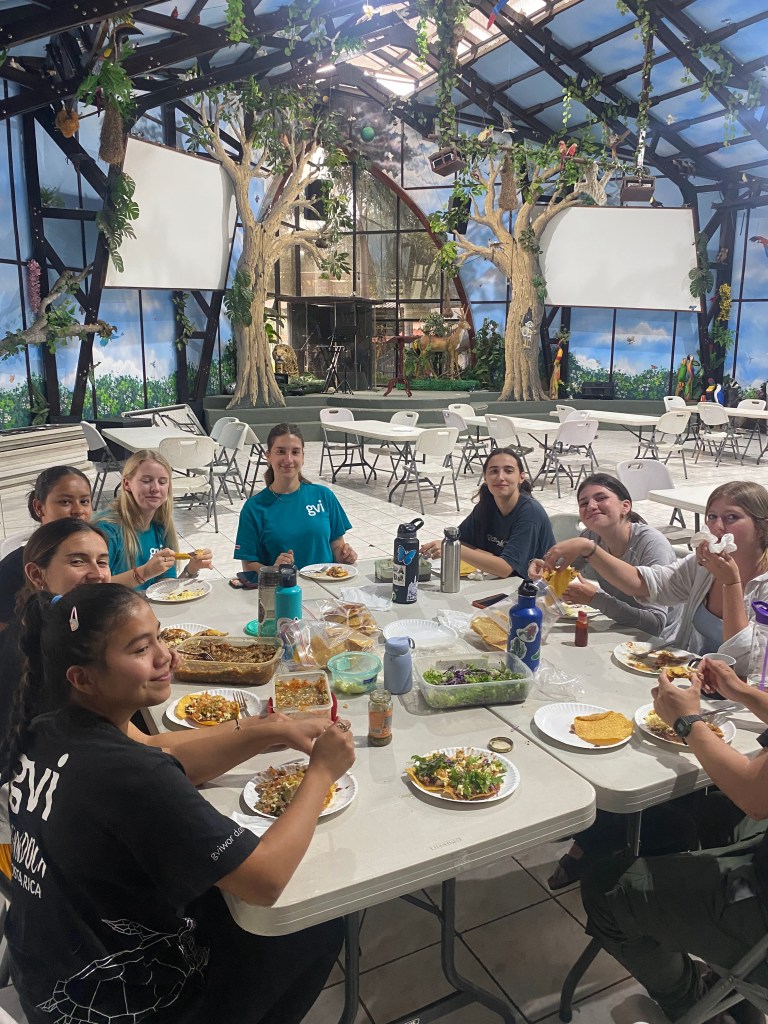


When it comes to lunch, there are two kinds. First of all, there’s the lunches that we take to school. There is a canteen in the school that provides breakfast, lunch and snacks to the kids for free and for a small fee for teachers but we have the resources to bring our own and don’t want to take any of theirs. Like breakfast, there’s a bit of a rotation but sometimes there are surprise entries. My least favourite of the standards is picadillo which can often have meat but ours are always vegetarian. I don’t mind the potato version but I don’t really like the courgette or chayote versions because they’re too watery. Another standard is fried rice, seen above with elotitos, roasted corn kernels, or pasta which is my favourite. Occasionally we have potato salad, Russian salad (like potato salad but with beetroot) or Alicia’s take on quiche. There’s also always salad, whatever lunch is.
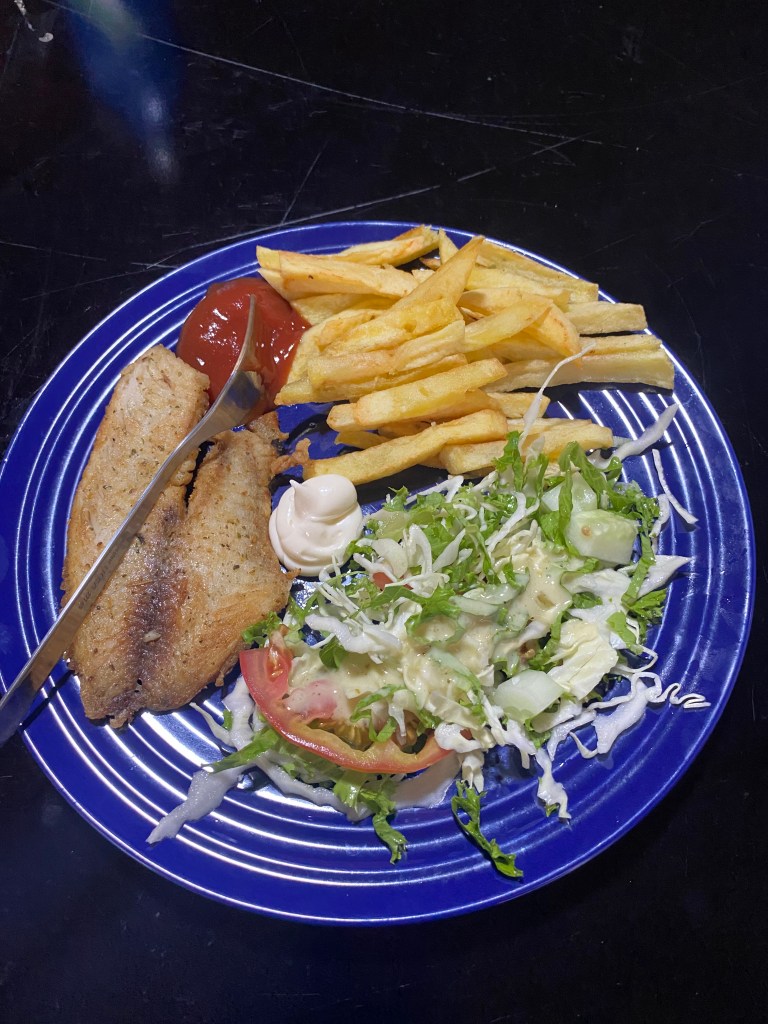

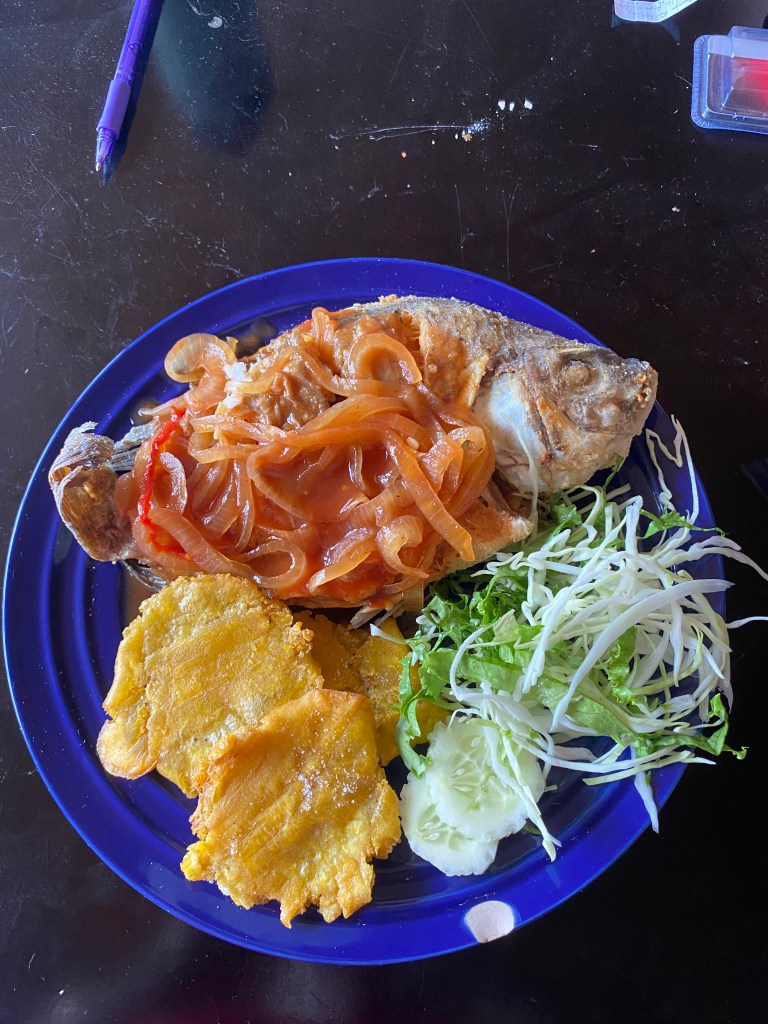
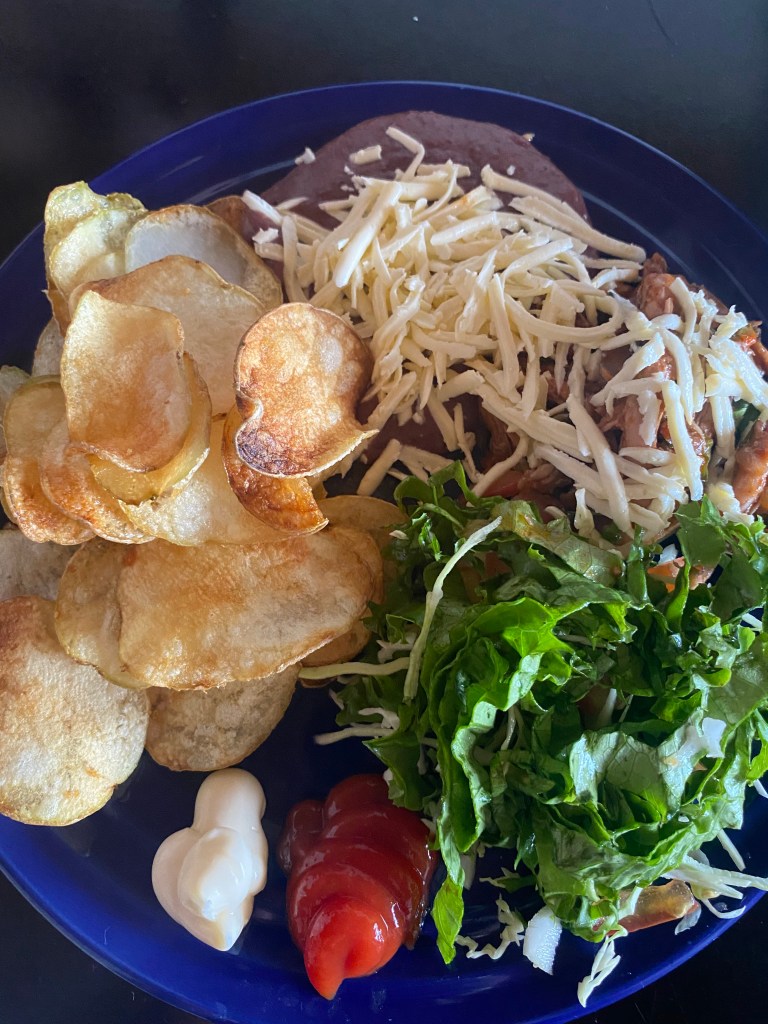


The other category of lunches are Thursdays. Our schedule is a bit different on Thursdays, we spend the morning lesson planning in the house before going into school after lunch and staying late for our conversation club. Being at home makes it easier for Alicia to prepare something a bit more elaborate. You can see two fish dishes above, the fish and chips in particular appealed to my British sentiments. Empanadas are also a great option but my favourites are chalupas or patacones. The two middle photos show the chalupas and all of its component parts. It’s a fried tortilla topped with frijoles licuados (beans), a chicken, pork or vegetable topping, cheese, pico de gallo (a tomato salsa), avocado and salad. Patacones involve similar toppings but the base is smashed and fried slices of plantain. Unfortunately I don’t have a photo of the whole dish but you can see patacones as a side with the whole fish.
Dinners


Dinners are more varied in the house. We have a lot of soups, especially if there are vegetarians or vegans. A typical Costa Rican soup is sopa negra (black soup) which is made with beans and usually eaten with rice and chopped up boiled eggs. I’m not much of a soup person but I love this one. I also really like the white bean soup and we also have chickpea or just general vegetable soup. We can also have a plate that is composed of rice, beans, salad, some vegetables and meat in an always delicious sauce. Again, there’s always salad!
Bonuses!
I’ve been lucky to have learnt how to cook a number of Costa Rican dishes while I’ve been here, some of which I might try to recreate at home and others that might be a lot harder!

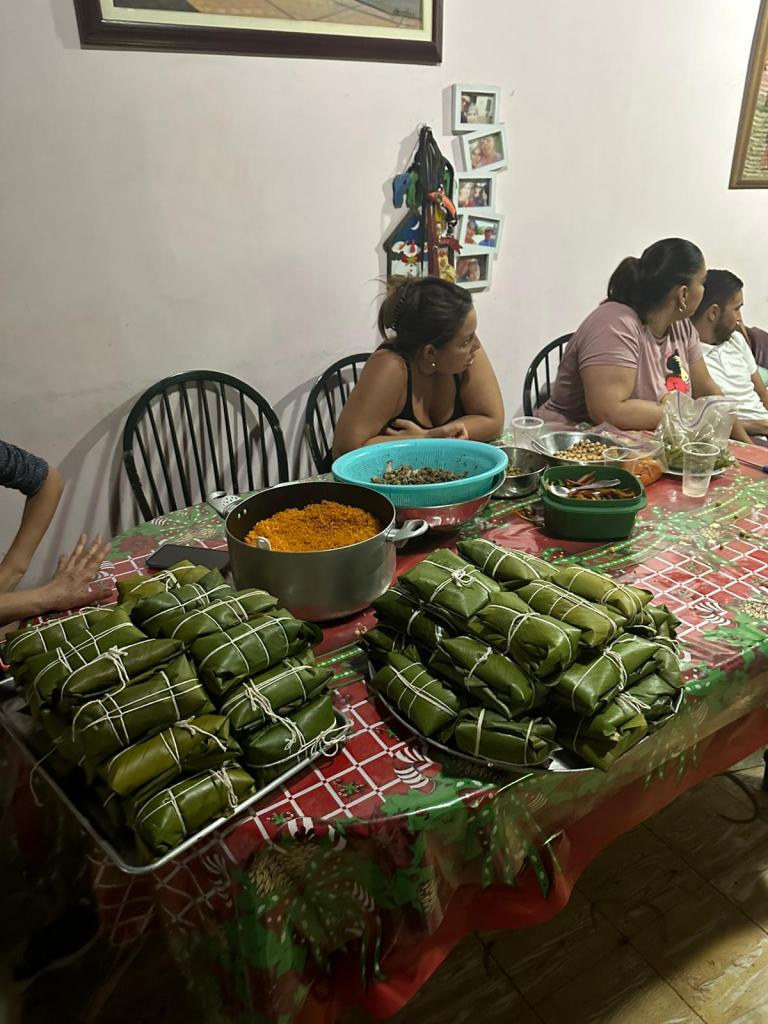

Tamales – These are the traditional Christmas dish in Costa Rica and it’s a long process to prepare them. It is made with a corn based dough that is filled with meat, vegetables and rice and wrapped in a banana leaf for cooking. The banana leaves that are used as wrapping have to be prepared before you can use them so they get wiped clean, cut down to size, and the strong centre vein of the banana leaf is separated to tie the tamal. The massa is mixed with spices, salsa lizano (a staple in Costa Rican cooking that is like a thicker Worcestershire sauce) and some of the cooking juices from whatever meat is being used. The fillings can vary but it’s traditionally made with pork as well as rice, potato, onion, carrot and pepper. When it comes to wrapping the tamales, you have to make sure it’s tied nice and tight so that no water can get in during the cooking because that ruins the flavour and texture.
I first made them in December when a volunteer that we had at the time expressed an interest in learning how to make them and we were invited around to Naty’s dad’s house to do just that! I’ve also made them twice while working with GVI’s group trips as one of their cultural activities.


Arepas colombianas – Again, I have some very lovely and generous friends. Karo is originally from Colombia and we met her through our conversation club. She recently taught us how to make Colombian arepas! The dough is made with cornmeal and then filled with cheese. It’s often eaten for breakfast with scrambled eggs. While Karo oversaw the cooking of the arepas, we had her 11 year old son Felipe (who speaks the most incredible English) teaching us how to fold the cheese into the dough.


Empanadas – Naty has also taught one group how to make empanadas and Andrés taught another group. You can fill empanadas with pretty much anything but the standard options are beans, cheese, chicken, chicharrón, potato or any combination. The trick is just not to over-fill them, however tempting it might be!
 Sara Somewhere