

I haven’t written much, if at all, about what my work in Costa Rica actually involves. Some of that is coming, I want to share a little of what my day to day looks like but this isn’t that… yet. Instead, this post is about a great work opportunity I had recently, or more specifically two great opportunities, where I got to do something a little different to my normal. GVI has three bases in Costa Rica, two core bases and one base for groups. Normally I work in the core community base in Cartago, that’s to say a permanent base that works on the regular, mostly education based programmes that run for individuals. There is also the core conservation base in Kéköldi. All participants have to be over 18 (unless coming as part of a family and then they can be 14) and most people come by themselves, although it is possible to come with a friend or partner.

Another area of GVI is the group trip programme. This most often serves schools or universities but there are also general under 18 programmes which bring together young people who don’t necessarily know each other. This is the type of programme that I did myself in Costa Rica when I was 17. I had the most amazing time and from that point I wanted to work for GVI one day. I was actually initially interested in working on the groups’ side of things before I got my current position, at least in part because of my own experience in 2015. Currently, the groups’ base is in Gandoca in the Limón province on the Caribbean side of Costa Rica. At the start of the season, they were a little short staffed and my base was quiet so I was able to go and fill in!
I helped on two groups, one in March and one in April, both a week long each. The first group was from NYU and it was part of their alternate spring break programme. They were honestly such an easy group, we had no problems and four of them were fluent Spanish speakers which was very helpful! The second group were students from a bilingual French high school in Los Angeles, so all around 16 years old. Working with under 18s was a very different dynamic to the university students that we had previous time, you always had to be on your toes!
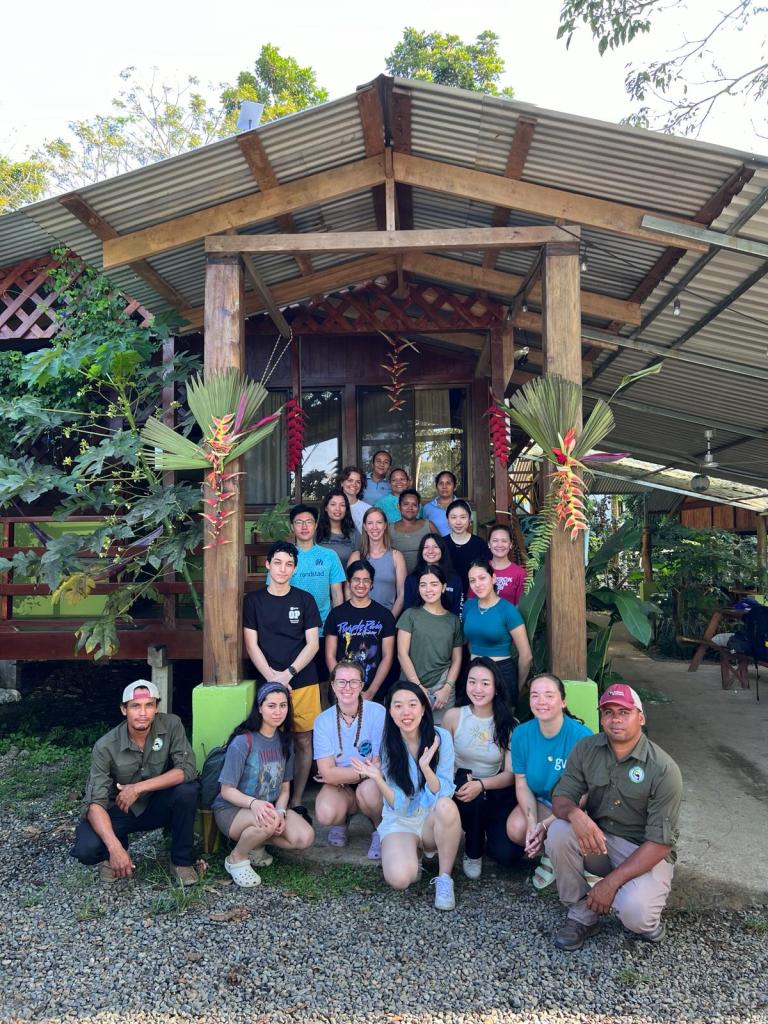
The first step is actually getting the groups to the base. After the groups arrived at the airport in San José we stayed the night there and set off the next day. It’s about a six hour drive to Gandoca in a minibus, driving through Braulio Carrillo national park which, fun fact, has Costa Rica’s only road tunnel going through a mountain. The scenery on the part of the road is stunning and it actually gets a bit chilly, a welcome change before the humid Caribbean weather. We stopped in Cahuita for lunch, a town known for its national park that we would visit at the end of each trip. This area of Costa Rica that includes Cahuita, Puerto Viejo and Gandoca, where the base is, is almost entirely surrounded by Panama. As you drive down one of the last roads of the journey, you can see Panamanian mountains. This area is also home to a lot of banana plantations that line the sides of the road. The bus sometimes has to stop so that the bananas can cross the road! (That’s not the first part of a bad joke, there’s a transportation system of rails that allows bunches of bananas to be quickly, easily and efficiently moved around the planation.)
Gandoca itself is a small town of only around 350 people. The GVI groups programme works in conjunction with a local business called Gandoca Experiential Learning. They provide sustainable experiences focusing on environmental, cultural and adventure activities to promote rural tourism and economic development in the town. As part of that we stay at their accommodation, Posada Casa Tucán Tranquilo, known as Casa Tucán for short. Most of the people that work in Casa Tucán (and most people in Gandoca actually) are family or as good as. Most of the families in Gandoca have been there for generations. There’s always a big welcome from the staff, the place is beautiful and there’s a spread of fresh fruit to eat and coconuts to drink. The rest of this first day was pretty admin heavy, there was a welcome presentation and a risk assessment to get through but at some point there was also a folkloric dance presentation from some of the local children which is a lovely way to kick things off.

There’s a couple of things that usually happen on the first full day in Gandoca which help to introduce the groups to the community that they’re in and give them some context for the rest of the week. The first thing is a presentation on the history and culture of the town, presented by the founders’ mother and translated by a member of staff or a participant, depending on their level of Spanish. She talked about the history of the town, that her family came here in the 1920s and they were very self-sufficient, they would grow pretty much everything they needed. The families that live there now might not be fully self-sufficient anymore but they still grow a lot of their own food.
In the afternoon, we took the groups out on a tour of the community and down to the lagoon. Like I said, Gandoca is a very small town with one main gravel road that runs through from one end to the other where it stops at the beach. There is a primary school and a high school, although previously the children had to travel over 13 km to the high school in Sixaola on the border with Panama, sometimes by bus but often by foot. There’s a pulpería, basically a corner shop, but no bigger supermarket. There’s a church and there are a few hotels or cabins for tourists to stay in. After walking through town, we split the group in two for half to take a boat through the lagoon and the other to carry on walking and would swap for the way back.
There are a lot of areas of ecological importance in Gandoca, including the lagoon which is a Ramsar site. This means that it’s a wetland of international importance, recognising its biological richness. The lagoon supports the only mangrove forest on the Caribbean coast of Costa Rica and is a very protected area so you can only use electric motors and fishing is limited to fish of a certain size. It’s also a great place to see birds, monkeys, caimans and, if you’re very lucky, a manatee. When there’s been a lot of rain, the lagoon actually links up with the sea. When that happens, it’s not the best time to swim but when we were there it was safe enough to get in the water near the beach. Swimming there was weird because some of the water was super hot but would swirl with super cold water! There were more coconuts to drink and fresh fruit which was delicious. When my group walked back along the beach on the way home, we heard a little from staff members Andrey and Justin about the turtle protection and conservation efforts along Gandoca beach. The whole beach is patrolled every night by volunteers in two shifts across three sections. The threats the turtles face range from poachers to the erosion of the beach. We would learn more about these efforts later in the week and get to contribute to their work.


As well as participating in a number of cultural activities, many of these group trips are built around volunteering and service work. The high school group from LA in particular had lots of volunteering worked into their schedule because they were all on a programme that required a certain number of hours. With them, one of the things we did was go to the high school where we planted some cassava and plantain that the students will look after and then will be used in the school meals. We also painted a table and benches in bright yellow, pink and blue to spruce them up a bit! With the NYU group, their volunteering was in Casa Tucán’s new plant nursery. Similar to at the school, the idea is to use what they grow in the kitchen, to feed the GVI groups and any other guests they have. Any surplus will be shared with the community or given to the school kitchens. The plant nursery was still very new, nothing had been planted yet, so the volunteers were building up the plant beds and digging holes around the edge so that a roof could be built to protect it from the intense sun and the equally intense rain. It was hot, sweaty work but with lots of water breaks and rotating through the different tasks, we helped make some good progress.


With the LA group, they had the chance to do a bit more volunteer work. They had two sessions working on cacao farms in the town and over the course of the week they got to see most of the chocolate making process, from harvesting to drying to roasting to grinding the beans. The first step was to cut the ripe cacao pods from the trees. There are two colours of pods – unripe green pods which turn yellow or orange when they are ripe and purple pods which turn red. If there are any black pods, they’ve gone bad so need to be cut from the trees but not collected. The ripe pods were collected and brought back to the group that was opening them, avoiding the many orb weaver spiders on the way! The pods are opened with a machete so that you can take the seeds out. You can eat the seeds at this point but they taste nothing like chocolate. To me, the white flesh tastes like soursop (guanabana in Spanish) or maybe pear and if you bite into the bean, it’s purple and very bitter. Another day on another cacao farm, rather than collecting the pods, we were doing some maintenance on the trees. We had some people raking around the base of the tree and others cutting off the sucker plants that take nutrients away from the main tree. We were supposed to be there for about two hours but we did roughly forty minutes in the end because the mosquitos were the worst that I’ve ever seen! Once you have the beans, they go into the drier for the fermentation process. Once you have the dried beans, you roast them over a fire and peel them. If you taste the cacao now it’s still bitter, but crunchy with a slightly smoky, almost coffee flavour. Lastly (for us anyway) you grind the beans into a paste. This is where we stopped the process. That evening we mixed the paste with water (or you can use milk) and a little sugar to make hot chocolate!


A very important part of the group’s experience is the turtle conservation part. Gandoca is a nesting site for three of the world’s seven sea turtle species, mostly leatherback but also hawksbill and green turtles. With all groups, they start with a presentation about turtles from Andrey who is extremely knowledgeable. He has spent decades doing this work, both in Gandoca and elsewhere. Andrey does a lot of work with COASTS, the Costa Rican Alliance for Sea Turtle Conservation Science, a grassroots non-profit organisation that he and his wife founded. Sea turtles return to the same region, if not the same beach, that they were born on when it comes time to nest. Turtles only nest at night, crawling out of the ocean to dig an egg pit. From every 1000 eggs that are laid, only one will make it to adulthood which I found to be a shocking statistic!
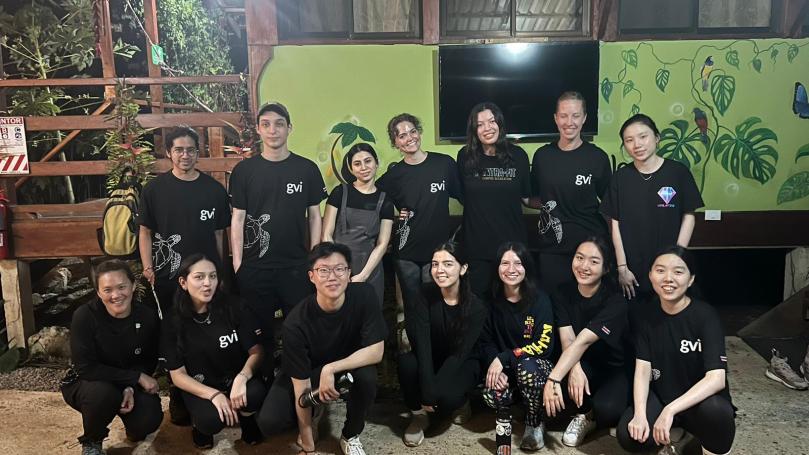
The second part is a turtle walk along Gandoca beach in the evening, leaving around 8pm and finishing anytime between 10pm and midnight, depending on the group and the weather. Every night COASTS have volunteers patrolling the beach to protect the turtles from poachers and keep track of them. You have to wear all black and no phones are allowed on the beach to keep the environment as natural and undisturbed as possible. When we did need to use a torch, it had to be a red light. If turtles feel disturbed once they come out of the water, they can do what is known as a false crawl which is when they return to the ocean without laying any eggs. We were out for a couple of hours before we had to come in early because of the rain. I went again the next night with a smaller group but we didn’t see turtles either night. Both the trips I was on were at the start of the turtle nesting season so chances were slim but it was still nice to be out on the beach in the evening.
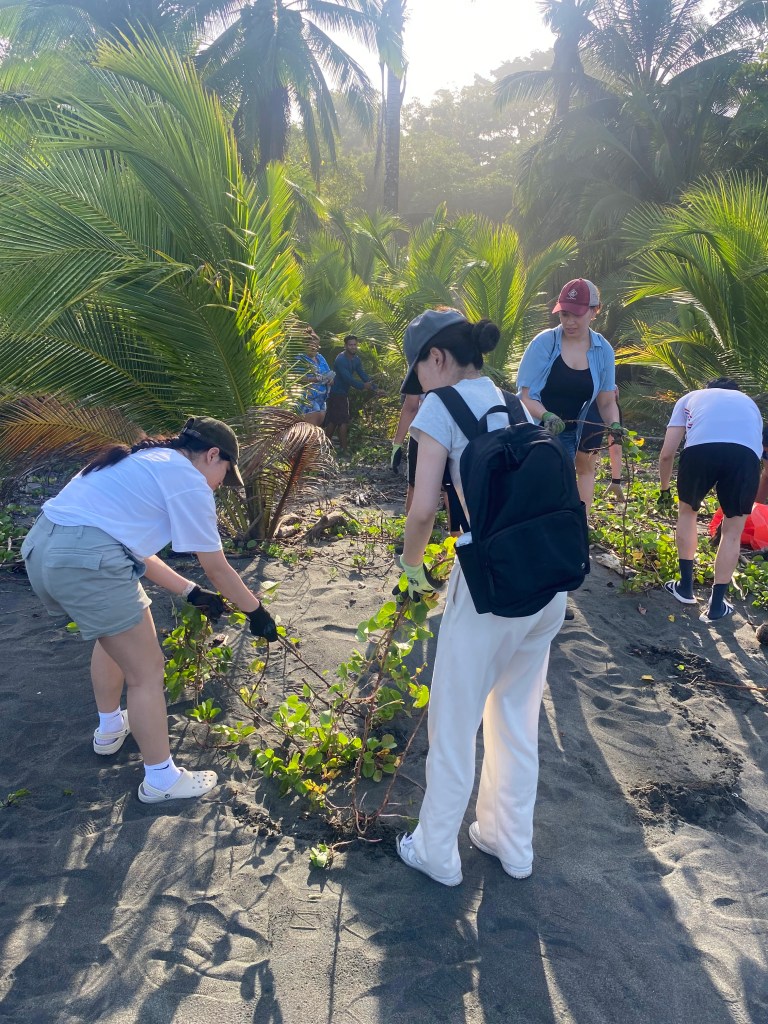
Another activity during the week that counts both as volunteering work and also contributes to the sea turtle conservation efforts is the beach clean. We actually focused more on pulling up roots and vines in the areas that the turtles like to nest rather than plastic, although obviously we also picked up any rubbish that we saw. At some points on the beach, there were some huge logs in the way but with a team of 8 or 10 people, it was light work! Even under the very hot sun, doing pretty physical work, the groups both got really into it. I think a beach clean gives you that immediate feeling of satisfaction and it’s easy to see the difference you’ve made. After one of the beach cleans and after some of the volunteering work with one group, we took them to the local football field to have some free time to let off some steam. Some of the students got into football games with whichever locals were around, others were passing around a volleyball and others making the most of the pitch being one of the only spots in town where you can get phone signal!


While the volunteering and conservation work are important parts of the group trips, it’s also a chance for the students to get to know more about Costa Rican culture. Part of this is a Spanish class or more specifically ‘Talk like a Tico’! There’s not enough time to start from scratch with any students that don’t speak Spanish but then there are also some students that are already fluent in Spanish. With such a mix of abilities, the Spanish class focuses more on Costa Rican slang. For example, ‘el tico no trabaja, el tico bretea’, ‘tico’ being a Costa Rican and ‘bretear’ being the word they use for work instead of ‘trabajar’. If you want to learn any of it, have a look at a video on YouTube called Gringo Pinto!
There is also a cooking class because food is such an important part of culture. All the GVI groups learn how to make tamales, a very traditional dish that is made across Latin America. The preparation is a little different from country to country and even regionally so these are Caribbean Costa Rican tamales, before anyone disagrees! It is made with a corn based dough that is filled with meat, vegetables and rice and wrapped in a banana leaf for cooking. The banana leaves that are used as wrapping have to be prepared before you can use them so they get wiped clean, cut down to size, and the strong centre vein of the banana leaf is separated to tie the tamal. The corn had been cooking over a wood fire the day before and the first thing to do was grind it up. The massa is mixed with spices, salsa lizano (a staple in Costa Rican cooking that is like a thicker Worcestershire sauce) and some of the cooking juices from whatever meat is being used. Every tamal gets some rice, potato, onion, carrot and pepper and then we had a range of other fillings. Pork is traditional but we also had chicken or you can leave them without for the vegans and vegetarians. We also separated some of the massa so it wouldn’t have the meat stock in it. When it comes to wrapping the tamales, you have to make sure it’s tied nice and tight so that no water can get in during the cooking because that ruins the flavour and texture. We made them in the morning so there was time for them to cook during the afternoon and then we ate them for dinner!


Probably my favourite part of the whole week was the 10 km hike from one side of the Gandoca-Manzanillo Wildlife Refuge to the other. We started on Gandoca beach at around 7.30am so that we could get a good distance out of the way before it got too hot. We walked along the beach for about an hour which was the most physically demanding part because the loose sand is harder to walk on. Beyond that it was mostly in the jungle with a few short stretches on the beach further along. It was so fun, such a nice level of difficulty, a good pace and so beautiful! Some of the most challenging moments were steep slopes that were a bit muddy because I only had trainers without much grip to them but I managed not to fall! Not everyone can say the same… What made these sections even more difficult is that a lot of the trees along the path are pochotes that have thick spikes all over the trunks so if you do slip or fall, you absolutely can’t reach out to catch yourself on the tree or risk shredding your hand to pieces. At around the halfway point we stopped at a coconut farm for a break, fresh coconuts included! What could be better? It was a breathtaking place to rest, ready for the second half of the hike.
With the NYU group, we completed the hike in four and a half hours. They were the first trip of the year but compared to the groups from last year they were second fastest, coming in after the group of high level student athletes so they did well! The LA group finished in five and a half hours, we just had a few more breaks along the way with them. The hike ended inside the main part of the Manzanillo national park where we managed to see a sloth! After a long hike, we had a well deserved lunch at a local restaurant of a very typical Caribbean dish, pollo caribeño and rice ‘n’ beans. To get back to Gandoca, rather than walk the opposite way back, we got a couple of boats which was great because both times I did it I saw turtles!


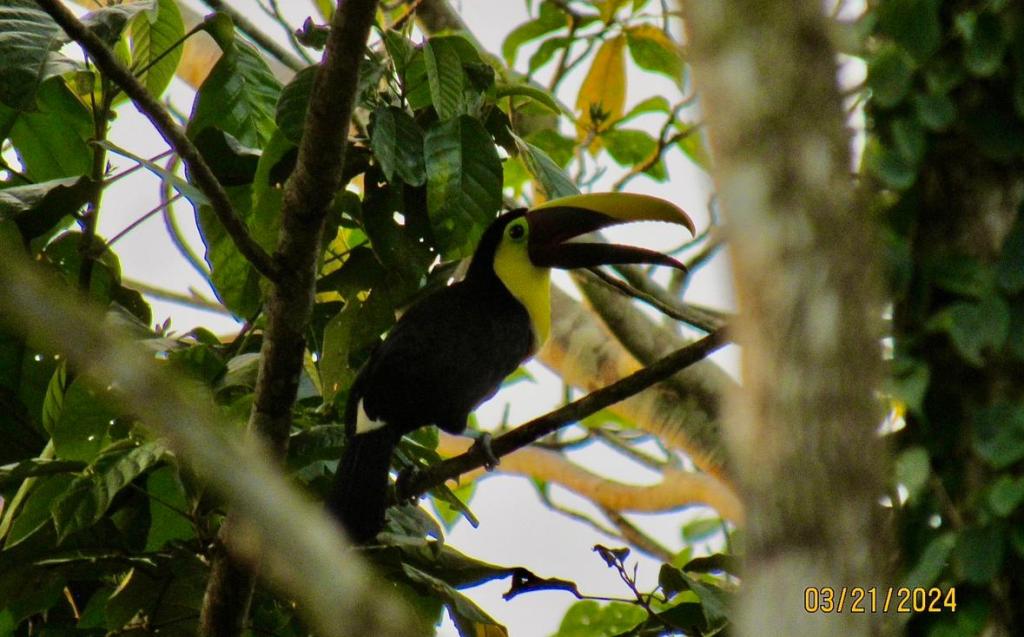
On the last morning of each trip, after saying goodbye to most of the team in Gandoca and leaving the lovely Casa Tucán behind, we head up to Cahuita, another national park on the coast. It’s not a huge park and entrance is by donation for anyone visiting. There’s only really one trail that heads along to an absolutely stunning beach, the perfect place to have a swim before you head back down the same path to the entrance again. Even though it’s small, there’s so much to see in Cahuita! Every time I’ve been there, I’ve seen at least three sloths and most of them were quite low in the trees. There’s also lots of monkeys, sometimes howler monkeys or capuchin monkeys. It’s also possible to see morpho butterflies floating lazily through the air, easy to spot because of their bright blue colour. With a good guide (which we had, Braulio from Casa Tucán), you can also see the harder to spot animals like tiny poison dart frogs or bright yellow eyelash viper snakes.



After lunch in Cahuita, it’s back into the bus for the final five hours to San José. Both groups had a night there and left at the end of the following day. With the NYU group, I had actually already arranged to have a weekend in Puerto Viejo, the most touristy town in the same area as Gandoca, Manzanillo and Cahuita. Because the group programme was short staffed and I was helping them out at the last minute, I was able to stay in Puerto Viejo so missed the final day with the NYU group. I was there for the second group with the LA school though. It’s much more relaxed than the rest of the week because after such a jam packed schedule, everyone was pretty exhausted! There was some admin to be done, a goodbye presentation, feedback and reflection and then we went to the national museum and San Jose’s central market to wrap things up.
I really enjoyed the two group trips that I worked on. It was really interesting to see a different side of what GVI does and I loved working with the partners in Gandoca as well. For the first group, with NYU, it was just me and Indie who manages the groups programme but for the LA group we also had Isa who worked on some of the groups last year. It was a great team to be a part of and I’m very pleased that I got to have this experience! For now, it’s back to Cartago and normal life but it wasn’t so bad working in paradise for a while.

 Sara Somewhere