

Gracias is one of my favourite places in Honduras but it could easily slip under the radar behind the more popular and well known Utila or Copán Ruinas. In this guide, I’ll share some of my favourite parts of Gracias and a little bit more about my time there this summer.
A bit of background first, Gracias is the capital of the department of Lempira and was founded in 1536. It is said that the name of the city, which means ‘thank you’ in Spanish, comes from when Spanish explorers arrived through the mountains and exclaimed ‘gracias a Dios, hemos llegado a tierra plana‘ meaning ‘thank God we have arrived at flat land’. A top tourist spot amongst Hondurans, Gracias is home to the highest point in Honduras and also its largest cloud forest.
WHERE TO STAY
Guancascos
It could only be Guancasos! This is as much the attraction to me as anything else in Gracias because it feels like a haven. Not just because it was my home away from home while I lived in Honduras and where I spent a lot of weekends but the hotel itself is blissful. The hotel has its own compound meaning that once you are inside it feels really safe, private and peaceful. There are so many plants and flowers as well which means there’s also lots of birds and other things to see while walking from the restaurant to your room. Another thing I love about Guancascos is that it’s really sustainable and supports the local community. There is an onsite restaurant and bar, breakfast is included in some rooms and they have hot water (not always a given in Central American accommodation!)


WHAT TO DO
Hot Springs
The hot springs are definitely one of the highlights in Gracias. You might think that it’s far too hot in Honduras to go to a hot spring and you would be right, most of the time. This is why they are a popular way to spend an evening. There are a couple around Gracias but the one I like is El Presidente. They are a couple of kilometres out of town but worth the journey so grab a mototaxi from anywhere in town. Mototaxis within Gracias are about 20 lempiras per person (65p) but out to the hot springs it will cost 80L total (£2.65) or 150L at night (£5). It can be hard to find a mototaxi there when you are done so arrange for whoever takes you to come back later.
Entrance to the pools themselves cost 50L (£1.65). Most of the pools are between 36º and 38º and they’re open until 11pm so you can really enjoy the warmth of the water! There’s a little restaurant where you can buy meals or snacks or you can bring your own. We opted to bring some snacks, a bag of lychees for me, and had dinner later. Many Hondurans will wear a t-shirt and shorts into the water and while you can wear whatever you like, you might feel more comfortable doing the same.

Celaque National Park
Celaque National Park is home to Honduras’ highest peak, Cerro Las Minas, but has plenty of hiking for all levels. The park was created in 1987 after a campaign by locals in the town of La Campa, aiming to stop logging that was harming biodiversity. The park has 21% of Honduras’ biodiversity, six of the seven pine species in the country, 256 species of fern and 75 species of moss. There are also 24 plants and 14 animals endemic to Celaque, meaning they aren’t found anywhere else in the world. Celaque means ‘box of water’ in the local indigenous language, Lenca. This could be due to the fact that the park’s nine rivers supply water to 120 villages nearby and the city of Gracias (including Guancascos hotel!).
We paid 120L (£4) entrance fee and arranged for our mototaxi to come back for us at 3pm, when the park closes. I would recommend this unless you want to walk for almost two hours back to town. We were a bit late getting started but the park is open from 8am if you want to spend more time there. There are a few routes you can take in Celaque. There is one that is only an hour long, one that takes you to a waterfall and back in 4-5 hours or the main hike to the highest point in Honduras which takes 12 hours over two days. There are a few off-shoots you can add to the shorter routes as well. We had about four hours but weren’t in a rush to get anywhere so we just started walking until we needed to turn around. We saw lots of cool mushrooms, insects, butterflies and even a cool little lizard.


Fuerte San Cristobal
Fuerte San Cristobal sits above Hotel Guancascos and gives you some gorgeous views over the city and out to Celaque. Admission is about 60 lempiras (£2) and although there isn’t much to see up there other than the tomb of Juan Lindo, former president of both El Salvador and Honduras, it’s still worth the short walk and small entrance fee to see the views across Gracias and over to Celaque.

La Campa Zipline
This isn’t something that I did on my most recent trip to Honduras but I went three times in the year that I lived there and it was one of my favourite experiences. La Campa is a town about an hour away from Gracias where you will find Central America’s most extreme zip line! Thrill seekers, this one’s for you. Six zip lines of 3.6km in total zig zag across a valley 700m deep! This is still one of my favourite things I’ve done in Honduras. The town of La Campa itself is also known for its beautiful Lencan pottery.


WHERE TO EAT AND DRINK
Guancascos
Again I have to start with Guancascos restaurant. Breakfast is included daily with a great desayuno típico, a traditional Honduran breakfast of blended beans, scrambled eggs, plantain and mantequilla (like sour cream) with tortillas on the side of course! Another favourite is the yoghurt and granola bowl piled high with fruit. Their fresh juice never misses, particularly the maracuyá (passion fruit) and you can’t go wrong with the chicken nachos.


Kandil
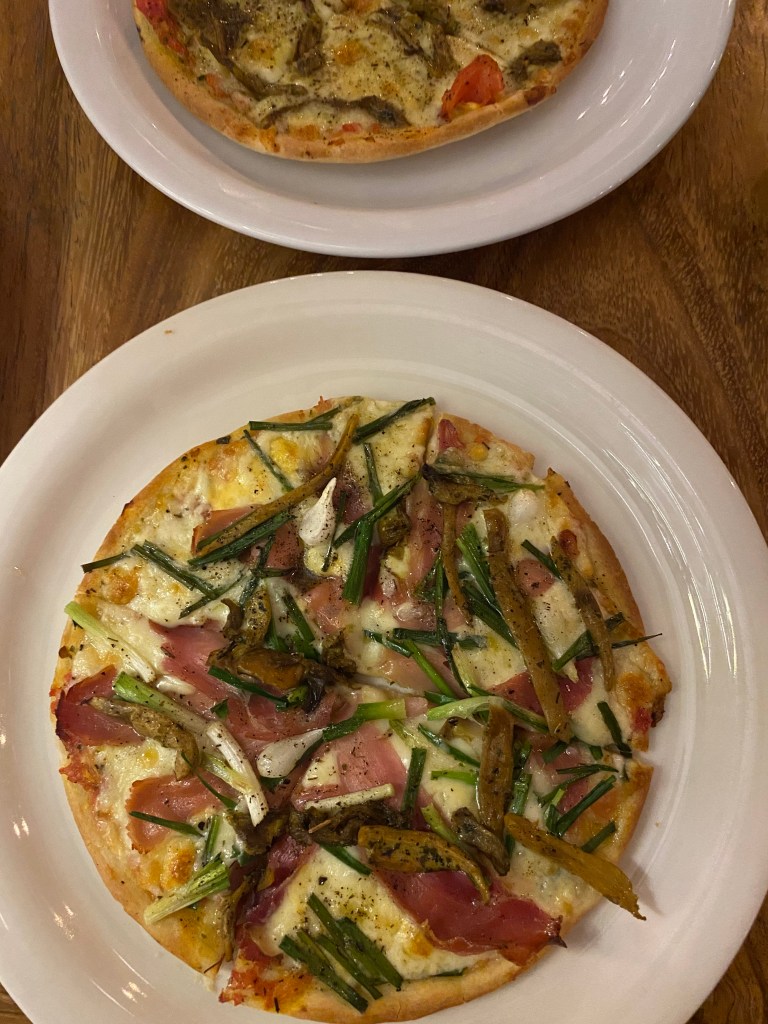
Kandil is a more modern spot, great for pizza, chicken wings and cocktails. A little pricier than the local comedores but worth it if you want a break from tortillas and frijoles. There’s a really nice atmosphere inside and a new courtyard since I was last there.

Plaza Cafe
The best spot in town for a coffee and some people watching, Plaza Cafe is a kiosk at the centre of the main square. My personal favourite is the granita de cafe, like a sweet, coffee-flavoured slushie. It makes a good place for a break while exploring the centre of the city.

Main Square
While I was in Gracias there was a feria (a cross between a market and a fair) happening in the main square where we stopped for lunch. On the menu: pupusas! These are basically stuffed tortillas, ours with quesillo (cheese) or pollo (chicken) but they are also often filled with beans, chicharrón (fried pork rinds) or loroco (an edible plant found in several Central American countries). They are actually a traditional dish from El Salvador but are often found in the west of Honduras that borders El Salvador. We ate it with a tomato sauce, curtido (fermented cabbage relish) and fresh jamaica (hibiscus) juice.
In the evenings, the main square fills with vendors and food stalls. It’s fair to be wary of places like this in terms of hygiene but it’s also where you’ll get some of the best local food like baleadas, pupusas, tacos flautas, fried chicken and more for pennies!


 Sara Somewhere